· Updated · 10 min read · StreetLegal Team

Mobile Food Vendor License: What It Is and How to Get One in Any State
Updated June 28, 2026.
A mobile food vendor license is the core health permit that authorizes you to prepare and sell food from a mobile unit — a truck, cart, trailer, or kiosk. If you want to operate legally, this is the permit you cannot skip. But what it's called, where you get it, and what it costs varies dramatically by state and city.
This guide covers what the license actually is, how it differs from other permits you need, what it costs in every major market, and the exact steps to get one — in any state.
What Is a Mobile Food Vendor License?
A mobile food vendor license is a permit issued by a local or state health authority that authorizes you to prepare and sell food from a mobile unit. The issuing authority is almost always the county or city health department — not a state agency. In most states, there is no single statewide permit; you apply to the health department that covers the jurisdiction where you operate.
The permit covers your entire mobile unit — the vehicle, equipment, and food handling practices. It is tied to a specific unit (identified by vehicle VIN or unit number) and, in most jurisdictions, a specific commissary kitchen. If you change vehicles or commissaries, you typically need to update or re-apply.
The permit is distinct from a business license, food handler certification, or food manager certification — all of which are typically required separately. See the comparison table below.
No Single Statewide Permit in Most States
Unlike a driver's license, there is no universal mobile food vendor license that works everywhere. The permit you get from the LA County Department of Public Health does not cover you in the City of Los Angeles proper (which has its own jurisdiction). Know which agency covers your operating area before you apply.
Mobile Food Vendor License vs. Other Permits
Most mobile food operators need 4–6 separate permits and certifications to operate legally. Here's how they differ:
| Permit / License | Issuing Authority | Who Holds It | What It Covers |
|---|---|---|---|
| Mobile Food Vendor License / Permit | City or county health department | The business | Authorization to operate the mobile food unit |
| Business License | City or county clerk | The business | Authorization to conduct business in a jurisdiction |
| Food Handler Certification | State-accredited provider (ServSafe, ANSI-CFP) | Individual staff member | Basic food safety training for all food-handling employees |
| Food Manager Certification | ANSI-accredited certifier (ServSafe, Prometric) | At least one designated manager | Advanced food safety — required per establishment, not per employee |
| Fire Inspection Certificate | Local fire marshal | The unit | Propane systems, suppression systems, hood/ventilation compliance |
| Sales Tax Permit | State revenue / comptroller agency | The business | Authorization to collect and remit state sales tax |
Pro Tip: Start with the Health Permit
The mobile food vendor license (health permit) is almost always the longest step. Get your commissary agreement and start the health department application first. You can process the business license, sales tax permit, and food handler certs in parallel — they're all faster.
What States Call the Mobile Food Vendor License
The permit is real and required nearly everywhere — it just goes by a dozen different names. Here's what the major states and cities call it:
| State / City | Official Permit Name | Issuing Agency |
|---|---|---|
| Texas (Houston) | Mobile Hot Food Dispensing (MHFD) Permit | City of Houston Health Dept (COHD) |
| Texas (Austin) | Mobile Food Vendor Permit | Austin Public Health (APH) |
| California | Mobile Food Facility Permit | County Environmental Health Dept |
| New York City | Mobile Food Vending License + Mobile Food Vendor Permit (separate) | NYC Dept of Health & Mental Hygiene (DOHMH) |
| Florida | Mobile Food Dispensing Vehicle License | FL Dept of Business & Professional Regulation (DBPR) |
| Illinois (Chicago) | Mobile Food Dispenser License or Mobile Food Preparer License | City of Chicago Dept of Business Affairs & Consumer Protection |
| Georgia | Mobile Food Service Permit | County Environmental Health (varies — Fulton, DeKalb, Gwinnett, etc.) |
| Pennsylvania (Pittsburgh) | Retail Food Facility License — Mobile Unit | Allegheny County Health Dept (ACHD) |
| North Carolina | Mobile Food Establishment Permit | County Environmental Health (each county) |
| Washington State | Mobile Food Unit Permit | Local health jurisdiction (LHJ) |
| Colorado (Denver) | Mobile Food Establishment License | Denver Dept of Public Health & Environment |
Note that Florida is unusual: the DBPR issues the license at the state level, but local county health departments still conduct inspections. In most other states, the county or city health department is both issuer and inspector.
How to Get a Mobile Food Vendor License: Step-by-Step
These steps apply in virtually every U.S. jurisdiction. The sequence matters — you cannot pass a health inspection without equipment, and you cannot get a commissary agreement without knowing what you're operating.
Secure a Commissary Agreement
Required in almost every state. Find a licensed commissary kitchen (they must hold their own valid health permit), sign a written agreement specifying access hours, prep space, cleaning facilities, cold storage, and wastewater disposal access. Most health departments will not accept your application without a commissary agreement already in hand.
Build or Buy a Code-Compliant Food Unit
Your truck, cart, or trailer must meet local equipment standards. At minimum: three-compartment sink (wash/rinse/sanitize), dedicated handwashing sink with hot water, fresh water tank (typically 30–50 gallons for full-service), wastewater tank at least 15% larger, and NSF-certified equipment for food contact surfaces. Check your specific health department's published standards before purchasing equipment.
Submit a Plan Review (Where Required)
LA County, Chicago, NYC, and several other jurisdictions require a plan review before they will schedule an inspection. Submit your equipment list, menu, and a scale drawing of the unit interior. This review takes 2–6 weeks. Starting without it delays everything downstream.
Pass the Health Department Inspection
A health inspector visits your unit — sometimes at the commissary, sometimes in the field. They check water system capacity, temperature controls (cold ≤41°F, hot ≥135°F), sink configuration, food storage, pest prevention, and your commissary documentation. Bring everything to this inspection: commissary agreement, food handler certs, manager certification, and vehicle registration.
Get the Fire Marshal Inspection
Required if you use open-flame cooking (propane, natural gas, or charcoal). The fire marshal inspects your propane connections, fire suppression (Ansul) system, Type I ventilation hood, fire extinguisher (Class K), and electrical system. Budget $150–$350 to get your suppression system professionally serviced and tagged before this inspection — it's the most common cause of failure.
Apply for Business License and Register for Sales Tax
Once your health permit is in process, apply for a business license from your city or county clerk's office ($25–$100/year). Register for a state sales tax permit with your state's revenue or comptroller agency — most are free and process within a few days online. You cannot legally collect sales tax without this registration.
Pro Tip: Run Steps 4–6 in Parallel
You don't need to wait for the health permit to finish before applying for your business license or sales tax permit. Submit everything simultaneously. The health permit will take the longest — 4–8 weeks in most cities. Business licenses and sales tax permits often process in 1–5 business days.
How Much Does a Mobile Food Vendor License Cost?
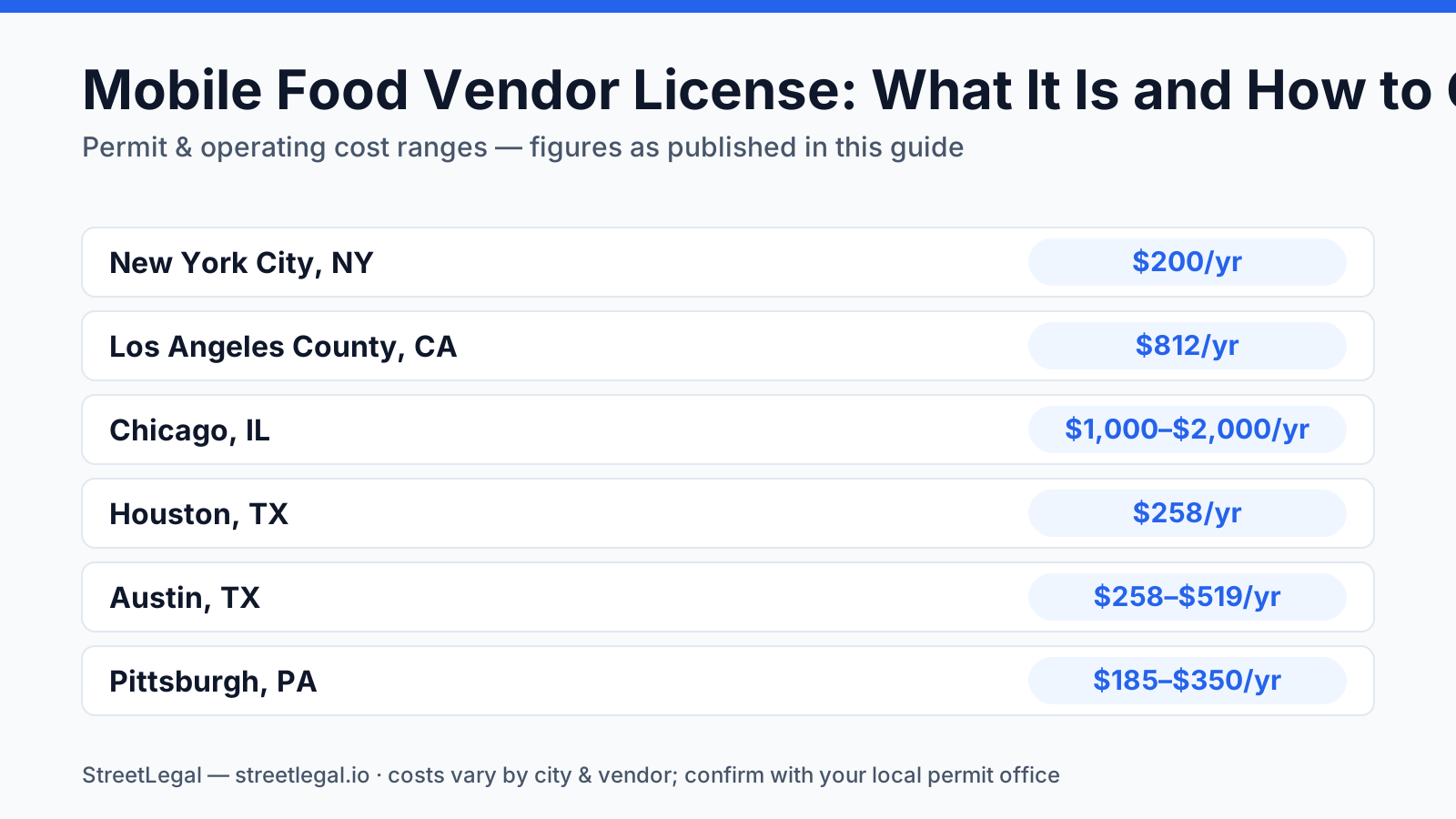
Permit cost is one of the most common research questions — and the range is enormous. Here's the breakdown by major market:
| City / State | Permit Name | Annual Fee | Notes |
|---|---|---|---|
| New York City, NY | MFVL + Unit Permit | $200/yr | Fee is low; the problem is a years-long waitlist for full-service permits |
| Los Angeles County, CA | Mobile Food Facility Permit | $812/yr | LA County Environmental Health; City of LA has separate jurisdiction |
| Chicago, IL | Mobile Food Dispenser / Preparer License | $1,000–$2,000/yr | $1,000 for Dispenser (pre-packaged + limited prep); $2,000 for full Preparer |
| Houston, TX | MHFD Permit | $258/yr | City of Houston; Harris County unincorporated areas use HCPH permit |
| Austin, TX | Mobile Food Vendor Permit | $258–$519/yr | Tiered by risk level; full-service trucks at higher tier |
| Pittsburgh, PA | Retail Food Facility License — Mobile | $185–$350/yr | Allegheny County Health Dept; tiered by risk and menu complexity |
| Philadelphia, PA | Mobile Food Establishment License | $200–$400/yr | Philadelphia Dept of Public Health; cart and truck fees differ |
| Georgia (county-level) | Mobile Food Service Permit | $100–$200/yr | Fulton County Environmental Health ~$150; varies by county |
| Florida (statewide) | Mobile Food Dispensing Vehicle License | $256–$515/yr | DBPR fee varies by seating and risk level; counties may add separate fees |
| U.S. Range | — | $100–$2,000+/yr | Depends on jurisdiction, unit type, and menu complexity |
NYC Warning: Low Fee, Massive Wait
New York City caps the total number of full-service mobile food unit permits at approximately 3,100 citywide. The waitlist to receive a permit can be 2+ years. The $200/year fee is irrelevant if you cannot get a permit in the first place. There is a limited exception for veterans and certain pushcart licenses, but the cap affects the vast majority of operators.
Documents Typically Required for Application
While specific requirements vary by jurisdiction, the following documents are required in the majority of states:
- Commissary agreement — signed by both parties, including the commissary's health permit number
- Equipment list and menu — all cooking equipment with manufacturer specs; menu must match equipment capabilities
- Unit specifications — vehicle VIN, dimensions, photos of interior layout showing sink placement and water systems
- Food handler certifications — for all staff who handle food (state-accredited training, usually $15–$30/person)
- Food manager (PIC) certification — one Person In Charge must hold an ANSI-CFP accredited manager cert (ServSafe, NRFSP, Prometric — typically $80–$180)
- Proof of business entity — LLC certificate, DBA filing, or business registration from your state's secretary of state
- Certificate of insurance — most health departments require proof of general liability coverage ($1M minimum is common); some require product liability as well
- Vehicle registration and proof of ownership or lease
How Long Does It Take to Get a Mobile Food Vendor License?
Timeline depends almost entirely on where you are and whether your application is complete. Here's the realistic range:
| Scenario | Timeline | Example Markets |
|---|---|---|
| Small city, complete application, no backlog | 2–3 weeks | Small Tennessee or Georgia county health depts |
| Mid-size city, standard processing | 4–8 weeks | Houston, Austin, Pittsburgh, Philadelphia |
| Major city with plan review required | 8–14 weeks | Chicago, LA County, Denver |
| NYC (full-service permit with waitlist) | 2+ years | NYC DOHMH — permit cap in effect |
The most controllable variable is application completeness. A complete application with all documents, correct fees, and a commissary agreement already in hand gets you to inspection faster than anything else. Missing a single document — typically the commissary agreement or food manager cert — can add 2–4 weeks to your timeline.
Hardest and Easiest States to Get a Mobile Food Vendor License
Hardest Jurisdictions
New York City, NY
Hard permit cap (~3,100 full-service permits citywide). Waitlist is years long. Commissary requirement is strictly enforced. Operating without a permit in NYC carries aggressive enforcement — fines of $1,000+ per violation are common.
Chicago, IL
Highest annual fees in the country ($1,000–$2,000/yr). Additionally, Chicago enforces a 200-foot distance restriction from any licensed brick-and-mortar restaurant — which eliminates most of the best lunch spots in the city. The Chicago Dept of Public Health also requires a plan review before inspection.
Los Angeles County, CA
LA County alone has 31 separate incorporated cities, each with their own jurisdiction. The LA County Environmental Health permit covers unincorporated areas — but operating in Pasadena, Long Beach, or Beverly Hills means separate city-level permits. Multi-jurisdiction complexity is the defining challenge.
Most Operator-Friendly Jurisdictions
Texas (Houston, Austin, San Antonio)
No statewide permit cap. Fees are reasonable ($258–$519/yr). No distance restrictions from restaurants in Houston. No plan review required before inspection. Timeline is predictable at 6–8 weeks. The dual-jurisdiction issue (city vs. county) is manageable once you know about it.
Georgia (Atlanta metro counties)
County-based permitting means most operators only need one permit. Fees are low ($100–$200/yr). No permit caps. The Atlanta metro area has strong demand. Fulton, DeKalb, and Gwinnett counties all process permits efficiently.
Tennessee (Nashville, Memphis)
Tennessee county health departments are among the faster-processing in the Southeast. Nashville and Memphis have growing food truck scenes with relatively low regulatory barriers. Fees are competitive with Texas. No permit caps.
Renewal Requirements
Most mobile food vendor licenses renew annually. The specifics vary by jurisdiction, but these are the standard rules:
- Annual renewal: The vast majority of jurisdictions renew permits every 12 months. Mark your expiration date 60–90 days out and submit renewal paperwork early — some jurisdictions process slowly.
- Re-inspection may be required: Many health departments require a new inspection at renewal, not just paperwork and fee submission. Assume you'll need to pass inspection again each year unless your jurisdiction explicitly states otherwise.
- Commissary agreement must be current: If your commissary agreement expired, your renewal will be denied. Renew or replace your commissary agreement before your permit renewal deadline.
- Food manager cert timeline: ANSI-accredited food manager certifications (ServSafe, etc.) are valid for 5 years. Track this separately from your annual permit renewal.
- NYC exception: NYC issues some mobile food vending licenses on a 2-year cycle rather than annual. Verify your specific license term with DOHMH.
Pro Tip: Set Calendar Reminders for All Permit Expiration Dates
Operating with an expired mobile food vendor license carries the same penalties as operating without one. Set calendar reminders 90 days, 60 days, and 30 days before each permit expiration. The renewal queue at many health departments can be 4–6 weeks, so early submission matters.
Mobile Food Vendor License FAQ
Is a mobile food vendor license the same as a food truck permit?
Do I need a separate business license in addition to a mobile food vendor license?
What happens if I operate without a mobile food vendor license?
Can I use my mobile food vendor license in multiple cities or states?
How long does it take to get a mobile food vendor license?
City-Specific Guides
Ready to get your permit? These city guides cover every permit, fee, and inspection requirement in detail:
Answers to the most common permit questions — costs, timelines, commissary rules, and more.
Find city-level permit guides for every state we cover — compare costs and requirements.
More from the blog
Food Truck POS Systems: Square vs. Toast vs. Clover vs. Avocado (2026)
Real 2026 pricing, hardware costs, offline mode, and contract terms for Square, Toast, Clover, and Avocado — compared specifically for food truck operators.
City GuidesEagan, MN Food Truck Permit Guide
Eagan MN food truck permit guide: MDH mobile food licensing, Dakota County food safety, city peddler rules, commissary records, costs, and launch timeline.
City GuidesBentonville, AR Food Truck Permit Guide
Complete guide to food truck permits, fees, and requirements in Bentonville, AR.
City GuidesBiloxi, MS Food Truck Permit Guide
Biloxi food truck permit guide 2026: licenses, health permit steps, commissary records, inspections, costs, renewal timing, and launch checklist.