· 13 min read · Gibby, StreetLegal Editorial

How to Start a Food Truck in Texas: Statewide Permit Guide 2026
Texas has more food trucks than almost any state in the country — but there is no Texas food truck permit. No statewide license. No single form you fill out. Permitting here is a city-by-city, county-by-county system, and the rules in Houston are completely different from the rules in Austin, which are different again from Dallas and San Antonio.
This guide covers what applies everywhere in Texas (TXDSHS certifications, commissary requirements, sales tax), and then breaks down the specific permit process for every major Texas city — with real fee amounts, real agency names, and real timelines.
Key Disclaimer
Texas has no uniform statewide food truck law. Rules vary by city and by county — and sometimes by jurisdiction within the same metro area. Always verify current requirements with the specific health authority where you plan to operate before filing any application.
The Texas Reality: No Statewide Food Truck License
If you Google "Texas food truck permit," you will find a bewildering mix of information. Some sources mention Texas DSHS. Some mention the Texas Comptroller. Some list a "Texas Mobile Food Unit permit." Here is the actual truth:
Texas has no uniform statewide mobile food vendor permit. The Texas Department of State Health Services (TXDSHS) does maintain a Retail Food Establishment permit for some categories of food operations, but the vast majority of food truck operators — those using a commissary kitchen and operating under a city or county health authority — get licensed at the local level only.
This matters enormously for planning. It means:
- There is no single Texas agency that oversees food trucks statewide
- Fees, timelines, inspection requirements, and parking rules all vary by city
- A permit from Houston does not authorize you to operate in Austin, Dallas, or San Antonio
- Operating across multiple Texas cities requires multiple separate permits
- Some Texas metro areas have dual jurisdiction (city limits vs. unincorporated county) — the Houston/Harris County split is the classic example
The Good News
Texas doesn't cap food truck permits the way New York City does (NYC has a 3,100-permit cap with a multi-year waitlist). In Texas, if you meet the requirements, you get permitted. Most major Texas cities process complete applications within 4–8 weeks.
How Texas Food Truck Licensing Actually Works
Despite the lack of a statewide system, there is a consistent framework that applies across Texas. Every food truck operator needs some combination of the following:
| Requirement | Issuing Authority | Fee | Notes |
|---|---|---|---|
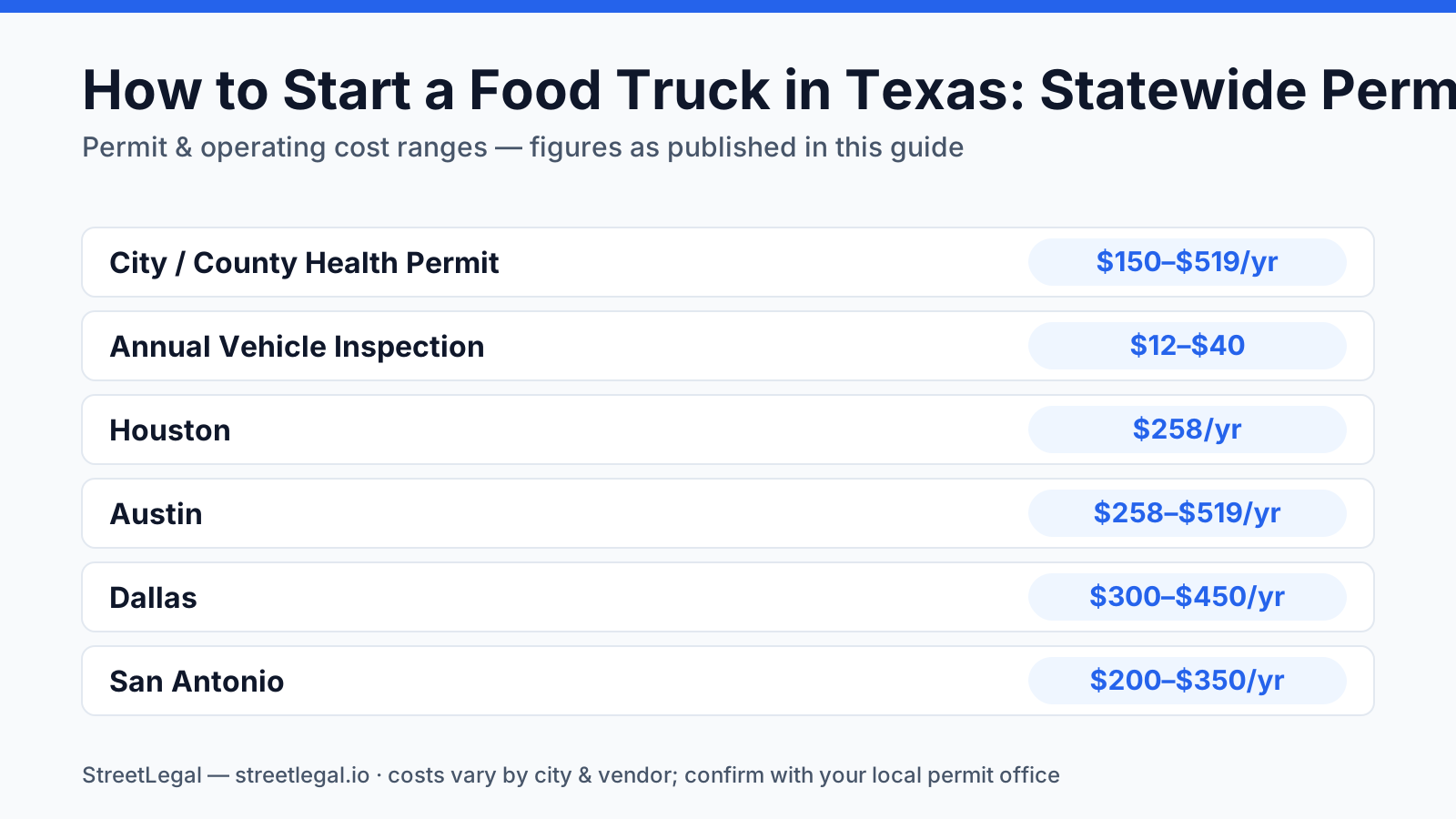
| City / County Health Permit | Local health dept (varies by city) | $150–$519/yr | Primary permit — required in every Texas city |
| TX Food Handler Certification | TXDSHS-accredited provider | $15–$30/person | All staff, every 2 years — statewide requirement |
| TX Food Manager Certification | TXDSHS-accredited provider | $80–$180/person | At least 1 person per truck, every 5 years |
| Texas Sales Tax Permit | Texas Comptroller | Free | Required before first sale; register at mycpa.cpa.state.tx.us/coa |
| Annual Vehicle Inspection | Texas DPS-licensed inspection station | $12–$40 | Standard TX safety inspection sticker, annual |
| TX Secretary of State Filing (optional) | Texas Secretary of State | $300 (LLC) | Recommended for liability protection; not strictly required |
| TXDSHS Retail Food Establishment Permit | Texas DSHS | Varies | Only required for specialized units not operating under a local health dept |
Major Texas Cities: Permit Comparison
Here is how the eight largest Texas markets compare on the metrics that matter most to an operator launching or expanding.
| City | Permit Name & Agency | Annual Fee | Timeline | Commissary Pressure | Best First Operating Model | Key Complexity |
|---|---|---|---|---|---|---|
| Houston | COHD Mobile Hot Food Dispensing (MHFD) | $258/yr | 6–8 weeks | High | Private lots, breweries, office parks | Dual jurisdiction with Harris County HCPH; Ansul system required |
| Austin | Austin Public Health (APH) Mobile Food Vendor Permit | $258–$519/yr | 4–6 weeks | Medium | Trailer parks, breweries, campus-adjacent service | Travis County dual system; highly competitive market; food trailer park model common |
| Dallas | DCHHS Mobile Food Establishment Permit | $300–$450/yr | 6–8 weeks | Medium | Corporate catering, booked events, private-property rotations | Strict 200-ft restaurant buffer enforced; Dallas County for unincorporated areas |
| San Antonio | Metro Health Mobile Food Vendor (MFV) Permit | $200–$350/yr | 4–6 weeks | Medium | Neighborhood lots, family-heavy event weekends | Fiesta season surge demand; Bexar County separate for unincorporated areas |
| Fort Worth | Tarrant County Public Health Mobile Food Unit Permit | $200–$300/yr | 4–6 weeks | Low–medium | Event vending, sports spillover, suburban activations | Tarrant County permit covers most DFW suburbs; city of Fort Worth has separate business license |
| El Paso | El Paso Dept of Public Health (EPDH) Mobile Food Unit Permit | $150–$250/yr | 3–5 weeks | Low | Neighborhood service and smaller recurring sites | Border city; TDEM fire code requirements apply; lower fee reflects smaller metro |
| Arlington | Tarrant County Public Health (same as Fort Worth) | $200–$300/yr | 4–6 weeks | Low–medium | Stadium-adjacent events and booked venue service | AT&T Stadium and Globe Life Field events require separate event vendor permits |
| Corpus Christi | Corpus Christi-Nueces County Health Dept (CCCHD) Mobile Food Unit | $150–$250/yr | 3–5 weeks | Medium | Beach-adjacent events and seasonal private-property service | Coastal/beach operating permits separate; hurricane season insurance critical |
Dual Jurisdiction Warning
Multiple Texas metros have split jurisdiction between the city and the surrounding county. The Houston/Harris County split is the most dangerous trap — Houston city limits use the COHD MHFD system; unincorporated Harris County uses a completely different HCPH permit. The same issue applies in Austin/Travis County and San Antonio/Bexar County. Know exactly which jurisdiction applies to your primary operating location before you apply.
Best Food Truck Type by Texas Market
Texas permit approval is only part of the launch decision. The better question is what truck build actually fits the market you want to enter. The same fully-built truck that works in Houston can be overkill for a first operator targeting Austin brewery loops, while a light trailer setup that works in outer-ring DFW events can struggle if your concept depends on high-volume downtown lunch service.
Use this as a market-fit layer on top of the permit tables above. It helps operators match truck type, menu, and first operating model to how each Texas market really behaves.
| Market | Best Starter Setup | Why It Fits | Best First Operating Model |
|---|---|---|---|
| Houston | Full truck with strong refrigeration and hood system | High humidity, long service windows, office lunch demand, and strong late-night volume reward a self-contained build that can handle heat and high output. | Private lots, breweries, office parks, and recurring neighborhood stops |
| Austin | Compact truck or trailer with fast menu throughput | Austin rewards lower-overhead builds that can plug into trailer parks, breweries, coffee clusters, and event-heavy traffic without overspending on a giant kitchen. | Trailer parks, brewery circuits, campus-adjacent service, and event catering |
| Dallas | Event-capable truck with disciplined parking strategy | Dallas can produce strong ticket sizes, but the restaurant buffer and location friction mean the winning setup is one built for planned stops, private events, and controlled venues. | Corporate catering, booked events, breweries, and private-property rotations |
| Fort Worth / Arlington | Flexible truck or trailer built for event traffic | This side of DFW leans harder into rodeos, sports venues, festivals, suburban pop-ups, and family events, so flexibility and mobility usually matter more than downtown lunch density. | Event vending, church/community nights, sports spillover, and suburban activations |
| San Antonio | Mid-size truck with steady family-service menu | San Antonio rewards consistency, value perception, and repeat family demand more than novelty alone, especially outside the downtown tourist core. | Neighborhood lots, event weekends, military-adjacent demand, and recurring family-heavy stops |
Best market for a first-time owner
Austin or San Antonio usually offers the cleanest path for an owner starting with a simpler concept, lower early staffing, and a trailer-first or compact-truck model.
Best market for a full kitchen truck
Houston is the strongest fit when your concept needs real production capacity, refrigeration resilience, and longer service windows.
Best market for event-first growth
Fort Worth, Arlington, and outer-ring DFW tend to reward trucks built around booked events, sports spillover, festivals, and family/community programming.
Texas Operator Goal Quick Picks
| Operator Goal | Best Texas Market | Why |
|---|---|---|
| Fastest launch path | San Antonio or Fort Worth | Lower location friction than Dallas and less system complexity than Houston's split-jurisdiction model. |
| Trailer-first budget build | Austin | Trailer parks, breweries, and lower-overhead service patterns make compact builds more viable. |
| Office-lunch / weekday volume | Houston | More recurring private-lot and office-park demand for trucks that can handle steady weekday throughput. |
| Event-first growth | Fort Worth / Arlington | Rodeos, stadium spillover, church nights, and suburban activations reward flexible event-ready setups. |
| Family-demand repeat business | San Antonio | Neighborhood-heavy patterns and family-oriented weekend demand favor dependable menus over novelty alone. |
Where You Can Actually Operate in Texas
A Texas permit is not the same thing as a guaranteed parking right. This is one of the biggest gaps in thin city guides and one of the most important SEO/helpfulness upgrades for operators. Getting licensed answers whether you can legally run the truck. It does not answer whether a site owner, zoning rule, event permit, or restaurant buffer allows you to sell at a specific place.
| Location Type | Usually Viable? | What Still Has To Be True |
|---|---|---|
| Private parking lots | Often yes | Owner permission, zoning compliance, and city-specific distance or fire-clearance rules still apply. |
| Breweries / taprooms | Often yes | Best fit in Austin, Houston, and DFW, but still depends on local site rules and event scheduling. |
| Street curbside stops | Sometimes | Meter rules, vending restrictions, downtown overlays, and local enforcement patterns vary sharply by city. |
| Festivals / sports / large events | Yes, with extra permission | Most require organizer approval and often a separate event vending permit or fire review. |
| Restaurant-adjacent parking | Risky | Dallas is especially strict with the 200-foot restaurant buffer, and other cities may enforce location-specific spacing rules. |
The safest first operating model in Texas is usually a mix of private-property service, recurring venue partners, and booked events — not pure curbside improvisation. That matters for both launch planning and truck design, because your power load, holding capacity, and menu speed should match the type of stops you can actually book.
Texas DSHS Requirements That Apply Everywhere
Even though there is no statewide food truck permit, Texas DSHS sets certification standards that apply across all Texas cities and counties. These apply regardless of which city you operate in:
Texas Food Handler Certification
Every employee who handles food — prepares, packages, serves, or handles unpackaged food — must hold a valid Texas Food Handler Certificate from a TXDSHS-accredited provider.
- Cost: $15–$30 per person (online or in-person courses)
- Validity: 2 years, then must renew
- Providers: ServSafe, National Registry of Food Safety Professionals (NRFSP), StateFoodSafety, and others — must be TXDSHS-accredited
- Important: This certification renews on a different cycle than your city health permit — track both separately
Texas Certified Food Manager (CFM)
At least one person per food truck must hold a Certified Food Manager certificate. This is a higher-level certification than the basic food handler cert.
- Cost: $80–$180 per person (exam + study materials)
- Validity: 5 years
- Accepted programs: ServSafe Manager, NRFSP, Prometric (National Restaurant Association approved), and TXDSHS-approved equivalents
- Note: The CFM does not replace the food handler certification — both are required
TXDSHS Retail Food Establishment Permit
Most standard food trucks operating under a city or county health department permit are exempt from the TXDSHS Retail Food Establishment permit. This state-level permit applies primarily to specialized food units that are not regulated at the local level — for example, trucks operating exclusively in state parks or other areas outside normal municipal jurisdiction. If you have a city or county health permit, you almost certainly do not need this TXDSHS permit as well.
Annual Texas Vehicle Inspection
Your food truck vehicle must have a current Texas safety inspection sticker (annual). This is separate from the health inspection. Cost: $12–$40 at any Texas DPS-licensed inspection station.
Texas Commissary Rules
Texas requires all food trucks to operate from an approved commissary kitchen. This is not optional and there are no exceptions for trucks that claim to do all their prep on-site. The commissary is where you:
- Prep food before hitting the road
- Store food and equipment between service periods
- Clean and sanitize equipment at the end of each day
- Dump wastewater (greywater) through approved drains
- Replenish fresh water supply
Commissary Must Match Your Permit Jurisdiction
This is the rule that trips up operators who move between cities. If you operate in Houston city limits, your commissary must be licensed by COHD — not Harris County Public Health and not Austin Public Health. If you switch your primary operating city, you may need to switch commissaries. Always verify your commissary holds a permit from the same health authority that will issue your truck permit.
Texas Commissary Kitchen Costs by Market
| Market | Monthly Range | Notes |
|---|---|---|
| Houston | $300–$900/mo | 60+ licensed commissaries; competitive market |
| Austin | $400–$700/mo | High demand; book early, especially in East Austin |
| Dallas/Fort Worth | $250–$600/mo | Growing market; options increasing in suburbs |
| San Antonio | $250–$500/mo | Lower cost market; strong commissary availability |
| El Paso / Corpus Christi | $200–$400/mo | Smaller markets; fewer options but lower rates |
Pro Tip: Secure Your Commissary First
Your commissary agreement is the first document every Texas health department will ask for in your permit application. Secure your commissary before you start the permit process — not after. Popular commissaries in Houston, Austin, and Dallas fill up quickly in spring and summer. Starting your search 30–60 days before you plan to apply is smart.
Texas Sales Tax Registration
Every Texas food truck operator must register with the Texas Comptroller of Public Accounts for a Sales and Use Tax Permit. Registration is free and done entirely online at mycpa.cpa.state.tx.us/coa.
What Is Taxable for Texas Food Trucks?
This distinction is critical and many new operators get it wrong:
- Food sold for immediate consumption IS taxable in Texas — this is most food truck food (tacos, burgers, plates, drinks)
- Unprepared groceries and food staples are NOT taxable — raw ingredients sold for home preparation are generally exempt
- Soft drinks and candy are taxable even if not "prepared food"
- If more than 50% of your items require eating utensils to consume, all your food sales are taxable
Current combined state and local sales tax rate in major Texas cities: Houston (8.25%), Austin (8.25%), Dallas (8.25%), San Antonio (8.25%). Texas state rate is 6.25%; city/county rates add up to 2.0% more.
Register Before Your First Sale
You are required to have your Texas Sales Tax Permit in hand before you make your first sale. Operating without one and collecting sales tax (or not collecting it when required) puts you in violation of the Texas Tax Code. Registration processes quickly — typically within 2–7 business days online.
Texas Fire Safety Requirements
Fire safety requirements for food trucks in Texas are enforced at the city level by each city's fire marshal's office. There is no single Texas state fire code for food trucks — but most major Texas cities follow NFPA standards closely.
What Most Texas Cities Require
- Ansul/K-Class suppression system: Required in any Texas food truck that uses a grease-producing cooking appliance (fryers, grills, griddles, flat-tops, woks). The suppression system must be tagged by a certified technician — typically within the last 6 months
- Type I commercial exhaust hood: Required over any grease-producing equipment
- K-Class fire extinguisher: For cooking with grease; minimum 2A:10B:C for general use
- Propane system compliance: NFPA 58 standards apply; secured tanks, proper regulators, shutoff valves, no hidden connections
- LP gas connectors: Flexible connectors maximum 6 feet; must be accessible for inspection
Fire Inspection by Major City
| City | Fire Authority | Inspection Fee | Notes |
|---|---|---|---|
| Houston | Houston Fire Department (HFD) | $89–$194 | Required before COHD issues MHFD; annual renewal |
| Austin | Austin Fire Department (AFD) | $89–$180 | Inspection typically coordinated with APH permit process |
| Dallas | Dallas Fire-Rescue Fire Marshal's Office (FMO) | $75–$150 | FMO inspects suppression systems; annual certification |
| San Antonio | San Antonio Fire Department | $75–$150 | Fire certificate required for full Metro Health permit issuance |
| Fort Worth / Arlington | Fort Worth Fire Department / Tarrant County | $50–$125 | Tarrant County permit applicants coordinate fire inspection separately |
Service Your Ansul System Before You Apply
The single most common reason Texas food truck operators fail their fire inspection is an unserviced Ansul suppression system. Budget $150–$350 for a certified technician to inspect, recharge if needed, and tag the system. Book this before you submit your health permit application — not after your fire inspection is already scheduled.
Step-by-Step Texas Food Truck Launch Checklist
Secure Your Commissary Kitchen
Find a licensed commissary kitchen in the same jurisdiction where you plan to operate. Sign a commissary agreement that includes the kitchen's permit number, your access hours, and wastewater disposal access. Budget $250–$600/month. This is the first step — no permit application moves without it.
Get TXDSHS Food Safety Certifications
Every staff member who handles food needs a Texas Food Handler Certificate ($15–$30, 2-year renewal). At least one person needs a Certified Food Manager certificate ($80–$180, 5-year renewal). Both must be from TXDSHS-accredited providers. Have these in hand before your health permit inspection.
Service Your Ansul System
If you cook with grease-producing equipment, have your Ansul/K-Class fire suppression system professionally inspected and tagged ($150–$350). This must be done before your fire marshal inspection. Do not skip this step — it is the leading cause of fire inspection failures in Texas.
Apply for Your City/County Health Permit
Submit your application to the relevant health authority for your primary operating city. Include your commissary agreement, food safety certifications, vehicle information, equipment list, and menu. Schedule your inspection date at the same time as submitting — slots fill up 2–3 weeks out in busy markets.
Pass Fire Marshal Inspection
Schedule and pass your city fire marshal inspection. This runs in parallel with the health department process. Have your Ansul system tag, K-Class extinguisher, and propane system ready for review. Fire inspection fee: $50–$194 depending on city.
Register for Texas Sales Tax Permit
Register with the Texas Comptroller at mycpa.cpa.state.tx.us/coa. Free. Must be done before your first sale. Takes 2–7 business days to process online. Food sold for immediate consumption is taxable at 8.25% in major Texas cities.
Register Your Business Entity (Recommended)
File for an LLC with the Texas Secretary of State ($300) for liability protection. Get an EIN from the IRS (free, online). Sole proprietors using a trade name file a DBA (assumed name) with their county clerk. This can be done in parallel with the health permit process.
Get Your Annual Vehicle Inspection
Get a current Texas safety inspection sticker ($12–$40). Health department inspectors will check for this. Annual renewal required.
First-Year Cost Breakdown (Texas)
| Cost Item | Low | High | Notes |
|---|---|---|---|
| TXDSHS Food Handler Certs (3 staff) | $45 | $90 | $15–$30/person; renew every 2 years |
| Certified Food Manager Certificate | $80 | $180 | 1 required per truck; renew every 5 years |
| City / County Health Permit | $150 | $519 | Varies by city; see comparison table above |
| Fire Inspection Certificate | $50 | $194 | Varies by city; annual renewal |
| Ansul System Service | $150 | $350 | Required before fire inspection; annual |
| Commissary Kitchen (12 months) | $3,000 | $10,800 | $250–$900/mo depending on market and usage type |
| Texas Sales Tax Permit | Free | Free | Texas Comptroller; no charge to register |
| TX Secretary of State LLC Filing | $300 | $300 | Optional but strongly recommended |
| Vehicle Inspection | $12 | $40 | Annual TX inspection sticker |
| Commercial Insurance | $1,800 | $3,600 | GL + vehicle + product liability; higher for coastal TX |
| Total First Year (Texas) | ~$5,587 | ~$16,073 | Commissary cost is the biggest variable |
Common Mistakes Texas Food Truck Operators Make
Assuming one county permit covers the whole metro area
The Houston/Harris County trap: operators who get a Houston MHFD permit think they are covered across the metro. They are not. Unincorporated Harris County (Katy, Pasadena, Sugar Land areas) requires a separate HCPH Mobile Food Unit permit. This same issue applies in Austin (Travis County), San Antonio (Bexar County), and Dallas (Dallas County). Know your exact jurisdiction before you apply.
Confusing TXDSHS cert renewal dates with city permit renewal dates
Your city health permit renews annually. Your food handler cert renews every 2 years. Your food manager cert renews every 5 years. These cycles are completely independent — you can have a current city permit but expired TXDSHS certs, which is still a violation. Track all three renewal schedules in a calendar with alerts.
Forgetting to register for sales tax before opening
Texas law requires a sales tax permit before you make your first taxable sale. Operating without one — even for a single day at a pop-up event — is a violation. Registration is free and fast. There is no excuse for missing this step. Complete it before you finalize your launch date.
Choosing a commissary that isn't licensed by the right health authority
If you plan to operate in Houston city limits but your commissary is licensed by Harris County Public Health (not COHD), your Houston MHFD application will be rejected. The commissary's health permit must come from the same authority that will issue your food truck permit. Always verify the permit number and issuing authority before signing a commissary contract.
Operating in Dallas within 200 feet of a brick-and-mortar restaurant
Dallas enforces a strict 200-foot restaurant buffer rule. If you park within 200 feet of a licensed brick-and-mortar restaurant, you are in violation. This is one of the strictest restrictions in Texas. Scout any Dallas operating location carefully before committing to it.
Texas-Specific Tips Most Guides Miss
1. Texas Summer Heat Is a Food Safety Risk — Plan for It
Texas summer temperatures regularly hit 95–105°F for weeks at a time. This puts real stress on refrigeration systems and dramatically accelerates bacterial growth. Pre-chill ingredients more aggressively before loading. If your reach-in refrigerator is more than 5 years old, consider upgrading before summer. Health inspectors in Houston, Austin, and Dallas check cold-holding temperatures more rigorously during summer months.
2. Coastal Texas Operators Need Hurricane and Storm Insurance
If you operate in Houston, Corpus Christi, Galveston, or anywhere along the Texas Gulf Coast, standard commercial food truck insurance may not cover storm damage, wind damage to equipment, flood, or business interruption from a named storm. Talk to your broker specifically about Named Storm and flood coverage before June 1 each year — hurricane season runs June through November.
3. Houston Has No Zoning — But Deed Restrictions Are Everywhere
Houston is famous for having no traditional zoning laws, which sounds like a food truck paradise. The reality is that private deed restrictions (covenants attached to property deeds) fill the gap. Many older Houston neighborhoods have deed restrictions that prohibit commercial food service on private lots. Before securing any regular operating location in Houston, ask the property owner to check their deed restrictions or consult a Texas real estate attorney.
4. San Antonio Fiesta Season Is a Major Opportunity
San Antonio's Fiesta (typically April) is one of the largest festival events in Texas — 11 days, 100+ events, millions of attendees. Food truck operators who are fully permitted before Fiesta season can capture massive revenue. But commissary spots get booked out early. If you plan to launch in San Antonio, aim to have your Metro Health MFV permit in hand at least 6–8 weeks before Fiesta begins.
5. Austin's Food Trailer Park Model Is Different from a Mobile Operation
Austin has pioneered the food trailer park model — semi-permanent trailers parked at a fixed location, often with shared seating and utilities. This model has different operational and sometimes regulatory implications compared to a standard mobile food truck. If you are considering the trailer park model in Austin, verify with Austin Public Health whether you will be treated as mobile or semi-permanent, as this can affect your permit category and fee tier.
Texas Food Truck Permit FAQ
Do I need a Texas state food truck permit?
Is there one permit that works across all Texas cities?
Do food trucks in Texas need a commissary kitchen?
How much does it cost to get a food truck permit in Texas?
What TXDSHS certifications do I actually need?
Official Resources — Verify Current Requirements
- City of Houston Health Dept (COHD) — MHFD permit application and forms
- Austin Public Health (APH) — Mobile Food Vendor Permit
- Dallas County Health and Human Services (DCHHS) — Mobile Food Establishment Permit
- San Antonio Metro Health — Mobile Food Vendor (MFV) Permit
- Texas DSHS Food Establishments — State-level information and certification providers
- Texas Comptroller — Sales Tax Permit Registration — Free, required before first sale
Fees and timelines shown reflect 2026 figures. Always confirm current requirements with each agency before filing.
City-by-City Texas Food Truck Guides
Ready to go deep on a specific Texas city? Each guide covers the exact permit process, fees, inspection checklist, and city-specific rules for that market.
Answers to the most common permit questions — costs, timelines, commissary rules, and more.
Find city-level permit guides for every state we cover — compare costs and requirements.
More from the blog
Food Truck POS Systems: Square vs. Toast vs. Clover vs. Avocado (2026)
Real 2026 pricing, hardware costs, offline mode, and contract terms for Square, Toast, Clover, and Avocado — compared specifically for food truck operators.
City GuidesEagan, MN Food Truck Permit Guide
Eagan MN food truck permit guide: MDH mobile food licensing, Dakota County food safety, city peddler rules, commissary records, costs, and launch timeline.
City GuidesBentonville, AR Food Truck Permit Guide
Complete guide to food truck permits, fees, and requirements in Bentonville, AR.
City GuidesBiloxi, MS Food Truck Permit Guide
Biloxi food truck permit guide 2026: licenses, health permit steps, commissary records, inspections, costs, renewal timing, and launch checklist.