
Use this as a starting point, then confirm before filing
This guide cites official public sources; no direct municipal response is displayed for this guide.
Informational only — not legal advice. Confirm requirements with the city before you apply. See our Disclaimer.
How to Start a Food Truck in San Antonio: Complete Permit Guide 2026
— permit requirements, Texas market comparison, and operating-lane guidance verified current.
San Antonio is one of Texas's most food-truck-friendly cities — a massive population, a booming tourist economy, and a culture that genuinely embraces street food. Getting licensed here means working through Bexar County health permitting and the City of San Antonio's business and vending rules. This guide covers every permit you need, the real fees, commissary requirements, and where you can legally set up.
Texas Disclaimer
Food truck regulations in San Antonio are administered by the City of San Antonio Metro Health Department, Bexar County, and the Texas Department of State Health Services. Requirements and fees change periodically. Always verify current rules directly with each agency before applying.
The San Antonio Food Truck Licensing Landscape
San Antonio's food truck permitting is primarily managed by the City of San Antonio Metropolitan Health District (Metro Health), which handles both city and county health permits for most operators. Texas is relatively operator-friendly at the state level — the main state requirement is a Texas Food Handler certification for all staff.
- City of San Antonio Metro Health — Mobile food vendor permit (the core health/operating permit)
- City of San Antonio Development Services — Business license and public right-of-way permits
- San Antonio Fire Department (SAFD) — Fire safety inspections for cooking equipment with open flame or propane
- Texas Comptroller — Texas Sales and Use Tax permit (required to collect sales tax)
What Licenses Do You Actually Need?
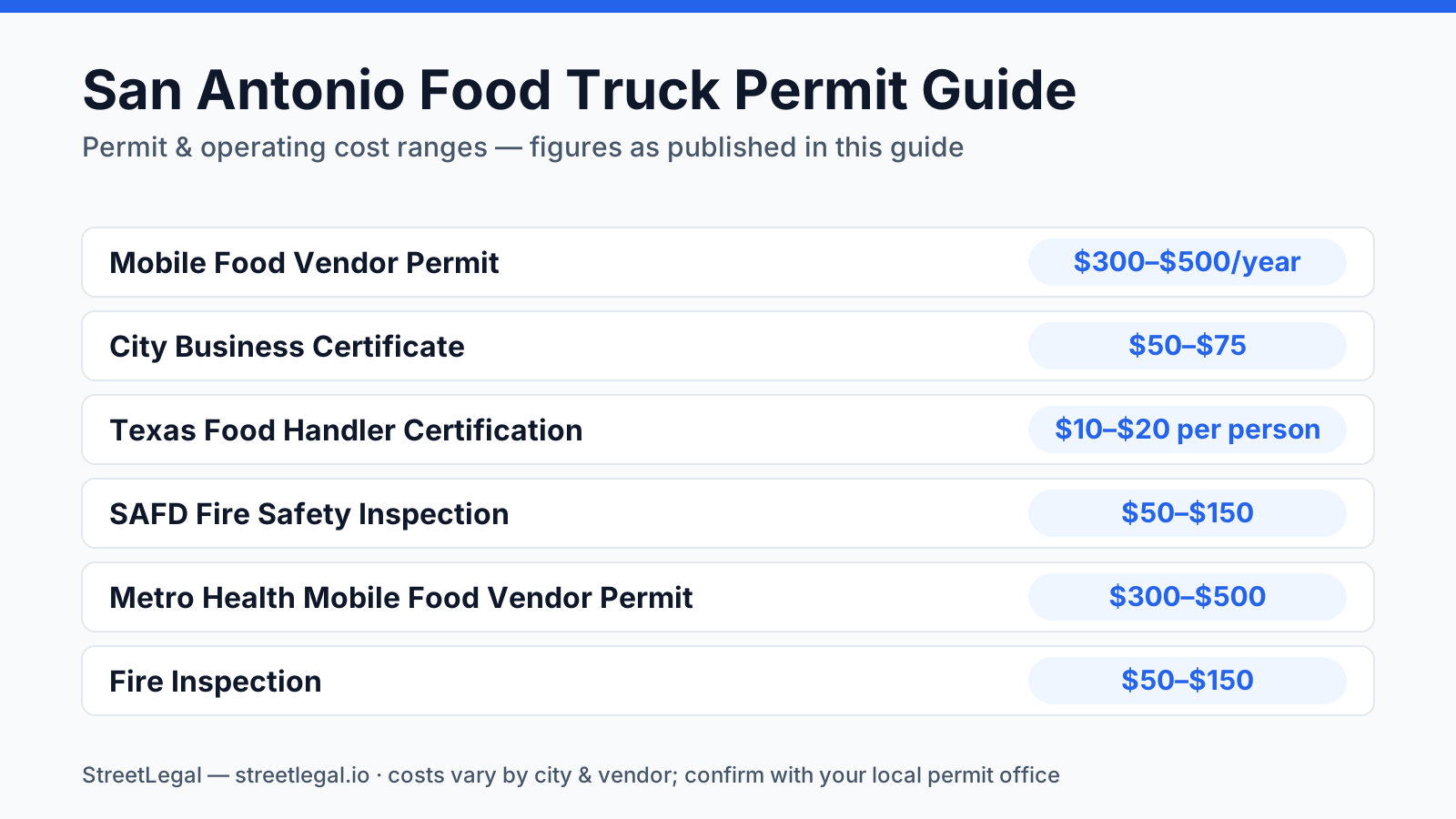
| License / Permit | Issuing Authority | Fee | Renewal |
|---|---|---|---|
| Mobile Food Vendor Permit | City of San Antonio Metro Health | $300–$500/year | Annually |
| City Business Certificate | City of San Antonio | $50–$75 | Annually |
| Texas Sales Tax Permit | Texas Comptroller (online) | Free | Permanent (file returns) |
| Texas Food Handler Certification | DSHS-approved provider | $10–$20 per person | Every 2 years |
| SAFD Fire Safety Inspection | San Antonio Fire Department | $50–$150 | Before permit, then annually |
| Public ROW/Vending Permit | City of San Antonio Transportation | Varies | Per location or event |
The Metro Health Mobile Food Vendor Permit — Your Core Permit
The City of San Antonio Metro Health Department issues the Mobile Food Vendor permit, which is required to legally sell food from a truck anywhere within city limits. The process:
Step 1: Commissary Agreement
All San Antonio food trucks must use a licensed commissary. San Antonio Metro Health requires proof of commissary at permit application time. Your commissary must be a licensed food establishment that provides:
- Daily food prep and storage access
- Potable water supply for tank refills
- Approved wastewater disposal
- Grease trap or approved grease disposal
- Equipment cleaning and sanitizing facilities
Step 2: Truck Inspection
Metro Health will schedule a physical inspection of your truck. Key requirements:
- Handwashing sink with soap and paper towels, hot/cold running water
- Three-compartment sink for wash, rinse, sanitize
- Food temperature control equipment (refrigerator, hot holding units)
- Fresh water tank (minimum 30 gallons for full-service operations)
- Wastewater tank 15% larger than fresh water capacity
- Proper food covering and sneeze guards
- Certified food manager on staff (Texas Food Manager Certification)
Step 3: Fire Inspection
The San Antonio Fire Department inspects trucks that use propane or open-flame cooking. Requirements include:
- UL-300 Type K fire suppression system for cooking equipment
- Propane tank mounting, shutoff valves, and connection integrity
- Ventilation hood and exhaust clearances
- Dry-chemical fire extinguisher (2.5 lb minimum, accessible)
Step 4: Apply and Pay
Apply at the Metro Health Environmental Health Division office at 1901 S. Alamo Street. Bring:
- Completed mobile food vendor application
- Commissary agreement (signed, dated, on commissary letterhead)
- Menu listing all food and beverage items
- Food manager certification (Texas requirement)
- Texas Food Handler certifications for all employees
- Fire inspection approval letter
- Vehicle registration
Commissary Requirements in San Antonio
San Antonio has a growing shared kitchen and commissary market. Monthly costs typically run $250–$700/month depending on access level and services. Key considerations:
What your commissary agreement needs to show Metro Health:
- The commissary's licensed facility name and permit number
- Your truck's specific access hours
- What services are provided (water, storage, waste disposal)
- Signature from the commissary operator
Note: Texas does allow some food trucks to operate without a commissary if they are self-sufficient (fully enclosed, on-board prep only, with adequate tanks). Talk to Metro Health directly about whether your specific operation qualifies for the self-contained exception.
Where Can You Operate in San Antonio?
Private Property
The easiest path. Operating on private property with owner permission only requires your Metro Health permit and business certificate. No additional city vending permit needed. This covers parking lots, private events, office campuses, and brewery lots.
Public Streets and Sidewalks
Vending on public rights-of-way requires a Right-of-Way Use Permit from the City of San Antonio Transportation and Capital Improvements Department. Key rules:
- Cannot block pedestrian access (must maintain 4-foot clear path on sidewalks)
- Cannot operate within 20 feet of a crosswalk or intersection
- The River Walk and downtown core have specific vending restrictions managed by the San Antonio River Authority and city parks
- No vending within sight of certain historic districts without a special permit
City Parks and Events
Vending in city parks requires a permit from the San Antonio Parks and Recreation Department. For Fiesta and major events, the San Antonio Fiesta Commission and individual event organizers manage vending assignments — you'll need your Metro Health permit to qualify.
Where you can actually operate in San Antonio
San Antonio is not just a permit market. It is a relationship and operating-lane market. A founder can be fully legal and still struggle if the truck is built for the wrong lane or if the plan assumes unlimited curb freedom.
| Operating lane | Permit alone enough? | Access reality | Best truck fit |
|---|---|---|---|
| Private lots | Usually close | Best starter lane if the property owner wants recurring service. | Compact or mid-size truck |
| Breweries and bars | No | Usually relationship-driven with scheduling and menu fit pressure. | Fast-service savory or late-night truck |
| Fiesta and major events | No | Strong demand, but access is organizer-controlled and often books far ahead. | High-throughput event truck |
| Military and office lunch stops | No | Good repeat revenue if you can win vendor approval and keep timing tight. | Reliable lunch-service truck |
| Downtown / public ROW | Rarely | Extra right-of-way limits, pedestrian rules, and location friction make this harder than founders expect. | Small footprint truck |
| Neighborhood pop-ups | Sometimes | Works well when paired with HOAs, churches, schools, and family event hosts. | Family-friendly truck or dessert trailer |
Best food truck types for San Antonio in 2026
San Antonio usually rewards trucks that can handle heat, move through event and private-lot demand, and serve broad family-friendly traffic without overbuilding the kitchen. This is a market where practical fit often beats the most expensive rig.
| Truck type | San Antonio fit | Why it works | Best first lane |
|---|---|---|---|
| Taco / Tex-Mex truck | Excellent | Natural local demand, strong lunch and event fit, and flexible menu engineering. | Private lots and lunch stops |
| BBQ sandwich / smoked-meat truck | Strong | Works well for family events, tourist zones, and higher-ticket weekend demand. | Events and community nights |
| Dessert / paleta / churro trailer | Strong | Hot climate, family traffic, and Fiesta/event demand make dessert concepts attractive. | Neighborhood and event vending |
| Burger / hot chicken truck | Strong | Fast service and broad appeal play well in bars, breweries, and evening demand. | Breweries and nightlife |
| Large chef-driven full kitchen | Mixed | Can work, but heavier equipment, fire complexity, and fixed costs create more launch pressure. | Booked events and catering |
San Antonio vs Other Texas Markets
San Antonio makes more sense when founders compare it against the rest of Texas instead of treating it as an isolated permit problem. The table below shows how San Antonio stacks up against Houston, Austin, Dallas, and Fort Worth for launch friction, best first revenue lane, and truck fit.
| Market | Launch Friction | Best First Revenue Lane | Best First Truck Fit | Why It Matters |
|---|---|---|---|---|
| San Antonio | Low-Medium | Neighborhood + family events | Taco/BBQ/dessert trailer | Strong family demand, lower density than Houston, good mix of cultural food + events |
| Houston | Low | Office lunch + breweries | Broad-menu full kitchen truck | Best Texas baseline for scale, menu range, and proving demand before expanding |
| Austin | Low-Medium | Brewery residencies | Smaller trailer / specialized concept | Best for trailer-first and specialized concepts; brewery partnerships are strong |
| Dallas | Medium-High | Private sites + booked events | Event-ready polished truck | Higher friction than Houston, but strong event and private-property demand in DFW |
| Fort Worth | Medium | Private lots + community events | BBQ / comfort food truck | Lower cost than Dallas, good for operators who want DFW metro reach at lower friction |
For deeper Texas state-layer comparison, review the Texas food truck permit hub, Houston guide, Dallas guide, and Fort Worth guide.
Total First-Year Cost Estimate
| Cost Item | Estimated Range |
|---|---|
| Metro Health Mobile Food Vendor Permit | $300–$500 |
| City Business Certificate | $50–$75 |
| Texas Sales Tax Permit | Free |
| Fire Inspection | $50–$150 |
| Food Handler + Manager Certifications | $50–$150 |
| Commissary (monthly × 12) | $3,000–$8,400 |
| Total First-Year Compliance Cost | $3,450–$9,275 |
Realistic Permitting Timeline
Weeks 1–2: Entity and tax setup
Register your LLC with the Texas Secretary of State ( $308 online). Apply for Texas Sales Tax permit at Texas Comptroller site (free, 3–5 days). Find and sign commissary agreement.
Weeks 3–4: Truck readiness
Verify all required sinks, tanks, and cooking equipment. Get food handler + food manager certifications completed for all staff.
Week 5: Fire inspection
Schedule SAFD inspection. Allow 2 weeks for scheduling. Receive fire inspection approval letter.
Week 6–7: Metro Health application and inspection
Submit application in person at 1901 S. Alamo. Schedule truck inspection with Metro Health (typically 1–2 weeks out). Pass inspection and receive your permit.
Week 8: Business certificate and you're ready
Apply for city business certificate at Development Services. Permit typically issues in 5–10 business days. You're cleared to operate.
San Antonio Operator Tips
Fiesta season is a major revenue opportunity
San Antonio's annual Fiesta (April) draws 3+ million visitors and is one of the best food truck revenue events in Texas. Apply for event vending permits well in advance — popular spots fill up 6+ months ahead.
Military base opportunities are real
San Antonio is home to multiple large military installations (JBSA Lackland, Fort Sam Houston, Randolph). Some bases allow food truck vendors for lunch service. Each base has its own vendor application process — worth pursuing for stable weekday revenue.
Texas food manager vs. food handler — know the difference
Texas requires at least one certified Food Manager (a proctored exam like ServSafe) per permitted establishment — this is separate from the basic Food Handler certification all staff need. Budget for both when getting your team ready.
People also ask about San Antonio food truck permits
How much does a food truck permit cost in San Antonio?
How long does it take to get a food truck permit in San Antonio?
Do I need a commissary kitchen to operate a food truck in San Antonio?
What documents do I need for a San Antonio food truck permit?
Answers to the most common permit questions — costs, timelines, commissary rules, and more.
Find city-level permit guides for every state we cover — compare costs and requirements.
More from the blog
Jefferson County, MO Food Truck Permit Guide
Complete guide to food truck permits, fees, and requirements in Jefferson County, MO.
City GuidesSt. Charles County, MO Food Truck Permit Guide
Complete guide to food truck permits, fees, and requirements in St. Charles County, MO.
City GuidesSt. Louis County, MO Food Truck Permit Guide
Complete guide to food truck permits, fees, and requirements in St. Louis County, MO.
Buyer's GuideFood Truck POS Systems 2026: Square, Toast, Clover & Avocado
Compare 2026 food truck POS systems by pricing, hardware costs, offline mode, and contract terms for Square, Toast, Clover, and Avocado.