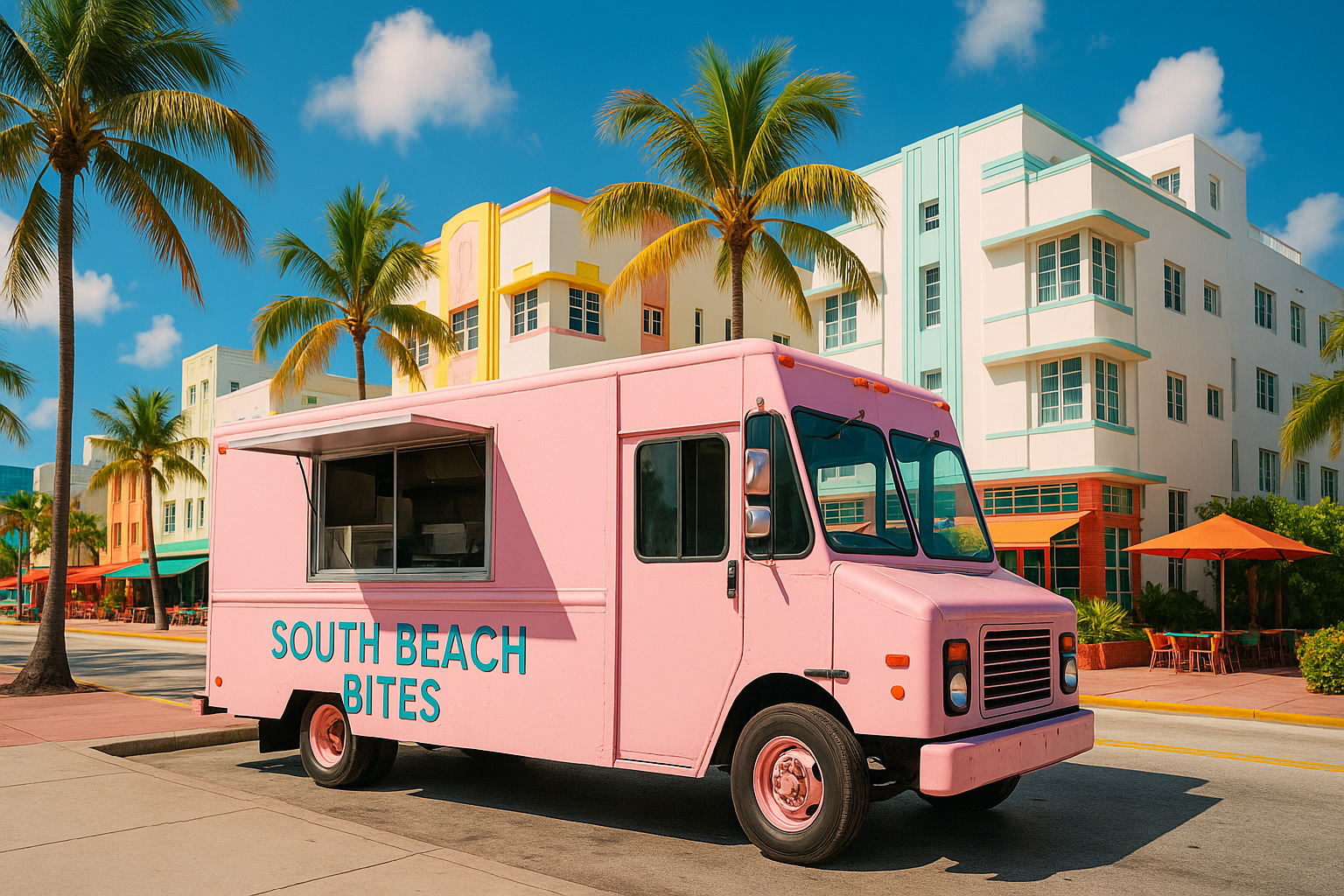
How to Get a Food Truck Permit in Miami (2026 Guide)
Updated August 12, 2026 — permit fees, commissary rules, operating lanes, best truck types, and Florida market comparison reviewed and current.
Miami is one of the top food truck markets in the country — warm weather year-round, a massive tourist economy, a festival-dense calendar, and a food culture that embraces everything from Cuban sandwiches to Caribbean fusion. Operating a food truck legally in Miami means navigating permits from the Florida DBPR, Miami-Dade County, and sometimes the City of Miami itself. This 2026 guide breaks down exactly what you need, what it costs, and which lanes actually generate revenue once permits are in hand.
Miami food truck permit snapshot (2026)
Full permit sequence for a new food truck launching in Miami, FL. Get your commissary agreement first — DBPR requires it before they'll process your application.
| Step | Agency | Permit / License | Fee | Timeline | Sequence note |
|---|---|---|---|---|---|
| 1 | Private DBPR-licensed facility | Commissary agreement | $400–$900/mo | 1–2 weeks to find + sign | First — required for DBPR application |
| 2 | FL DBPR | Mobile Food Dispensing Vehicle (MFDV) license | $100–$300/yr | 6–10 weeks (plan review + inspection) | Core statewide license; covers all FL cities |
| 3 | FL Dept. of Revenue | Sales Tax Dealer Certificate | Free | 1 week (online) | Register before first sale; 7% rate in Miami-Dade |
| 4 | Miami-Dade Tax Collector | County Business Tax Receipt (BTR) | $50–$150/yr | 1–2 weeks | After DBPR approval; required for county operation |
| 5 | City of Miami Finance Dept. | City BTR (if vending in City of Miami limits) | $50–$150/yr | 1–2 weeks | Only required if operating inside City of Miami; separate from county |
| 6 | Fire inspector / installer | Fire suppression system + Class K extinguisher cert | $200–$600 one-time | 2–4 weeks (install + cert) | Required at DBPR inspection if cooking with open flame/fryer |
Core Permits & Licenses
1. Florida DBPR Mobile Food Dispensing Vehicle License
The Florida Department of Business and Professional Regulation (DBPR) issues the Mobile Food Dispensing Vehicle (MFDV) license — the foundational state permit that covers your truck throughout Florida. This is the equivalent of a statewide food service license for mobile operators.
- Apply through the DBPR online portal (MyFloridaLicense.com)
- Plan review required for new trucks or significant equipment changes
- Inspection by a DBPR inspector before license is issued
- Commissary agreement required from a licensed Florida food establishment
- License fee: $100–$300/year depending on operation type
- Annual renewal — October 1 deadline statewide
Key advantage: Your Florida MFDV license is valid statewide. Once licensed in Miami-Dade, you can legally operate in Orlando, Tampa, Jacksonville, and anywhere else in Florida without a separate state license — though local municipal BTRs still apply.
2. Miami-Dade County Business Tax Receipt (BTR)
Miami-Dade County requires a Business Tax Receipt for any business operating in the county. Apply through the Miami-Dade Tax Collector's Office.
- Fee: $50–$150 depending on business type
- Annual renewal — October 1
- Required even if your primary DBPR license is already in hand
3. City of Miami Business Tax Receipt
Miami-Dade County and the City of Miami are separate jurisdictions. If you regularly operate within City of Miami limits, you need a City BTR in addition to the county BTR. Apply through the City of Miami Finance Department.
Miami Beach, Coral Gables, Hialeah, and other municipalities each require their own BTR for vending within their borders. Check which municipality you plan to work in most frequently and confirm their specific requirements.
4. Florida Sales Tax Registration
Register with the Florida Department of Revenue to collect and remit Florida sales tax (6% + Miami-Dade 1% county surtax = 7% total). Prepared food is taxable. Free to register at floridarevenue.com.
Commissary Requirements in Miami
Florida DBPR requires all food trucks to operate from a licensed commissary for food prep, storage, cleaning, and waste disposal. In Miami, finding a good commissary is one of the highest-friction steps — demand is high and quality facilities book up fast.
- Cost range: $400–$900/month depending on location, storage, and access hours
- What to look for: DBPR-licensed facility, cold storage, potable water hookup, grey water dump station, and prep space that matches your menu
- Key mistake: Signing a commissary agreement before verifying the facility's DBPR license is current — an expired commissary license will fail your MFDV inspection
- Self-contained trucks: Even if your truck can handle all prep on-board, Florida still requires a commissary agreement for potable water fill and grey water disposal
- Lead time: Start commissary search 4–6 weeks before your DBPR application date — waitlists are common in popular Miami neighborhoods
Health & Food Safety Requirements
- Food Manager Certification: Florida requires a Certified Food Manager for each establishment. ServSafe and equivalent Florida-approved certifications accepted.
- Temperature control: Cold TCS foods ≤41°F, hot TCS foods ≥135°F. Miami's heat and humidity make cold chain management critical — verify your refrigeration handles Florida summer conditions.
- Handwashing station: Dedicated sink with hot/cold water, soap, and paper towels required. Cannot be shared with food prep or warewashing sinks.
- Three-compartment sink: Required for on-truck dishwashing. If your commissary handles all warewashing, document this explicitly in your commissary agreement.
- Potable water: Fresh water tank required. Grey water must be contained and dumped at commissary or approved dump station — never on the street.
- Pest and vector control: Miami's subtropical climate makes pest control non-negotiable. Inspectors check for gaps, screens, and evidence of pest activity.
- Fire suppression: Required for open-flame cooking and fryers. Class K extinguisher required if operating a fryer. Ansul or equivalent system must be professionally inspected and tagged.
Where You Can Actually Operate in Miami
Permit approval alone does not give you access to most high-revenue Miami locations. Here's the reality by operating lane:
| Operating lane | Permit alone enough? | Access reality | Best truck fit |
|---|---|---|---|
| Wynwood arts district | No — Wynwood BID coordination required | Strong Fri–Sun foot traffic; must work with BID for designated spots; popular Art Walk nights | Latin cuisine, specialty/upscale, fusion |
| Brickell / Downtown corporate lunch | No — private lot landlord approval required | Strong weekday demand; no public street spots; building management approval essential | Gourmet lunch, fusion, coffee cart |
| Coconut Grove / waterfront | No — event coordination or park permit needed | Weekend and evening focus; moderate foot traffic; CocoWalk area events | Seafood, dessert, upscale fusion |
| Miami Beach (Ocean Dr / Lincoln Rd) | No — Miami Beach BTR + separate city permits required | Very restricted public vending; event-only access realistic; Miami Beach is a separate jurisdiction | Upscale, seafood, Latin — high price point |
| Private property / brewery pop-ups | No — written landowner permission required (no separate city permit) | Best access reality; written permission is sufficient; Wynwood breweries a strong lane | Any type — taco, BBQ, dessert, upscale all work |
| Art Basel / Calle Ocho / major events | No — event producer application required months in advance | Massive revenue potential but competitive application process; apply 6+ months early | Any — premium events favor upscale and Latin/Cuban concepts |
| Hialeah / Little Havana neighborhoods | Yes — with county BTR + MFDV (municipal BTR if in those city limits) | Good neighborhood demand; lower competition than Wynwood; strong Cuban/Latin food culture | Cuban/Latin, taco, affordable quick-service |
Best Food Truck Types for Miami (2026)
Miami's food culture, tourism economy, and event calendar favor specific truck concepts. Cuban/Latin and upscale fusion dominate the premium market; event-flex setups have the highest revenue ceiling.
| Truck type | Miami market fit | Commissary pressure | Event flexibility | Rationale |
|---|---|---|---|---|
| Cuban / Latin cuisine truck | Excellent | Medium | High | Cultural demand in Little Havana, Hialeah; strong Art Basel + Calle Ocho fit; authentic cuisine commands premium pricing |
| Upscale fusion / seafood truck | Excellent | High | High | Brickell corporate lunch, Miami Beach events, Art Basel catering; high average ticket; tourist economy supports premium pricing |
| Taco / Mexican street food truck | Very good | Medium | High | Strong street food culture across Miami; Wynwood events; fast service model works well for high-volume event days |
| Specialty coffee / espresso cart | Good | Low | Very high | Brickell morning rush, corporate campus catering, Art Basel pop-up coffee; low prep complexity; high daily margin per cup |
| Dessert / ice cream truck | Good | Low | Very high | Year-round warm weather drives demand; beach events, family markets, Wynwood; lower fire inspection risk (no fryer/grill) |
| BBQ / smoked meats trailer | Good | Medium | Medium | Private lot events, brewery partnerships, Wynwood weekends; BBQ is less dominant than in TX markets but still works well for event catering |
Events & Markets
- Art Basel Miami Beach (December): The biggest event on the Miami calendar. Vendor applications through Art Basel and affiliated event producers — apply months in advance. Massive foot traffic and high revenue potential.
- Calle Ocho Festival (March): One of the largest street festivals in the US. Vendor applications through Kiwanis Club of Little Havana — apply by fall of the prior year.
- Miami Spice and Miami Food & Wine Festival: Application-based events with strong brand-building value for food truck operators.
- Wynwood Art Walk (Second Saturday monthly): Monthly evening event in Wynwood — connect with the Wynwood BID for vendor participation details.
- Farmers markets: Coconut Grove Organic Market, Pinecrest Gardens Farmers Market, and others — apply directly to each market manager.
- Temporary food service permits: For events in Miami Beach or other municipalities, a temporary food service permit from the local health authority may be required in addition to your primary MFDV license.
Fees & Timeline
| Permit / License | Approx. Fee | Renewal |
|---|---|---|
| FL LLC Registration (SUNBIZ) | $125 one-time | $138.75/yr |
| Commissary agreement | $400–$900/mo | Monthly |
| Florida DBPR MFDV License | $100–$300/yr | Annual (Oct 1) |
| Florida Sales Tax Registration | Free | Quarterly / monthly filing |
| Miami-Dade County BTR | $50–$150/yr | Annual (Oct 1) |
| City of Miami BTR | $50–$150/yr | Annual |
| Fire suppression system + Class K cert | $200–$600 one-time | Annual inspection |
| General liability insurance | $150–$300/mo | Annual |
First-year total estimate (permits only, excluding truck/equipment): $3,000–$5,500
Timeline: Budget 8–12 weeks. Florida DBPR plan review takes 4–6 weeks for new builds. Once DBPR approval is in hand, county and city BTRs process in 1–2 weeks. The October 1 statewide renewal deadline means most operators apply in August–September.
Miami vs. other Florida markets (2026)
How Miami compares to other Florida launch markets — for operators deciding where to start or expand.
| Market | Launch friction | Best first revenue lane | Best first truck fit | Why this market |
|---|---|---|---|---|
| Miami / Miami-Dade | High — multi-agency stack, commissary $400–$900/mo, street vending restricted | Private lots + Wynwood BID events | Cuban/Latin cuisine or upscale fusion | Highest revenue ceiling, year-round tourism, Art Basel, Calle Ocho, food culture hub |
| Tampa / Hillsborough | Medium — commissary $400–$800/mo, food truck park access required | Food truck parks (Armature Works, Sparkman Wharf) + brewery pop-ups | Seafood/taco truck or BBQ trailer | Strong food truck park culture, waterfront events, lower competition than Miami |
| Orlando / Orange County | Medium — theme park proximity limits some spots; event coordination required | Corporate event catering + private events | Family-friendly dessert truck or upscale fusion | Theme park tourism, year-round demand, strong corporate and private event market |
| Jacksonville / Duval County | Low–Medium — lighter competition, lower costs, fewer high-density foot-traffic zones | Military base catering + beach event pop-ups | BBQ trailer or seafood truck | Lowest friction Florida market, strong Naval Station demand, beach/riverfront events, lower commissary costs |
| Fort Lauderdale / Broward | High — similar to Miami; beach vending restricted; Broward county BTR stack | Private events + yacht show / boat show events | Upscale seafood or Latin fusion | Beach tourism, boat show events, close to Miami market with slightly less competition |
See the Florida food truck permit hub for full state-level guidance and market comparison.
Operator Tips & Common Mistakes
- Year-round is real: Unlike northern markets, Miami doesn't have an off-season. Weekend volume stays high all year, and tourist traffic peaks December–April (snowbird season).
- Heat management is critical: Your refrigeration equipment needs to handle Miami's humidity and heat. Inspectors see temperature violations most often in summer — check your fridge seals and compressor regularly.
- Miami Beach = separate world: Don't assume your City of Miami permits cover South Beach. Miami Beach has strict street vending rules, its own BTR, and tighter enforcement on Lincoln Road and Ocean Drive.
- Commissary first, always: New operators who try to find a commissary after starting their DBPR application add 4–6 weeks to their timeline. Lock in your commissary agreement before submitting anything.
- Art Basel timing: Book your commissary, staff, and event permits for Art Basel (early December) months in advance. It's the highest-demand week of the year for Miami vendors — and slots fill fast.
- Spanish-language menus: Bilingual menus aren't legally required but are practically essential in many Miami neighborhoods (Little Havana, Hialeah, Westchester). They also signal cultural respect that builds repeat customers.
- Private lots first, street later: Many successful Miami operators start with private lot deals and brewery partnerships before chasing public street spots. Private access is more reliable, more recurring, and less enforcement-heavy.
- Networking: Miami Food Truck Association and the Greater Miami Chamber of Commerce both host events where you can find commissary leads, event opportunities, and vendor community support.
Florida state hub
Comparing Miami to Tampa, Orlando, or Jacksonville? The Florida food truck permit hub covers all major Florida markets, truck-type guidance by city, and a side-by-side permit comparison.
Related Florida & Southeast Guides
Have more questions about food truck permits?
Check out our complete FAQ for answers on costs, timelines, commissary requirements, and how StreetLegal can help.
The local permit office answered some of our questions. Confirmed so far: potable water fill stations, grey-water / dump stations, approved food-truck vending locations. Awaiting: mobile food vending permit fees, approved commissary kitchens, food-truck parking rules. What they confirmed:
- Approved food-truck vending locationsofficial list published
- Grey-water / dump stationshandled by another office
- Potable water fill stationshandled by another office
Details and official sources
- Approved food-truck vending locations: Miami-Dade Dept. of Regulatory & Economic Resources (RER) — Development Services Division publishes official information on approved food-truck vending locations.
- Grey-water / dump stations: Miami-Dade Dept. of Regulatory & Economic Resources (RER) — Development Services Division referred this question to another office; StreetLegal is following up.
- Potable water fill stations: Miami-Dade Dept. of Regulatory & Economic Resources (RER) — Development Services Division referred this question to another office; StreetLegal is following up.
We publish the office and its links, never individual staff names or contact details.
Nearest locations to vend
Markets, spots where food trucks already set up, and parking around Miami, FL.
These are leads, not permission. Private lots need the owner's OK and street spots follow Miami vending rules — see the Miami Commissary Kitchen Guide.
Map: what's around Miami
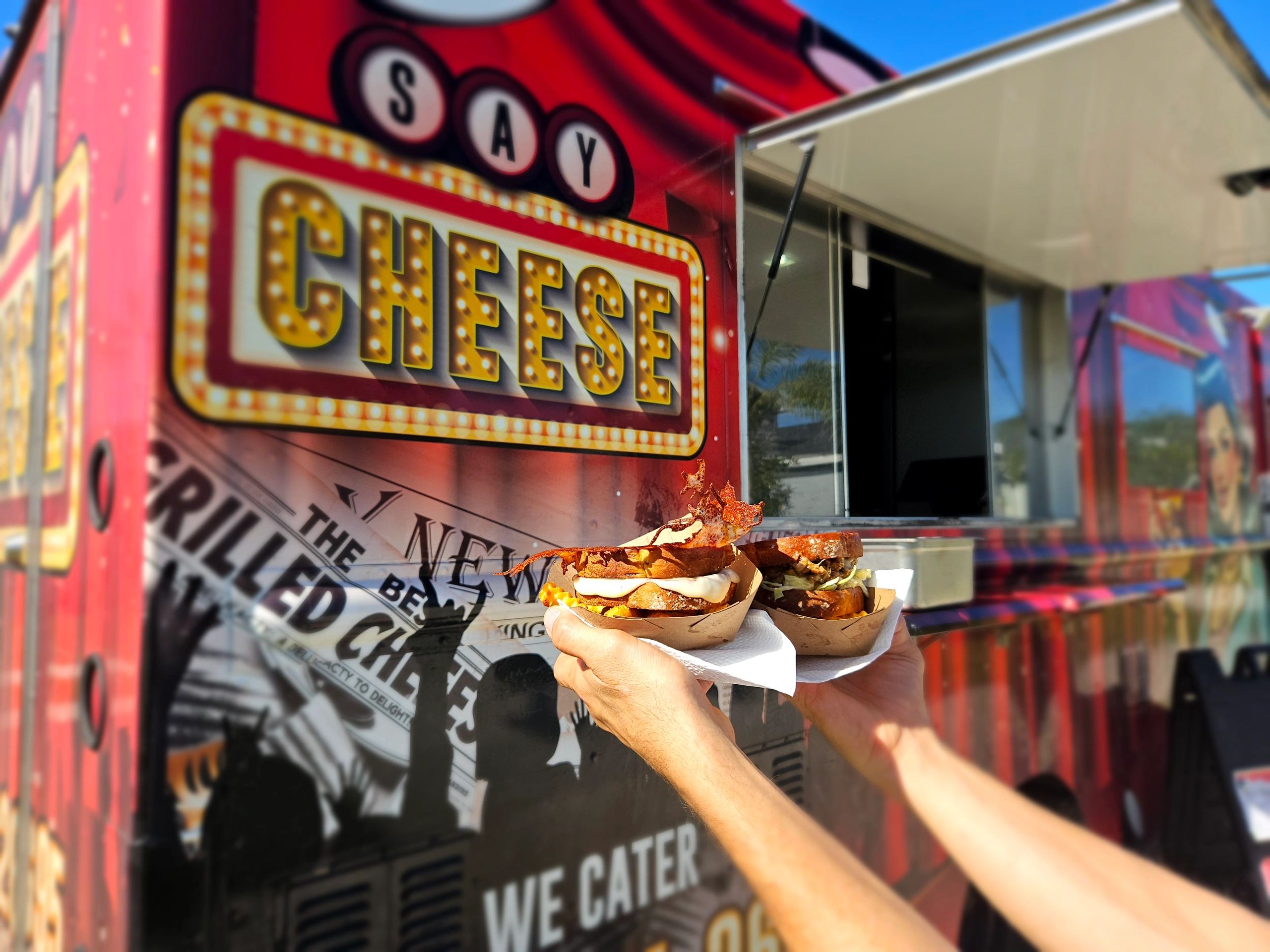
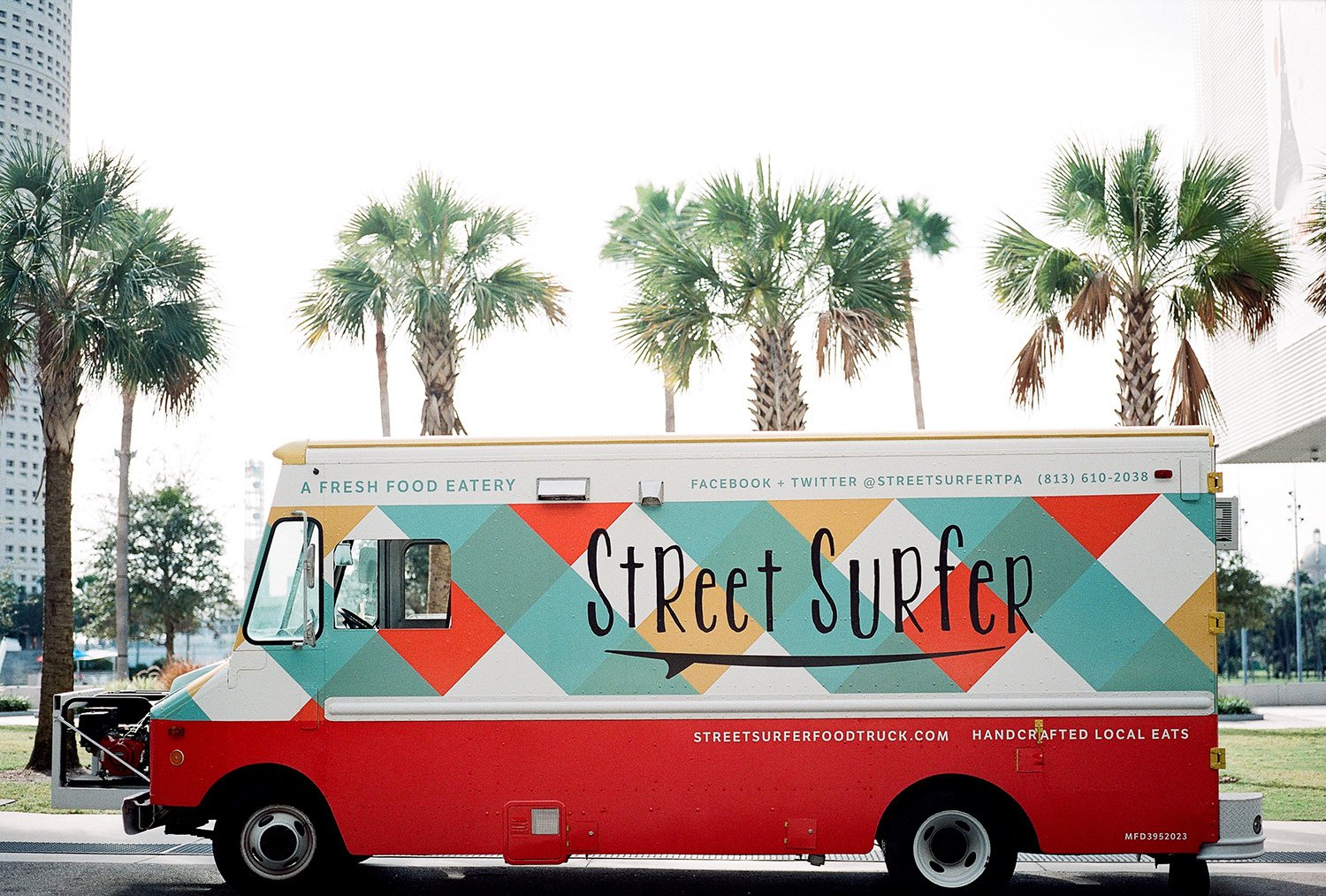
Food trucks near Miami, FL
Upcoming events in Miami, FL


Commissary kitchens in Miami, FL

Guides for Miami, FL
People also ask about Miami food truck permits
How much does a food truck permit cost in Miami?
How long does it take to get a food truck permit in Miami?
Do I need a commissary kitchen to operate a food truck in Miami?
What documents do I need for a Miami food truck permit?
Answers to the most common permit questions — costs, timelines, commissary rules, and more.
Find city-level permit guides for every state we cover — compare costs and requirements.
More from the blog
Jefferson County, MO Food Truck Permit Guide
Complete guide to food truck permits, fees, and requirements in Jefferson County, MO.
City GuidesSt. Charles County, MO Food Truck Permit Guide
Complete guide to food truck permits, fees, and requirements in St. Charles County, MO.
City GuidesSt. Louis County, MO Food Truck Permit Guide
Complete guide to food truck permits, fees, and requirements in St. Louis County, MO.
Buyer's GuideFood Truck POS Systems 2026: Square, Toast, Clover & Avocado
Compare 2026 food truck POS systems by pricing, hardware costs, offline mode, and contract terms for Square, Toast, Clover, and Avocado.