· 6 min read · StreetLegal Team

How to Get a Food Truck Permit in St. Paul (2026 Guide)
Updated June 28, 2026.
Operating a food truck in St. Paul, Minnesota requires navigating permits from St. Paul-Ramsey County Public Health as well as state and local business licensing. This guide covers every step to legally operate in St. Paul.
Core Permits & Licenses
1. Mobile Food Vehicle License (St. Paul-Ramsey County Public Health)
St. Paul-Ramsey County Public Health issues the Mobile Food Vehicle License — your primary operating credential in St. Paul.
- Application with commissary agreement and menu
- Pre-opening inspection
- Annual renewal — fee: $175–$350
Renew annually. Inspections are unannounced throughout the year.
2. St. Paul Business License
All businesses operating in St. Paul must hold a City of St. Paul Business License. Apply through the City Clerk. Fee: $50–$200 based on category.
3. Minnesota Sales Tax Registration
Register with the MN Department of Revenue to collect state sales tax (6.875%). Food prepared at retail is generally taxable. Apply at MN Business One Stop.
4. Commissary Agreement
MN requires all mobile food vehicles to base from a licensed commissary. Your commissary must hold its own Ramsey County food license.
5. Street Vending Permit (City of St. Paul)
To operate on public streets, you need a Street Vending Permit from St. Paul's Department of Safety and Inspections. Designated vending zones are mapped on the city website. Fee: $100–$250/year.
Health & Food Safety
- Food Manager Certification: At least one MN-approved CFPM per truck.
- Temperature control: Cold ≤41°F, hot ≥135°F.
- Winter operations: Trucks must be winterized or stored; commissary access during winter is critical.
- Handwashing station: Required with hot water.
- Fire safety: Class K extinguisher for fryers; ABC extinguisher in all trucks.
Where You Can Operate in St. Paul
- Downtown St. Paul: Rice Park, Mears Park, and the Lowertown district have active food truck spots during warm months.
- Lowertown Farmers Market: Popular weekend market — apply for a vendor slot.
- Private property: Written landowner permission. Common around craft breweries and commercial parks.
- Minneapolis vs St. Paul: Both cities have active scenes but require separate city licenses — coordinate both if you plan to work the Twin Cities metro.

Fees & Timeline
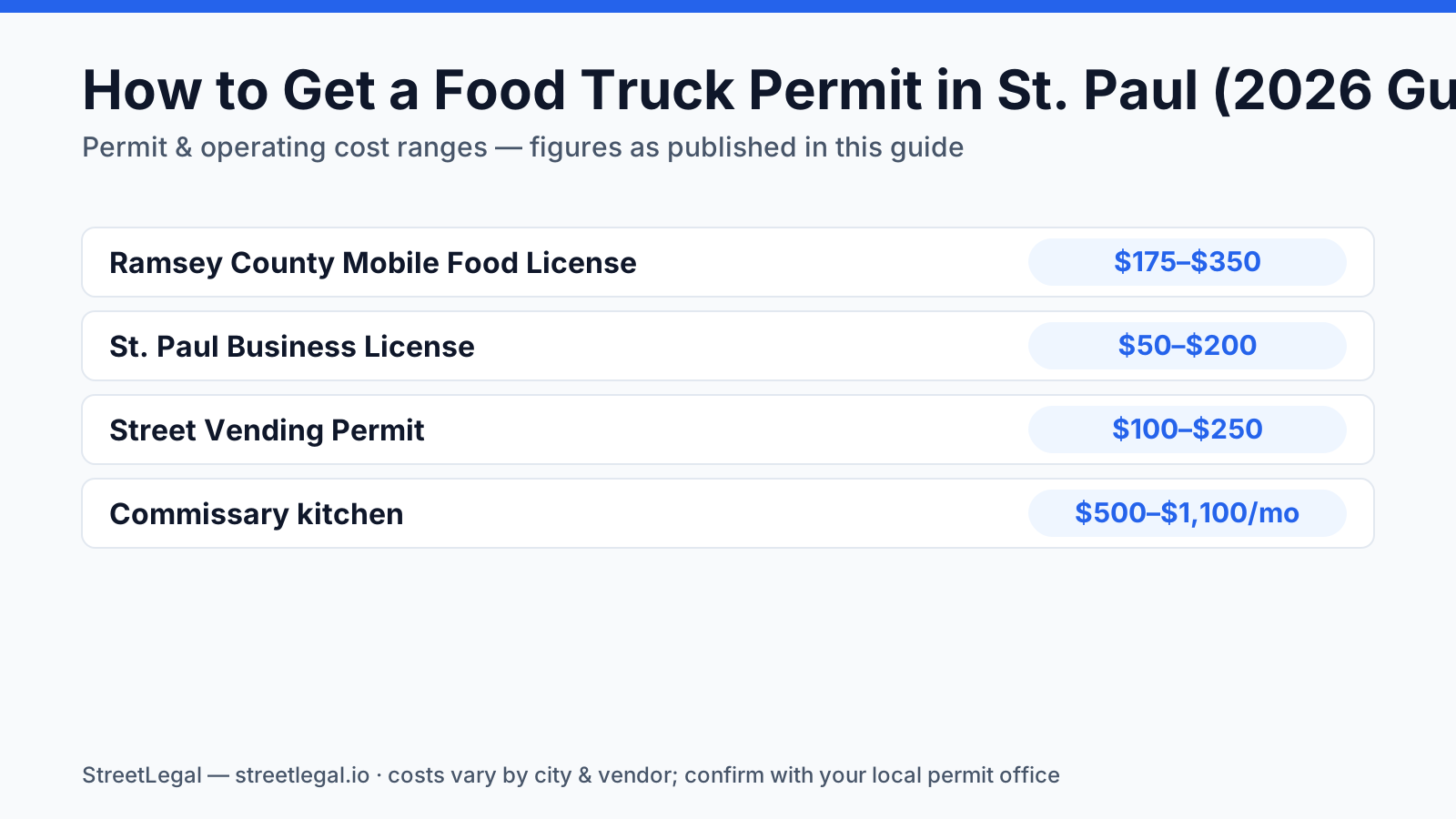
| Permit / License | Approx. Fee | Renewal |
|---|---|---|
| Ramsey County Mobile Food License | $175–$350 | Annual |
| St. Paul Business License | $50–$200 | Annual |
| Street Vending Permit | $100–$250 | Annual |
| MN Sales Tax Registration | Free | Ongoing |
| Commissary kitchen | $500–$1,100/mo | Monthly |
Timeline: 4–8 weeks. Season runs May–October for most operators.
Operator Tips
- Season is short: Plan for a 6-month outdoor season and fill winter with catering, events, and private bookings.
- Saint Paul Saints baseball: CHS Field in Lowertown — event vendor applications available through the venue.
- Winter Carnival: St. Paul's famous winter event — temporary event vendor permits available.
- Coordinate Minneapolis: The two cities share metro traffic but require separate permits — get both if you want full metro coverage.
People also ask about St. Paul food truck permits
How much does a food truck permit cost in St. Paul?
How long does it take to get a food truck permit in St. Paul?
Do I need a commissary kitchen to operate a food truck in St. Paul?
What documents do I need for a St. Paul food truck permit?
Answers to the most common permit questions — costs, timelines, commissary rules, and more.
Find city-level permit guides for every state we cover — compare costs and requirements.
More from the blog
Food Truck POS Systems: Square vs. Toast vs. Clover vs. Avocado (2026)
Real 2026 pricing, hardware costs, offline mode, and contract terms for Square, Toast, Clover, and Avocado — compared specifically for food truck operators.
City GuidesEagan, MN Food Truck Permit Guide
Eagan MN food truck permit guide: MDH mobile food licensing, Dakota County food safety, city peddler rules, commissary records, costs, and launch timeline.
City GuidesBentonville, AR Food Truck Permit Guide
Complete guide to food truck permits, fees, and requirements in Bentonville, AR.
City GuidesBiloxi, MS Food Truck Permit Guide
Biloxi food truck permit guide 2026: licenses, health permit steps, commissary records, inspections, costs, renewal timing, and launch checklist.