· Updated · 11 min read · Ben, Co-founder of StreetLegal
What This Playbook Covers
- ✅ The one number that decides whether you make money: occupancy
- ✅ Pricing and upsells that raise revenue per member without adding space
- ✅ Scheduling members across time slots to lift capacity
- ✅ How to keep members and cut the churn that quietly kills margin
- ✅ The daily operating systems that keep a shared kitchen sane
- ✅ The weekly KPIs and a realistic monthly P&L
How to Run a Commissary Kitchen Profitably in 2026: The Operator's Playbook
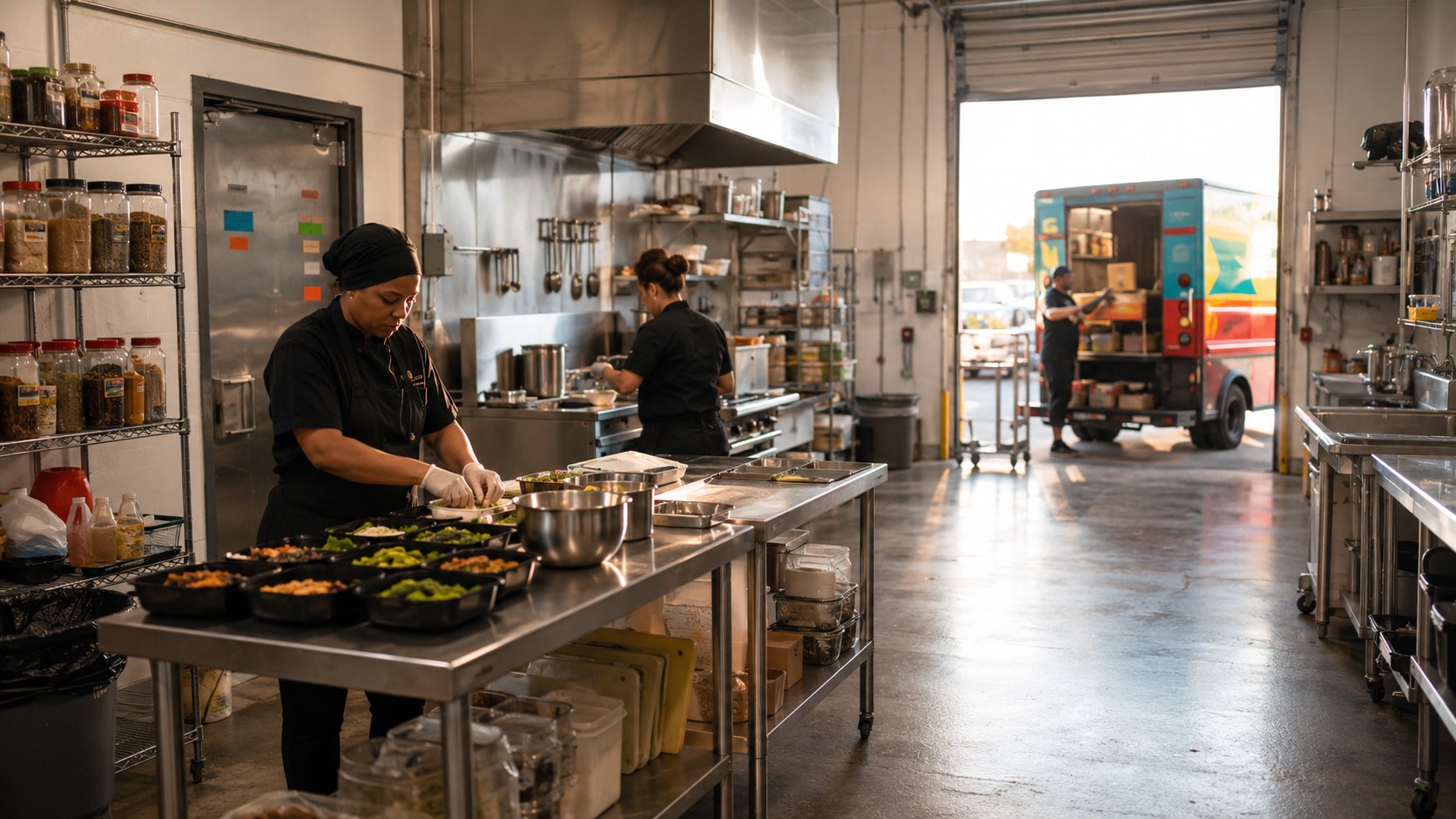
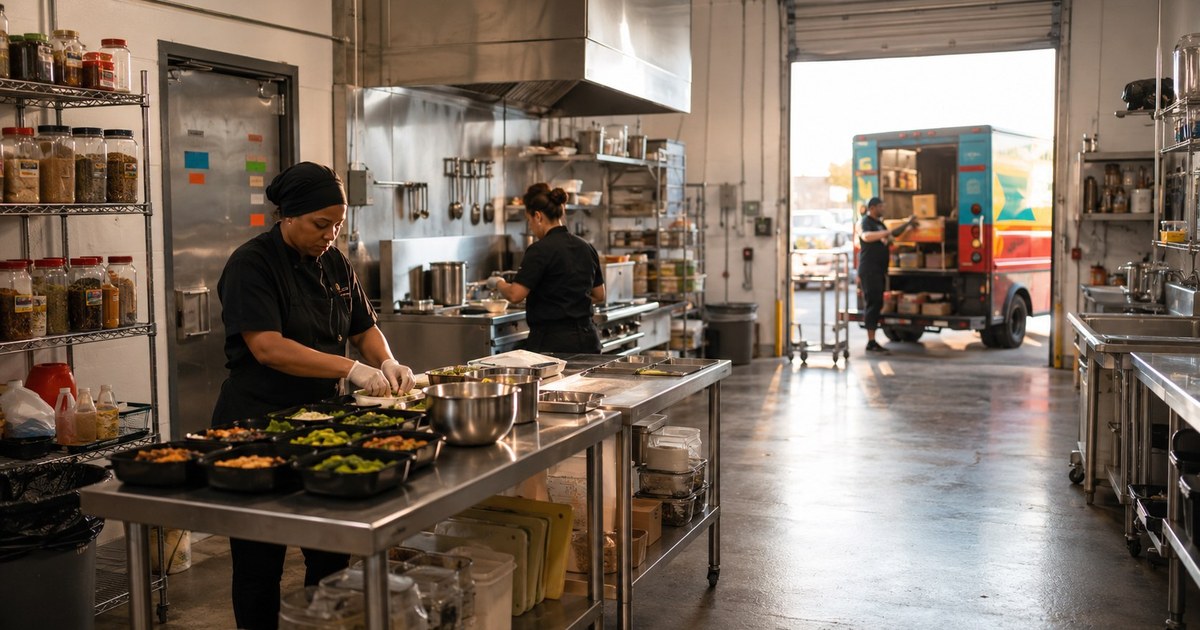
Opening a commissary kitchen is hard. Running it profitably is a different skill entirely. Once the buildout is done and the doors are open, your profit no longer comes from construction decisions — it comes from how well you fill the space, how you price it, and how long members stay. The same facility can lose money at 45% occupancy and throw off 30% margins at 80%.
The good news: a commissary is a high-operating-leverage business. Your big costs — rent, utilities, insurance, debt — are mostly fixed. Every additional booked hour and every add-on you sell after you've covered those costs is almost pure margin. The whole job of running one well is getting and keeping the space full, then squeezing more revenue out of each member without making the place miserable to use.
This playbook is for operators who already have (or are about to open) a commissary and want the day-to-day system that turns it into a profitable, low-drama business. If you're still deciding whether to open one, start with how to start a commissary kitchen first.
To run a commissary kitchen profitably: drive occupancy of your bookable hours and storage to 75–85%, layer pricing (memberships + hourly + high-margin add-ons like storage, dump station, and propane), schedule members across different time slots so trucks, caterers, and meal-prep brands don't collide, cut churn by keeping stations reliable and switching costs high, systematize daily operations and compliance, and watch four numbers every week: occupancy, revenue per member, churn, and your fixed-cost ratio. Net margins of 15–35% are realistic at stable occupancy.
Step 1: Occupancy Is the One Number That Decides Profit
Because your costs are mostly fixed, occupancy is the lever that moves everything. Don't measure it by how many members you have — measure it by how much of your bookable capacity (station hours plus storage) is actually paid for.
The occupancy curve, roughly:
- Under 60%: You're usually covering fixed costs and little else. This is the danger zone most new commissaries sit in for 6–12 months.
- 70–85% — the profit zone. Rent, utilities, and insurance are already paid, so most of this revenue is margin. This is the target.
- Over 90%: You start hitting scheduling conflicts, members can't get the hours they need, and frustration drives churn. Counterintuitively, being too full can cost you good members.
💡 Sell hours and storage, not just memberships
Two facilities with the same 12 members can have wildly different revenue. The profitable one sells more billable hours and add-ons per member — overnight prep slots, dedicated cold storage, dump-station use. Track revenue per booked hour, not just headcount, and you'll find capacity you didn't know you had.
Step 2: Pricing & Upsells That Lift Revenue per Member
Most commissaries leave money on the table by pricing flat — one membership fee and nothing else. The profitable structure layers a predictable base, usage-based hours, and high-margin add-ons that members happily pay for because they solve a real problem.
| Revenue Layer | Typical Pricing | Why Members Pay | Margin |
|---|---|---|---|
| Base membership | $75–$250/mo | Access to shared, licensed stations | Covers fixed cost |
| Hourly station time | $18–$25/hr | Pay only for the hours they cook | High |
| Truck home-base plan | $250–$600/mo | Parking + compliant dump/fill + storage | High |
| Private suite lease | $1,500–$4,500/mo | Dedicated, lockable kitchen | Stable |
| Add-ons | $25–$200/mo each | Storage, dump station, propane, 24/7 access | Highest |
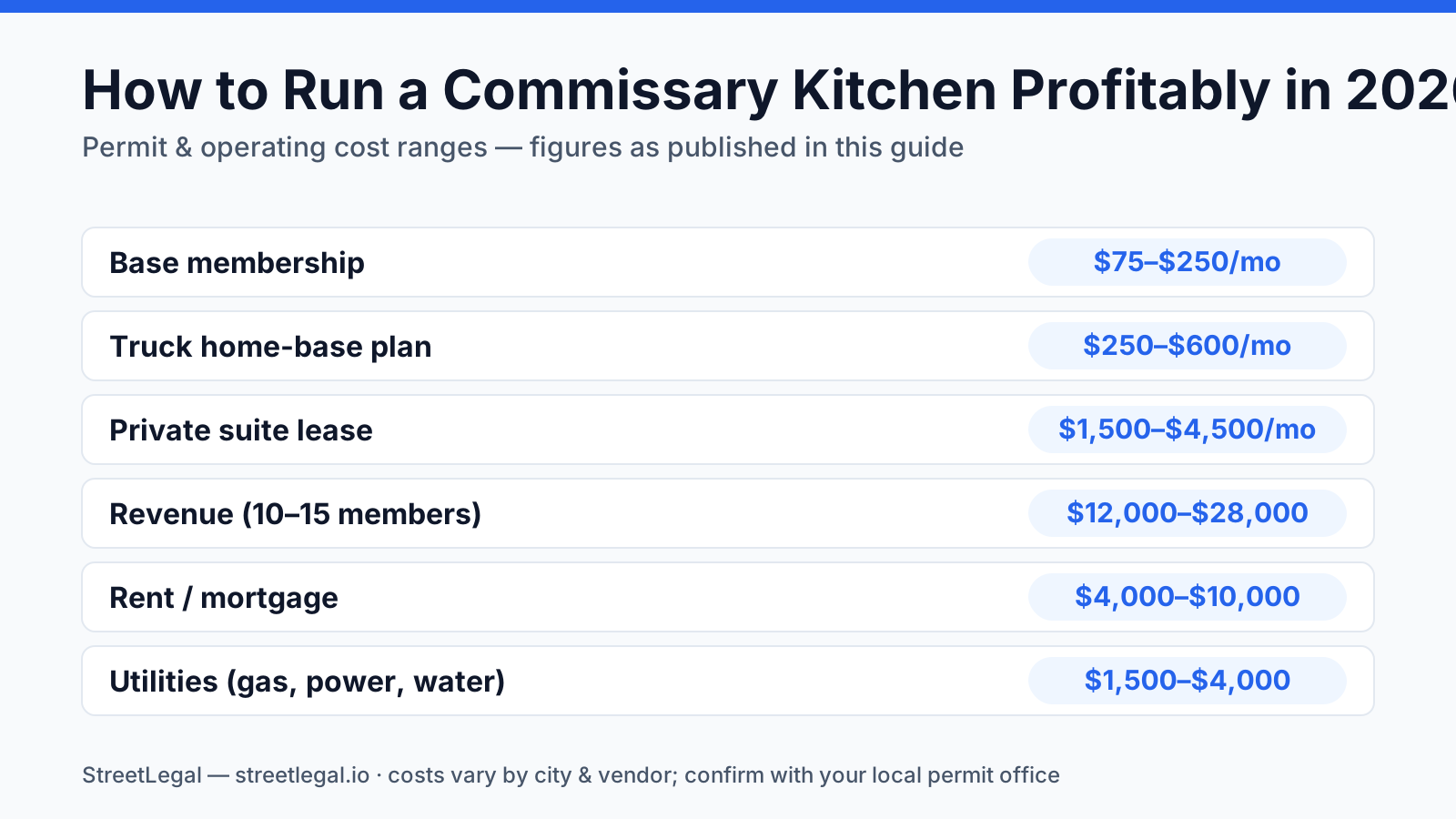
The add-on layer is where margin hides. A member already paying $350/month for a truck home base will add $75 for dedicated cold storage, $40 for propane fills, and $60 for guaranteed after-hours access without blinking — because each one removes a headache. Those add-ons cost you almost nothing once the infrastructure exists, so they flow straight to the bottom line. Price them as explicit line items, not bundled freebies.
💡 Raise prices on value, not across the board
When it's time to increase revenue, resist a flat membership hike that annoys everyone. Instead, introduce or raise prices on the things members value most — guaranteed parking, dump-station access, peak-hour booking priority. You capture more from heavy users and protect your price-sensitive casual makers.
Step 3: Scheduling to Maximize Station Hours
Your physical capacity isn't fixed by square footage — it's fixed by how many members want the same station at the same time. Smart scheduling is how you fit 18 members into a four-station kitchen without conflict.
Different member types naturally want different hours — use that:
- Food trucks prep early morning before service and clean up late evening.
- Caterers work mid-day and around weekend events.
- Meal-prep & ghost-kitchen brands run big overnight batches — the hours nobody else wants.
- Bakers often want very early mornings.
When you deliberately recruit a mix of these, your stations stay busy across 18–24 hours instead of cramming everyone into a 6am–10am rush. An online booking system with visible availability, per-member hour minimums, and limits on no-shows keeps the schedule honest. Charge a premium for the genuinely contested peak slots and a discount for dead overnight hours, and you'll smooth demand while lifting total billable time.
Step 4: Member Retention & Reducing Churn
In a recurring-revenue business, churn is a slow leak that sinks the boat. Losing two members a month means you have to sign two just to stand still — and acquisition is expensive. Keeping members is cheaper and more profitable than constantly replacing them.
What actually keeps members:
- Reliability. Clean, stocked, working stations every single time. One broken walk-in during a member's busiest week can lose them for good.
- Fair access. They can always book the hours they need. The fastest way to lose a growing truck is to tell them the kitchen is full when they need to scale.
- Low friction. Easy booking, predictable door access, clear billing. Every annoyance is a reason to shop around.
- Switching costs. Dedicated storage, founding-member rates, and annual plans make leaving a hassle. A member with a fridge full of inventory and a discounted annual rate doesn't leave casually.
- Compliance value. A signed, current commissary agreement is what keeps their permit valid. As long as you're the easiest path to staying legal, you're sticky.
⚠️ Protect your whales
Not all members are equal. A single truck booking 60 hours a month and three add-ons is worth more than five occasional bakers. Know who your high-revenue members are, check in with them, and make sure they can always grow with you. Losing one quietly can erase a month of new signups.
Step 5: Running Clean Daily Operations
A shared kitchen lives or dies on systems. With a dozen-plus independent businesses using the same equipment, anything you leave to "people will be reasonable" becomes a dispute. Systematize it.
- Access control with logging. Keypad or fob entry that records who's in the building. This makes 24/7 access possible without staffing the door and gives you accountability if something goes wrong.
- Assigned storage. Labeled, dedicated dry, cold, and freezer space per member. Unassigned shared storage is the #1 source of member conflict.
- Cleaning standards & turnover rules. Written "leave it as you found it" rules, a closing checklist, and consequences for violations. A periodic deep clean you run keeps the baseline high.
- Compliance upkeep. Keep your own health permit, fire inspection, grease-trap pumping, and pest control current — a lapse on your end jeopardizes every member's permit.
- Commissary agreements on file. A current signed agreement for every member, with renewal tracking, so nobody's truck permit lapses because of stale paperwork on your side.
- Fast dispute resolution. A clear, neutral process for storage, scheduling, and cleanliness complaints. Resolve quickly and consistently or small frictions become exits.
Most of this can run lean — one on-site manager plus software for booking, billing, and access can operate a mid-size facility. The systems do the enforcing so you're not refereeing every shift.
Step 6: The KPIs to Track Every Week
You don't need a finance team — you need four numbers in front of you every week. If these are healthy, the business is healthy.
| KPI | What It Tells You | Healthy Range |
|---|---|---|
| Occupancy | % of bookable hours + storage actually paid for | 75–85% |
| Revenue per member | Base + hours + add-ons; rising means upsells working | Trending up |
| Monthly churn | % of members leaving each month | <5% |
| Fixed-cost ratio | Rent + utilities + insurance + debt ÷ revenue | 55–75% |
Watch the trend, not just the snapshot. Occupancy creeping down or churn ticking up are early warnings you can fix before they hit the bank account — usually by recruiting an off-peak member type or checking in with an at-risk whale.
Step 7: Operating Costs & the Monthly P&L
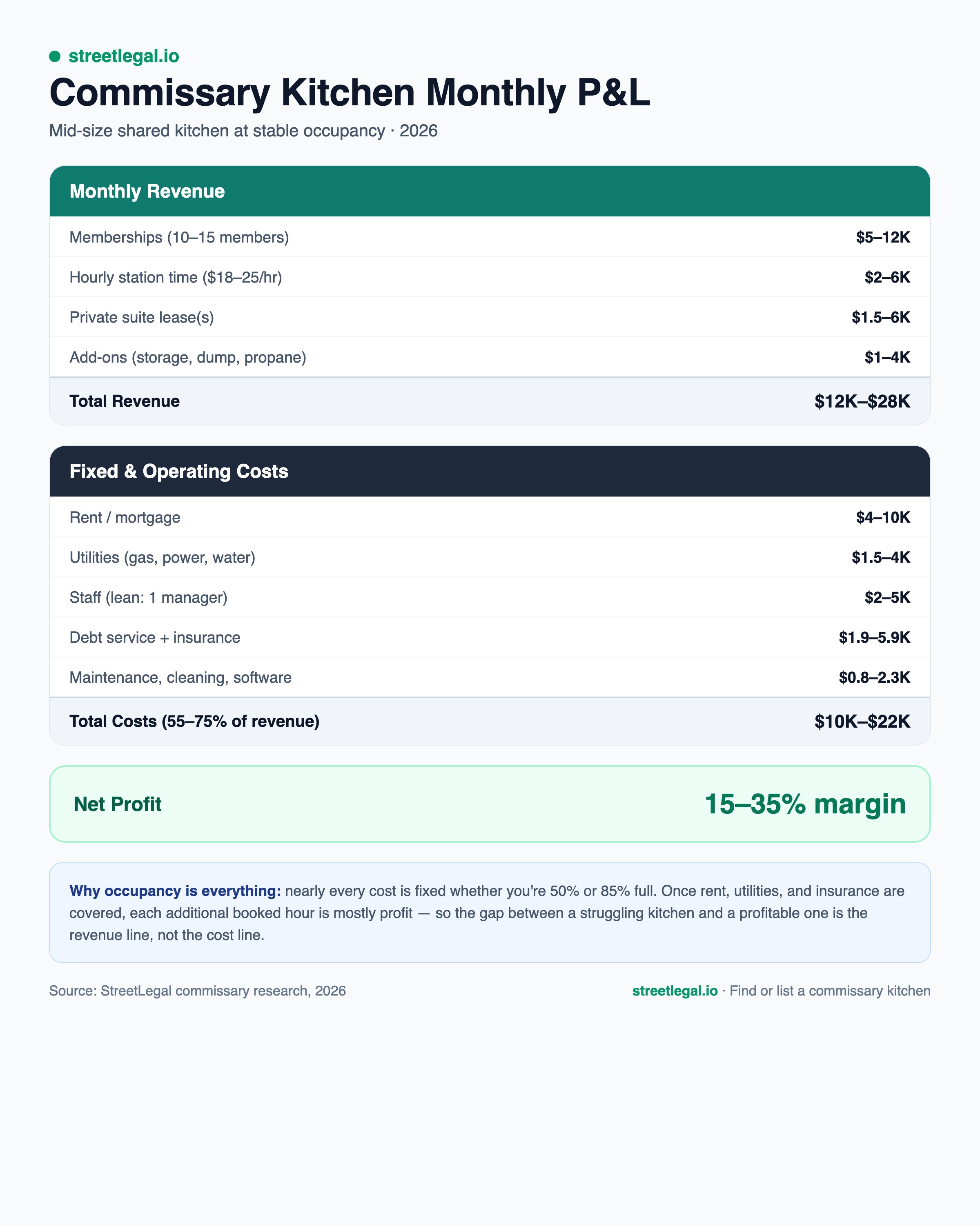
Here's an illustrative monthly P&L for a mid-size hybrid commissary (roughly 4,000–6,000 sq ft) once it's reached stable occupancy. Your numbers shift with local rent, debt load, and member mix, but the shape — mostly fixed costs, profit driven by occupancy — holds everywhere.
| Line Item | Monthly | Notes |
|---|---|---|
| Revenue (10–15 members) | $12,000–$28,000 | Memberships + hours + suites + add-ons |
| Rent / mortgage | $4,000–$10,000 | Largest fixed cost |
| Utilities (gas, power, water) | $1,500–$4,000 | Heavy refrigeration + cooking load |
| Insurance | $400–$900 | Property + general liability |
| Staff (1 manager, part-time help) | $2,000–$5,000 | Lean; software does the rest |
| Maintenance, cleaning, pest, grease pumping | $600–$1,800 | Don't defer — it drives churn |
| Software (booking, billing, access) | $150–$500 | Pays for itself in admin time |
| Debt service (if financed) | $1,500–$5,000 | Buildout loan repayment |
| Net profit (stable occupancy) | ~15–35% of revenue | Grows with every point of occupancy |
Notice that nearly every cost above is fixed regardless of how full you are. That's the whole thesis of the business: once these are covered, the next booked hour is mostly profit. A facility limping along at 50% occupancy and one at 85% have almost identical cost columns — the only difference is the revenue line, and that difference is your profit.
Step 8: When & How to Scale
Once your first facility holds 80%+ occupancy with a waitlist, you have real options:
- Densify the space you have. Add a station, extend hours, or convert dead area to storage you can rent — the cheapest growth there is.
- Add private suites. If you have demand from high-volume caterers or ghost kitchens, converting shared area into a couple of leased suites raises revenue per square foot.
- Open a second location. Once your operating system is documented and a manager runs site one without you, a second facility leverages everything you've learned. The second one is far easier than the first.
- Sell what's scarce. If your dump station and truck parking always fill first, your next site should lead with even more of that — it's your moat against plain prep kitchens.
Common Operating Mistakes
- Chasing members instead of occupancy. Twelve members using few hours is worse than eight who book heavily and buy add-ons. Track billable hours, not headcount.
- Pricing flat and bundling everything. Free storage and free dump access give away your highest-margin revenue.
- Ignoring churn until it's a crisis. A quiet 8% monthly churn will outrun your sales effort. Watch it weekly.
- Deferring maintenance. The broken walk-in or clogged grease trap you put off becomes the reason your best member leaves.
- Cramming everyone into peak hours. Not recruiting overnight and mid-day member types leaves 60% of your day empty.
- Letting compliance lapse. Your expired permit or fire inspection invalidates every member's commissary agreement at once — an existential, self-inflicted risk.
Frequently Asked Questions
How do commissary kitchens make money?
By renting one licensed, well-equipped kitchen to many operators at once. Revenue comes from monthly memberships ($75–$250 for shared stations, $250–$600 for truck home-base plans, $1,500–$4,500 for private suites), hourly station fees ($18–$25/hr), and high-margin add-ons like dedicated storage, grey-water dump and water fill, propane, and 24/7 access. Profit comes from filling the same fixed-cost space past roughly 70% occupancy.
What is a good occupancy rate for a commissary kitchen?
Aim for 75–85% of your bookable station hours and storage. Below ~60% you're mostly just covering fixed costs; at 70%+ the incremental revenue is mostly margin. Above 90% you risk scheduling conflicts that drive churn, so a steady 75–85% is the sweet spot.
How do you reduce churn in a commissary kitchen?
Keep stations clean, stocked, and reliable; make booking and access frictionless; ensure members can always get the hours they need; and raise switching costs with dedicated storage, founding-member rates, and annual plans. Protect your highest-revenue members especially — losing one heavy user hurts more than losing several occasional ones.
How much profit does a commissary kitchen make?
At stable occupancy, net margins of 15–35% are realistic. A mid-size hybrid grossing $12,000–$28,000/month typically runs fixed costs at 55–75% of revenue, so profit grows with every point of occupancy. The first 6–12 months are usually thin while you fill memberships against fixed rent.
How many members can one commissary kitchen support?
It depends on station count and operating hours more than square footage. A four-station kitchen open extended hours can support 12–25 active members because they use different time slots — trucks early, caterers mid-day, meal-prep brands overnight. Balancing members across the clock is how you raise capacity without adding space.
A profitable commissary isn't about a fancier kitchen — it's about operating discipline. Drive occupancy into the profit zone, price the add-ons members actually value, schedule across the whole day, keep your best members happy, and watch four numbers every week. Get those right and the high operating leverage of the model does the rest.
Last updated: June 19, 2026. Pricing, costs, and margins vary by market and member mix — treat the figures here as illustrative ranges, not guarantees, and validate against your local rents and demand.
Answers to the most common permit questions — costs, timelines, commissary rules, and more.
Find city-level permit guides for every state we cover — compare costs and requirements.
More from the blog
Jefferson County, MO Food Truck Permit Guide
Complete guide to food truck permits, fees, and requirements in Jefferson County, MO.
City GuidesSt. Charles County, MO Food Truck Permit Guide
Complete guide to food truck permits, fees, and requirements in St. Charles County, MO.
City GuidesSt. Louis County, MO Food Truck Permit Guide
Complete guide to food truck permits, fees, and requirements in St. Louis County, MO.
Buyer's GuideFood Truck POS Systems 2026: Square, Toast, Clover & Avocado
Compare 2026 food truck POS systems by pricing, hardware costs, offline mode, and contract terms for Square, Toast, Clover, and Avocado.