· 8 min read · StreetLegal Team
Food Truck Commissary Kitchen Guide 2026: Requirements, Costs, and How to Find One
Updated June 29, 2026
The number one thing that surprises people when they start researching food truck permits is the commissary kitchen requirement.
You've got this beautiful truck. It's got a commercial fryer, a flat-top grill, three sinks, and a walk-in cooler. You've invested $80,000 in a fully-equipped mobile kitchen. And then your local health department tells you that before you can get a permit, you need a signed agreement with a separate licensed kitchen.
Wait — what?
I get it. I heard this from nearly every food truck operator we talked to when building StreetLegal. Nobody explains the commissary requirement upfront, and it trips people up constantly. So let me break it down clearly: what a commissary kitchen is, why almost every state requires one, and how to find a good one without overpaying.
What Is a Commissary Kitchen?
A commissary kitchen is a licensed, commercial-grade kitchen that food truck operators rent to use for food preparation, storage, cleaning, and sanitation — the things your truck either can't do or isn't allowed to do on its own.
Think of it as your truck's home base. It's where you:
- Prep ingredients before your shift (chopping, marinating, par-cooking)
- Store perishable food at proper temperatures overnight
- Clean and sanitize your equipment, utensils, and truck interior
- Dump gray water and grease safely and legally
- Refill your fresh water tank
- Store dry goods and supplies in bulk
- Park your truck securely overnight (at many commissaries)
Some commissaries offer all of the above. Others are more basic — rented kitchen space only. The range in services is wide, and so is the range in cost.
Why Do You Need One? (The Honest Answer)
Here's what the health department will tell you: food trucks aren't built to handle full-scale food production, sanitation, and waste disposal without supplemental facilities.
Here's what's really going on: health codes were largely written before food trucks were a thing, and the commissary requirement is how regulators ensure that mobile food vendors have access to the same basic safety infrastructure as brick-and-mortar restaurants — proper refrigeration, wastewater disposal, grease management, and sanitizing capacity.
In practice, nearly every state in the US requires a commissary kitchen agreement to get a food truck health permit. A few cities allow exceptions for trucks with extremely complete onboard facilities, but these are rare. If you're planning to operate legally — and you should be — assume you need one.
What you actually need to demonstrate to your health department is:
- You have a signed agreement with a licensed commissary kitchen
- The commissary is inspected and approved by the relevant health authority
- The agreement covers the specific services your truck requires (cleaning, storage, prep)
- The agreement is current (many health departments require it to be dated within 30 days of your permit application)
Without this, your health permit application goes nowhere.
Types of Commissary Arrangements
Not all commissaries are created equal. Here are the main types you'll encounter:
Shared Commercial Kitchens
Purpose-built spaces where multiple food businesses rent kitchen time and storage. These are the most food-truck-friendly option — they're used to issuing commissary agreements and dealing with health department paperwork. Many offer parking for your truck. Pricing: $15–$45/hour for kitchen time, or $400–$2,000/month for a dedicated membership.
Restaurant Kitchens
Some restaurants rent out their licensed kitchen during off-hours (typically early morning or late night). This can be significantly cheaper than a purpose-built commissary. The catch: you have to work around the restaurant's schedule, and not all restaurants want to deal with the paperwork. Pricing: $10–$30/hour, negotiated directly.
Catering Facility Kitchens
Catering companies often have large, well-equipped licensed kitchens sitting idle between events. Many are open to commissary arrangements with food trucks. Similar to restaurant kitchens in terms of flexibility and pricing.
Commissary-Only Facilities
These are purpose-built specifically for food trucks — truck parking, water/propane fill-ups, grease disposal, kitchen space, and cold storage all in one place. More expensive, but the most operationally convenient. Pricing: $800–$3,000/month for a full-service package.
How Much Does a Commissary Kitchen Cost?
| Service Type | Typical Cost | Best For |
|---|---|---|
| Hourly kitchen access only | $15–$45/hour | Part-time operators; low-volume prep |
| Monthly kitchen membership | $400–$1,200/month | Full-time operators needing regular prep space |
| Full-service commissary (kitchen + parking + storage) | $1,000–$3,000/month | Operators who want everything in one place |
| Restaurant/catering kitchen agreement | $200–$600/month negotiated | Operators who need minimal prep time + storage |
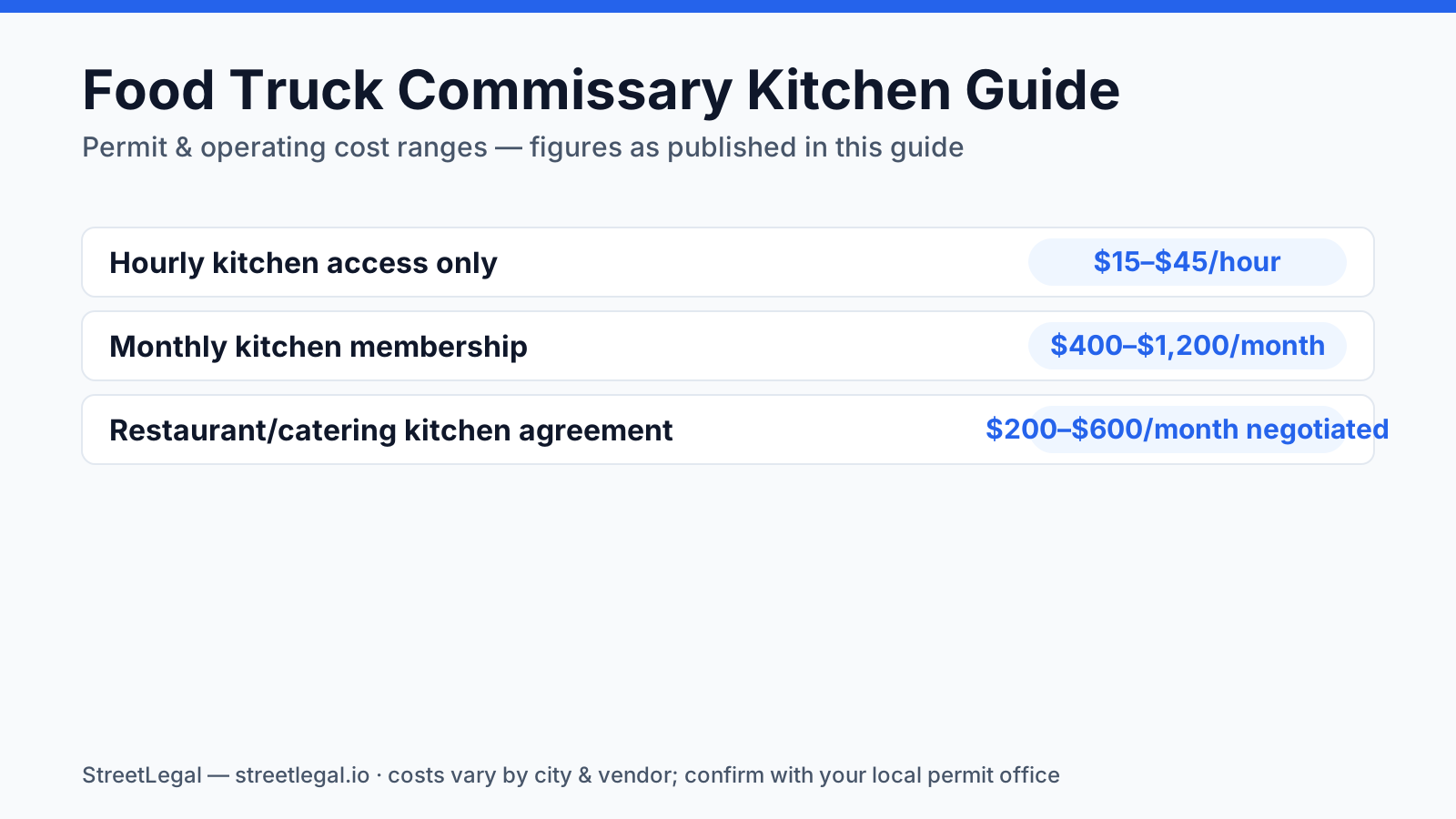
Budget $500–$1,500/month as a reasonable planning figure for most markets. NYC and San Francisco will run higher. Smaller markets and suburban areas will run lower.
What Your Commissary Agreement Must Include
The agreement you sign with your commissary kitchen isn't just for your records — health departments review it. Most require these elements:
- Names and addresses of both parties (you and the commissary)
- Specific services provided — food prep space, cold storage, cleaning area, parking, water fill, grease disposal
- Hours of access — when you can use the facility
- Signatures from both parties and the date
- Proof the commissary is licensed — some health departments want to see the commissary's own health permit number on the agreement
- Duration of the agreement — most health departments require a minimum 6-month or 1-year commitment
Get this document right from the start. Sloppy commissary agreements are one of the top reasons permit applications get rejected or delayed.
How to Find a Commissary Kitchen in Your City
The most reliable way to find an approved commissary kitchen in your area:
1. Ask Your Local Health Department
Most health departments maintain a list of approved commissary facilities in their jurisdiction. Call or email your local environmental health office and ask for it directly. It's public information and they'll usually email it to you. This is the most underused shortcut in food truck permitting.
2. Use StreetLegal's Commissary Kitchen Finder
StreetLegal's platform includes a commissary kitchen directory with verified listings across major US markets. You can filter by city, services offered, and price range — and contact commissaries directly through the platform.
3. Ask Other Food Truck Operators
Find local food truck Facebook groups, attend local food truck rallies, or just walk up to a truck and ask where they commissary. Operators are generally open about this — it's not competitive information. You'll get honest reviews of local commissaries that you won't find on Yelp.
4. Search the Local Food Truck Association
Most major cities have a local food truck association or guild. They often maintain commissary directories and can make introductions. Google "[your city] food truck association" to find yours.
5. Call Local Restaurants and Caterers
Don't underestimate this one. A quick call to a dozen local restaurants — "Hey, I'm starting a food truck and looking for a commissary kitchen. Do you rent your kitchen out during off-hours?" — often turns up an arrangement you won't find on any website.
Red Flags When Choosing a Commissary
Not every commissary is a good fit. Watch out for:
- No current health permit on display — if they're not licensed, your agreement with them is worthless
- Won't put the agreement in writing — run
- No dedicated truck parking or water access — adds logistics headaches
- Overcrowded scheduling — if 30 trucks all show up at 6am to prep, you'll spend 45 minutes waiting for a sink
- No grease disposal on-site — you'll need somewhere to dump cooking oil; make sure this is covered
Questions to Ask Before Signing
- Is this facility currently licensed and inspected by the local health department?
- Can you provide your health permit number for my permit application?
- What's included in my monthly fee — specifically, does it cover cold storage, parking, water fill, and grease disposal?
- What are my access hours, and are there peak periods where space is limited?
- Can I see a sample commissary agreement before I commit?
- Have any food truck operators been denied a permit because of an issue with your facility?
The Bottom Line
The commissary kitchen requirement isn't an obstacle — it's infrastructure. Once you have a good commissary relationship, your operations get cleaner, your permit applications get easier, and you have a physical home base that makes running a food truck significantly less chaotic.
The key is finding the right one early. Your commissary agreement is one of the first documents your health department will ask for. Get it locked in before you start the rest of your permit applications.
If you're still figuring out what's required in your specific city, StreetLegal can walk you through it — permit by permit, deadline by deadline, without the guesswork.
Answers to the most common permit questions — costs, timelines, commissary rules, and more.
Find city-level permit guides for every state we cover — compare costs and requirements.
More from the blog
Jefferson County, MO Food Truck Permit Guide
Complete guide to food truck permits, fees, and requirements in Jefferson County, MO.
City GuidesSt. Charles County, MO Food Truck Permit Guide
Complete guide to food truck permits, fees, and requirements in St. Charles County, MO.
City GuidesSt. Louis County, MO Food Truck Permit Guide
Complete guide to food truck permits, fees, and requirements in St. Louis County, MO.
Buyer's GuideFood Truck POS Systems 2026: Square, Toast, Clover & Avocado
Compare 2026 food truck POS systems by pricing, hardware costs, offline mode, and contract terms for Square, Toast, Clover, and Avocado.