· 12 min read · Gibby, StreetLegal Editorial

Food Truck Insurance: What You Need, What It Costs, and Where to Get It (2026)
Updated June 28, 2026
There is no such thing as a single "food truck insurance policy." What food truck operators actually need is a stack of three to five separate coverages — and if you skip any of them, you're either legally non-compliant, locked out of most events, or personally on the hook for a judgment that could wipe out your business. This guide covers what each coverage does, what it actually costs in 2026, and which carriers work best for food trucks.
The short version: a solo operator should budget $2,500–$5,400/yr for full coverage. An operator with employees should budget $4,300–$9,800/yr. Every number in this guide comes from carrier rate sheets and actual food truck operator data — not round-number estimates.
The Coverage Stack: What a Food Truck Actually Needs
Most business insurance guides treat food trucks like a restaurant with wheels. That's wrong. A food truck combines a commercial vehicle, a food production operation, an employer (usually), and an event vendor — all in one. That means you need coverages from multiple insurance categories that don't normally talk to each other.
Here are the five coverage types that make up a complete food truck insurance program:
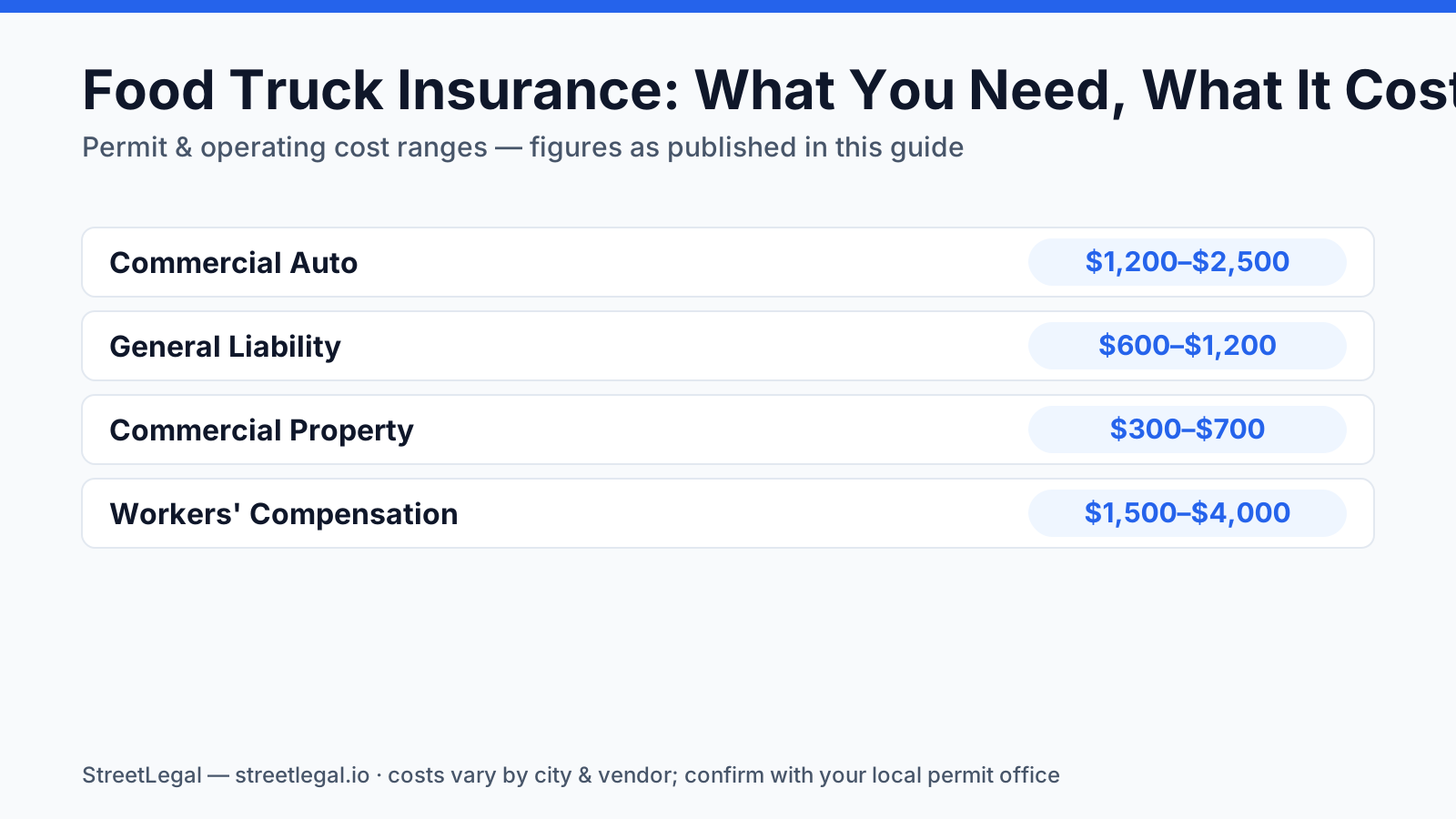
| Coverage | What It Covers | Required? | Annual Cost |
|---|---|---|---|
| Commercial Auto | Vehicle on public roads, accident liability | Yes — legally required | $1,200–$2,500 |
| General Liability | Slip-and-fall, property damage, advertising injury | Required by events/commissaries | $600–$1,200 |
| Commercial Property | Equipment, generator, POS, inventory inside truck | Not legally required, but essential | $300–$700 |
| Workers' Compensation | Employee injuries on the job | Legally required if you have employees (most states) | $1,500–$4,000 |
| Product Liability | Foodborne illness claims from customers | Usually bundled with GL | $200–$600 standalone |
Commercial Auto Insurance: The Non-Negotiable
Commercial auto is the one coverage there is no workaround for. You cannot legally operate a food truck on public roads without it, and your personal auto policy explicitly excludes vehicles used for commercial purposes. If you get into an accident driving your truck to an event and you're on a personal policy, the claim will be denied.
What Commercial Auto Covers
- Liability: Damage or injury you cause to other vehicles or people in an accident
- Collision: Damage to your truck from an accident (optional but almost always worth carrying)
- Comprehensive: Non-collision damage — theft, fire, weather, vandalism
- Uninsured/underinsured motorist: Protects you if the other driver has no or insufficient insurance
- Medical payments: Medical expenses for you and passengers after an accident
What Commercial Auto Does NOT Cover
This is where operators get surprised. Commercial auto covers the vehicle and liability on the road. It does not cover:
- The cooking equipment inside the truck if damaged by a kitchen fire — that's commercial property
- Customer injuries at your serving window while the truck is parked — that's general liability
- Food spoilage from a mechanical breakdown — that's commercial property or equipment breakdown coverage
- Employee injuries — that's workers' compensation
What Drives Commercial Auto Cost
- Vehicle value and age: A newer, higher-value truck costs more to insure
- Annual mileage: Seasonal operators who drive less may qualify for lower premiums
- State: Rates vary by 30–50% across states — Texas and Florida tend to be higher
- Driver record: Single biggest factor; one at-fault accident can raise premiums 20–40%
- Deductible: Higher deductible = lower premium; most operators carry $1,000–$2,500 deductible
- Coverage limits: Minimum state liability vs. higher commercial limits affects pricing significantly
Typical cost range: $1,200–$2,500/yr for a standard food truck with a clean driving record. Older trucks in low-rate states with high deductibles can come in closer to $900. Newer trucks or operators with recent violations can exceed $3,000.
Specialty carriers for food truck commercial auto: Progressive Commercial, National General, State Farm Commercial.
General Liability Insurance: Required by Everyone Who Matters
General liability (GL) insurance isn't always legally mandated at the state or city level — but it's required by virtually every event organizer, commissary kitchen, and farmers market you'll want to work with. In practice, you can't run a real food truck business without it.
What GL Covers
- Bodily injury: A customer slips on a wet surface near your truck and breaks their wrist
- Property damage: You damage a venue's property while setting up or operating
- Advertising injury: Claims of copyright infringement, defamation in your marketing
- Product liability: Usually included — covers claims that your food caused illness or injury (more on this below)
Standard Limits
The industry standard is a $1M per occurrence / $2M aggregate policy. Most event organizers require exactly this. Some corporate catering clients require $2M per occurrence. When comparing quotes, make sure you're comparing the same limits — a $500K/$1M policy is meaningfully different.
Typical cost: $600–$1,200/yr for a $1M/$2M policy. Often bundled with commercial property in a Business Owner's Policy (BOP) — the BOP is almost always more cost-efficient than buying GL and property separately.
Pro Tip: Bundle GL + Property in a BOP
A Business Owner's Policy (BOP) combines general liability and commercial property into a single policy, typically at a 10–20% discount versus buying them separately. Most carriers that write food truck insurance offer BOP options. Ask for a BOP quote alongside standalone GL — you'll almost always save money.
Commercial Property Insurance: Protecting What's Inside
Your commercial auto policy covers the truck as a vehicle on the road. It does not cover the $15,000–$40,000 worth of cooking equipment, generator, POS system, and refrigeration units inside it. Commercial property insurance covers that gap.
What Commercial Property Covers
- Commercial cooking equipment (fryer, grill, flat-top, smoker, etc.)
- Generator and electrical systems
- Point-of-sale system and tablets
- Refrigeration units
- Food inventory (often subject to spoilage sub-limits)
- Smallwares, prep equipment, serving supplies
Coverage is typically written on an "agreed value" or "actual cash value" basis. Agreed value (replacement cost) pays what it costs to replace the equipment new. Actual cash value pays the depreciated value — significantly less for used equipment. Pay the premium for replacement cost coverage if your equipment is relatively new.
Typical equipment value to insure: $30,000–$75,000 for a fully-equipped food truck. Typical cost: $300–$700/yr as a standalone policy, or bundled into a BOP at a discount.
Workers' Compensation: Required If You Have Employees
Workers' compensation is the coverage most food truck operators either ignore or delay — and it's the one that can create the most personal financial exposure. If an employee is injured working on your truck and you don't have workers' comp, you are personally liable for their medical bills and lost wages.
Legal Requirement by State
Workers' comp is required in virtually all states once you have employees. The thresholds vary:
- Most states: Required as soon as you have 1 employee
- Some states (Alabama, South Carolina, Georgia): Required at 3–5 employees
- Texas: Not state-mandated, but many contracts and commissaries require proof of coverage
- Part-time employees: Usually count in most states — "part-time" doesn't exempt you
The Personal Liability Trap
If you operate without required workers' comp and an employee suffers a serious injury — a burn from a fryer, a back injury unloading equipment, a slip in the truck — you are personally liable for all medical costs and lost wages. This is not covered by your GL policy. A single serious workplace injury can generate $50,000–$200,000+ in medical bills. Workers' comp is not optional if you have employees.
Workers' Comp Cost Factors
- Payroll size: Premiums are calculated as a percentage of total payroll
- State: Workers' comp rates vary dramatically — California and New York are significantly higher than Texas and Florida
- Job classification: Food prep and counter service workers have different risk codes than delivery drivers
- Claims history: A clean claims record qualifies for experience modification discounts
Typical cost: $1,500–$4,000/yr for a food truck with one or two part-time employees and a $30,000–$60,000 annual payroll. Sole proprietors are excluded from workers' comp in most states but can opt in voluntarily.
Product Liability: The Foodborne Illness Exposure
Product liability covers claims that your food caused a customer to become sick or injured. In most general liability policies, product liability is included as a standard coverage. But it's worth understanding separately because the exposure for food businesses is real and can be large.
Foodborne illness litigation is not hypothetical. A single hepatitis A case linked to a food truck can generate significant litigation — even if the truck operator followed all food safety protocols. The investigation, legal defense, and potential settlement can easily exceed $100,000. Your GL/product liability policy is what stands between you and that exposure.
When Product Liability Is Standalone
If you purchase a limited GL policy or an event-specific policy (like those from FLIP), product liability may need to be added as a rider rather than being automatically included. Always confirm with your broker. If it's a separate line item:
- Standalone cost: $200–$600/yr
- Usually not worth buying standalone — upgrade to a full GL policy that includes it
- Event-specific FLIP policies include product liability — useful for new operators doing occasional events before committing to a full annual policy
Optional Coverages Worth Considering
These coverages aren't required, but some of them have a strong risk/reward profile for food truck operators:
Business Interruption Insurance — $200–$500/yr
Covers lost revenue if your truck is out of service due to a covered loss (fire, accident, major mechanical failure). If your truck is your primary income source and it's sidelined for 6 weeks waiting on repairs, this coverage pays your ongoing expenses. Worth it if you're operating full-time with limited cash reserves.
Catering / Off-Premises Coverage Rider — $200–$500/yr added to GL
Extends your general liability to catering events at private residences and off-site locations that aren't your regular operating spots. Many standard GL policies have geographic or location-type limitations. If you do private catering — weddings, corporate events, private parties — confirm your GL covers those locations or add this rider.
Equipment Breakdown Coverage — $100–$300/yr
Covers mechanical or electrical failure of cooking equipment — a fryer that burns out, a refrigerator compressor that fails, a generator that seizes. Commercial property covers fire and theft; equipment breakdown covers failure from within. The cost is low and the risk is real for older equipment.
Named Storm / Flood Coverage (Seasonal Operators in Coastal States)
Standard commercial property policies often exclude flood damage and may limit hurricane or windstorm coverage. In hurricane-prone states (Texas, Florida, Louisiana, the Carolinas), ask your broker explicitly about named storm and flood coverage. Your food truck represents significant asset value sitting in a parking lot during a storm.
What Events and Commissaries Actually Require
The practical insurance requirement for most food truck operators isn't set by law — it's set by the venues, events, and kitchens you need access to. Here's what typical certificate of insurance (COI) requirements look like across different contexts:
| Venue / Context | GL Minimum | Additional Insured? | Other Requirements |
|---|---|---|---|
| Farmers Markets | $1M / $2M | Yes — market operator | COI due before first event |
| Food Festivals | $1M / $2M | Yes — event organizer | Product liability often specified |
| Commissary Kitchens | $1M / $2M | Yes — commissary | Required before agreement signed |
| Corporate Catering | $2M / $4M | Yes — client company | Higher limits common; verify per contract |
| Private Events (Weddings, Parties) | $1M / $2M | Sometimes | Venue may require naming as additional insured |
| Food Truck Parks | $1M / $2M | Yes — park operator | Part of lease/contract terms |
The "additional insured" requirement means the event organizer or commissary kitchen is listed on your policy as a protected party — if a customer sues them for something related to your food or operation, your GL policy covers both of you. Your broker can issue a certificate of insurance (COI) adding any party as an additional insured at no extra charge.
Full Cost Breakdown: Solo Operator vs. 1–2 Employees
| Coverage | Solo Operator | 1–2 Employees | Notes |
|---|---|---|---|
| Commercial auto | $1,200–$2,500 | $1,200–$2,500 | Add drivers = higher premium |
| General liability + product | $600–$1,200 | $800–$1,500 | Higher revenue = higher premium |
| Commercial property | $300–$700 | $400–$800 | Based on equipment value |
| Workers' comp | N/A | $1,500–$4,000 | Based on payroll + state |
| Optional riders | $400–$1,000 | $400–$1,000 | Biz interruption, catering rider, etc. |
| Total / yr | $2,500–$5,400 | $4,300–$9,800 | Get 3+ quotes |
These ranges are wide because food truck insurance pricing is genuinely variable. The state you operate in, your vehicle's age and value, your driving record, your annual revenue, and which carrier you choose all move the needle significantly. A solo operator in a low-rate state with a clean record and an older truck can realistically come in at $2,200–$2,800 total. An operator in California or Florida with a newer truck will be at the top of the range.
How to Reduce Food Truck Insurance Costs
Food truck insurance pricing has more levers than most operators realize. These are the tactics that actually move the number:
1. Bundle Commercial Auto + GL + Property with One Carrier (BOP)
Buying a Business Owner's Policy (BOP) that bundles GL and commercial property typically saves 10–20% versus buying them separately. Some carriers also offer package discounts when you add commercial auto from the same provider. Get a bundled quote alongside individual quotes — the savings are usually real.
2. Maintain a Clean Driving Record
Your driving record is the single biggest factor in commercial auto pricing. One at-fault accident can raise your annual premium $300–$600 for three years. If you have violations or accidents, consider a higher deductible to offset the rate — and invest in a dash cam for dispute documentation.
3. Increase Your Deductibles (If You Have Cash Reserves)
Moving from a $500 to a $2,500 deductible on commercial auto can save $200–$400/yr. This only makes sense if you have reserves to cover the deductible without stress. Don't raise deductibles to the point where a claim would create a cash flow crisis.
4. Pay-Per-Mile Commercial Auto for Seasonal Operators
Some carriers (Progressive, Nationwide) offer usage-based or pay-per-mile commercial auto pricing. If you operate seasonally — 6–8 months per year and primarily at fixed locations — you may drive significantly fewer miles than a full-time operator. Usage-based policies can cut commercial auto costs 15–25% for low-mileage trucks.
5. Association Group Rates
Some food truck associations negotiate group insurance rates for members. The National Food Truck Association and various state-level food truck associations offer member insurance programs. Annual membership fees ($100–$400) can be offset by insurance savings. Worth checking before renewing your existing policy independently.
Pro Tip: Get 3+ Quotes — Food Truck Insurance Pricing Varies Dramatically
Food truck insurance is not commoditized the way personal auto insurance is. Carrier appetite for food trucks varies — one carrier might quote $1,800/yr for commercial auto and another quotes $2,800 for the same truck and driver. Always get at least three quotes from different carriers before binding coverage. Specialty carriers like Markel and Next Insurance often come in significantly different from general commercial carriers.
Where to Get Food Truck Insurance: Specific Carriers
Not every commercial insurer writes food truck policies, and even among those that do, coverage quality varies. These are the carriers most commonly used by food truck operators in 2026:
Progressive Commercial
Best for: Commercial auto. Progressive is the largest commercial auto insurer in the U.S. and has strong food truck pricing. Online quoting is fast. They're generally competitive on auto but mid-tier on GL. Good starting point for commercial auto quotes.
Markel Specialty
Best for: Full coverage stack, food and beverage specialty. Markel writes specialty food and beverage insurance and understands food truck operations better than most general commercial carriers. Often competitive on GL + property bundled. Recommended for operators who want a single carrier for most of their coverage.
Next Insurance
Best for: New operators, simple digital purchase. Next Insurance is a digital-first small business insurer with fast online quoting and same-day coverage. Their food truck GL and BOP policies are straightforward to purchase without a broker. Pricing is competitive for newer operators. Good option for first-year operators who want to get covered quickly.
State Farm Commercial
Best for: BOP with local agent support. State Farm has strong BOP options for food trucks and the advantage of local agent relationships. Useful if you want in-person guidance, especially when navigating additional insured certificates for multiple events. Coverage quality is solid; pricing is mid-range.
Nationwide
Best for: Food truck-specific programs in some states. Nationwide has food truck-specific programs in certain states, with competitive pricing in those markets. Coverage offerings vary significantly by state — worth getting a quote, especially if you're in the Midwest or Southeast.
FLIP (Food Liability Insurance Program)
Best for: New operators, event-specific GL, short-term coverage. FLIP specializes in food liability insurance for food businesses and is very popular with new food truck operators doing occasional events before committing to a full annual policy. GL policies start around $300/yr and include product liability. Good entry point — but you'll still need separate commercial auto coverage.
National General
Best for: Commercial auto, alternative to Progressive. National General (now owned by Allstate) is a solid alternative to Progressive for commercial auto. Worth including in your quote comparison, particularly for operators with more complex vehicle situations or those who've had difficulty getting competitive auto rates elsewhere.
Food Truck Insurance FAQ
How much does food truck insurance cost per year?
Is food truck insurance required by law?
What insurance do I need to work at a farmers market or festival?
Do I need different insurance for catering events?
Can I get food truck insurance as a new or first-year operator?
Official Resources — Verify Requirements in Your State
- Progressive Commercial — Online quotes for commercial auto and food truck policies
- Markel Specialty — Food & Beverage — Specialty food truck GL and property coverage
- Next Insurance — Food Truck — Digital-first, same-day food truck BOP coverage
- FLIP (Food Liability Insurance Program) — Event-focused GL, popular for new operators
Cost ranges above reflect 2026 market data. Insurance pricing is highly variable — always obtain multiple quotes before binding coverage.
Related Food Truck Guides
Insurance is one part of the food truck operating picture. Here are related guides on permits, costs, and operations:
Answers to the most common permit questions — costs, timelines, commissary rules, and more.
Find city-level permit guides for every state we cover — compare costs and requirements.
More from the blog
Food Truck POS Systems: Square vs. Toast vs. Clover vs. Avocado (2026)
Real 2026 pricing, hardware costs, offline mode, and contract terms for Square, Toast, Clover, and Avocado — compared specifically for food truck operators.
City GuidesEagan, MN Food Truck Permit Guide
Eagan MN food truck permit guide: MDH mobile food licensing, Dakota County food safety, city peddler rules, commissary records, costs, and launch timeline.
City GuidesBentonville, AR Food Truck Permit Guide
Complete guide to food truck permits, fees, and requirements in Bentonville, AR.
City GuidesBiloxi, MS Food Truck Permit Guide
Biloxi food truck permit guide 2026: licenses, health permit steps, commissary records, inspections, costs, renewal timing, and launch checklist.