· 11 min read · StreetLegal Team

Food Truck Event Permits: How to Legally Work Festivals, Markets & Private Events (2026)
Updated June 29, 2026
Most food truck operators think their standard health permit covers everything. It doesn't. The rules for public events are completely different from private catering — and if you show up at a festival without the right permits, you'll get turned away or fined. Here's how it actually works.
The confusion comes from a real gap in how permits are structured. Your base Mobile Food Unit permit is your license to operate. It covers a lot — but not all situations. Once you start working public events, you're in a different permitting lane. This guide breaks down exactly which events need what, what it costs, and the one question that can save you hundreds of dollars per event.
Important Note
Permit requirements vary by city, county, and state. The framework in this guide applies broadly across the US, but always verify current requirements with your local health department before working any public event. Rules change, fees change, and enforcement varies significantly by jurisdiction.
Your Standard Permit vs. Event Permits
Your Mobile Food Unit permit (called an MFU, MFV, MHFD, or similar depending on your city) is your base operating license. Think of it as your food truck's driver's license — you need it to operate at all, and it covers a wide range of scenarios. But it's not a universal pass.
Here's the line that trips people up: private property vs. public land.
- Private property events (corporate parking lots, private venues, breweries, private event spaces) — your base MFU permit is generally sufficient. The property owner has jurisdiction, not the city's parks or street department.
- Public land events (city parks, public streets, public plazas, public right-of-way) — you're now in territory that requires a separate temporary food establishment permit from the health department, and sometimes an additional permit from the parks department or city.
That's the whole framework. Most of the complexity in event permitting is just variations on that core distinction.
Don't Show Up Without Checking First
Festival and market organizers will sometimes turn trucks away at the gate if permits aren't in order. Health inspectors who walk large public events will write citations on the spot. A $150 temp permit problem can turn into a $500 fine and a lost event slot. Check before you go.
Types of Events and Which Permits They Need
The permit requirement depends primarily on the type of event and who controls the land. Here's a practical breakdown:
| Event Type | Permit Needed | Who Issues | Est. Cost |
|---|---|---|---|
| Private corporate catering | Base permit only (usually) | N/A | — |
| Private wedding / birthday | Base permit only (usually) | N/A | — |
| Farmers market (public land) | Temporary food permit | City/county health dept | $25–$150 |
| Street festival (public right-of-way) | Temp food permit + sometimes street vending permit | Health dept + city | $50–$200 |
| City park event | Temp food permit + parks permit | Health dept + parks dept | $50–$250 |
| County fair | Fair authority permit | County / fairground authority | $100–$500 |
| Sporting event (stadium, arena) | Venue license | Venue authority | Negotiated |
| Brewery / bar events (private property) | Base permit usually sufficient | N/A | — |
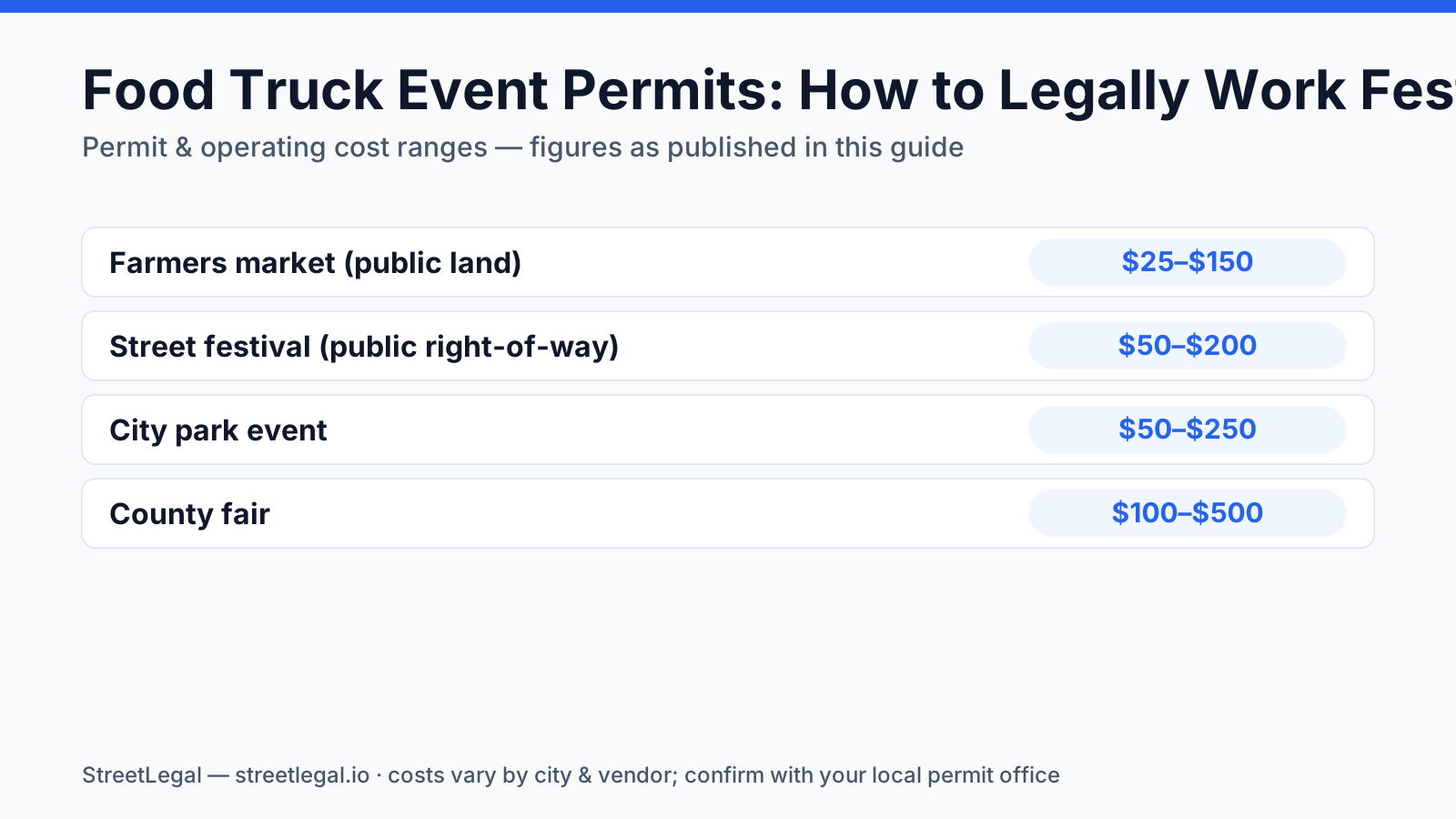
Notice the pattern: private land events rarely need additional permits. Events on public land almost always do. The exception is when the event organizer has already obtained a blanket permit — which is covered in the next section.
Temporary Food Establishment Permits: How They Work
A temporary food establishment permit (sometimes called a temporary food event permit or TFE permit) is a short-duration health permit issued by the local health department for a specific event. It's separate from your base MFU permit and covers your operation for a defined period — typically one day to two weeks.
The Basics
- Required for most public-land events where the organizer doesn't have a blanket permit
- Issued by the same health department that licenses your base permit — usually the city or county health dept
- Apply 2–4 weeks before the event; some jurisdictions require 30 days in advance
- Cost: $25–$200 depending on city, event duration, and risk category
- Many cities offer annual bulk event permits for operators doing many events — worth asking about if you work 10+ events per year
What Inspectors Check at Events
Temporary food permit inspections are typically less intensive than your base permit inspection, but they focus on the same core food safety requirements adapted for a temporary setup:
- Temperature controls: Cold holding ≤41°F, hot holding ≥135°F — inspectors may take spot readings at any time during the event
- Handwashing: Accessible handwash station with soap and paper towels, even at temporary setups
- Food protection: Covered food, no cross-contamination risks, adequate sneeze protection for displayed items
- Commissary plan: For multi-day events, inspectors may ask where you're prepping, cleaning equipment, and dumping wastewater
- Base permit on hand: Inspectors will ask to see your base health/MFU permit — have a copy in the truck
Annual Event Permits: Ask About These
Many cities offer a single annual temporary food event permit that covers all events you work during the calendar year — instead of filing per event. These typically cost $150–$400/year and eliminate the per-event application burden. If you're working 8+ public events per year, the math usually favors the annual permit. Call your local health department and ask: "Do you have an annual temporary food establishment permit for operators who work multiple events?"
The Event Organizer Blanket Permit (The One Question That Saves You Money)
Here's the thing most food truck operators don't know: many large festivals and established farmers markets already have a blanket temporary food establishment permit that covers all vendors at the event. When this happens, you don't need to file your own temp permit.
How it works: the event organizer applies for a single blanket permit that names all vendors under their umbrella. The health department treats the organizer as the responsible party for food safety across the entire event. Individual vendors are still subject to inspection, but the permit burden falls on the organizer, not on each truck.
The Question That Saves $100–$200 Per Event
Before you apply for a temp permit for any event, ask the organizer: "Do you have a blanket temporary food establishment permit that covers vendors, or does each vendor need to apply individually?" — This one question can save you the cost of a temp permit application every single time. Many operators pay for permits they didn't need because they never asked.
When the Blanket Permit Covers You
- Large established festivals (most pull their own permit as part of the event permit package)
- City-run farmers markets and public markets
- Some privately-run weekly markets that have operated for years and have their permit process dialed in
When You Still Need Your Own Temp Permit
- New or smaller events where the organizer hasn't applied for a blanket permit
- Events where the organizer explicitly tells you each vendor handles their own permitting
- Events on public land where the organizer only has a special event permit but not a food-specific permit
- Anywhere the health department requires individual vendor permits regardless of organizer coverage
Important: Even when a blanket permit covers you, your base health/MFU permit must be active and current. The blanket permit does not replace your base operating license — the organizer will ask to see your base permit and insurance certificate as part of vendor onboarding.
What Event Organizers Actually Require
The official permit requirements are one thing. What event organizers actually ask for is another — and the organizer's list is usually longer. Here's the real vendor requirements checklist for most professional festivals and markets:
Copy of your base health/MFU permit
Always required. Current year, not expired. Have a PDF ready to send the moment you submit a vendor application.
General liability insurance certificate (organizer as additional insured)
Standard minimum: $1 million per occurrence / $2 million aggregate. The COI must name the event organizer specifically as additional insured — your existing policy doesn't cover this automatically. Request the COI from your broker when you get accepted; allow 5–10 business days.
Temporary food permit (if organizer doesn't have blanket coverage)
If required, file as early as possible — don't wait until the week before the event. Some health departments have hard deadlines that cannot be waived.
Food handler certifications (sometimes)
Larger events or events in stricter jurisdictions may ask for copies of food handler certs for everyone working the truck at the event. Keep digital copies ready.
Menu submitted in advance
Required for health department review as part of the temp permit application. Organizers also want it for their event marketing materials. Lock your event menu and submit it early — changing it late creates paperwork.
Proof of commissary agreement (sometimes)
For multi-day events, the health department or organizer may ask where you're prepping and cleaning. Have your commissary agreement accessible.
Vehicle and equipment info (sometimes)
Large festivals with fire safety reviews may ask for your vehicle make/model, propane tank size, and cooking equipment type. Fire marshals at major events do walk-throughs.
Build a Vendor Document Packet Once
Create a single folder (digital) with every document you might need: base permit PDF, current COI template, food handler certs, commissary agreement, and a standard menu PDF. Every time you apply to a new event, you can respond to vendor applications in under 10 minutes instead of scrambling to find documents.
Street Markets and Public Markets Specifically
Markets deserve their own section because they have a different operating model than one-off festivals — and the permit rules reflect that.
Farmers Markets
Most established farmers markets handle their own permitting. Before you apply to any permit on your own, talk to the market manager. Ask two things:
- Do you have a blanket food permit that covers vendors?
- What documents do you require from each vendor?
In most cases, established farmers markets on public land have worked out their permit situation with the city. Your job is to show up with a valid base permit and whatever the market manager asks for. Filing your own separate temp permit is often unnecessary and sometimes creates conflicts.
Night Markets and Pop-Ups on Public Streets
These are more variable. Night markets on public streets or in public plazas usually require event organizers to have both a special event permit from the city and a temporary food permit from the health department. The key question is whether the organizer has both. If they've been operating for years, they probably have it dialed in. If it's a new event, ask to see their permit documentation before you commit to the slot.
Recurring Weekend Markets
Seasonal recurring markets — weekly Saturday markets that run April through October, for example — often operate under a seasonal permit that covers the entire series rather than one permit per week. This is the most efficient arrangement for everyone. If you join one of these, the organizer's seasonal permit typically covers you for the full season, not just individual dates. Confirm this at the start of the season so you're not filing individual permits unnecessarily.
Big Festivals and Fairs: A Different World
Large events — county fairs, state fairs, major food festivals with 10,000+ attendees — operate on a completely different permitting track. Your local health department may not even be the right contact.
County Fairs
County fairs are usually run by the fair authority, which acts as its own permitting body. You don't file with your city health department — you file directly with the fair authority. They have their own application process, vendor fees (often $100–$500 just for the permit/booth space deposit), and inspection schedule. The fair authority typically coordinates with the county health department, but you interact with the fair office, not the health dept.
State Fairs
State fairs are typically regulated by the state agriculture or state health department — not your local city or county. This means a completely separate application process, often with stricter equipment requirements, advance menu approval, health department pre-inspection before the fair opens, and sometimes specific commissary capacity requirements at the fairgrounds.
Large Music and Food Festivals
Professional multi-day festivals (think 10,000+ attendance) typically have their own vendor management team that handles permitting coordination. The event pulls a master event permit and food permit, and vendors apply through the festival's vendor portal. These events often require:
- Advance menu approval by the health department (the festival submits vendor menus on your behalf)
- Higher insurance minimums ($2M per occurrence is common at large events)
- Pre-event health department inspection of your truck at a designated staging area
- Specific equipment requirements (measured commissary capacity, water system specs)
- Fire marshal walkthrough on setup day
Big Events Move Fast — Don't Miss the Window
Major festivals often open vendor applications 4–6 months in advance and fill slots quickly. When you apply, the organizer will need your permit and insurance documents on file before the event. If your annual permit is up for renewal close to the event date, renew it early. A lapsed permit can cost you a lucrative slot.
Building a Yearly Event Calendar Without Permit Headaches
Most operators figure out the permit game through painful trial and error. Here's how to front-load the work so the rest of the year runs smoothly.
Step 1: Map Your Recurring Events
Make a list of every recurring event you want to work: regular farmers markets, seasonal night markets, annual festivals, local fairs. For each one, find out:
- Who issues the permit and what type is required
- Whether the organizer has blanket coverage or each vendor files independently
- Lead time required for permit applications
- Annual or per-event cost
Step 2: Build a Permit Renewal Calendar
Most recurring events have the same permit window each year. Once you've done an event once, note the filing deadline and put it in your calendar for the following year. A simple spreadsheet with event name, permit type, who files, deadline, and cost will save you significant stress.
Step 3: Keep a Ready-to-Send Document Folder
Event organizers move fast. Keep digital copies of everything ready to send immediately when you're accepted to a new event:
- Current base health/MFU permit (PDF)
- Current insurance certificate (note the expiration date — if it expires before the event, renew in advance)
- Food handler certifications
- Commissary agreement
- Standard menu PDF (your most common event menu)
Step 4: Ask About Annual Event Permits Early
At the start of each year, check with your local health department about annual temporary food event permits. If you're doing 10+ public events per year, an annual bulk permit may eliminate the need for per-event applications and reduce your total permit costs significantly. Not every jurisdiction offers these, but many do — and most food truck operators don't know to ask.
The Fast-Track Version
Do this once and you'll never scramble for permits again: (1) Build your document folder. (2) Call your health dept about annual event permits. (3) For every event you want to work, ask the organizer about blanket coverage before filing anything. (4) Track filing deadlines in a calendar. The whole setup takes an afternoon and pays back in time and money every event season.
Food Truck Event Permit FAQ
Do I need a special permit to work at a farmers market?
What happens if the festival has a blanket permit?
How far in advance do I need to apply for an event permit?
Does my regular food truck permit cover outdoor events?
What insurance do I need for festivals and events?
Official Resources — Verify Current Requirements
- FDA Food Code — model food code that most state and local regulations are based on
- CDC Food Safety Resources — temporary food event guidance and food safety best practices
Always verify current permit requirements, fees, and lead times directly with your local city or county health department before working any public event.
Related Guides
More on permits, insurance, and operating in specific cities:
Answers to the most common permit questions — costs, timelines, commissary rules, and more.
Find city-level permit guides for every state we cover — compare costs and requirements.
More from the blog
Food Truck POS Systems: Square vs. Toast vs. Clover vs. Avocado (2026)
Real 2026 pricing, hardware costs, offline mode, and contract terms for Square, Toast, Clover, and Avocado — compared specifically for food truck operators.
City GuidesEagan, MN Food Truck Permit Guide
Eagan MN food truck permit guide: MDH mobile food licensing, Dakota County food safety, city peddler rules, commissary records, costs, and launch timeline.
City GuidesBentonville, AR Food Truck Permit Guide
Complete guide to food truck permits, fees, and requirements in Bentonville, AR.
City GuidesBiloxi, MS Food Truck Permit Guide
Biloxi food truck permit guide 2026: licenses, health permit steps, commissary records, inspections, costs, renewal timing, and launch checklist.