· Updated · 9 min read · StreetLegal Team
Pittsburgh Food Truck Permits: The Sequencing Trap That Costs Operators $8,000–$15,000
By StreetLegal Team · April 2, 2026 · City Guides · 8 min read
Updated June 30, 2026.
Pittsburgh food truck operators who apply in February think they will be open by April. Most do not open until June — and that two-month slip quietly costs them $8,000 to $15,000 in lost spring revenue. It is not bad luck. It is a sequencing trap buried in how Allegheny County processes applications that nobody at the permit office will warn you about.
Pittsburgh food truck permit snapshot — 2026
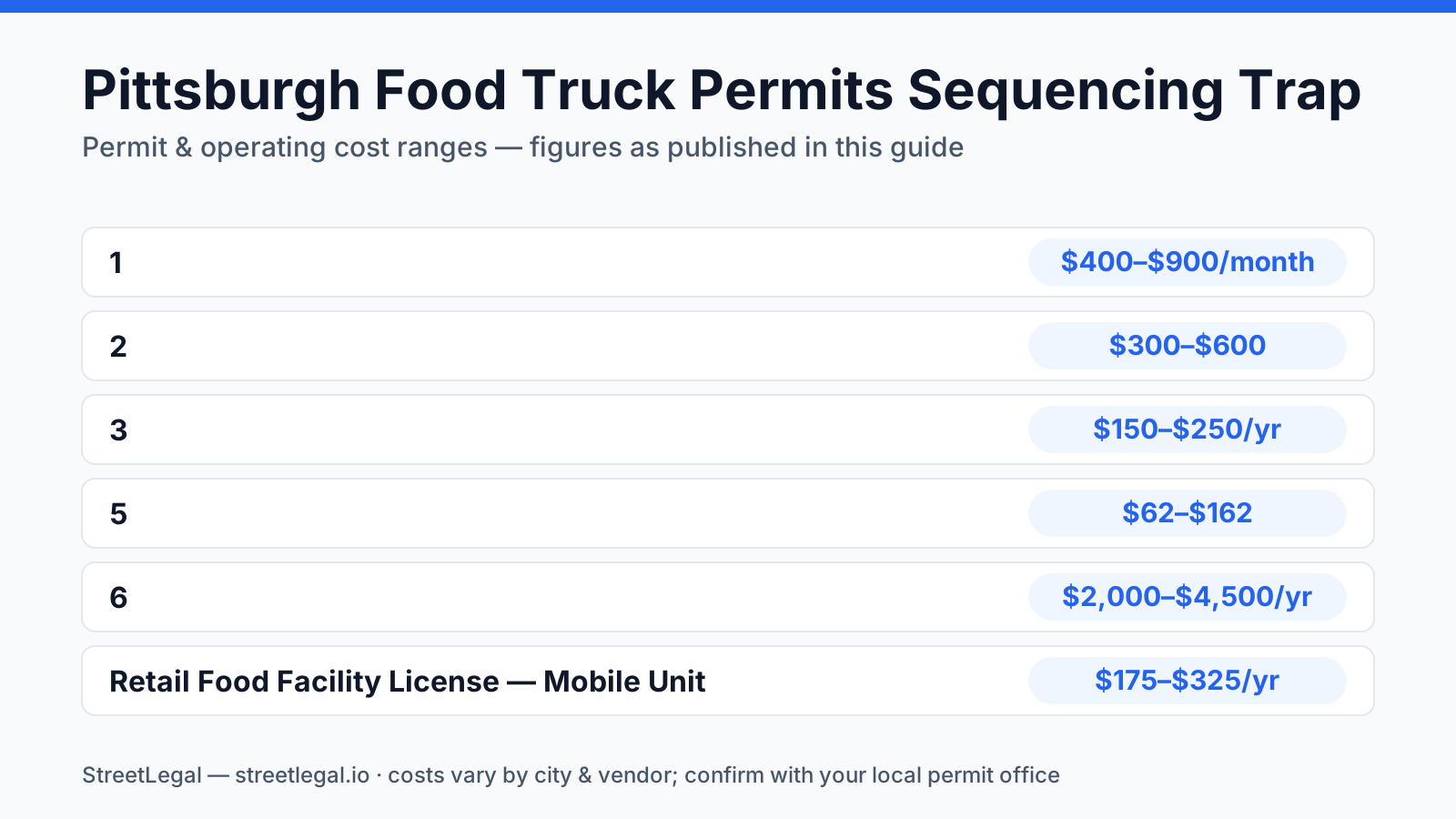
Pittsburgh is a two-agency market. The table below shows the full permit sequence — the order it must happen, not just the list. Getting this order wrong is the sequencing trap.
| Step | Agency | Permit / item | Fee | Timeline | Sequence note |
|---|---|---|---|---|---|
| 1 | Commissary kitchen | ACHD-approved commissary agreement | $400–$900/month | 1–3 weeks to sign | First — required before any city or county filing |
| 2 | Allegheny County Health Dept (ACHD) | Retail Food Facility License (TFF) | $300–$600 | 6–12 weeks | Longest gate — must start before city license |
| 3 | City of Pittsburgh | Mobile food vendor (MFV) license | $150–$250/yr | 2–4 weeks | Can run parallel to ACHD after commissary is signed |
| 4 | PA Department of Revenue | Sales tax license | Free | 1–2 weeks | Before first sale; concurrent with city layer |
| 5 | PA Department of Agriculture | Food establishment license | $62–$162 | 2–3 weeks | Required if operating outside Allegheny County |
| 6 | Insurance provider | Commercial auto + general liability | $2,000–$4,500/yr | 1–2 weeks | Required before operating; event sites may need add'l insured |
Spring Window Alert
If you want to open by April or May in Pittsburgh, you needed to submit your commissary agreement and ACHD application by January. If you're reading this now, keep reading — there are still options.
Pittsburgh Requires Three Separate Permits. Most Operators Know About One.
On opening day, an operator in Lawrenceville got shut down by ACHD. His City of Pittsburgh license was valid. He did not know they were different things.
This is the first trap. Pittsburgh sits at the intersection of two overlapping regulatory systems — the city and the county — and they do not automatically communicate with each other. Getting licensed by one does not mean you are cleared by the other.
Here is what you actually need:
| Permit / License | Issuing Agency | Fee | Expires |
|---|---|---|---|
| Retail Food Facility License — Mobile Unit | Allegheny County Health Dept (ACHD) | $175–$325/yr | December 31 |
| City of Pittsburgh Vending License | City of Pittsburgh | ~$100–$300/yr | Annually |
| Pennsylvania Department of Agriculture License | PA Dept of Agriculture | $100–$200/yr | Annually |
The ACHD permit is the hardest to get and the most dangerous to lose. ACHD inspectors conduct unannounced inspections and have authority to pull your permit on the spot. Operating without it is not just a fine — it is a stop-work order with no timeline for reinstatement until you resolve whatever triggered the revocation.
One more thing most operators miss: all Allegheny County permits expire December 31 regardless of when they were issued. If you receive your ACHD permit in September, you have three months before you need to renew. Budget and plan accordingly.
The Commissary Catch-22
Here is the mechanism that produces the spring delay nobody warned you about.
ACHD requires a signed commissary agreement before they will process your application. This is not optional — it is a hard requirement. Without it, your application sits in a queue and does not move.
The problem: commissary kitchens will not sign an agreement until you are close to approval. They are protecting themselves from operators who sign agreements and then never actually open. The result is a circular dependency — ACHD won't process you without the commissary agreement, and the commissary won't sign until you're nearly approved.
The way out of this trap is relationship and timing. You need to find a commissary early, build a real relationship with the operator, and negotiate the agreement before you technically need it. This takes weeks, not days.
Commissary scarcity makes this worse
Fewer than 15 ACHD-approved commissary kitchens operate in the Pittsburgh metro area. If the commissary you signed with gets removed from ACHD's approved list mid-application — which does happen — you restart from scratch. Ask your commissary for proof of their current ACHD approval status before signing anything.
The $8,000 Spring Mistake: What Missing Your Launch Window Actually Costs
Let's put a number on the sequencing trap.
Pittsburgh food trucks earn $800 to $2,500 per operating day depending on the concept, location, and season. April and May are peak earning months — pent-up demand after winter, farmers markets reopening, corporate lunches resuming, and the festival calendar starting. Operating in April and May is not equivalent to operating in February. It is worth more, and there are more opportunities per week.
| Scenario | Revenue Impact |
|---|---|
| Missing April entirely (20 operating days) | $16,000–$50,000 in lost gross revenue |
| Missing May entirely (20 operating days) | $16,000–$50,000 in lost gross revenue |
| Fixed costs accruing during permit limbo | $2,000–$4,000/month (commissary rental, equipment financing, loan payments) |
| Non-refundable application fees already paid | $400–$800 that doesn't come back |
April and May represent an estimated 20–30% of a Pittsburgh food truck's annual revenue potential. Missing it does not just affect those months — it compresses the entire year. You never recover the farmers market spots you didn't get, the corporate accounts you didn't land before someone else did, or the brand awareness you didn't build while the season was starting.
Neighborhood Rules That Get Operators Fined in Week One
Getting your permits approved does not mean you can operate anywhere. Pittsburgh has layered location rules that many first-time operators only discover after their first citation.
The 20-foot rule: Pittsburgh requires food trucks to maintain a minimum 20-foot distance from the entrance of a brick-and-mortar restaurant when operating on public property. This is strictly enforced in neighborhoods with dense restaurant corridors. In areas like the Strip District or Oakland, many spots you'd consider ideal are legally off-limits.
Micro-zoning: The Strip District, Oakland, and the Downtown Cultural District each have their own overlapping rules about hours, locations, and event operations. What is legal in one block may not be legal in the next. Before committing to a regular spot in any of these areas, verify with the city's zoning office — not just the general permit office.
Private lots are not automatic clearance: Many operators assume that a deal with a private lot owner eliminates city oversight. It does not. Operating on private property still requires a separate city zoning filing in most cases. Operators who relied on a lot owner's verbal approval have been cited within their first week of operation.
Event permits are a separate problem: Heinz Field, PNC Park, and major Pittsburgh festivals require special event permits that are entirely separate from your operating licenses. Non-refundable vendor fees are typically due at application — meaning if you do not have your permits in order by the time the event application closes, you lose your spot and your fee.
How to File Pittsburgh Permits in the Right Sequence
The trap is sequencing. The solution is also sequencing — done correctly.
Commissary Agreement First
Before anything else, identify an ACHD-approved commissary, build the relationship, and secure a signed agreement. Verify their approval status directly with ACHD. This is step one — not step three.
ACHD Application Second
Submit your Allegheny County Health Department Retail Food Facility License application with your commissary agreement attached. This is the longest step — plan for 6–12 weeks when all documents are correct, longer with any errors or missing items.
City License in Parallel
Once ACHD is in process, file your City of Pittsburgh vending license. These two tracks can run simultaneously — you don't need to wait for ACHD approval to apply for the city license.
PA Department of Agriculture License if Crossing County Lines
If you plan to operate at any events or locations outside Allegheny County — even a single suburban farmers market — add the PA DOA license to your stack. File this alongside your city license.
Target Submission Window: November–January for April Launch
If you want to be operational for the spring season, you need your commissary secured and ACHD application submitted by January at the latest. November is safer. February means June.
Permit Expediters Save 3–5 Weeks
Operators who use a permit expediter — someone who knows ACHD's documentation preferences and has established contacts at the office — consistently save 3–5 weeks compared to first-time self-filers. When spring timing is at stake, that delta is worth more than the expediter's fee.
Pittsburgh Food Truck Permit FAQ
Do I need both a city AND county permit?
How long does the ACHD application actually take?
Can I operate on private property without a city permit?
What are the fines for operating without proper permits?
Do I need the PA DOA license if I only plan to operate in Pittsburgh?
Pittsburgh permit sequence & startup costs
Commissary kitchen agreement
ACHD-approved facility · Signed agreement required before any application · Find & lock in before anything else
ACHD Retail Food Facility License
Allegheny County Health Dept · Requires commissary agreement · 6–12 week review · Expires December 31
City of Pittsburgh vending license
Pittsburgh PLI · Can file parallel to ACHD · Separate from county — ACHD inspectors won't accept it as county clearance
PA Dept of Agriculture license (if leaving Allegheny County)
Required the moment you operate at any event in a neighboring county — even one farmers market · File alongside city license
Total first-year (with commissary + insurance)
$3,500–$6,500
Correct sequence timeline
10–14 weeks
Wrong order delay
+6–8 weeks
Market fit
Best truck type for the Pittsburgh market (2026)
Getting your permits in the correct sequence matters. So does choosing a truck build that actually fits Pittsburgh operating conditions before you commit. Pittsburgh rewards compact, repositionable trucks that work brewery lots, office corridors, neighborhood events, and university-area traffic — not oversized street-food rigs built for warm-weather cities.
| Truck / Concept Type | Pittsburgh Market Fit | Commissary Dependence | Event Flex | Best Use Case |
|---|---|---|---|---|
| Compact taco / street food truck | Excellent | Medium (1–2 hrs/day) | High | Brewery lots, neighborhood loops, office blocks; fits tighter Pittsburgh street constraints |
| Smash burger / comfort food | Excellent | Medium (1–2 hrs/day) | High | Strip District events, university corridors (Pitt/CMU), North Shore game-day traffic |
| Coffee / espresso trailer | Very Good | Low (<1 hr/day) | Very High | Morning office-district runs in Oakland and Downtown; easiest repositioning; minimal ACHD commissary friction |
| BBQ / full scratch-cook truck | Moderate | High (3–5 hrs/day) | Medium | Weekend festivals and private events; highest daily commissary burden; ACHD compliance pressure is greatest for this build |
| Dessert / single-specialty | Good | Low–Medium | Very High | Breweries, festivals, private catering; too niche for street-only daily operation in Pittsburgh |
All Pittsburgh food truck builds require an ACHD-approved commissary agreement regardless of type. Commissary dependence refers to daily prep hours required — not whether you need one.
Pennsylvania food truck permit hub
Pittsburgh is the larger of PA's two main food truck markets. Compare Pittsburgh vs. Philadelphia permit stacks, understand the PA DOA layer, and see all PA city guides in one place.
Open Pennsylvania state hub →More Pennsylvania reading:
Where You Can Operate in Pittsburgh: Permit Approval vs. Real Access
Your ACHD permit and city vending license tell you that you are legally eligible to operate. They do not guarantee that a specific location is available, accessible, or practical. Pittsburgh's layered operating rules mean that permit approval is only the first gate — this table separates legal status from operational reality for each major location type.
| Location Type | Permit Required | Access Reality | Key Friction |
|---|---|---|---|
| Public street / metered parking | ACHD TFF + City vending license | Legal in designated zones only; 20-ft rule from restaurant entrances strictly enforced | Most desirable downtown and Strip District spots blocked by 20-ft rule; high competition for remaining legal positions |
| Private parking lot | ACHD TFF required; city zoning filing often needed even on private land | More flexible than street, but lot owner deal alone is not city clearance | Verbal approval from lot owner does not eliminate city oversight; operators have been cited in week one relying on this |
| Brewery / bar lot | ACHD TFF + City vending license | Fastest-growing access channel; most Pittsburgh breweries welcome rotating food trucks | Check for exclusive catering contracts before committing; some require revenue share or minimum nights |
| Office park / business district | ACHD TFF + City vending license | Strong midweek lunch demand in Southside, Oakland, North Shore; requires property manager permission | Spots are relationship-driven; cold-approaching without a contact rarely works long-term |
| Farmers markets | ACHD TFF + market-specific vendor application | Accessible but limited spots; Bloomfield and Strip District markets fill early each season | Application deadlines are often January–February for the spring season; late applicants lose prime spots |
| Stadium / major event venues | Event-specific vendor permit + ACHD TFF | Heinz Field and PNC Park require separate vendor applications; spots go to established operators first | Non-refundable application fees due at submission; miss the deadline and you lose the season |
| Allegheny County (outside city limits) | ACHD TFF covers county health; individual municipalities may add local vendor permits | Suburban festivals and county-area events are accessible; rules vary significantly by municipality | Check each municipality before committing to events in Bethel Park, Mt. Lebanon, or Monroeville; PA DOA license required for any out-of-county events |
Operating outside Allegheny County — at any event, farmers market, or festival in a neighboring county — requires a PA Department of Agriculture license in addition to your ACHD permit. Apply for it alongside your city license so you are not blocked by a single out-of-county opportunity.
People also ask about Pittsburgh food truck permits
How much does a food truck permit cost in Pittsburgh?
How long does it take to get a food truck permit in Pittsburgh?
Do I need a commissary kitchen to operate a food truck in Pittsburgh?
What documents do I need for a Pittsburgh food truck permit?
Answers to the most common permit questions — costs, timelines, commissary rules, and more.
Find city-level permit guides for every state we cover — compare costs and requirements.
More from the blog
Food Truck POS Systems: Square vs. Toast vs. Clover vs. Avocado (2026)
Real 2026 pricing, hardware costs, offline mode, and contract terms for Square, Toast, Clover, and Avocado — compared specifically for food truck operators.
City GuidesEagan, MN Food Truck Permit Guide
Eagan MN food truck permit guide: MDH mobile food licensing, Dakota County food safety, city peddler rules, commissary records, costs, and launch timeline.
City GuidesBentonville, AR Food Truck Permit Guide
Complete guide to food truck permits, fees, and requirements in Bentonville, AR.
City GuidesBiloxi, MS Food Truck Permit Guide
Biloxi food truck permit guide 2026: licenses, health permit steps, commissary records, inspections, costs, renewal timing, and launch checklist.