· Updated · 9 min read · StreetLegal Team
Pittsburgh Food Truck Rules Just Changed in 2026 — And the NFL Draft Is Why
Updated June 30, 2026.
The 2026 NFL Draft is coming to Pittsburgh in April — three days Downtown and on the North Shore, hundreds of thousands of visitors, and the biggest revenue opportunity most Pittsburgh food truck operators will see all year. Pittsburgh City Council saw it coming too. They unanimously passed new vendor ordinances in late 2025 that remove the biggest operating restrictions food trucks have faced for years — and the timing is no accident.
Here's exactly what changed, what it means for your operation, and how to position yourself before April.
What Changed: The 4-Hour Move Rule Is Gone
Under Pittsburgh's old rules, mobile food vendors were required to physically relocate every four hours. Found a great spot near a busy lunch block? You'd have to pack up and move by mid-afternoon — even if business was thriving.
That rule no longer exists.
Pittsburgh City Council voted unanimously to eliminate the 4-hour relocation requirement. Trucks can now stay in a legal operating location for the full duration of their operating hours without being forced to move on a timer.
For operators, this means:
- Set up at a strong lunch spot and stay through the dinner rush
- No more mid-shift packing, moving, and re-setting up equipment
- More predictable locations — your regulars know where to find you
- Less fuel and vehicle wear from mandatory relocations
Where Can Food Trucks Legally Park in Pittsburgh in 2026?
The previous rules largely limited food trucks to metered parking spots on public streets. The new ordinance significantly expands where mobile vendors can legally operate:
- Parking areas (public and private, with landowner permission)
- Vacant lots
- Parks
- Properties in business districts
This is a major change in practice. A vacant lot or parking garage forecourt that previously required City Council approval is now generally available — as long as you have landowner permission and clear the 150-foot competitor rule.
For the NFL Draft specifically, this means trucks can set up in the expanded footprint around the North Shore, Point State Park, and Downtown corridors without being boxed into metered spots that fill up hours before the crowds arrive. The operators who scout and secure locations now — before the rush — will have the best spots in April.
StreetLegal's legal vending map shows verified operating locations across Pittsburgh and Allegheny County, updated as rules change.
What Stayed the Same: The 150-Foot Rule
Food trucks are still prohibited from operating within 150 feet of a brick-and-mortar business or stationary vendor selling the same type of merchandise, unless that competing business gives written permission.
In practice:
- You can't park a taco truck in front of a Mexican restaurant without their sign-off
- Distance is measured from the nearest point of the competing business
- The rule applies to stationary vendors too — not just permanent storefronts
- Written permission from the competing business fully clears the restriction
What Permits Do You Need for a Pittsburgh Food Truck?
The ordinance change affects operating rules — not the underlying licenses you need. You still need all of these:
Pittsburgh Permit Snapshot — Full Sequence and Costs (2026)
Pittsburgh has a three-layer permit stack: PA state, Allegheny County, and City of Pittsburgh. The commissary kitchen agreement is the most common first-blocker — ACHD will not process your application without it. Start there, then run the rest in the sequence below.
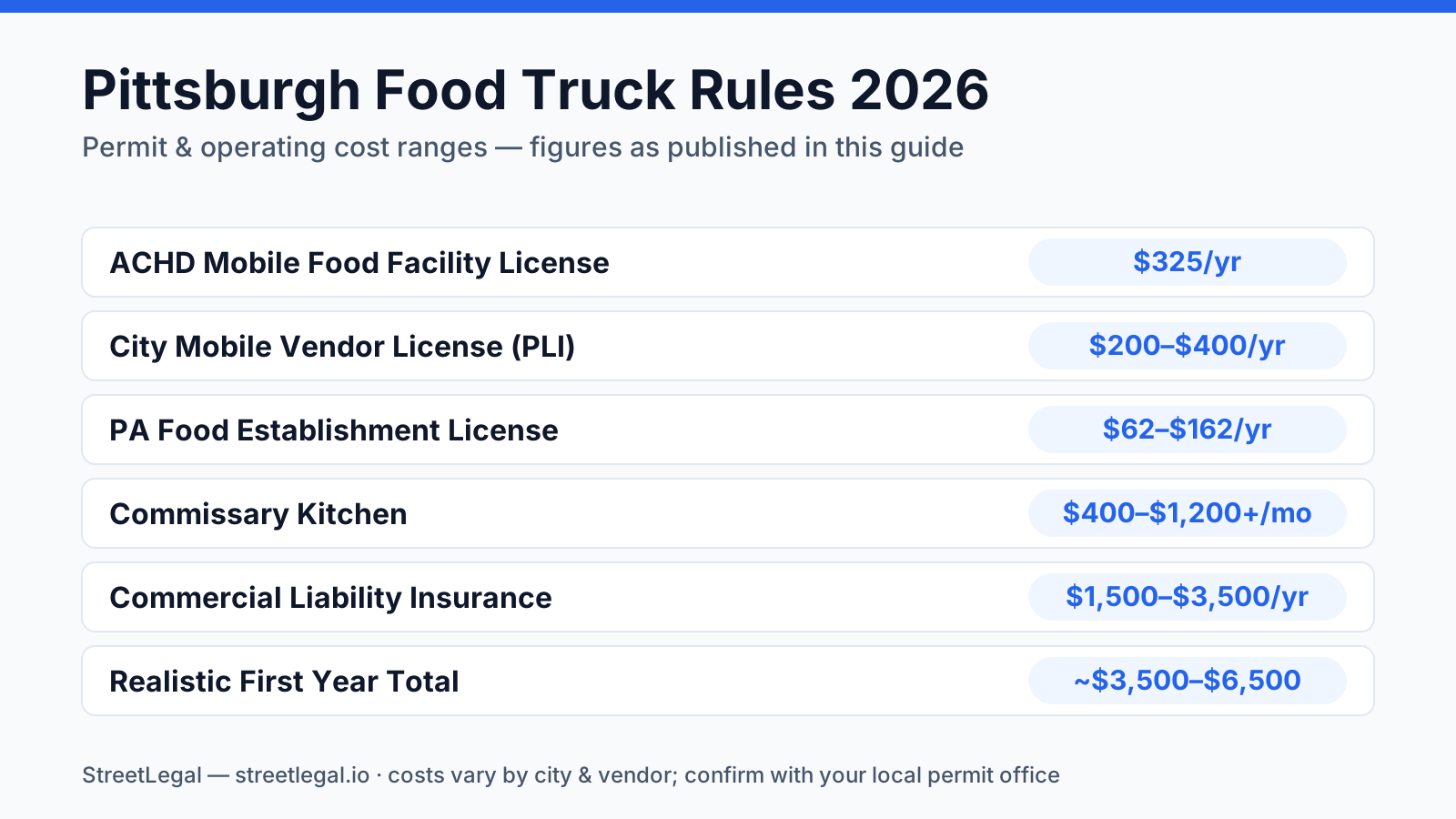
Typical total permit timeline: 6–10 weeks when commissary is secured in week 1. Missing the commissary step first adds 4–6 weeks.
Pittsburgh Food Truck Permit Costs at a Glance
Official sources: ACHD Mobile Food Facility permits · PA Department of Agriculture · Pittsburgh PLI
One Operator's Experience With Pittsburgh Permits
A South Side truck operator we spoke with spent 11 weeks waiting on permits before they could legally open — not because anything was wrong, but because they submitted their ACHD application before securing a commissary kitchen agreement. ACHD won't process the application without it. They had to start the process over, losing their original slot in the inspection queue.
With the NFL Draft 8 weeks out, there's no margin for that kind of delay. ACHD and PLI queues fill fast ahead of major events. The operators who are permitted and positioned in April will have their best revenue weekend of the year.
StreetLegal flags this sequence automatically — commissary first, then ACHD, then PLI — so operators don't lose weeks to a preventable ordering mistake.
Why Did Pittsburgh Do This Now?
The 2026 NFL Draft comes to Pittsburgh in April — a three-day event spanning Downtown and the North Shore expected to draw hundreds of thousands of visitors. City leaders wanted vendors ready to capitalize on that foot traffic without being hamstrung by the four-hour move requirement.
Jacquelyn Wright, a Hill District food truck owner who testified in support: "I believe if we're allowed to come down here, we can drive more money and revenue to the city."
The unanimous council vote signals broad support — this isn't a temporary Draft accommodation. These are Pittsburgh's new baseline rules going forward.
Action Items for Pittsburgh Operators Before April
- Scout new locations now. The 4-hour rule is gone — spots you previously avoided are viable. Map routes near the NFL Draft zone before April; North Shore, Point State Park, and Downtown will see the heaviest foot traffic.
- Verify the 150-foot rule before any new spot. Still in effect. Walk it off or check StreetLegal's legal vending map before committing to a regular location.
- Confirm all permits are current. ACHD and PLI will see a surge of applications ahead of the Draft. A lapsed renewal means you're sidelined during the best revenue week of the year.
- Get landowner permission in writing for any private property locations. Oral agreements won't protect you if a property owner changes their mind mid-event weekend.
- Check PLI for the finalized rules. Pittsburgh's full Rules & Regulations for the new vendor program were published around March 12, 2026. Check the PLI site or EngagePGH for the latest version.
The NFL Draft brings hundreds of thousands of people to Pittsburgh. The operators who are permitted, positioned, and ready in April will have their best revenue weekend of the year. Eight weeks isn't long.
Running a Food Truck in Pittsburgh Is More Than Just Permits
Day-to-day, Pittsburgh operators are also dealing with:
- Where can you legally park? Rules vary by neighborhood, time of day, and proximity to competitors
- What events and rallies are looking for trucks? Most operators find out too late or through word of mouth
- Which commissary kitchens are available in Allegheny County? ACHD requires one — finding a good one is its own project
- When do your permits renew? ACHD, PLI, and PA Agriculture all run on different schedules
What changed in Pittsburgh: 2025 rules vs. 2026 rules
Old rules (2025 and before)
- Must physically relocate every 4 hours
- Largely limited to metered parking spots
- No vacant lots without City Council approval
- No parks without separate park permit
- Brick-and-mortar corridor restrictions
New rules (2026, unanimous council vote)
- 4-hour relocation rule eliminated
- Parking areas (public & private with permission)
- Vacant lots — now generally available
- Parks — expanded operating zones
- Business district properties
Still applies: the 150-foot rule
Trucks cannot operate within 150 feet of a competing brick-and-mortar or stationary vendor selling the same type of merchandise — unless that business gives written permission.
Council vote
Unanimous
Effective
2026
Trigger
2026 NFL Draft
These are
Permanent rules
Pennsylvania food truck permit hub
Pittsburgh sits inside a three-layer PA permit structure: PA DOA (state), ACHD (county), and PLI (city). If you plan to operate outside Allegheny County at any point — suburbs, festivals, neighboring counties — the PA DOA license applies from day one.
Open Pennsylvania state hub →More Pittsburgh reading: Complete Pittsburgh permit guide · PA commissary requirements · How to start a food truck
Source: Pittsburgh City Council Ordinances 34 & 35, passed November 2025. Reported by TribLive. Full Rules & Regulations published March 12, 2026 via EngagePGH.
Best Truck Type for the Pittsburgh 2026 Market
The 2026 ordinance change rewards trucks that can move between neighborhoods, events, and private lots efficiently. Not all truck builds fit Pittsburgh's operating model equally. Here's how common setups compare.
Pittsburgh commissary scarcity (fewer than 15 ACHD-approved kitchens in the metro) makes low-commissary-dependence concepts a structural advantage.
Where You Can Actually Operate in Pittsburgh — Permit vs. Real Location Access
Getting your permits approved is not the same as having good operating locations. The 2026 rule changes expand what's legal — but actual access depends on landowner permission, the 150-foot rule, and event/venue constraints. Here's how the major Pittsburgh operating environments stack up.
The 2026 rule changes expand legal access — but every location still requires landowner permission, 150-ft competitor clearance, and the full permit stack.
People also ask about Pittsburgh food truck permits
How much does a food truck permit cost in Pittsburgh?
How long does it take to get a food truck permit in Pittsburgh?
Do I need a commissary kitchen to operate a food truck in Pittsburgh?
What documents do I need for a Pittsburgh food truck permit?
Answers to the most common permit questions — costs, timelines, commissary rules, and more.
Find city-level permit guides for every state we cover — compare costs and requirements.
More from the blog
Jefferson County, MO Food Truck Permit Guide
Complete guide to food truck permits, fees, and requirements in Jefferson County, MO.
City GuidesSt. Charles County, MO Food Truck Permit Guide
Complete guide to food truck permits, fees, and requirements in St. Charles County, MO.
City GuidesSt. Louis County, MO Food Truck Permit Guide
Complete guide to food truck permits, fees, and requirements in St. Louis County, MO.
Buyer's GuideFood Truck POS Systems 2026: Square, Toast, Clover & Avocado
Compare 2026 food truck POS systems by pricing, hardware costs, offline mode, and contract terms for Square, Toast, Clover, and Avocado.