· 7 min read · StreetLegal Team

How to Get a Food Truck Permit in Fort Lauderdale, FL (2026 Guide)
Updated June 29, 2026 — permit fees, commissary rules, DBPR licensing process, operating zones, startup costs, and Florida market comparison reviewed and verified current.
Fort Lauderdale combines year-round warm weather, a tourist-heavy beach economy, a strong local food culture, and the Broward County Parks event circuit — making it one of the better South Florida food truck markets. Permitting involves Florida DBPR for your statewide MFDV license, Broward County for health oversight, and the City of Fort Lauderdale for the local vendor license. This guide covers the full permit stack, real startup costs, where to actually operate, best truck types for this market, and how Fort Lauderdale compares to other major Florida cities.
Fort Lauderdale Permit Snapshot
Fort Lauderdale food truck permitting runs through three layers: Florida state (DBPR MFDV license), Broward County (health inspection and business tax), and the City of Fort Lauderdale (local vendor license). Your Florida DBPR MFDV license covers the entire state — you can work any city in Florida with the same health-and-safety credential.
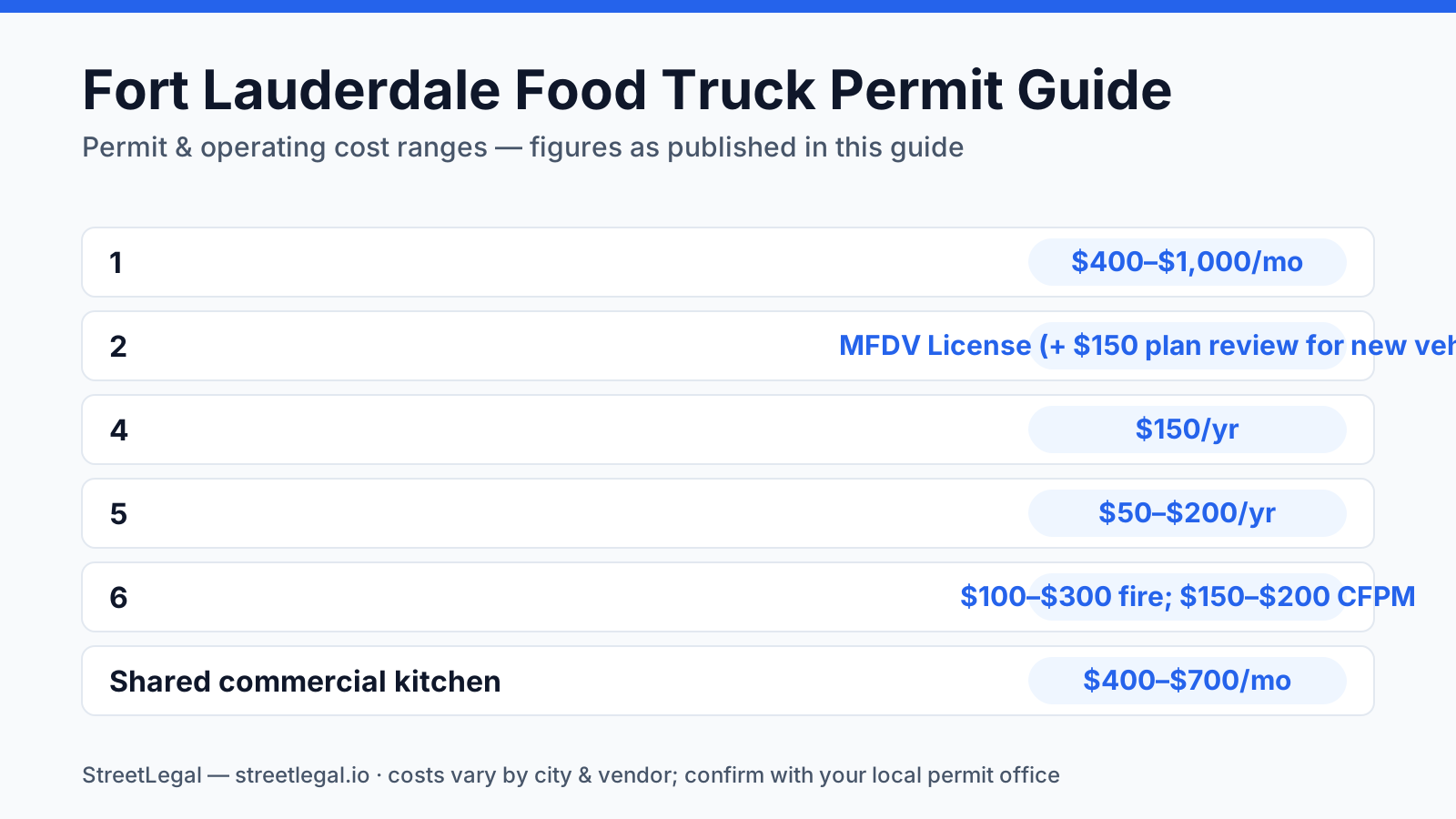
| Step | Agency | Permit / License | Fee | Timeline | Sequence |
|---|---|---|---|---|---|
| 1 | Licensed commissary (private) | Commissary agreement — DBPR form HR 7022 | $400–$1,000/mo | 1–2 wks to secure | Required before DBPR application |
| 2 | Florida DBPR | MFDV License (+ $150 plan review for new vehicles) | $347–$760/yr | 4–8 wks (plan review 2–4 wks extra for new vehicles) | Primary statewide credential; valid all of Florida |
| 3 | Florida Dept. of Revenue | Florida Sales Tax Permit | Free | 1–3 days | Before first sale; Broward County rate is 7% |
| 4 | City of Fort Lauderdale | Mobile Food Vendor License | $150/yr | 1–2 wks | Required for city operations; display while operating |
| 5 | Broward County Revenue Collections | Local Business Tax Receipt (BTR) | $50–$200/yr | 1–2 wks | Required for Broward County operations beyond city limits |
| 6 | Fort Lauderdale Fire Rescue / ANSI program | Fire safety cert + Food Safety Manager Cert (CFPM) | $100–$300 fire; $150–$200 CFPM | Schedule before DBPR inspection | Both required; fire cert for propane/cooking-hood trucks |
Commissary Requirements in Fort Lauderdale
Florida law requires all mobile food vendors to operate from a licensed commissary kitchen. Your commissary must hold its own valid food service license. You cannot use a home kitchen — and DBPR will not approve your MFDV license without a signed commissary agreement (form HR 7022) on file.
The commissary handles:
- Food prep and ingredient storage
- Equipment cleaning, sanitizing, and wastewater disposal
- Restocking between service periods
- Overnight equipment storage (required when not in a secured private lot)
| Commissary Type | Typical Cost | Best For |
|---|---|---|
| Shared commercial kitchen | $400–$700/mo | New operators, flexible hours, lower overhead |
| Restaurant commissary agreement | $400–$600/mo | Operators with set early-morning prep schedules |
| Private commissary / own space | $1,000–$2,000/mo | Multi-truck operations, highest control |
South Florida has a healthy supply of licensed commissary kitchens compared to many markets. Still, quality commissaries with the right storage and dump facilities fill up — lock in your agreement before you submit the DBPR application.
Fire & Food Safety Requirements
- Fire suppression system (UL 300): Required for trucks with commercial cooking hoods — deep fryers, commercial flat tops, or open-flame equipment. Fort Lauderdale Fire Rescue inspects cooking trucks. Annual service certification required. Budget $1,500–$3,500 installed.
- Class K fire extinguisher: Required for any cooking with grease or oils. Must be current and tagged.
- ABC extinguisher: Required in addition to Class K in all trucks.
- Propane system: Connections, regulators, and tanks must pass inspection before DBPR licensing.
- Food Safety Manager Certification (CFPM): At least one person per truck must hold a current CFPM from an ANSI-accredited program (ServSafe, NRFSP, etc.). Required before DBPR inspection.
- Temperature control: Cold hold at 41°F or below; hot hold at 135°F or above. Broward County Environmental Health inspectors use calibrated thermometers during annual inspections.
- Handwashing station: Dedicated handwash sink with hot and cold running water, soap, and single-use towels required.
- Waste disposal: Grey water and solid waste must be disposed of at your commissary or an approved dump station — never in storm drains.
Week-by-Week Launch Timeline
| Week | Action | Notes |
|---|---|---|
| 1–2 | Secure commissary agreement + sign DBPR form HR 7022 | Must be licensed commissary; required before DBPR will process your application |
| 1–2 | Register Florida business entity + FL Sales Tax Permit | FL Dept. of State (LLC) + FL Dept. of Revenue (tax); both fast; FL Annual Report due each May |
| 2–3 | Complete Food Safety Manager Certification | ServSafe or equivalent ANSI program; required before DBPR inspection |
| 3–4 | Submit DBPR MFDV license application at myfloridalicense.com | Include commissary agreement, menu, equipment list, vehicle photo; add plan review ($150) if new vehicle |
| 3–5 | Apply for City of Fort Lauderdale Mobile Food Vendor License | Annual fee $150; parallel with DBPR process; display while operating |
| 4–5 | Apply for Broward County Local Business Tax Receipt | Revenue Collections Division; $50–$200/yr; needed for Broward operations |
| 5–9 | Pass DBPR licensing inspection | Most common delay; DBPR contacts you to schedule after application is reviewed; new vehicles with plan review add 2–4 weeks |
| 6–10 | Pass fire safety inspection + confirm Broward Health compliance | Fort Lauderdale Fire Rescue for cooking trucks; Broward Environmental Health annual inspection after licensing |
| 9–10 | Secure property owner agreements + event applications | Brewery lots, private property, Broward County Parks Food Truck Frenzy applications; written permission required |
| 10 | Launch + set annual renewal reminders | DBPR MFDV license, City vendor license, Broward BTR all renew annually |
Fast path: Buying an already-licensed vehicle with no modifications eliminates the $150 plan review and can cut 3–4 weeks off your timeline. This is the fastest route to first-day operations in Fort Lauderdale.
Fort Lauderdale Startup Cost Breakdown
| Item | First-Year Cost | Notes |
|---|---|---|
| Florida DBPR MFDV License | $347–$760 | Annual; statewide validity; covers all of Florida |
| DBPR Plan Review (new vehicles) | $150 | One-time; skip if buying already-licensed vehicle with no mods |
| City of Fort Lauderdale Mobile Food Vendor License | $150 | Annual; display while operating in city limits |
| Broward County Local Business Tax Receipt | $50–$200 | Annual; for Broward County operations beyond city |
| Fire Safety Certification | $100–$300 | Annual cert; required for trucks with cooking hoods |
| Food Safety Manager Certification (CFPM) | $150–$200 | ServSafe or equivalent; valid 5 years |
| General Liability Insurance | $1,500–$3,500/yr | $1M minimum; required by most venues and events |
| Florida Sales Tax Permit | Free | FL Dept. of Revenue; Broward County rate is 7% |
| Commissary kitchen (annual) | $4,800–$12,000/yr | $400–$1,000/mo; year-round in warm FL climate |
Total first-year permits and fees (excluding commissary): $2,497–$5,260. Add commissary and you are looking at $7,297–$17,260 before equipment and food costs.
Where You Can Actually Operate in Fort Lauderdale
Your MFDV license and City vendor permit give you legal authorization — not automatic location access. Private property requires written landowner permission. Beach areas have tighter vending restrictions. Here is where real revenue happens:
| Operating Lane | Permit Alone Enough? | Access Reality | Best Truck Fit |
|---|---|---|---|
| Las Olas Boulevard | No — city permit + property owner permission required | Prime tourist and local corridor; evening and weekend demand strongest; limited parking/vending zones | Upscale/fusion, Cuban/Latin, seafood |
| Flagler Village (NE 2nd / 4th Ave) | No — landowner or event organizer permission required | Arts, brewery, and nightlife district; strong weekend demand; private lots accessible with agreements | Taco/Mexican, upscale fusion, specialty dessert |
| Private Brewery Lots (Funky Buddha, LauderAle) | No — brewery partnership agreement required | Consistently strong evening revenue; breweries actively partner with trucks; requires relationship-building | BBQ, taco, upscale, seafood |
| Broward County Parks — Food Truck Frenzy | No — county vendor application required | Organized monthly events at rotating parks (Tree Tops, T.Y. Park, Brian Piccolo, Plantation Heritage); built-in attendance; apply through Broward County Parks | Any crowd-appeal truck; family-friendly concepts strong |
| Sistrunk Marketplace (NW 6th St) | No — marketplace vendor agreement required | Food hall and outdoor market; regularly hosts food truck pop-ups; apply through marketplace management | Latin/fusion, upscale comfort food, dessert |
| Fort Lauderdale Beach (A1A) | No — beach/park vending restrictions apply; check zoning | High tourist traffic year-round; tighter vending rules than inland; parking and zone restrictions significant; best as event vendor not permanent route | Seafood, ice cream, tropical drinks/dessert |
| Private Corporate / Office Parks | No — property manager permission required | Predictable weekday lunch revenue; less competitive than public vending; Cypress Creek and Sunrise corporate corridors | Specialty coffee, quick-service lunch, gourmet wrap |
Note: Your Florida DBPR MFDV license is valid statewide. You can work Miami, Palm Beach, Boca Raton, or Tampa with the same license. Each city requires its own local vendor permit ($50–$250/yr), but the state-level food safety credential carries everywhere.
Best Food Truck Types for the Fort Lauderdale Market
| Truck Type | Fort Lauderdale Market Fit | Commissary Pressure | Event Flexibility | Best First Revenue Lane |
|---|---|---|---|---|
| Cuban / Latin Fusion Truck | Excellent — South Florida's largest demographic segment; strong demand for Cuban, Puerto Rican, Venezuelan, and Colombian food | Medium — fresh proteins, daily prep; standard commissary workload | High — broad appeal at festivals, private lots, and corporate events | Las Olas Boulevard corridor or Flagler Village brewery lots — strongest recurring demand |
| Seafood / Fish Truck | Strong — coastal market, year-round warm weather, strong local seafood culture; beach events and tourist demand | High — daily fresh seafood sourcing required; refrigeration-intensive | High — beach events, Food Truck Frenzy parks, waterfront venues | Broward County Parks events or beach-adjacent private lots — tourist and local crossover |
| Upscale / Fusion Truck | Good — affluent Las Olas and East Fort Lauderdale demographics; premium catering demand for HOAs, corporate events, and private parties | Medium-High — complex prep, quality sourcing; more commissary time needed | Medium — best at curated events and private catering; less ideal for fast-turnover festival vending | Corporate catering or private events — highest per-ticket revenue in the market |
| Specialty Coffee / Espresso Cart | Good — year-round warm weather limits peak hot coffee demand but iced specialty drinks have strong year-round pull; office parks and morning markets | Low — minimal cooking equipment; simplified commissary and fire safety needs | Very High — works morning markets, office parks, festivals, and events year-round | Corporate office park route — predictable morning revenue, low competition |
| BBQ / Smoked Meats Trailer | Good — event and festival circuit; Broward County Parks events and private lots; outdoor smoking is a visual draw | Medium-High — long smoking times; heavy commissary prep; wood or pellet storage | High for outdoor events; requires more setup time than smaller formats | Brewery lots (Funky Buddha, LauderAle) or Food Truck Frenzy events — consistent event revenue |
| Dessert / Ice Cream Truck | Strong year-round — warm Florida climate drives consistent frozen dessert demand; beach events and family-friendly venues | Low-Medium — cold storage-focused; lighter commissary prep requirements | Very High — beach events, family festivals, Food Truck Frenzy parks, private parties | Beach-adjacent events or Broward County Parks circuit — broad demographic appeal |
How Fort Lauderdale Compares to Other Florida Markets
| Market | Launch Friction | Best First Revenue Lane | Best First Truck Fit | Why This Market |
|---|---|---|---|---|
| Fort Lauderdale / Broward | Moderate — Broward BTR adds one layer; DBPR plan review for new vehicles adds 2–4 weeks; 6–10 week timeline | Broward County Parks Food Truck Frenzy + brewery lots | Cuban/Latin fusion or seafood truck | Year-round tourist season, strong county event circuit, statewide MFDV for expansion, less competitive than Miami |
| Miami / Miami-Dade | High — most complex FL permit stack; Miami-Dade BTR + City BTR + DBPR; 8–12 week timeline | Wynwood BID, private lots, private events | Cuban/Latin fusion, upscale seafood | Highest revenue ceiling in FL but most competitive; strongest event catering market |
| Tampa / Hillsborough | Moderate — Hillsborough EPC adds layer; Ybor City access controlled by YCDC; 6–10 weeks | Ybor City, Riverwalk parks, brewery circuit | Cuban/Latin, BBQ, taco truck | Gasparilla festival, strong brewery circuit, year-round local demand; lower tourist dependency than Fort Lauderdale |
| Orlando / Orange County | Moderate — Orange County Health adds layer; convention calendar drives seasonal demand spikes; 6–10 weeks | Convention center catering, International Drive, private lots | Taco/quick-service, specialty coffee, upscale | Convention and theme park economy; event catering strongest lane; less beach/tourist foot traffic than Fort Lauderdale |
| Jacksonville / Duval | Lower-Moderate — FDOH Duval adds layer; fewer high-density vending zones; 6–10 weeks | Riverside/Avondale, military base catering, beach events | BBQ, seafood, taco truck | Lowest permit costs in FL major markets; military community adds catering demand; less tourist-dependent than Fort Lauderdale |
Common Mistakes Fort Lauderdale Operators Make
- Not accounting for DBPR plan review timing: If your vehicle was never licensed, closed for 18+ months, or remodeled, DBPR requires a plan review that adds 2–4 weeks to your timeline. Buying an already-licensed truck with no modifications eliminates this entirely. Know your vehicle's history before you plan your launch date.
- Treating the beach (A1A) as easy vending territory: Beach areas have specific zoning, vending restrictions, and parking rules. Many operators assume beach foot traffic is automatically accessible — it is not. Verify zoning and get property owner permission before planning any beach route.
- Skipping the Broward County BTR: The City of Fort Lauderdale vendor license only covers city limits. If you plan to operate in Hollywood, Pompano Beach, Deerfield Beach, or other Broward County municipalities, you need the Broward County Local Business Tax Receipt. Failure to carry it can result in fines when operating outside city limits.
- Missing the Broward County Parks Food Truck Frenzy application window: These monthly events are the best-organized, most consistent food truck revenue opportunity in Broward County. They fill vendor slots quickly. Apply through Broward County Parks as early as possible — not after you have your license.
- Not building brewery relationships before launch: Funky Buddha, LauderAle, and other craft breweries in the Fort Lauderdale area regularly partner with food trucks, but they have preferred vendors. Reaching out before your license is issued — not after — gets you in the rotation when spots open.
- Underestimating summer insurance requirements: Florida is one of the most litigious states for food service. Carry at least $1 million in general liability. Many event organizers and property owners in Broward County require proof of insurance before allowing you on site — especially for beach-adjacent events.
- Not planning for tourist season vs. off-season cash flow: October through April is Fort Lauderdale's strongest revenue window. New operators who launch in summer and spend peak profits rather than saving for slower months often struggle. Build your financial projections around October–April peak, June–September ramp.
Fort Lauderdale Food Truck FAQ
What permits do I need to operate a food truck in Fort Lauderdale?
Florida DBPR MFDV License ($347–$760/yr), City of Fort Lauderdale Mobile Food Vendor License ($150/yr), Broward County Local Business Tax Receipt ($50–$200/yr), Florida Sales Tax Permit (free), and Food Safety Manager Certification. A commissary agreement (DBPR form HR 7022) is required before DBPR will process your application.
How much does it cost to start a food truck in Fort Lauderdale?
First-year permit and fee costs run $2,497–$5,260 (DBPR license, plan review if needed, City vendor license, Broward BTR, fire cert, CFPM cert, insurance). Add commissary at $400–$1,000/month ($4,800–$12,000/yr). Total first-year all-in runs $7,297–$17,260 before equipment and food costs.
Can I operate in all of Florida with my Fort Lauderdale food truck permit?
Yes. Your Florida DBPR MFDV license is valid statewide — you can operate in Miami, Palm Beach, Tampa, Orlando, or any Florida city with the same state-level health and food safety credential. Each city will require its own local vendor license ($50–$250/yr), but the MFDV license is the hard part. That is Fort Lauderdale's key advantage over most other states.
What is the best way to build a customer base in Fort Lauderdale?
Start with Broward County Parks Food Truck Frenzy events — they are the best-organized, most consistent foot-traffic events in the county and run monthly at rotating parks. Apply through Broward County Parks. Also reach out to Funky Buddha and LauderAle breweries early — these are the strongest repeat-revenue private lot partnerships in the market.
What are the food truck operating hours in Fort Lauderdale?
The City of Fort Lauderdale allows food truck operations from 7:00 a.m. to 10:00 p.m. These hours may vary for special event permits. Private property operations may follow property-specific rules set by the landowner.
Do I need a fire suppression system on my Fort Lauderdale food truck?
Yes, if your truck uses cooking equipment under a commercial hood — deep fryers, commercial flat tops, or open-flame equipment. Fort Lauderdale Fire Rescue Department inspects cooking trucks. A UL 300 Ansul-type system is required for trucks with cooking hoods. Budget $1,500–$3,500 installed plus annual service certification. Class K and ABC extinguishers are also required in all trucks.
How does Fort Lauderdale compare to Miami for food truck operators?
Fort Lauderdale has a simpler permit stack than Miami (no dual-BTR requirement in most cases), lower competition, an organized county event circuit through Broward Parks, and strong tourist-season demand. Miami has the highest revenue ceiling in Florida but is more competitive and complex to navigate. Many operators launch in Fort Lauderdale first, then expand into Miami once their truck and operations are proven.
What is the fastest way to get a food truck permit in Fort Lauderdale?
Buy an already-licensed vehicle with no modifications. This eliminates the DBPR plan review ($150, 2–4 weeks). You still need the commissary agreement, City vendor license, Broward BTR, and to pass the DBPR licensing inspection — but skipping plan review is the single biggest timeline saver. Realistically plan for 6–8 weeks instead of 8–10 weeks.
Explore the full Florida food truck cluster
Fort Lauderdale is part of a growing Florida network on StreetLegal. Compare permit stacks, costs, and operating realities across major Florida markets.
People also ask about Fort Lauderdale food truck permits
How much does a food truck permit cost in Fort Lauderdale?
How long does it take to get a food truck permit in Fort Lauderdale?
Do I need a commissary kitchen to operate a food truck in Fort Lauderdale?
What documents do I need for a Fort Lauderdale food truck permit?
Answers to the most common permit questions — costs, timelines, commissary rules, and more.
Find city-level permit guides for every state we cover — compare costs and requirements.
More from the blog
Food Truck POS Systems: Square vs. Toast vs. Clover vs. Avocado (2026)
Real 2026 pricing, hardware costs, offline mode, and contract terms for Square, Toast, Clover, and Avocado — compared specifically for food truck operators.
City GuidesEagan, MN Food Truck Permit Guide
Eagan MN food truck permit guide: MDH mobile food licensing, Dakota County food safety, city peddler rules, commissary records, costs, and launch timeline.
City GuidesBentonville, AR Food Truck Permit Guide
Complete guide to food truck permits, fees, and requirements in Bentonville, AR.
City GuidesBiloxi, MS Food Truck Permit Guide
Biloxi food truck permit guide 2026: licenses, health permit steps, commissary records, inspections, costs, renewal timing, and launch checklist.