· Updated · 13 min read · Gibby, StreetLegal Editorial
How to Start a Food Truck in Orlando FL: Complete Permit Guide 2026
Updated June 12, 2026 — permit fees, commissary requirements, operating zone reality, best truck types, and Florida market comparison reviewed current.
Orlando Quick Stats
- 🏛️ Primary permit: DBPR Mobile Food Dispensing Vehicle (MFDV) License
- 💰 License cost: $297–$397/yr (DBPR risk-based classification)
- 📋 Commissary: Required — DBPR-licensed facility, signed agreement before application
- 🏭 Commissary cost: $300–$700/mo — mid-range for Florida
- ⏱️ Timeline: 7–10 weeks commissary to operating
- 📍 Market edge: Year-round tourism; strong corporate event + hotel catering demand; high average ticket at events
Orlando Food Truck Permit Costs — 2026 Summary
Permits + commissary (12 mo) + fire suppression + insurance. Excludes truck, equipment, and food inventory.
Orlando's Unique Food Truck Market
Orlando is unlike most food truck markets. Year-round tourism drives baseline demand (Disney, Universal, SeaWorld, conventions), but the operators making real money are not parked on street corners near theme parks. They are catering private events, hotel functions, and convention centers — and building relationships with event planners before they ever launch.
Key market reality: The International Drive corridor has massive tourist traffic but intense competition and limited public street vending access. Downtown Orlando — office workers, entertainment districts, local residents — is more stable and less crowded. The Mills 50 and Audubon Park districts attract food-forward locals willing to pay for a quality meal.
Key distinction: Your DBPR license approval does not automatically give you access to high-revenue Orlando locations. Event contracts, hotel agreements, and food truck park arrangements are separate steps. Read the operating-lane table before choosing your first location.
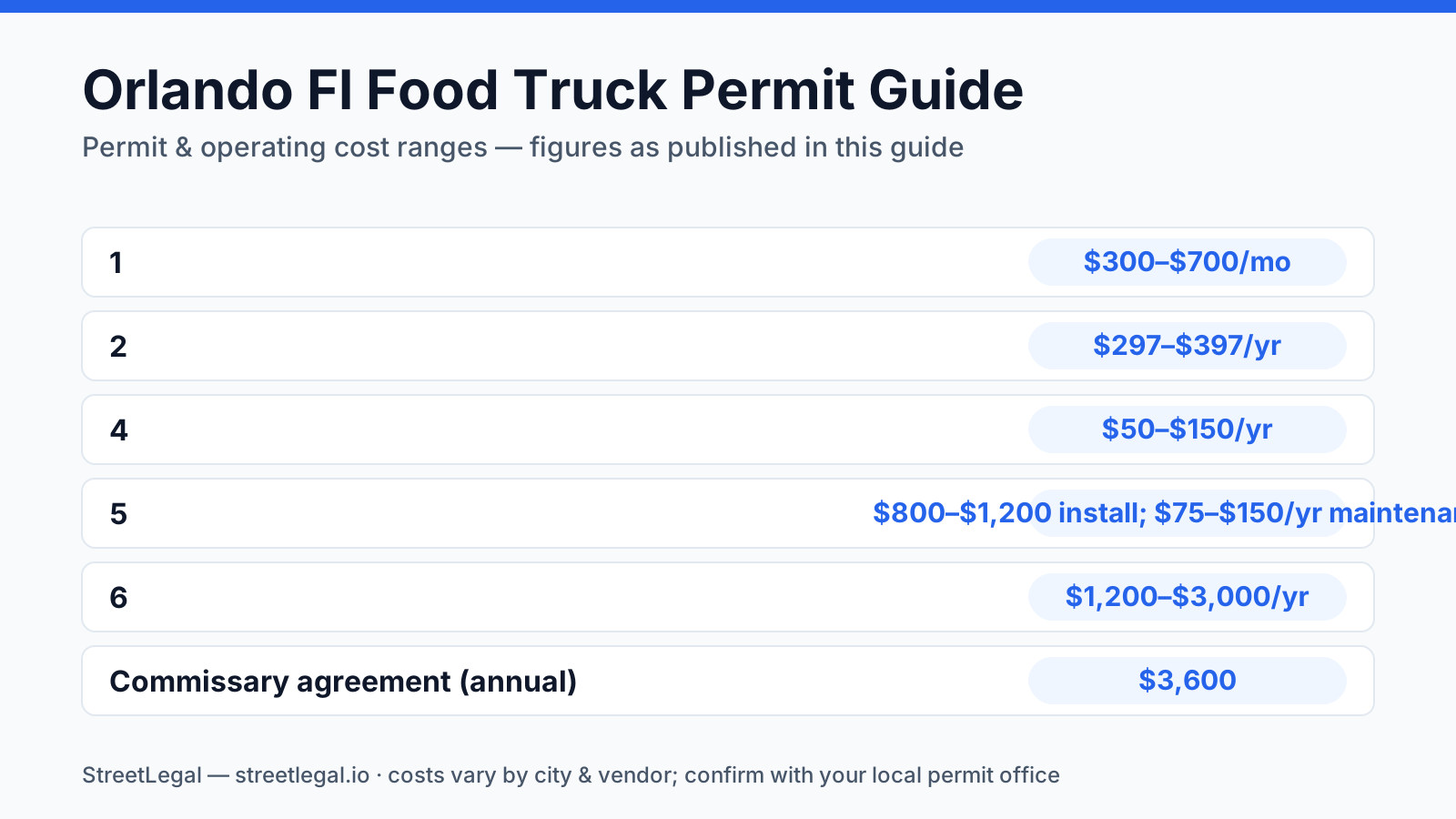
Orlando food truck permit snapshot (2026)
Full permit sequence for a new food truck launching in Orlando, FL. Sign your commissary agreement first — DBPR requires it before processing your application.
| Step | Agency | Permit / License | Fee | Timeline | Sequence note |
|---|---|---|---|---|---|
| 1 | Private DBPR-licensed facility | Commissary agreement | $300–$700/mo | 1–2 weeks to find + sign | First — required for DBPR application; verify facility holds current DBPR license |
| 2 | FL DBPR (Div. of Hotels & Restaurants) | Mobile Food Dispensing Vehicle (MFDV) License | $297–$397/yr | 4–6 weeks (review + inspection) | Core FL license; valid statewide; covers all FL cities once issued |
| 3 | FL Dept. of Revenue | Sales Tax Dealer Certificate | Free | 1 week (online) | Register before first sale; 6.5% sales tax rate in Orange County |
| 4 | Orange County Tax Collector | Orange County Business Tax Receipt (BTR) | $50–$150/yr | 3–5 business days | Can run parallel with DBPR; required for Orange County operation |
| 5 | Licensed fire suppression contractor | K-class fire suppression system + certification | $800–$1,200 install; $75–$150/yr maintenance | 1–2 weeks to schedule + install | Required for any cooking equipment; Orange County Fire Rescue inspects |
| 6 | Insurance carrier | General liability insurance | $1,200–$3,000/yr | 1 week to bind | Required by most event venues, hotels, food truck parks, and private lot landlords |
Step 1: Secure Commissary Agreement
Mandatory in Florida. DBPR requires all food trucks to operate from a DBPR-licensed commissary kitchen. Secure a signed commissary agreement before submitting any other application.
Commissary Requirements
- Must be DBPR-licensed: The commissary must hold a current DBPR food service license — verify directly with DBPR before signing
- Written agreement: Signed contract specifying access hours, prep space, cold storage, potable water, and waste disposal
- DBPR verification: DBPR verifies the commissary's license during your application review — do not assume
Orlando Commissary Costs (2026)
- Shared commercial kitchen: $300–$700/month (higher than Jacksonville, lower than Miami)
- Daily access: $40–$70/day if available
- Hourly rental: $20–$30/hour
Orlando has a well-developed commissary market. Downtown, International Drive area, and suburban corridors all have licensed options. Lock this in first — commissary search adds 1–2 weeks to your timeline.
💡 Event Catering Strategy
Orlando's convention centers, hotels, and private event venues pay premium rates for food truck catering. Build relationships with event planners and hotel banquet coordinators before you launch — these are your highest-revenue lane and smooth seasonal variation from street vending.
Full Cost Breakdown & Timeline
| Permit / Cost Item | Low | High | Renewal |
|---|---|---|---|
| Commissary agreement (annual) | $3,600 | $8,400 | Monthly ongoing |
| DBPR MFDV License | $297 | $397 | Annual (Oct 1 FL renewal) |
| Florida Sales Tax Registration | $0 | $0 | Quarterly/monthly filing |
| Orange County Business Tax Receipt | $50 | $150 | Annual |
| Fire Suppression System (install) | $800 | $1,200 | One-time + $75–$150/yr inspection |
| Business Liability Insurance | $1,200 | $3,000 | Annual |
| First-Year Total (permits + commissary) | $5,947 | $13,147 | Excludes truck, equipment, inventory |
Week-by-Week Launch Timeline
- Week 1–2: Find and sign a DBPR-licensed commissary agreement
- Week 2–3: Register for Florida sales tax (free, online); apply for Orange County BTR
- Week 3–4: Install fire suppression system; arrange fire inspection
- Week 3–4: Submit DBPR MFDV application (commissary agreement + menu + equipment list)
- Week 4–6: DBPR review; inspector schedules visit
- Week 6–7: Pass DBPR health inspection; receive MFDV license
- Week 7–8: Pass fire inspection; bind insurance; contact event planners and hotel banquet managers
- Week 8–10: Secure food truck park spot, private lot agreement, or first event contract; begin operating
Where You Can Actually Operate in Orlando
DBPR permit approval does not give you automatic access to Orlando's high-revenue locations. Here's the reality by operating lane:
| Operating lane | Permit alone enough? | Access reality | Best truck fit |
|---|---|---|---|
| Downtown Orlando (office district) | No — spot-specific zoning + private lot or park permit required | Most stable year-round lane; office lunch demand Mon–Fri; Lake Eola area events; less seasonal than tourist zones; worth the effort to secure a private lot agreement | Gourmet lunch, fusion, taco, coffee cart |
| International Drive corridor | No — private property; must negotiate individually with each lot owner | Highest tourist volume in Florida but most competitive lane; private lots required; no public street vending on I-Drive itself; works best with an existing relationship with a lot owner | Family-friendly, taco, dessert/ice cream — broad tourist appeal |
| Orange County Convention Center area | No — event organizer/venue application required; advance booking essential | High-value catering lane during conventions; major events draw 50k+ attendees; apply to each event organizer directly; excellent revenue-per-hour when secured | Coffee cart, gourmet lunch, upscale fusion — convention crowd |
| Hotels / resort private events | No — hotel contract required; typically event-by-event approval | Best revenue-per-event in Orlando; weddings, corporate retreats, pool parties, team dinners; build relationships with hotel banquet and event planners before launch | Upscale fusion, BBQ, taco bar, dessert truck — premium event formats |
| Mills 50 / Audubon Park districts | No — landlord permission or food truck park spot required | Local food-forward community; less tourist dependent; consistent foot traffic especially Fri–Sun; farmers markets; Audubon Park Garden District events; good for specialty and upscale concepts | Specialty coffee, upscale fusion, farm-to-table, dessert |
| Private lots / business parks | No — written landowner permission required (no separate city permit) | Best access reality; landlord permission is the only extra requirement; stable weekday lunch demand in office/tech parks near UCF Research Park, Lake Nona, Maitland Center | Any concept — gourmet lunch and coffee work especially well in office parks |
| Theme park perimeter (NOT inside parks) | No — theme park property is private; perimeter public roads limited; nearby hotels best approach | Cannot operate inside Disney/Universal/SeaWorld lots (exclusive vendor agreements). Public street access near parks is limited. Nearby hotel lots or I-Drive private spots are the realistic approach to capture theme park adjacent demand. | Family-friendly formats — taco, dessert, BBQ |
Best Food Truck Types for Orlando (2026)
Orlando's tourist economy, corporate event market, and local food-forward districts favor specific truck formats. Family-friendly and broadly appealing concepts perform across all zones; upscale formats dominate event catering.
| Truck type | Orlando market fit | Commissary pressure | Event flexibility | Rationale |
|---|---|---|---|---|
| Taco / Mexican street food truck | Excellent | Medium | High | Universal tourist appeal; works across Downtown, I-Drive, and local districts; fast service model handles high-volume event days; taco bar format popular for corporate catering |
| Specialty coffee / espresso cart | Excellent | Low | Very high | Convention center morning demand is enormous; hotel lobby and resort pool deck catering; office park lunch; compact footprint; low fire inspection risk; highest margin-per-cup in the market |
| Dessert / ice cream truck | Excellent | Low | Very high | Year-round warm weather; tourist demand at I-Drive and resort areas; family events and birthday parties; weddings; no fryer reduces fire inspection complexity; extremely mobile |
| BBQ / smoked meats trailer | Very good | Medium | High | Corporate event catering; tailgate-style events; Downtown lunch demand; Thornton Park and Mills 50 weekend traffic; familiar format appeals to large diverse tourist groups and corporate crowds |
| Upscale fusion / farm-to-table truck | Very good | High | High | Hotel wedding and private event catering; corporate dinners; Audubon Park Garden District; commands premium pricing; differentiates from commodity formats; highest revenue-per-plate at events |
| Latin / Cuban fusion truck | Good | Medium | High | Growing Puerto Rican and Latin community in Orlando metro; cultural resonance in Mills 50 and Kissimmee corridors; tourists familiar with Latin food from their home cities; event catering works well |
Orlando vs. other Florida markets (2026)
How Orlando compares to other Florida launch markets — for operators deciding where to start or expand.
| Market | Launch friction | Best first revenue lane | Best first truck fit | Why this market |
|---|---|---|---|---|
| Orlando / Orange County | Medium — theme park limits some areas; commissary $300–$700/mo; seasonal tourist variation requires event lane diversification | Corporate event catering + hotel functions + private events | Taco truck, dessert truck, or specialty coffee cart | Year-round tourism baseline; convention center and hotel catering revenue ceiling is high; diverse neighborhoods (Mills 50, Audubon, Thornton Park) support local loyal customer base |
| Jacksonville / Duval County | Low–Medium — Florida's lowest-friction market; commissary $250–$550/mo; lighter competition; large military market | Private lots + food truck parks + beach/military community events | BBQ trailer or seafood truck | Best Florida entry market for budget-conscious operators; NAS Jacksonville + NS Mayport military population drives reliable demand; beach tourism provides seasonal spike |
| Tampa / Hillsborough | Medium — commissary $400–$800/mo; food truck park access required for best spots; growing competition | Food truck parks (Armature Works, Sparkman Wharf) + brewery pop-ups | Seafood/taco or BBQ trailer | Strong food truck park culture; waterfront events; Ybor City nightlife; lower competition than Miami; Rays/Buccaneers game day catering opportunities |
| Miami / Miami-Dade | High — multi-agency stack; commissary $400–$900/mo; street vending restricted; two separate BTRs (county + city) | Private lots + Wynwood BID events | Cuban/Latin cuisine or upscale fusion | Highest revenue ceiling in Florida; Art Basel, Calle Ocho, year-round tourism, food culture hub — but highest friction, cost, and competition |
| Fort Lauderdale / Broward | High — similar to Miami; beach vending restricted; Broward County BTR stack | Private events + yacht show / boat show catering | Upscale seafood or Latin fusion | Beach tourism; International Boat Show events; close to Miami market with slightly less competition; affluent waterfront demographic |
See the Florida food truck permit hub for full state-level guidance and market comparison.
Operator Tips & Common Mistakes
- Event catering is 50%+ of top operators' revenue. Do not rely on street foot traffic alone. Start networking with event planners, hotel banquet managers, and convention center booking coordinators before you launch. These relationships are your primary profit center — a $5,000 catering event beats a week of street vending.
- Downtown Orlando is underrated. While operators chase theme park tourists, Downtown has stable office-worker lunch traffic, entertainment district evening crowds, and regular events at Dr. Phillips Center, Amway Center, and Lake Eola Park. Less competitive and more consistent than I-Drive.
- Do not assume your commissary is DBPR-licensed. DBPR verifies directly. A commissary that is not licensed means a denied application and wasted weeks. Call DBPR to confirm the facility's license before you negotiate — do not rely on the commissary's word alone.
- Build a 3-month cash runway. Seasonal tourist volume swings — especially summer vs. January–February slow periods for local customers when snowbirds dominate older demographics. Have enough runway to survive the first slow stretch without stress.
- International Drive is high-volume but overcrowded. Private lot access on I-Drive is competitive and expensive. Only pursue I-Drive if you have a differentiated product and a specific lot owner relationship. Downtown and hotel event catering generate better ROI for most new operators.
- October 1 is Florida's MFDV renewal deadline. Apply for renewal in August–September to avoid a lapse. An expired license means no operation and no revenue — set a calendar reminder before your first year is up.
- Your MFDV license is statewide. Once licensed in Orlando, you can operate in Jacksonville, Tampa, or Miami without a separate state license. Local BTRs still apply in each county/city where you regularly operate, but the core license does not need to be re-obtained.
Florida state hub
Comparing Orlando to Tampa, Jacksonville, or Miami? The Florida food truck permit hub covers all major Florida markets, truck-type guidance by city, operator-goal routing, and a side-by-side permit comparison. Includes the fastest-launch, beach-market, event-driven, and Latin niche strategies.
Related guides
Florida food truck permit hub
All major FL markets, state-level comparison, best truck types
Miami food truck permit guide
Florida's highest-revenue market — Wynwood, private lots, event catering
Jacksonville FL food truck permit guide
Florida's lowest-friction market — military community, beach zones, event catering
Tampa food truck permit guide
Armature Works, Sparkman Wharf, brewery circuit — Florida's best food truck park scene
Fort Lauderdale food truck permit guide
Beach tourism, boat show catering, Broward County BTR — South Florida market overview
Answers to the most common permit questions — costs, timelines, commissary rules, and more.
Find city-level permit guides for every state we cover — compare costs and requirements.
More from the blog
Food Truck POS Systems: Square vs. Toast vs. Clover vs. Avocado (2026)
Real 2026 pricing, hardware costs, offline mode, and contract terms for Square, Toast, Clover, and Avocado — compared specifically for food truck operators.
City GuidesEagan, MN Food Truck Permit Guide
Eagan MN food truck permit guide: MDH mobile food licensing, Dakota County food safety, city peddler rules, commissary records, costs, and launch timeline.
City GuidesBentonville, AR Food Truck Permit Guide
Complete guide to food truck permits, fees, and requirements in Bentonville, AR.
City GuidesBiloxi, MS Food Truck Permit Guide
Biloxi food truck permit guide 2026: licenses, health permit steps, commissary records, inspections, costs, renewal timing, and launch checklist.