· 11 min read · StreetLegal Team

Food Truck Permit Renewal: How to Stay Compliant Year After Year (2026)
Most food truck operators nail their initial permits. What trips them up is Year 2 — when every license they got at launch is coming due for renewal at roughly the same time, and none of them auto-renew. This guide breaks down exactly what you need to renew, when, what it costs, and how to build a system that keeps you compliant without scrambling every spring.
The stakes are real: operating with an expired permit is operating illegally. One spot-check from a health inspector at a food truck park and you're looking at a stop-operation order, reinstatement fees, and potentially a gap in your insurance coverage when you need it most.
General Disclaimer
Permit renewal requirements, fees, and timelines vary by city and change annually. This guide reflects 2026 best practices and known city-specific rules. Always verify current requirements directly with your local health department before filing your renewal.
The Core Problem: Permits Don't Auto-Renew
Most food truck operators know they need permits to launch. What catches people in Year 2 is that nearly every permit and certification they obtained expires — and none of them send you a reliable reminder that handles the renewal for you.
This isn't just a fee payment. Annual renewal typically requires:
- A new application or renewal form submitted to the health department
- Updated documentation (current commissary agreement, proof of insurance, updated employee cert list)
- In many cities, a physical re-inspection of the vehicle
- A separately-scheduled Ansul system re-inspection (not part of the health dept renewal)
- Fee payment — which, if late, becomes a fee plus a penalty
The operators who run into trouble are the ones who treat renewal like a single task ("pay the fee"). It's a multi-step process with dependencies — the Ansul tag needs to be current before the health department will issue a renewed permit, for example. Getting the sequencing wrong costs weeks.
What Typically Needs Annual Renewal
Here's every item you're managing on a renewal cycle. The "Lead Time Needed" column reflects how early you should start the renewal process for that specific item — not when you should submit the main permit renewal.
| Permit / Cert | Renewal Frequency | Lead Time Needed | Auto-Renew? |
|---|---|---|---|
| Mobile Food Unit / Vendor permit | Annually (exact date varies by city) | 30–60 days early | No |
| Fire code certificate / Ansul inspection | Annually | 6–8 weeks | No |
| City business license | Annually | 2–4 weeks | No |
| Commercial auto insurance | Annually | 30 days | Often yes |
| General liability insurance | Annually | 30 days | Often yes |
| Food handler certifications (per employee) | Every 2 years | 2 weeks | No |
| Food safety manager certification | Every 5 years | 1 month | No |
| Vehicle safety inspection sticker | Annually (biannually in some states) | 1 week | No |
| Commissary agreement | Typically 1-year term | 30 days | Depends on commissary |
Updated June 28, 2026 - renewal timelines, Ansul inspection timing, and annual compliance guidance reviewed for 2026.
Insurance is the one category that often does auto-renew — but "auto-renew" doesn't mean you should ignore it. Review your coverage limits annually. Food truck insurance needs tend to increase as revenue grows, and many operators are underinsured by Year 3.
City-Specific Renewal Dates: Fixed vs. Rolling
There are two renewal systems in use across US cities, and knowing which one your city uses changes how you plan:
- Fixed-date expiration: All permits in the city expire on the same date regardless of when they were issued. You renew on a city-wide schedule.
- Rolling 12-month expiration: Your permit expires exactly 12 months from the date it was issued. Your renewal date is unique to you.
| City | System | Expiration / Notes | Late Penalty |
|---|---|---|---|
| Austin (APH) | Fixed | Expires May 31 regardless of issue date | New application required — not just late fee |
| Houston (COHD) | Rolling | 12 months from issue date | $65 late fee |
| Chicago (CDPH) | Fixed (varies by license type) | MFP expires annually on fixed date | $100 late fee on top of renewal |
| NYC (DOHMH) | Rolling | Annual renewal required; permit cap in effect | Risk of losing scarce permit number |
| Philadelphia (PDPH) | Rolling | Annual renewal; historically slow processing | Submit 60+ days early — processing delays are common |
The Austin system is the most punishing for late filers — missing the May 31 deadline means starting from scratch with a new application, not just paying a late fee. If you operate in Austin, your renewal process starts in late March at the latest.
The Ansul System Inspection: The One Operators Forget Most
If you cook over open flame, your truck has a fire suppression system (Ansul or equivalent). That system must be inspected and re-tagged annually by a licensed contractor — and this inspection is completely separate from your health department renewal.
An Expired Ansul Tag Fails Your Health Inspection — Full Stop
Health inspectors and fire inspectors both look for the Ansul tag date. If the tag is expired, you fail the inspection regardless of everything else on the truck. You cannot pass a health department re-inspection with an expired suppression system tag. Schedule the Ansul re-inspection 6–8 weeks before your permit renewal date so you have time to address any issues found.
Here's what the annual Ansul re-inspection covers:
- Visual inspection of nozzles, fusible links, and detection components
- System pressure check on the agent cylinder
- Verification that the manual pull station is accessible and functional
- Confirmation that the gas line automatic shutoff engages on system discharge
- New tag affixed to the system (the physical record inspectors check)
Cost: $200–$400 per inspection, depending on your market and contractor. In major metros, $300 is typical.
If issues are found: A failing nozzle or a cylinder that needs recharging adds time and cost. This is exactly why you schedule 6–8 weeks out — not 2 weeks before your renewal deadline. A recharge can take 1–2 weeks to arrange.
Food Handler and Manager Cert Tracking
Employee certifications don't expire on a single annual date — they expire on rolling dates tied to each individual's completion date. This makes them the trickiest item to track across a full year.
Cert Specifics
- Food handler cert: $15–$30 per person, required every 2 years (Texas DSHS; specifics vary by state)
- Food safety manager cert: $80–$180 per person, required every 5 years
- If an employee's cert expires mid-season, they are technically not permitted to handle food — mid-year lapses are just as serious as renewal-window lapses
- Health inspectors check individual cert cards on-site, not just the "most recent" cert you can show
The Practical Tracking System
Build a spreadsheet with these columns for every employee:
| Column | What to Track |
|---|---|
| Employee name | Full name as it appears on the cert |
| Food handler cert date | Date of completion |
| Food handler cert expiration | Completion date + 2 years |
| Manager cert date | If applicable (at least one required) |
| Manager cert expiration | Completion date + 5 years |
| 60-day reminder date | Expiration minus 60 days — schedule renewal at this point |
Keep digital copies of every cert in a shared folder. When an event organizer or health inspector asks for documentation, you want to produce it in under 60 seconds.
Pro Tip: Make Cert Currency a Hiring Condition
Require new hires to have a current food handler cert as a condition of employment — not just during your permit renewal window. This eliminates mid-year surprises. If a candidate's cert is expired, they need to get it renewed before their first shift. The cert takes a few hours online and costs under $30. It's a reasonable condition to set.
What a Health Department Re-Inspection Covers
Cities that require a physical re-inspection for annual renewal use essentially the same checklist as the initial inspection. Inspectors are not doing a "lighter" pass because you've been operating for a year. They're checking everything.
Standard Re-Inspection Checklist
- Temperature controls: Hot-holding at 135°F+, cold storage at 41°F or below, functioning thermometers visible
- Water system: Fresh water tank filled, wastewater tank empty and functional, adequate tank capacity (most cities: 1.5x fresh water)
- Handwashing: Dedicated handwash sink with hot water, soap, and paper towels stocked
- Three-compartment sink: Functional wash/rinse/sanitize setup, separate from handwash
- Food storage: Off-floor shelving, covered containers, no cross-contamination setups
- Equipment condition: No corrosion, cracked surfaces, or equipment that can harbor bacteria
- Fire suppression tag: Current Ansul tag visible and in-date — this is often the first thing they check
- Food handler and manager certs: All current, on-hand for review
- Vehicle inspection sticker: Current (they note this even if it's not their jurisdiction)
- Commissary agreement: Current agreement on file — if your commissary changed, you need the new agreement
Cities that typically require physical re-inspection: Austin, Houston, Chicago, Los Angeles, Philadelphia. Cities that often allow paperwork-only renewal for operators with clean history: some smaller metro areas and rural jurisdictions.
If your city requires physical re-inspection: Do a self-inspection the day before using the checklist above. Fix anything that's borderline. Don't show up with a near-empty fresh water tank or equipment you haven't cleaned since last week's event.
Building a Renewal Calendar That Actually Works
The operators who never have compliance gaps are not smarter than you — they have a better system. Here's the system:
Step 1: Map Every Expiration Date
Go through every permit, cert, insurance policy, and agreement you hold. Find the expiration date on every single one. Enter it in a spreadsheet or calendar. Do this once a year in January even if your renewals are spread throughout the year.
Step 2: Set Three Reminders Per Item
- 60-day reminder: "Start renewal process for [item]" — this is your action trigger
- 30-day reminder: "Confirm renewal submitted / in process for [item]"
- 7-day reminder: "Verify renewed [item] document received and on file"
For the Ansul inspection specifically: set your 60-day reminder as "Schedule Ansul inspection contractor appointment." The appointment itself needs to happen at least 30 days before your health permit renewal to leave buffer for any issues found.
Step 3: Track Per-Employee Certs Separately
Don't lump employee certs into your main renewal calendar entry. Each employee has their own expiration date. Use the employee spreadsheet described in the cert tracking section and set individual calendar reminders per person.
Step 4: Maintain a Renewal Document Folder
Keep a folder (physical or digital) with a copy of every current permit, cert, and insurance certificate. Label each document with the expiration date in the filename or on the folder tab. When an event organizer asks for proof of permits — which happens constantly — you can produce everything in under a minute.
Pro Tip: Align All Insurance Renewals to One Month
If your commercial auto and general liability policies have different renewal dates, ask your broker to consolidate them to the same month. Most brokers can short-term a policy to accomplish this. One renewal window per year means one batch of paperwork, one conversation with your broker about coverage review, and one less thing to track independently. Operators who do this consistently report fewer lapses in coverage documentation.
What Happens If You Let a Permit Lapse
Operating with an expired permit is operating illegally, regardless of how long you've been licensed, how clean your inspection history is, or whether anyone has complained. The enforcement consequences are real:
On-Site Enforcement
- Health inspectors do spot-checks at food truck parks, events, and permitted locations — they don't only show up when called
- An inspector who finds an expired permit can issue a stop-operation order on the spot
- Stop-operation means you stop serving — mid-event, mid-shift, immediately
- The order stays in effect until you demonstrate compliance (renewed permit in hand)
Reinstatement Process
- Most jurisdictions treat a lapsed permit as a new application, not a late renewal
- That means full new application fees, fresh inspection scheduling, and the full processing timeline (weeks, not days)
- In Austin, this is explicit policy — late renewal triggers a new application regardless of your prior history
- Some jurisdictions have a grace period (typically 7–14 days); most do not publish one, and you should not rely on undocumented grace periods
Insurance Denial Risk During Lapsed Permit Period
If you have a claim — a customer slip-and-fall, a fire, a food-borne illness complaint — during a period when your permit was expired, your insurer may deny coverage. Many commercial GL policies include a clause that voids coverage if the insured was operating illegally at the time of the incident. Operating without a valid health permit qualifies as illegal operation. This is not a minor risk. The cost of a single denied claim dwarfs years of permit renewal fees.
Late Renewal Fees by City
Most health departments and licensing agencies charge late fees if you renew after the expiration date. Here's what the major cities look like:
| City / Agency | Standard Renewal Fee | Late Fee | Notes |
|---|---|---|---|
| Austin (APH) | ~$258/yr | Full new application | Missed May 31 deadline = start over |
| Houston (COHD) | ~$258/yr | +$65 late fee | Rolling 12-month, late fee if expired |
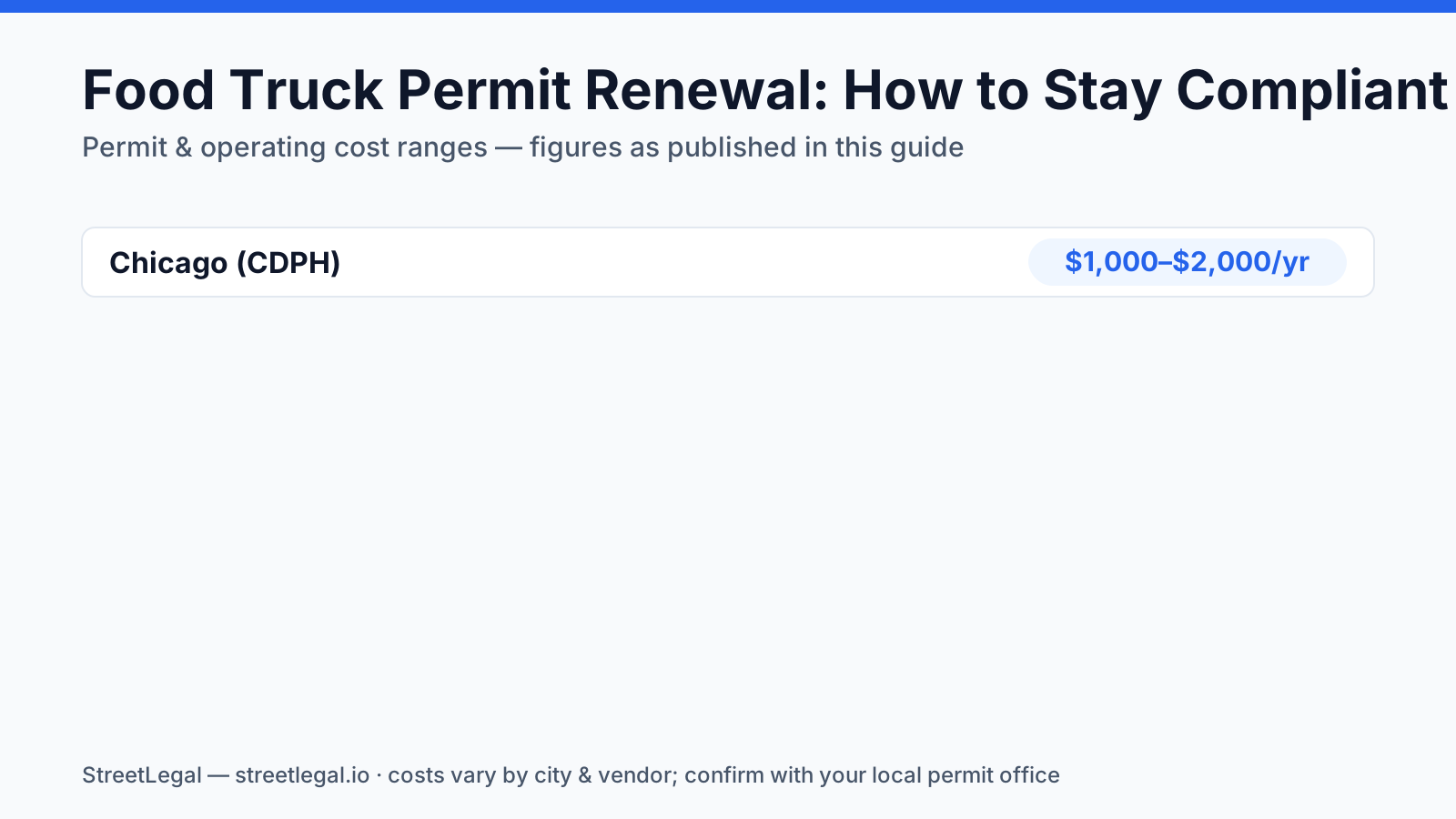
| Chicago (CDPH) | $1,000–$2,000/yr | +$100 late fee | MFD vs. MFP tier determines base fee |
| NYC (DOHMH) | Varies by unit type | Risk of permit loss | NYC permit cap makes lapse especially costly |
| Philadelphia (PDPH) | ~$300–$400/yr | +25–50% penalty | Processing delays are common; submit 60+ days early |
The financial cost of a late fee is almost never the real problem. The real cost is the gap in operating time while you're trying to reinstate through a backed-up health department office.
Frequently Asked Questions
Do food truck permits auto-renew?
No. Nearly all food truck permits require active renewal each year — you must submit a renewal application, pay the fee, and in many cities pass a physical re-inspection. Insurance is the one exception: commercial auto and GL policies often auto-renew, but you should still review them annually. Do not assume anything related to your health department permit will happen automatically.
How much does food truck permit renewal cost?
Your health department permit typically runs $150–$400/year to renew, depending on city. Add the Ansul system re-inspection ($200–$400), city business license renewal ($50–$150), and employee food handler cert renewals ($15–$30 per person every 2 years). Budget $600–$1,200 in total annual renewal costs, not counting insurance premiums. This is significantly less than your first-year cost, but it's still a material annual expense to plan for.
What happens if I miss my permit renewal date?
Operating with an expired permit is operating illegally. If a health inspector finds you operating with an expired permit, they can issue a stop-operation order immediately. Reinstatement often requires a new application, full fees, and a complete re-inspection — not just a late fee payment. In Austin, this is explicit policy. Your insurer may also deny claims filed during a lapsed permit period, which is a far larger financial risk than the reinstatement cost.
Do I need a physical inspection to renew my food truck permit?
It depends on your city. Austin, Houston, Chicago, Los Angeles, and Philadelphia typically require a physical re-inspection. Some smaller jurisdictions allow paperwork-only renewals for operators with a clean compliance history. Check with your local health department directly — don't assume based on your initial inspection experience, since cities sometimes change their renewal process. If your city requires physical re-inspection, prepare for it exactly like your initial inspection.
When should I start the permit renewal process?
Start 60 days before your permit expiration date. The 60-day buffer exists primarily for the Ansul inspection — you need the re-tag done before the health department will issue a renewed permit, and contractor scheduling plus any remediation work can easily eat 3–4 weeks. For Austin operators, 60 days before May 31 is a hard minimum. For Philadelphia operators, consider 75–90 days given historically slow processing at PDPH.
Related Guides
Getting your initial permits or planning your first full year of operation? These guides cover the full setup:
Answers to the most common permit questions — costs, timelines, commissary rules, and more.
Find city-level permit guides for every state we cover — compare costs and requirements.
More from the blog
Jefferson County, MO Food Truck Permit Guide
Complete guide to food truck permits, fees, and requirements in Jefferson County, MO.
City GuidesSt. Charles County, MO Food Truck Permit Guide
Complete guide to food truck permits, fees, and requirements in St. Charles County, MO.
City GuidesSt. Louis County, MO Food Truck Permit Guide
Complete guide to food truck permits, fees, and requirements in St. Louis County, MO.
Buyer's GuideFood Truck POS Systems 2026: Square, Toast, Clover & Avocado
Compare 2026 food truck POS systems by pricing, hardware costs, offline mode, and contract terms for Square, Toast, Clover, and Avocado.