· 12 min read · StreetLegal Team
How to Get a Food Truck Permit in Milwaukee, WI (2026 Guide)
Updated June 29, 2026 - permit fees, commissary requirements, Summerfest vendor rules, and Midwest market comparison reviewed current.
Operating a food truck in Milwaukee, Wisconsin requires a Mobile Food Establishment (MFE) License from the City Health Department, a city business license, a Wisconsin Seller's Permit, and a signed commissary agreement. Unlike Chicago, Milwaukee has no 200-foot restaurant proximity rule — which makes public street vending and brewery pop-ups significantly easier. This guide covers every permit, real cost range, commissary rules, and where you can actually operate in 2026.
6–10 wk
Launch timeline
$1,800+
First-year permit costs
No 200-ft rule
vs. Chicago
May–Oct
Peak outdoor season
Milwaukee Food Truck Permit Stack
Milwaukee's permitting process is managed by two primary agencies: the City of Milwaukee Health Department (food safety and MFE License) and the City of Milwaukee City Clerk/Treasurer (business licensing). Wisconsin DOR handles the sales tax registration separately.
1. Mobile Food Establishment (MFE) License — Milwaukee Health Dept
The MFE License is the foundation permit — required for all food trucks operating in Milwaukee city limits. The Health Department requires a pre-opening inspection before your first service day.
- Application with signed commissary agreement and menu/equipment list
- Health Department pre-opening inspection — schedule 3–4 weeks before target launch
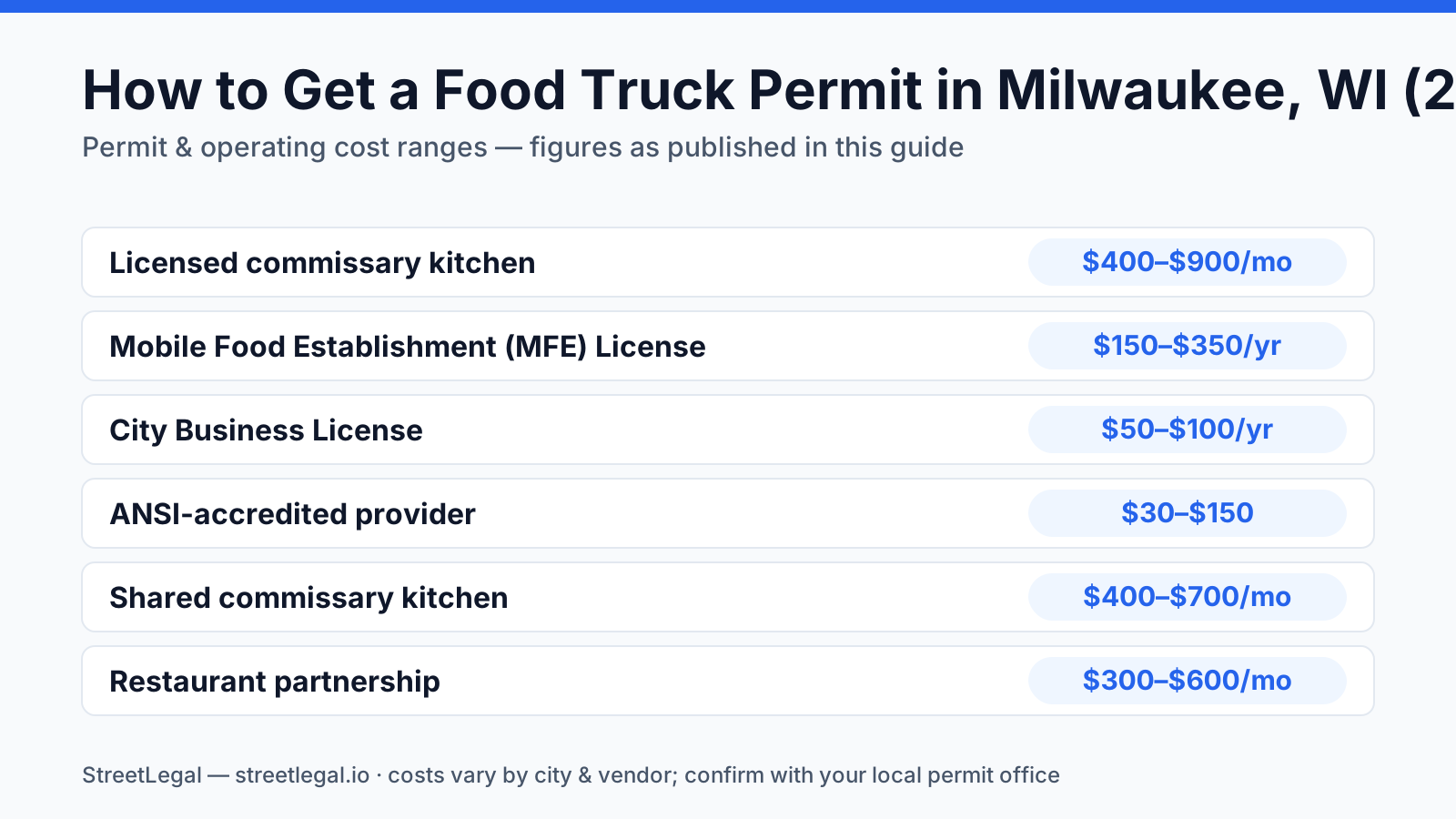
- Annual renewal fee: $150–$350/yr (varies by truck size and food risk category)
- Renewal deadline: January 1 each year
2. City of Milwaukee Business License
All businesses operating in Milwaukee must hold a City Business License issued by the City Clerk's office. Apply alongside your MFE application to run them in parallel.
- Annual fee: $50–$100/yr depending on business type
- Renew annually
3. Wisconsin Seller's Permit (WI DOR)
Register with the Wisconsin Department of Revenue at My Tax Account (DOR.wi.gov) before your first sale. Free to obtain. Required to collect and remit Wisconsin sales tax on food sales.
4. Wisconsin Food Manager Certification
At least one certified Food Protection Manager per truck — ServSafe or ANSI-accredited equivalent. Required before the Health Department inspection. Budget $30–$150 for the certification course and exam.
5. Commissary Agreement
Wisconsin requires all mobile food establishments to operate from a licensed commissary kitchen for daily prep, cleaning, and wastewater disposal. The commissary must hold its own Health Department permit and must be named on your MFE application.
Milwaukee Permit Snapshot
| Step | Agency | Permit / Action | Fee | Timeline | Sequence |
|---|---|---|---|---|---|
| 1 | Licensed commissary kitchen | Commissary agreement + proof of commissary permit | $400–$900/mo | 1–2 weeks to secure | First — required before MFE application |
| 2 | City of Milwaukee Health Dept | Mobile Food Establishment (MFE) License | $150–$350/yr | 4–6 weeks | Core permit — required for all Milwaukee food trucks |
| 3 | City of Milwaukee City Clerk | City Business License | $50–$100/yr | 1–2 weeks | Parallel with MFE — required for all city businesses |
| 4 | Wisconsin DOR | Wisconsin Seller's Permit | Free | 1–3 days online | Before first sale |
| 5 | Milwaukee Fire Dept (MFD) | Fire suppression inspection (propane/open flame trucks) | $75–$150 inspection; $1,500–$3,500 Ansul system if needed | 2–3 weeks | Required if propane, fryer, or open flame — run parallel |
| 6 | ANSI-accredited provider | Food Manager Certification (ServSafe or equivalent) | $30–$150 | 1–2 weeks | Before Health Dept inspection — one certified manager required |
Commissary Requirements in Milwaukee
Wisconsin law requires all mobile food establishments to operate from a licensed commissary for daily prep, cleaning, greywater disposal, and food storage. This is not optional — your commissary must be listed on your MFE application, and the Health Department will verify it holds its own permit.
| Commissary Type | Typical Monthly Cost | Notes |
|---|---|---|
| Shared commissary kitchen | $400–$700/mo | Most common option; shared with other food truck operators |
| Restaurant partnership | $300–$600/mo | Some Milwaukee restaurants rent off-hours commissary access |
| Dedicated private kitchen | $700–$1,200/mo | Private lease; most expensive but maximum flexibility |
Commissary trap: don't sign before confirming the permit
Always verify the commissary holds a current City of Milwaukee Health Dept permit before signing. A commissary without its own permit makes your MFE application invalid and delays your entire launch.
Fire & Safety Inspection
The Milwaukee Fire Department (MFD) requires an inspection if your truck uses propane, a deep fryer, open flame cooking, or any commercial cooking equipment that generates grease-laden vapors.
- Fire suppression system: An Ansul-type wet chemical suppression system is required for trucks with commercial fryers or grills. Installation cost: $1,500–$3,500. Annual service: $200–$400.
- Class K fire extinguisher: Required on all cooking trucks. Must be current and accessible.
- Propane inspection: All LPG systems must be inspected and certified before your first service day.
- Hood/ventilation: Commercial hood with grease filters required for most frying and grilling operations — verify your truck's hood is rated for your cooking type.
Schedule your fire inspection in parallel with your Health Dept MFE inspection to avoid adding weeks to your launch timeline.
Milwaukee Food Truck Launch Timeline
| Week | Action | Notes |
|---|---|---|
| Week 1 | Secure commissary agreement | Verify commissary holds current Health Dept permit; sign contract |
| Week 1–2 | Complete Food Manager Certification | ServSafe or equivalent; required before inspection |
| Week 2 | Submit MFE License application + Business License application | Include commissary agreement, menu, equipment list; run both in parallel |
| Week 2 | Register WI Seller's Permit online | DOR.wi.gov My Tax Account; same-day to 3-day processing |
| Week 3–4 | Schedule pre-opening Health Dept inspection | Request inspection date at time of application to avoid backlog |
| Week 3–4 | Fire Dept inspection (if propane/fryer) | Run parallel with Health Dept; schedule early |
| Week 5–7 | Pass pre-opening Health Dept inspection | MFE License issued after passing inspection; fix any violations and re-inspect |
| Week 7–10 | Receive MFE License + Business License | Once all permits in hand, you are cleared to operate in Milwaukee |
Startup & Annual Costs
First-year permit and compliance costs (does not include truck purchase, equipment, or food):
| Item | Low Estimate | High Estimate | Notes |
|---|---|---|---|
| MFE License (Health Dept) | $150 | $350 | Annual |
| City Business License | $50 | $100 | Annual |
| WI Seller's Permit | Free | Free | One-time registration |
| Food Manager Certification | $30 | $150 | One-time (renews every 5 years) |
| Fire inspection (if propane/fryer) | $75 | $150 | One-time inspection fee |
| Ansul fire suppression system (if needed) | $0 | $3,500 | One-time install if not already equipped |
| General liability insurance | $1,200 | $2,400/yr | Annual; required by most events and venues |
| Commissary kitchen | $4,800 | $10,800/yr | $400–$900/mo ongoing |
Total first-year permit/compliance range: $1,800–$7,500 (Ansul system included in high range). Annual renewal: $800–$1,500 in permits plus ongoing commissary.
Where You Can Actually Operate in Milwaukee
Milwaukee does not have Chicago's 200-foot restaurant proximity rule, which opens up more street and public vending options. However, permit approval alone does not guarantee access — private lots, festivals, and special events each require separate agreements or vendor applications.
| Operating Lane | Permit Alone Enough? | Access Reality | Best Truck Fit |
|---|---|---|---|
| Historic Third Ward & Walker's Point | Yes for street zones (check City designations) | Strong foot traffic; Milwaukee's top food/arts district; competitive but accessible | Upscale fusion, taco trucks, specialty coffee |
| Brewery circuit (Third Space, Lakefront, Sprecher, MKE Brewing) | No — requires brewery agreement | Milwaukee's most reliable high-volume lane; breweries actively seek food truck partners; low friction | Bratwurst/German, BBQ, taco trucks, comfort food |
| Summerfest / Maier Festival Park | No — requires separate Summerfest vendor permit | Competitive application; 11 days, 1M+ attendees; high revenue ceiling but not guaranteed access | Event-flex BBQ trailers, taco trucks, comfort food |
| Brady Street & East Side neighborhoods | Yes for public street zones | Strong weekend crowd; young professional and student demographic; walkable vending accessible | Taco trucks, dessert/ice cream, specialty coffee |
| Fiserv Forum / Deer District (Bucks arena area) | No — requires Deer District or event vendor permit | Game day and event crowds; premium spending; requires separate vendor agreement with Fiserv Forum operators | Upscale comfort food, BBQ, taco/street food |
| Private lots, office parks, corporate campuses | No — requires property owner/manager permission | Good lunch-rush revenue; Milwaukee's downtown and Harbor District have solid corporate demand; build direct relationships | Gourmet lunch trucks, taco, specialty coffee |
| Milwaukee County parks and public events | Partial — MFE required plus event organizer agreement | Milwaukee County ethnic festivals (Polish Fest, German Fest, Irish Fest, Festa Italiana) run May–September; separate vendor applications per event | Culturally themed trucks, BBQ, dessert/sweets |
Milwaukee winter reality
Outdoor food truck demand drops sharply November through March. Most Milwaukee operators target May–October for outdoor vending. Survival strategies: indoor commissary kitchens with retail access, Deer District indoor event catering, private corporate lunch contracts, and winter farmers markets inside the Wisconsin Center or similar venues.
Best Food Truck Types for Milwaukee
| Truck Type | Milwaukee Market Fit | Commissary Pressure | Event Flexibility | Best First Revenue Lane |
|---|---|---|---|---|
| Bratwurst / German comfort food | Excellent — deep cultural identity, German Fest, Milwaukee Brewers tailgates, Oktoberfest events | Low-medium | Very high — festivals, sporting events, beer gardens | Brewery circuit + Milwaukee County festivals |
| BBQ / smoked meats trailer | Strong — Wisconsin BBQ culture; trailer format fits brewery lots and festival fields better than strict truck | Medium (high prep) | High — festivals, Summerfest, corporate catering | Brewery pop-ups + Summerfest vendor circuit |
| Taco / Mexican street food | Very strong — broad appeal, cost-efficient, strong lunch and festival demand; Walker's Point has established Hispanic dining scene | Low | High — street vending, events, brewery lots | Third Ward / Walker's Point street vending |
| Specialty coffee / espresso cart | Good — lower overhead, fastest licensing (no fire inspection for espresso-only), strong cold-season viability via indoor markets and office parks | Very low | Medium — limited at BBQ/food-focused events | Downtown office parks + winter indoor markets |
| Dessert / ice cream truck | Strong seasonal — heavy demand May–September; East Side, Deer District, parks, and family events; revenue concentrates in summer | Low-medium | High in summer — neighborhood circuits, parks, events | Neighborhood circuit + county festivals |
| Upscale fusion / craft menu | Solid — Third Ward and Deer District premium crowd, private corporate catering; higher price points command better margins | High (complex prep) | Medium — works well for private catering and curated events | Private corporate catering + Deer District events |
Midwest Market Comparison: Milwaukee vs. Nearby Cities
Milwaukee sits between Chicago (south) and Minneapolis (northwest) — two very different operating environments. Here's how the markets compare for a first-time operator choosing their Midwest launch city:
| Market | Launch Friction | Best First Revenue Lane | Best First Truck Fit | Why This Market |
|---|---|---|---|---|
| Milwaukee, WI | Low-medium — no 200-ft rule, simpler permitting, 6–10 week timeline | Brewery pop-ups + Milwaukee County festivals | Bratwurst/German, BBQ trailer, taco truck | Easiest Midwest entry point; strong beer culture; Summerfest is 11 days of high-volume vending; lower permit friction than Chicago |
| Chicago, IL | High — 200-foot rule severely limits street vending; 3–5 month timeline | Private corporate lots, catering, Taste of Chicago | Taco/Mexican, BBQ trailer, specialty coffee | Largest Midwest market; highest revenue ceiling; requires event/catering focus to avoid 200-ft rule friction |
| Minneapolis, MN | Medium — thorough health dept, commissary required; no 200-ft rule; 8–12 weeks | Downtown lunch rush, Uptown, food truck courts | Scandinavian/Nordic, upscale fusion, hot dish comfort food | Food truck-friendly city; strong summer demand; harsh winters reduce year-round viability but good event culture |
| Detroit, MI | Low-medium — improving food truck scene; shorter timelines; lower commissary costs | Eastern Market, Midtown, private lots | Soul food/comfort, BBQ, taco, Middle Eastern | Growing food truck culture; lower startup costs; strong neighborhood loyalty; Eastern Market is a top venue |
| St. Louis, MO | Low — food truck-friendly ordinances; simpler licensing; active city permit program | Food truck parks, private events, Soulard Market area | BBQ, comfort food, taco, specialty | Very food truck-friendly; one of easiest Midwest entry cities; smaller revenue ceiling but fast path to operating |
Milwaukee's strongest advantage: no 200-foot rule
Chicago's 200-foot restaurant proximity rule makes traditional street vending nearly impossible without relying entirely on private lots and events. In Milwaukee, you can set up in public street zones without triggering proximity restrictions — making it the most accessible Midwest city for operators who want a genuine street vending lane alongside the brewery and festival circuit.
Common Mistakes in Milwaukee
- Assuming your MFE covers all Wisconsin: Your Milwaukee Health Dept MFE License covers Milwaukee city operations. Operating in other Wisconsin cities (Madison, Racine, Green Bay) may require separate local permits from those municipalities.
- Signing a commissary without verifying its permit: Always confirm the commissary holds a current, valid City of Milwaukee Health Dept permit before signing. An unlicensed commissary invalidates your application.
- Applying for Summerfest too late: The Summerfest vendor application opens 3–6 months before the June event. Missing the application window means sitting out the biggest food truck revenue event in Wisconsin.
- Not securing brewery agreements in advance: Milwaukee's craft brewery circuit is the most reliable high-volume lane — but spots fill up fast. Contact Third Space, Lakefront, and MKE Brewing months before your target season opens.
- Underestimating winter impact: Operators who plan for 12 months of outdoor revenue in Milwaukee get burned. Build a winter strategy (indoor markets, catering, office parks) before you launch, not after October.
- Skipping fire inspection for propane trucks: If you use propane, fryers, or open flame equipment, the MFD inspection is not optional. Running without it is a code violation and can result in permit suspension.
- Missing the Ansul annual service: Fire suppression systems require annual certification. Missing this can void your permit and shut you down mid-season.
Frequently Asked Questions
What permits do I need to operate a food truck in Milwaukee?
Four core permits: City of Milwaukee Health Department MFE License ($150–$350/yr), City Business License ($50–$100/yr), Wisconsin Seller's Permit (free), and a signed commissary agreement. If you use propane or open flame, also add a Milwaukee Fire Dept inspection.
How long does it take to get a food truck permit in Milwaukee?
Plan for 6–10 weeks from application to first service. The Health Department pre-opening inspection is the longest step. Schedule your inspection at time of application to avoid backlog delays.
Do I need a commissary in Milwaukee?
Yes — Wisconsin requires a licensed commissary for all mobile food establishments. It must be listed on your MFE application before the Health Dept will schedule your inspection. Budget $400–$900/month plus a deposit.
How much does it cost to start a food truck in Milwaukee?
First-year permit and compliance costs typically run $1,800–$7,500 (higher end includes Ansul system). Commissary adds $400–$900/month. Annual renewal costs are $800–$1,500 plus ongoing commissary after year one.
Do I need a special permit for Summerfest?
Yes — Summerfest runs its own competitive vendor application through the festival portal, separate from your city MFE license. Apply 3–6 months in advance. Your base MFE license is still required regardless of Summerfest approval.
Is Milwaukee better than Chicago for food trucks?
For street vending: yes — Milwaukee has no 200-foot restaurant proximity rule, which makes street and public vending accessible. For total revenue ceiling: Chicago wins, but requires an event/catering-focused model to avoid the 200-foot restriction. Milwaukee is the better entry point for operators who want a genuine multi-lane operating model from day one.
Midwest food truck cluster
Milwaukee sits inside the growing Midwest food truck market. Chicago is the strongest hub — see how Milwaukee compares:
People also ask about Milwaukee food truck permits
How much does a food truck permit cost in Milwaukee?
How long does it take to get a food truck permit in Milwaukee?
Do I need a commissary kitchen to operate a food truck in Milwaukee?
What documents do I need for a Milwaukee food truck permit?
Answers to the most common permit questions — costs, timelines, commissary rules, and more.
Find city-level permit guides for every state we cover — compare costs and requirements.
More from the blog
Food Truck POS Systems: Square vs. Toast vs. Clover vs. Avocado (2026)
Real 2026 pricing, hardware costs, offline mode, and contract terms for Square, Toast, Clover, and Avocado — compared specifically for food truck operators.
City GuidesEagan, MN Food Truck Permit Guide
Eagan MN food truck permit guide: MDH mobile food licensing, Dakota County food safety, city peddler rules, commissary records, costs, and launch timeline.
City GuidesBentonville, AR Food Truck Permit Guide
Complete guide to food truck permits, fees, and requirements in Bentonville, AR.
City GuidesBiloxi, MS Food Truck Permit Guide
Biloxi food truck permit guide 2026: licenses, health permit steps, commissary records, inspections, costs, renewal timing, and launch checklist.