· Updated · 11 min read · Gibby, StreetLegal Editorial
How to Start a Food Truck in Richmond, VA: Complete Permit Guide 2026
Richmond Food Truck Permitting Overview
Starting a food truck in Richmond, VA requires coordinating across three layers: the Virginia Department of Health (which oversees food safety statewide), the Richmond City Health District (which issues your actual mobile food unit permit), and the City of Richmond (business license, zoning, and location rules).
The key thing to understand upfront: Virginia does not issue a statewide food truck license. Your permit comes from the local health district where you operate. If you want to run events in Henrico County or Chesterfield County, you'll need separate permits from those jurisdictions — your Richmond City permit doesn't automatically cover the wider metro.
The good news: Richmond's permitting is relatively straightforward compared to major metros. The VDH application fee is modest, the health district is responsive, and the commissary requirement — while mandatory — is manageable with the right kitchen partner.
VDH Mobile Food Unit Permit (Richmond City Health District)
Your primary operating permit comes from the Richmond City Health District, a division of VDH. This is called a Mobile Food Unit (MFU) Permit, and you need one for every truck you operate.
What You Need to Apply
- Mobile Food Unit Permit Application with Commissary Form — $40 fee
- Mobile Food Unit Plan Review Form — $40 fee
- Commissary agreement — Signed contract with a licensed commissary kitchen; must be submitted with your application
- Proposed menu — Submitted for review to confirm proper handling procedures
- Truck floor plan — Showing placement of all equipment, sinks, and storage
- Food manager certification — At least one Certified Food Protection Manager (CFPM) per operation (ServSafe or equivalent)
- Food handler cards — Some localities require all staff to hold valid food handler cards
VDH Permit Fees
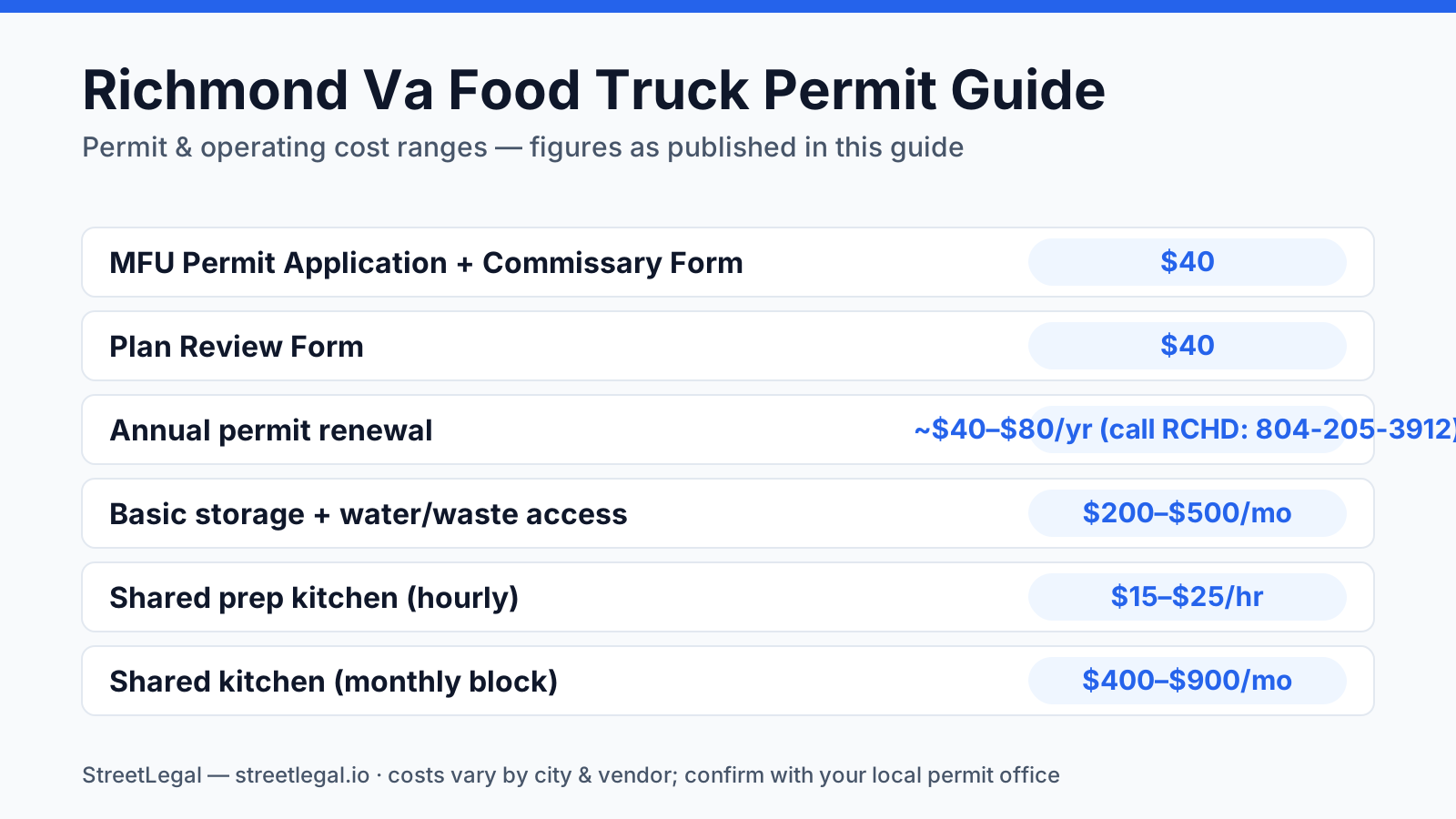
| Item | Fee |
|---|---|
| MFU Permit Application + Commissary Form | $40 |
| Plan Review Form | $40 |
| Annual permit renewal | ~$40–$80/yr (call RCHD: 804-205-3912) |
| Re-inspection fee (if failed) | Contact RCHD (804-205-3912) |
How to submit: Applications can be submitted by U.S. mail, fax (804-371-2208), or email (ehrchd@vdh.virginia.gov). Payment is accepted by credit card over the phone at 804-205-3912.
Permit display: Once issued, your VDH permit sticker must be placed on your unit in plain view of the public, following placement guidelines from the health district.
What Inspectors Check
A Richmond City health inspector will visit your truck before issuing the permit. They'll verify:
- Proper food storage temperatures (hot ≥135°F, cold ≤41°F)
- Functioning handwashing station with hot water, soap, and paper towels
- 3-compartment sink for washing, rinsing, and sanitizing equipment
- Adequate fresh water supply and wastewater holding capacity
- Equipment in good repair and meeting NSF commercial standards
- No bare-hand contact with ready-to-eat foods
- Fire safety compliance (extinguisher present, propane secured)
Commissary Kitchen Requirements in Richmond
Virginia law and Richmond City Health District rules require all mobile food units to operate from a licensed commissary kitchen. The commissary is your home base — where you prep food, clean equipment, dump wastewater, and reload fresh water before and after each service day.
Your commissary must:
- Hold a valid health permit from the relevant Virginia health district
- Have a signed commissary agreement with your truck on file (submitted with your MFU application)
- Provide adequate prep space, commercial-grade equipment, hot water, and 3-compartment sink access
- Be approved before your MFU permit is issued
Important: Prepping food at home is not permitted under Virginia code. Your commissary must be a licensed, inspected commercial facility.
Richmond Commissary Cost Ranges
| Type | Estimated Monthly Cost |
|---|---|
| Basic storage + water/waste access | $200–$500/mo |
| Shared prep kitchen (hourly) | $15–$25/hr |
| Shared kitchen (monthly block) | $400–$900/mo |
| Dedicated commissary agreement | $800–$1,800/mo |
Richmond has a growing number of shared commercial kitchens and incubator spaces. Start your search 4–6 weeks before you plan to apply, as the best spots book up quickly.
Fire Marshal Inspection
If your food truck uses propane, a fryer, griddle, open flame, or any heat-generating cooking equipment, you'll need a fire safety inspection from the Richmond Bureau of Fire and Emergency Services. Inspectors check for:
- Fire extinguisher — K-class (for kitchen fires), properly sized and within inspection date
- Fire suppression system — Required if you have a Type I hood over a fryer or grill (Ansul R-102 or equivalent)
- Propane storage — Tanks must be properly secured and valves accessible
- Ventilation — Type I hood required over all heat-producing commercial cooking equipment
- Semi-annual service — Fire suppression systems typically require inspection every 6 months
Budget approximately $300–$700/year for fire suppression inspection and service, depending on your equipment setup.
Business Registration & Other Requirements
Beyond your VDH health permit, you'll need to set up the business side:
- Virginia LLC or business entity — Register with the Virginia State Corporation Commission (SCC) at scc.virginia.gov; filing fee ~$100 for an LLC
- City of Richmond Business License — Required from the Richmond Department of Finance; fees based on gross receipts (typically $30â$300/yr; confirm at richmond.gov)
- Virginia Sales Tax Permit — Free from the Virginia Department of Taxation (tax.virginia.gov); you'll collect and remit Virginia's 5.3% state sales tax plus any local taxes
- EIN — Free from the IRS; required if you have employees or operate as an LLC
- Commercial vehicle registration — Register your truck with the Virginia DMV; may require commercial plates and inspection depending on vehicle weight
Where Can You Park in Richmond?
Richmond has a mix of designated zones and private property opportunities. For the general rules behind these restrictions, see our food truck zoning laws guide.
- Private property — With written owner permission, you can vend on private lots (breweries, events, corporate campuses). This is the most common and reliable model in Richmond.
- Downtown food truck zones — Richmond has designated downtown areas where mobile vendors can operate. Contact the City of Richmond Planning & Development Review at 804-646-6304 for current designated locations.
- Scott's Addition — Richmond's brewery and arts district is the highest-traffic food truck corridor; private agreements with individual businesses required.
- Special events — Richmond has a robust event scene (Richmond Folk Festival, Richmond Night Market, brewery tap days). Event organizers typically sponsor permits for participating vendors.
- Public streets / sidewalks — Generally restricted without a specific vending permit. Check with the City of Richmond Right-of-Way Management for current rules.
Henrico and Chesterfield Counties: If you plan to operate in suburban Richmond, each county issues its own health district permit. Henrico County Health District and Chesterfield Health District both have separate MFU permit processes and fees. Budget for additional permits if you want to cover the full metro.
Required Permits Summary
| Permit / License | Issuing Agency | Fee | Renewal |
|---|---|---|---|
| MFU Health Permit | Richmond City Health District (VDH) | $80 (app + plan review) | Annual |
| City Business License | City of Richmond Finance | Gross receipts-based | Annual |
| Virginia Sales Tax Permit | VA Dept of Taxation | Free | Ongoing |
| Virginia LLC Registration | VA State Corporation Commission | ~$100 | Annual report $50 |
| Fire Safety Inspection | Richmond Bureau of Fire | $300–$700/yr (service) | Semi-annual (suppression) |
| Commercial Vehicle Registration | Virginia DMV | Varies by weight | Annual |
| CFPM Certification (ServSafe) | Accredited provider | $150–$200 | Every 5 years |
Full Richmond Food Truck Cost Breakdown (First Year)
| Item | Low | High |
|---|---|---|
| VDH MFU Permit (application + plan review) | $80 | $80 |
| City business license | $50 | $300 |
| Virginia LLC registration | $100 | $100 |
| Annual LLC report | $50 | $50 |
| Fire suppression inspection & service | $300 | $700 |
| ServSafe (CFPM) certification | $150 | $200 |
| Food handler cards (per employee, avg 2–3) | $30 | $90 |
| Commissary kitchen (annual) | $2,400 | $10,800 |
| Commercial vehicle insurance (annual) | $1,200 | $2,500 |
| General liability insurance (annual) | $800 | $1,800 |
| Vehicle registration & inspections | $100 | $400 |
| TOTAL (first year) | $5,260 | $17,020 |
Does not include truck purchase/build-out, equipment, or working capital. Commissary cost varies significantly by arrangement type.
Richmond Permitting Timeline
- Week 1–2: Register LLC with Virginia SCC, apply for EIN, obtain Virginia Sales Tax Permit
- Week 2–3: Find and sign a commissary agreement (start early — good kitchens book up)
- Week 3–4: Complete ServSafe CFPM certification; get food handler cards for staff
- Week 4–5: Submit MFU permit application and plan review form to RCHD with commissary agreement attached
- Week 5–8: RCHD reviews plans and schedules health inspection of your truck
- Week 6–8: Fire marshal inspection (if applicable)
- Week 7–9: Obtain City of Richmond business license
- Week 8–10: Permits issued; begin operations
Total: allow 8–10 weeks from start to first service. Can compress to 6 weeks if you move quickly and have a commissary locked in before applying.
5 Richmond-Specific Tips
- Lock your commissary before you apply. The RCHD application requires your signed commissary agreement upfront. Without it, your application cannot move forward. Richmond's shared kitchens — especially in Scott's Addition and Manchester — fill up. Start shopping 6–8 weeks before you plan to open.
- Scott's Addition is gold. Richmond's fastest-growing food and brewery district has an incredible density of foot traffic, breweries with open-air event space, and a culture of partnering with food trucks. Cultivate 3–5 steady brewery or business relationships before launch — this is the fastest path to consistent revenue.
- Plan for Henrico and Chesterfield if you want to cover the metro. Many Richmond events and venues sit just outside city limits. A second health district permit from Henrico County or Chesterfield adds cost but significantly expands your reach. Budget an extra $100–$300/year per jurisdiction.
- Humidity and summers are real. Richmond summers are hot and humid (regularly 95°F+). Your refrigeration, generator cooling, and staff hydration protocols matter as much as your permits. Equipment that passes a spring inspection can fail on a July afternoon if not sized correctly.
- Track your renewal dates across all jurisdictions. If you're running permits in Richmond City, Henrico, and Chesterfield plus a state sales tax registration, renewal dates are scattered across the calendar year. Missing one — especially your health permit — can mean an immediate shutdown and re-inspection. Use StreetLegal's permit tracker to keep every deadline in one dashboard.
Official Richmond & Virginia Resources
- Richmond City Health District — Food Safety & Mobile Food Unit Permits
- Virginia State Corporation Commission — Business Registration
- Virginia Department of Taxation — Sales Tax Permit
- City of Richmond — Business License
Questions about Richmond food truck permits? Contact our support team — we help operators across Virginia navigate local health district requirements.
Related Food Truck Permit Guides
- Virginia Beach, VA Food Truck Permit Guide — Hampton Roads regulations, oceanfront vending rules
- Charlotte, NC Food Truck Permit Guide — Mecklenburg County health permits, zoning rules
- Nashville, TN Food Truck Permit Guide — Metro health permits, downtown zones, commissary requirements
- Pittsburgh, PA Food Truck Permit Guide — Allegheny County health permits, city licenses
- Philadelphia, PA Food Truck License Guide — PDPH permits, vending cart licenses, full cost breakdown
Last updated: June 11, 2026
Answers to the most common permit questions — costs, timelines, commissary rules, and more.
Find city-level permit guides for every state we cover — compare costs and requirements.
More from the blog
Jefferson County, MO Food Truck Permit Guide
Complete guide to food truck permits, fees, and requirements in Jefferson County, MO.
City GuidesSt. Charles County, MO Food Truck Permit Guide
Complete guide to food truck permits, fees, and requirements in St. Charles County, MO.
City GuidesSt. Louis County, MO Food Truck Permit Guide
Complete guide to food truck permits, fees, and requirements in St. Louis County, MO.
Buyer's GuideFood Truck POS Systems 2026: Square, Toast, Clover & Avocado
Compare 2026 food truck POS systems by pricing, hardware costs, offline mode, and contract terms for Square, Toast, Clover, and Avocado.