· Updated · 11 min read · Gibby, StreetLegal Editorial
Informational only — not legal advice. Confirm requirements with the city before you apply. See our Disclaimer.
Municipal reply evidence
StreetLegal updated this guide from official city, county, or health-department replies received by info@streetlegal.io.
FIN - Supplier Support <vssvendor@wake.gov> · Tue, 8 Sep 2026 15:50:22 +0000
Good morning, This is not the City of Raleigh. You will have to contact them directly and we do not have contact information of whom you will need to speak with at City of Raleigh. Regards, Wake County VSS Vendor Team (TLW) email: VSSVendor@wake.gov ***This email address is not for payment or invoice inquires.***
PH - Health and Safety <healthandsafety@wake.gov> · Fri, 4 Sep 2026 13:37:11 +0000
Hi, Unfortunately our office does not have this information. Best Regards, EH & S Customer Support Wake County Government Public Health/Environmental Health & Safety 919.856.5700 office 336 Fayetteville Street, PO Box 550, Raleigh, NC 27602 Wake.gov/pools Wake.gov/food Wake County Health & Human Services would like your feedback. In order to participate, please CLICK HERE!
Wake County replies say they do not hold the requested Raleigh city records; seal remains pending.
How to Start a Food Truck in Raleigh, NC: Complete Permit Guide 2026
Raleigh Food Truck Permitting Overview
Running a food truck in Raleigh means navigating two parallel permit tracks: a Wake County Mobile Food Unit (MFU) health permit and a City of Raleigh mobile retail vendor permit. Both are required, and they come from different agencies with different timelines and requirements.
The county permit is your food safety license — without it, you cannot legally operate anywhere in Wake County. The city permit is your location authorization for operating within Raleigh city limits. If you want to operate in Cary, Apex, or other Wake County towns, you may need additional local permissions — but your county health permit covers the health and safety side everywhere in the county.
Wake County Mobile Food Unit (MFU) Health Permit
The Wake County Environmental Health department issues your Mobile Food Unit permit. This is the foundational permit for any food truck operating in Raleigh or anywhere in Wake County.
Requirements to Apply
- Commissary agreement — Mandatory. A signed commissary agreement with a licensed commercial kitchen must be submitted with your application. Email the commissary form to healthandsafety@wake.gov.
- Floor plan — Detailed drawing of your truck showing equipment placement, sink locations, and storage areas
- Proposed menu — Reviewed to ensure proper food handling procedures for all items
- Food Protection Manager certification — At least one Certified Food Protection Manager (CFPM) per shift required; ServSafe or equivalent ($150–$200, valid 5 years)
- Equipment list — All cooking and refrigeration equipment, including make/model
- Construction evaluation — After plan approval, a Wake County inspector evaluates the physical truck before issuing the permit
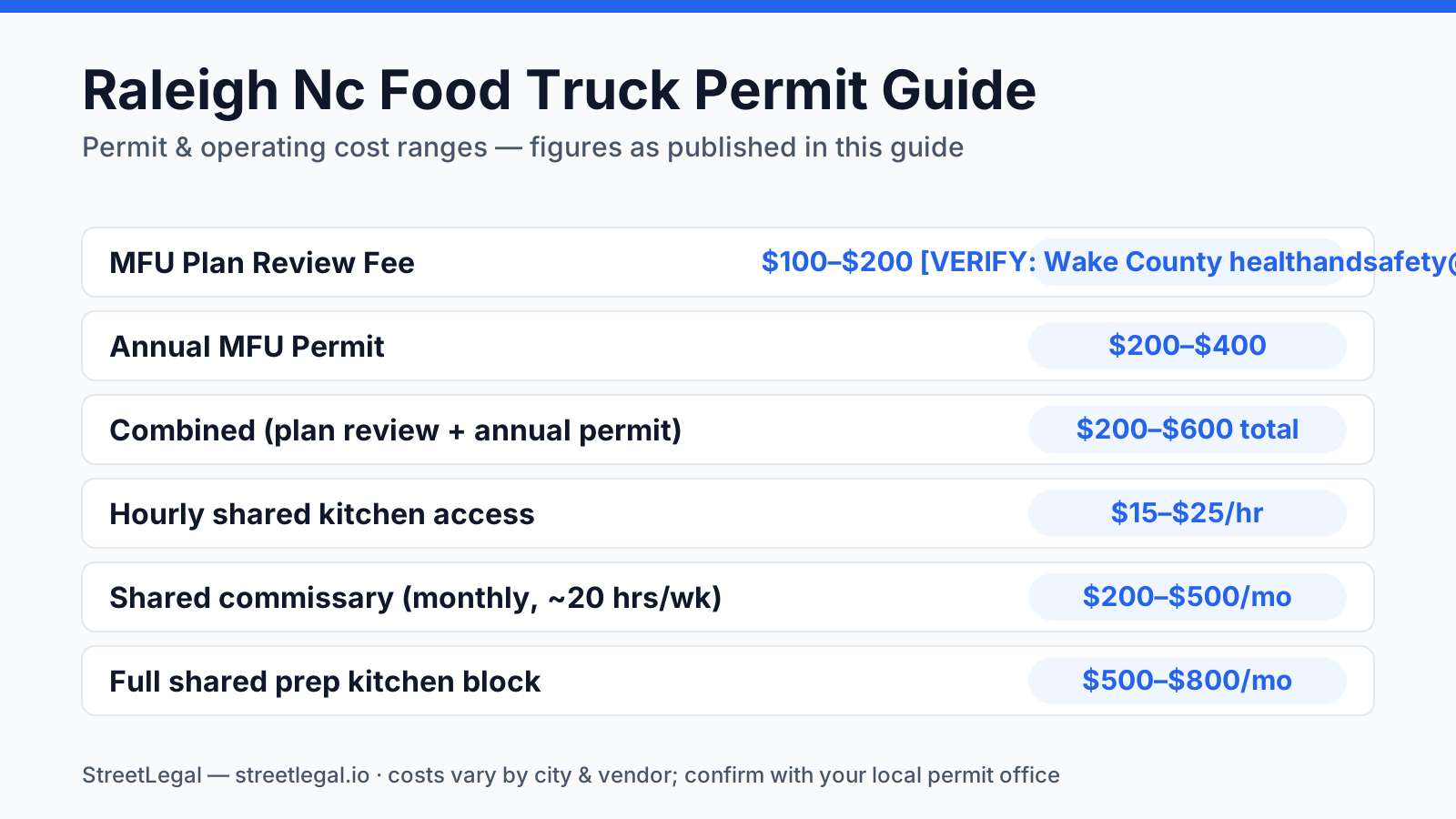
Wake County MFU Permit Fees
| Fee Item | Cost |
|---|---|
| MFU Plan Review Fee | $100–$200 [VERIFY: Wake County healthandsafety@wake.gov] |
| Annual MFU Permit | $200–$400 |
| Re-inspection fee (if failed) | [VERIFY: Wake County] |
| Combined (plan review + annual permit) | $200–$600 total |
Timeline: Once a complete application is submitted, plans are reviewed within approximately 10 business days. A construction evaluation of the physical unit follows plan approval. Allow 4–6 weeks total from submission to permit issuance.
Monthly drop-in Q&A: Wake County holds a free monthly drop-in session for prospective food truck operators — second Wednesday of each month, 10–11 a.m., 6th floor of the Wake County Office Building, 336 Fayetteville St., downtown Raleigh. Highly recommended for first-timers.
What Inspectors Check
Once operating, your truck will be subject to unannounced inspections 2–4 times per year. Inspectors check for:
- Temperature control (hot ≥135°F, cold ≤41°F)
- Handwashing station with hot water (≥100°F), soap, and paper towels
- 3-compartment sink (wash, rinse, sanitize)
- No bare-hand contact with ready-to-eat foods
- Proper waste disposal and fresh water supply
- Sanitation grade displayed (A/B/C) — the same letter grade system used for NC restaurants
City of Raleigh Vendor Permit
Separate from the county health permit, the City of Raleigh Planning & Development Division requires a vendor permit for mobile retail operations within the city. There are two permit types:
- Mobile Retail – Short Term — For temporary or one-off vending locations; processes in approximately 2 business days
- Mobile Retail – Long Term — For recurring operations at a fixed private location; processes in approximately 3 business days
City Permit Requirements
- Certificate of Insurance — Minimum $1,000,000 general liability through an NC-authorized insurance carrier; required for any operations affecting the public right-of-way
- Property owner consent — Written permission from property owner for operations on private property
- Zoning compliance — Your intended location must be properly zoned for mobile food vending
Contact: City of Raleigh Planning and Development, One Exchange Plaza, Suite 300, Raleigh, NC 27601 | Phone: 919-278-6209 | Mon–Fri 8:30 a.m. – 4:30 p.m.
Commissary Kitchen Requirements in Raleigh
North Carolina law requires every food truck to have a commissioned commissary kitchen, regardless of whether you're fully self-contained. The Wake County health department will not approve your MFU permit without a valid signed commissary agreement on file.
Your commissary must:
- Hold a valid health permit from Wake County Environmental Health
- Provide adequate prep space, hot water, a 3-compartment sink, and grease disposal access
- Be your daily base of operations for prep, cleaning, and supply reload
- Have the commissary owner sign and submit the county's commissary form
Important: Home kitchens are not permitted as commissaries in NC. Your home prep space, no matter how clean, cannot qualify.
Raleigh Commissary Cost Ranges
| Type | Monthly Cost |
|---|---|
| Hourly shared kitchen access | $15–$25/hr |
| Shared commissary (monthly, ~20 hrs/wk) | $200–$500/mo |
| Full shared prep kitchen block | $500–$800/mo |
| Dedicated commissary agreement | $800–$2,000/mo |
Where Can You Park in Raleigh?
Raleigh has specific rules about where food trucks can operate on both private property and the public right-of-way:
- Private property — Most common model. Must have written owner permission. Maximum trucks allowed per lot:
- 2 trucks on lots ½ acre or less
- 3 trucks on lots between ½ and 1 acre
- 4 trucks on lots 1–2 acres
- Public right-of-way — Requires a City permit and must comply with setback and zoning rules
- Glenwood South / downtown corridor — High foot traffic area; many lots are available through private agreements with bars, restaurants, and venues
- North Hills / North Raleigh — Suburban office and retail corridor; strong lunch demand from corporate parks
- Special events — Raleigh has a robust events calendar (Hopscotch, NC State Fair food truck weekends, brewery pop-ups). Event organizers manage vendor permits for their events.
Business Registration & Other Licenses
- NC LLC — Register with the NC Secretary of State at sosnc.gov; filing fee $125
- NC does not require a city business license — Unlike many cities, Raleigh does not require a local business license to operate commercially. This is one fewer permit to manage.
- NC Sales Tax Certificate — Free from the NC Department of Revenue (ncdor.gov); required to collect sales tax on prepared foods. NC state rate is 4.75% + Wake County local 2%, totaling approximately 6.75–7.5%.
- EIN — Free from the IRS; required if you have employees or an LLC
- Fire permit — If using propane, fryers, or open flame; contact the Raleigh Fire Department for inspection requirements
Required Permits Summary
| Permit / License | Issuing Agency | Fee | Renewal |
|---|---|---|---|
| MFU Health Permit | Wake County Environmental Health | $200–$600 | Annual |
| Mobile Retail Vendor Permit | City of Raleigh Planning & Development | $50–$200 [VERIFY] | Annual or per event |
| NC Sales Tax Certificate | NC Dept of Revenue | Free | Ongoing |
| NC LLC Registration | NC Secretary of State | $125 | Annual report $200 |
| Fire Safety Inspection | Raleigh Fire Dept | Varies | Annual |
| CFPM Certification (ServSafe) | Accredited provider | $150–$200 | Every 5 years |
| General Liability Insurance | Private carrier (NC-authorized) | $1,200–$2,500/yr | Annual |
Full Raleigh Food Truck Cost Breakdown (First Year)
| Item | Low | High |
|---|---|---|
| Wake County MFU health permit | $200 | $600 |
| City of Raleigh vendor permit | $50 | $200 |
| NC LLC registration | $125 | $125 |
| Annual LLC report | $200 | $200 |
| Fire safety inspection & suppression service | $200 | $700 |
| ServSafe (CFPM) certification | $150 | $200 |
| Food handler cards (2–3 staff) | $30 | $90 |
| Commissary kitchen (annual) | $2,400 | $9,600 |
| General liability insurance (annual) | $1,200 | $2,500 |
| Vehicle registration & commercial tags | $150 | $400 |
| TOTAL (first year) | $4,705 | $14,615 |
Does not include truck purchase/build-out, equipment, or working capital.
Raleigh Permitting Timeline
- Week 1–2: Form NC LLC, register for NC sales tax certificate, apply for EIN
- Week 2–3: Find and sign commissary agreement; submit commissary form to Wake County (healthandsafety@wake.gov)
- Week 3–4: Complete ServSafe CFPM certification; get food handler cards for all staff
- Week 4–5: Submit complete MFU application to Wake County Environmental Health
- Week 5–6: Plans reviewed (~10 business days); construction evaluation of unit scheduled
- Week 6–8: Construction evaluation and any re-inspection if needed
- Week 7–8: Apply for City of Raleigh mobile retail permit (2–3 business days processing)
- Week 8–10: Permits issued; begin operations
Total: 8–10 weeks from start to first service. Can compress to 6 weeks with a fast commissary find and no inspection issues.
5 Raleigh-Specific Tips
- Attend the Wake County monthly Q&A. It's free, it's on the second Wednesday of every month, and the county staff will answer your specific questions about your truck's setup, menu, and commissary situation. First-timers who attend save weeks of back-and-forth email.
- Secure your commissary first — not last. The Wake County application requires the commissary agreement upfront. The Raleigh shared kitchen market is competitive (especially the downtown and Glenwood South incubator spaces). Lock yours down 6–8 weeks before you want to submit your permit application.
- Know the private property truck limits. Raleigh's rule capping trucks per lot size is real and enforced. If you're trying to join a multi-truck food hall or pop-up market, verify the lot size before committing to a spot — you could be turned away at the zoning level even if the property owner is willing.
- The NC State University corridor is underserved. The Hillsborough Street / Western Blvd zone around NC State has enormous student demand and relatively few established food truck spots. Private lot deals near campus can deliver consistent lunch and late-night revenue.
- Track county vs. city renewal deadlines separately. Your Wake County MFU permit and your City of Raleigh vendor permit renew on different schedules. Missing either one can shut you down. StreetLegal's dashboard tracks both — so you never get caught operating on an expired permit.
Related City Guides
Exploring other Southeast and Mid-Atlantic markets? These guides cover adjacent regulatory frameworks:
- Charlotte, NC Food Truck Permit Guide — Mecklenburg County Environmental Health permit, same state framework as Raleigh
- Richmond, VA Food Truck Permit Guide — VDH mobile food unit permit, Richmond city license, Virginia statewide rules
- Atlanta, GA Food Truck Permit Guide — Fulton County health permit, one of the strongest food truck markets in the Southeast
- Nashville, TN Food Truck Permit Guide — Metro Health permit, Tennessee commissary requirements, event-driven market
Official Raleigh & Wake County Resources
- Wake County Environmental Health — Food Trucks & Hot Dog Carts
- City of Raleigh — Food Trucks on Private Property and Public Right-of-Way
- City of Raleigh — Mobile Retail Permit
- NC Secretary of State — Start a Business (LLC Registration)
- NC Department of Revenue — Sales Tax Registration
Questions about Raleigh food truck permits? Contact our support team — we help operators across North Carolina navigate county and city permit requirements.
Last updated: June 11, 2026. Permit fees and requirements verified against Wake County Environmental Health and City of Raleigh sources.
People also ask about Raleigh food truck permits
How much does a food truck permit cost in Raleigh?
How long does it take to get a food truck permit in Raleigh?
Do I need a commissary kitchen to operate a food truck in Raleigh?
What documents do I need for a Raleigh food truck permit?
Answers to the most common permit questions — costs, timelines, commissary rules, and more.
Find city-level permit guides for every state we cover — compare costs and requirements.
More from the blog
Jefferson County, MO Food Truck Permit Guide
Complete guide to food truck permits, fees, and requirements in Jefferson County, MO.
City GuidesSt. Charles County, MO Food Truck Permit Guide
Complete guide to food truck permits, fees, and requirements in St. Charles County, MO.
City GuidesSt. Louis County, MO Food Truck Permit Guide
Complete guide to food truck permits, fees, and requirements in St. Louis County, MO.
Buyer's GuideFood Truck POS Systems 2026: Square, Toast, Clover & Avocado
Compare 2026 food truck POS systems by pricing, hardware costs, offline mode, and contract terms for Square, Toast, Clover, and Avocado.