· 8 min read · StreetLegal Team
How to Get a Food Truck Permit in Raleigh (2026 Guide)
Updated June 28, 2026.
Raleigh is one of the fastest-growing cities in the Southeast, with a tech-driven economy (Research Triangle), a young professional population, and a food truck culture that's matured significantly over the last decade. Permitting a food truck in Raleigh means working through Wake County Environmental Services for health oversight, the City of Raleigh for business licensing and street vending, and the State of North Carolina for some business-level registrations. This guide covers every step.
In This Guide
Jump through the sections below to compare permits, costs, timelines, and operating rules.
Core Permits & Licenses
1. Wake County Environmental Services Mobile Food Unit Permit
Wake County Environmental Services (WCES) issues the Mobile Food Unit (MFU) permit — the foundational health permit for all food trucks operating in Wake County. This covers Raleigh and surrounding towns (Cary, Apex, Garner, Wake Forest, etc.).
- Application submitted to Wake County Environmental Services
- Plan review required for new trucks or major equipment changes (submit plans before buying/building equipment)
- Pre-operational inspection required — truck must pass before the permit is issued
- Commissary agreement from a Wake County or NC-licensed food establishment required
- Annual renewal — permit year is typically fiscal year (July 1–June 30)
2. City of Raleigh Business License
The City of Raleigh requires a Privilege License (business license) for businesses operating within city limits. Apply through the Raleigh Finance Department. Annual renewal required.
3. City of Raleigh Mobile Food Vendor Permit
To operate on Raleigh public streets or city-owned property, you need a Mobile Food Vendor Permit from the City of Raleigh. This permit governs where and when you can park on public right-of-way within the city. Key requirements:
- Valid Wake County MFU permit (required before city permit is issued)
- Proof of liability insurance ($1M per occurrence, $2M aggregate)
- Approved locations list — the city publishes approved vending zones
- Annual fee (approximately $100–$200)
4. North Carolina Business Registration
Register your business entity with the North Carolina Secretary of State ($125 for LLCs). Sole proprietors using a trade name must file an Assumed Business Name certificate with the Wake County Register of Deeds ($26).
5. North Carolina Sales Tax Registration
Register with the NC Department of Revenue to collect and remit sales tax (4.75% state + 2% Wake County = 6.75% total). Prepared food sold from a food truck is taxable. Register at dor.nc.gov — free.
6. Commissary Agreement (Required)
Wake County requires all food trucks to operate from a licensed commissary for prep, storage, and equipment cleaning. Your commissary must hold a valid Wake County food establishment permit. Submit the signed agreement with your MFU permit application.
Health & Food Safety Requirements
- Food Handler Certification: North Carolina requires a Certified Food Protection Manager (CFPM) — ServSafe or equivalent NC-approved certification. Required at least one per truck.
- Temperature control: Cold TCS foods ≤41°F, hot TCS foods ≥135°F. Temperature logs are checked during Wake County inspections.
- Handwashing station: Dedicated sink with hot/cold water, soap, and paper towels — cannot be shared with prep or warewashing sinks.
- Three-compartment sink: Required for on-truck warewashing. Must have wash, rinse, and sanitize compartments plus a drainboard.
- Potable water supply: Fresh water tank required; gray water tank must be larger. Dump at commissary or approved dump station.
- Fire extinguisher: Class K for fryers; ABC minimum for all trucks. Fire suppression system required for open-flame hood setups per NC fire code.
- Grading: Wake County posts food truck inspection scores publicly (like restaurants). A high score builds customer trust; a low score is visible to everyone searching for your truck.
Where You Can Operate in Raleigh
- City-approved street vending locations: The City of Raleigh publishes a list of approved locations where food trucks can operate on public right-of-way. Downtown Raleigh (Fayetteville Street corridor, Moore Square area) has designated zones.
- Moore Square: Raleigh's central downtown plaza — one of the most popular food truck gathering spots. Public events and informal vending are common here.
- Glenwood South: Popular nightlife and dining corridor. Evening food truck demand is strong, especially on weekends. Street spots require city permit; bar lot partnerships are common.
- North Hills / Midtown: Suburban commercial hub with strong lunch demand from office workers. Private parking lot arrangements with shopping center management are the primary model here.
- Research Triangle Park (RTP): Massive corporate campus in Durham/Research Triangle area. Food trucks serving RTP typically operate under private property agreements with corporate campus managers. Note: Durham has separate permitting requirements.
- Private property: Written landowner permission is sufficient for private lots — no separate city permit required. Your Wake County MFU permit and city business license must be current.
Events & Markets
- State Farmers Market (NCDA): One of the largest farmers markets in the Southeast — apply through the NC Department of Agriculture. Year-round operation with strong weekend traffic.
- Downtown Raleigh Food Truck Rodeo: A popular recurring event organized by Raleigh food truck operators — one of the best networking and sales events in the city.
- Raleigh Night Market / Transfer Co. Market: Transfer Co. Food Hall area hosts markets and events — apply through the venue organizers.
- NC State Fair (October): Massive annual event on the State Fairgrounds — separate vendor application through the NC State Fair. Extremely high volume but very competitive.
- Special event permits: For events requiring road closures or occurring on city property outside normal vending zones, a Special Event Permit from the City of Raleigh is required. Apply through the Parks, Recreation and Cultural Resources department.

Fees & Timeline
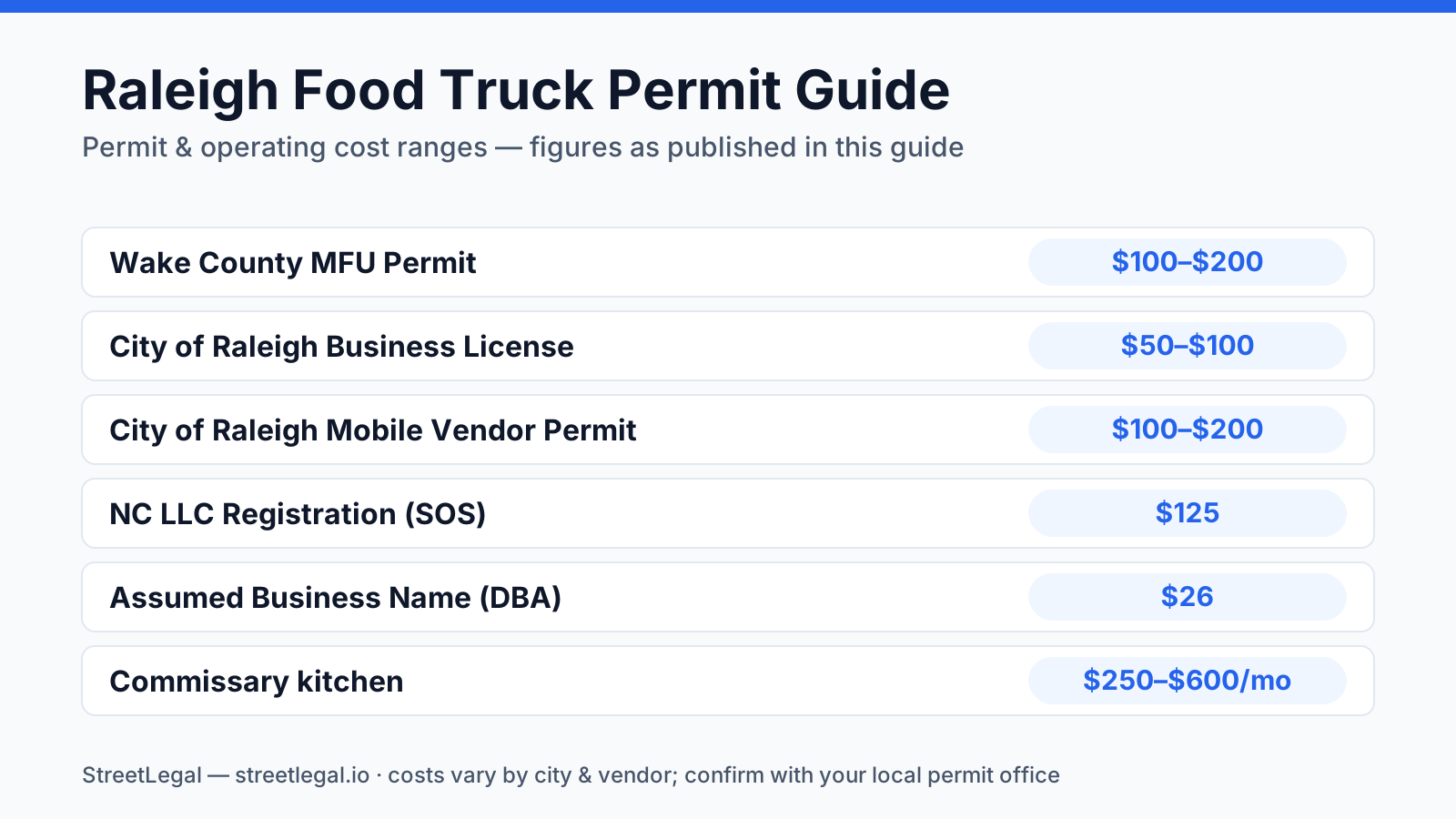
| Permit / License | Approx. Fee | Renewal |
|---|---|---|
| Wake County MFU Permit | $100–$200 | Annual (July 1) |
| City of Raleigh Business License | $50–$100 | Annual |
| City of Raleigh Mobile Vendor Permit | $100–$200 | Annual |
| NC LLC Registration (SOS) | $125 | $200/yr annual report |
| Assumed Business Name (DBA) | $26 | Every 10 years |
| NC Sales Tax Registration | Free | Regular filing |
| Commissary kitchen | $250–$600/mo | Monthly |
Timeline: Budget 4–8 weeks from application to opening day. Wake County plan review for new builds takes 2–4 weeks. City permits typically process in 1–2 weeks once health permit is in hand. Submit applications early — inspectors have limited scheduling windows.
Operator Tips
- Score visibility matters: Wake County posts inspection grades publicly. Aim for a 97+ (A grade) — it's a marketing asset. Customers check before they queue.
- Tech campus lunch is gold: RTP and the Raleigh tech corridor (NC State area, Midtown) have thousands of office workers with expense accounts and limited lunch options. One good corporate account can anchor your weekly revenue.
- Food Truck Rodeo is essential networking: The Downtown Raleigh Food Truck Rodeo brings thousands of attendees and the full vendor community together. Show up, be visible, and introduce yourself to other operators — spot intel and event leads flow through the community.
- Durham and Chapel Hill are close but separate: Durham has its own permitting system (Durham County Environmental Services). Chapel Hill is in Orange County. If you want to operate across the full Research Triangle, budget permit time and fees for each jurisdiction.
- Plan around NCSU and Duke schedules: The academic calendar drives a lot of foot traffic. Graduation weekends, homecoming, and first weeks of school are high-demand days for nearby food truck spots.
- Shared kitchens are affordable: Raleigh's commissary market is competitive and relatively affordable compared to coastal cities. Several shared kitchens in the West Raleigh and downtown areas cater specifically to food truck operators.
People also ask about Raleigh food truck permits
How much does a food truck permit cost in Raleigh?
How long does it take to get a food truck permit in Raleigh?
Do I need a commissary kitchen to operate a food truck in Raleigh?
What documents do I need for a Raleigh food truck permit?
Answers to the most common permit questions — costs, timelines, commissary rules, and more.
Find city-level permit guides for every state we cover — compare costs and requirements.
More from the blog
Las Cruces, NM Food Truck Permit Guide
Complete guide to food truck permits, fees, and requirements in Las Cruces, NM.
City GuidesGrand Junction, CO Food Truck Permit Guide
Complete guide to food truck permits, fees, and requirements in Grand Junction, CO.
City GuidesKey West, FL Food Truck Permit Guide
Complete guide to food truck permits, fees, and requirements in Key West, FL.
City GuidesNew Haven, CT Food Truck Permit Guide
Complete guide to food truck permits, fees, and requirements in New Haven, CT.