· Updated · 8 min read ·
Informational only — not legal advice. Confirm requirements with the city before you apply. See our Disclaimer.
Kansas City Food Truck Permit Guide 2026
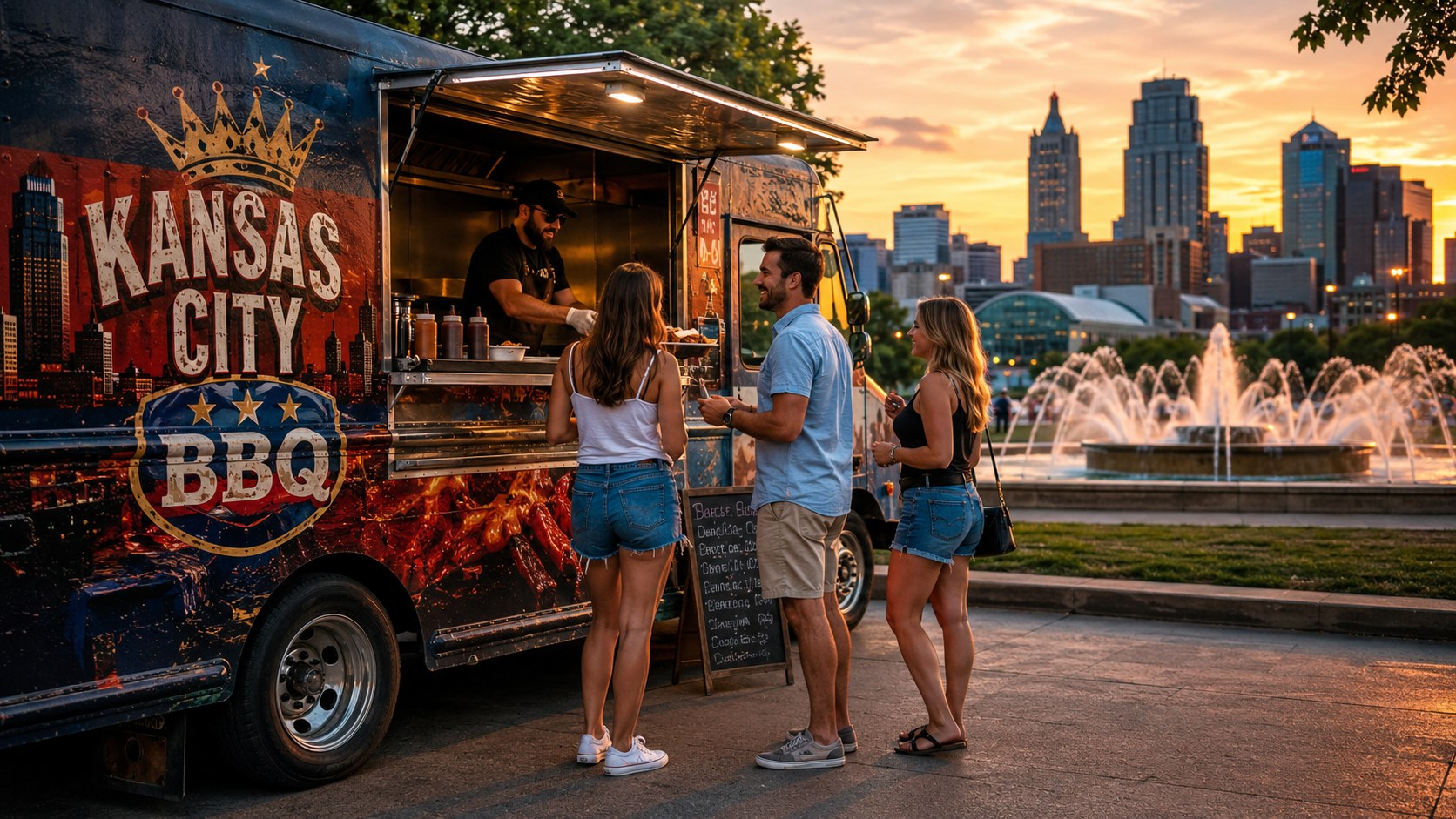
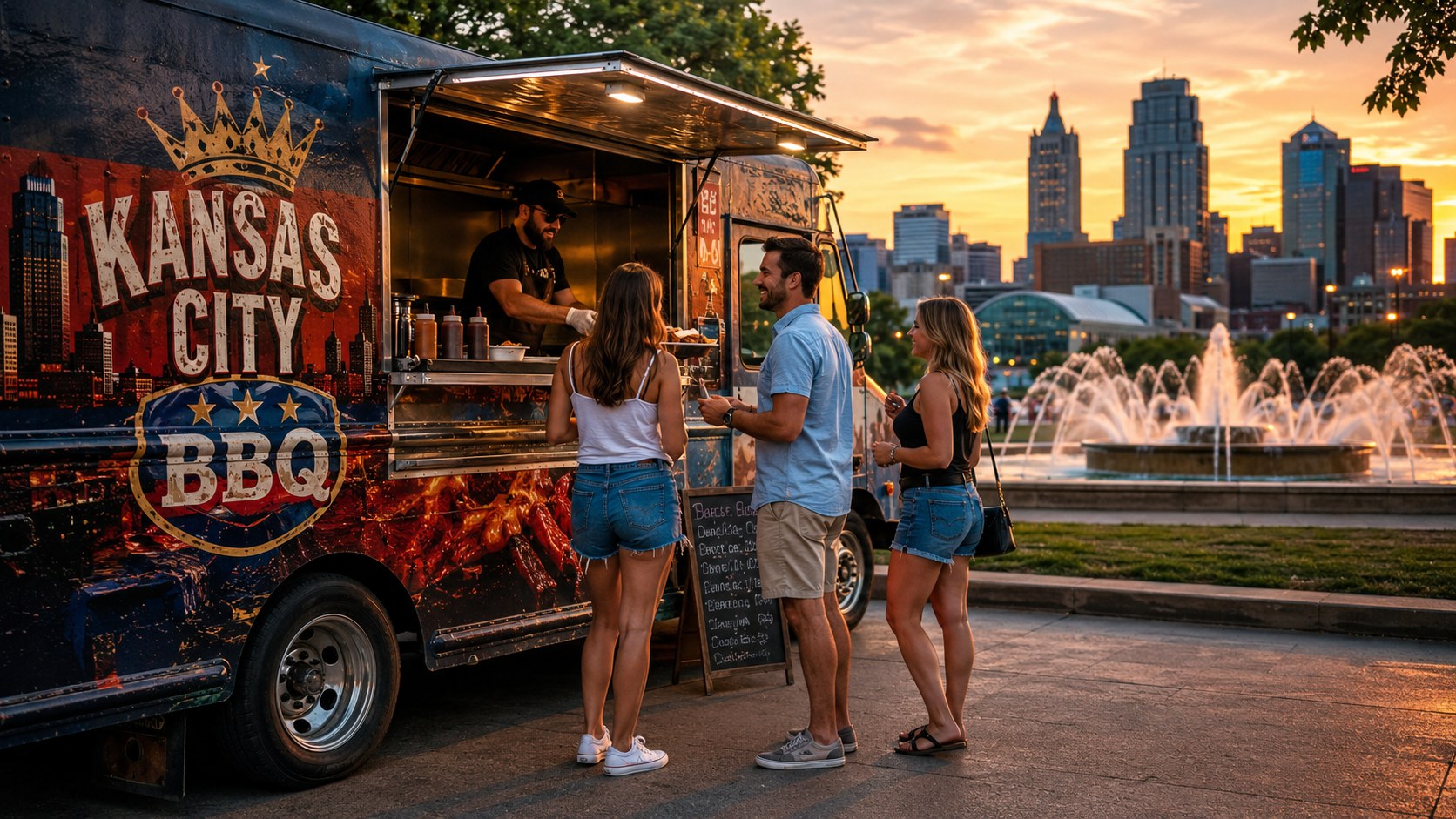
Launching a food truck in Kansas City means lining up Missouri mobile food licensing, local business records, commissary support, inspection readiness, and practical parking permissions before your first service. The paperwork is manageable, but delays usually happen when operators treat each permit as a separate errand instead of one connected launch sequence.
Use this guide to build a Kansas City-ready permit packet, estimate your first-year costs, and avoid the common back-and-forth that slows down health, fire, and event approvals.
Permit packet checklist
Line up the Kansas City approval packet before you book service.
Use one clean packet for the local license, health review, commissary, and inspection steps.
Local business license
Match the legal name, address, insurance, and truck details across every form.
Health permit
Prepare the menu, equipment list, food-safety credentials, and inspection plan.
Commissary proof
Show where storage, prep, dishwashing, wastewater, and overnight servicing happen.
Inspection and renewal
Track corrections, approval dates, renewal deadlines, and event-specific permissions.
StreetLegal keeps these requirements organized so operators can launch without spreadsheet chaos.
Kansas City Permit Snapshot for 2026
Kansas City operators should expect the core approval path to run through the Kansas City Health Department, Environmental Public Health Program ((816) 513-6008), Kansas City business licensing (BizCare portal), and the Missouri Department of Revenue, plus commissary documentation, insurance, vehicle information, and inspection readiness for any equipment that affects food safety or fire safety. The exact routing can vary by operating location, menu, and event type, so confirm current forms before filing.
The smartest move is to assemble one complete packet before you submit. That packet should make it obvious who owns the business, where the truck is based, what food is served, how food is stored safely, how wastewater is handled, and where the truck expects to operate.
| Step | What to Prepare | Why It Matters |
|---|---|---|
| Business setup | Entity name, tax records, Kansas City business licensing (BizCare portal) license details | Keeps every permit under the same legal identity |
| Health review | Menu, process notes, food safety certificate, commissary agreement for the Kansas City Health Department, Environmental Public Health Program ((816) 513-6008) | Shows how food will be stored, prepared, and served safely |
| Truck readiness | Equipment list, water system, waste plan, vehicle registration | Lets inspectors match the truck to the application |
| Fire safety | Propane, generator, hood, extinguisher, suppression records | Reduces inspection delays for cooking-heavy menus |
| Operating access | Event approvals, private-property permission, route plan | Prevents a permitted truck from having nowhere legal to sell |
What Licenses Do Kansas City Food Trucks Need?
Most Kansas City food trucks need some combination of health department approval through the Kansas City Health Department, Environmental Public Health Program ((816) 513-6008), a business license or registration record through Kansas City business licensing (BizCare portal), a sales tax registration through the Missouri Department of Revenue, insurance, commissary support, and fire-safety clearance if the truck uses cooking equipment, propane, generators, or suppression systems. Operators serving at festivals, farmers markets, breweries, or private lots may also need event-specific approvals or written property permission.
Do not assume one approval covers every service location. Kansas City city limits, the surrounding county, private events, and neighboring municipalities can each add their own access rules. If you plan to move around the wider Missouri market, track each city separately.
Kansas City Food Truck Permit Cost Breakdown
| Permit or Expense | Typical Range | Planning Note |
|---|---|---|
| Mobile Food Unit Permit | $207/yr | Core health department permit for the truck |
| Truck sales vendor permit | $292/yr | Applies to general truck sales activity in the city |
| Catering permit | $398/yr | Only needed if you also cater private events |
| Commissary processing fee | $50 initial | One-time fee when the commissary agreement is filed |
| Parks mobile vending (annual) | $500/yr | Only required to vend in KC Parks & Rec locations |
| Re-inspection fee | $116 | Charged if the truck fails its first health inspection |
| Late renewal fee | $50/month | Charged per month if the annual renewal is filed late |
| Estimated first-year total | $800-$1,800 | Core permit plus commissary and inspection costs, before vehicle purchase |
These ranges reflect current published fee schedules and web research for Kansas City; treat any figure marked "est." as a planning range rather than a quoted price, and confirm the exact current fee with the Kansas City Health Department, Environmental Public Health Program ((816) 513-6008) or Kansas City business licensing (BizCare portal) before you budget your launch.
Realistic Kansas City Launch Timeline
A clean Kansas City application can move quickly, but most first-time operators should plan for 3 to 8 weeks. The critical path is usually not the application fee. It is the sequence of commissary agreement, menu review, truck readiness, insurance, and inspection scheduling.
| Week | Focus | Operator Action |
|---|---|---|
| 1 | Business and menu setup | Finalize entity name, menu scope, and equipment list |
| 2 | Commissary and insurance | Get signed support-kitchen agreement and certificate of insurance |
| 3-4 | Application filing | Submit complete forms to the Kansas City Health Department, Environmental Public Health Program ((816) 513-6008) and respond quickly to reviewer questions |
| 5-6 | Inspection readiness | Prepare the truck exactly as described in the application |
| 7-8 | Launch access | Confirm event approvals, private-lot letters, and renewal reminders |
Commissary Requirements in Kansas City
A commissary is the home base that supports the truck with prep, storage, cleaning, water, wastewater disposal, and food safety records. Kansas City operators need a commissary agreement plus a $50 initial commissary processing fee. In practice, your commissary agreement is one of the most important documents in the packet because it explains how the truck operates when it is not parked at a service window.
Before signing, confirm that the commissary can support your actual menu. A coffee truck, a taco truck, and a barbecue trailer may need different storage, cooking, and cleaning workflows. If your menu changes after approval, revisit whether the commissary agreement still matches your operation.
Fire and Equipment Prep
Cooking equipment is where many mobile food applications get more complex. In Kansas City, fire inspection is part of the review, and mobile units are prohibited within 500 feet of schools during school hours. Keep service tags current and make sure the equipment on the truck matches the list you submit.
If you buy a used truck, do not rely on the seller's old approvals. Inspectors will review your current layout, menu, ownership, and equipment condition. Build time for repairs and recertification into your opening schedule.
Parking, Events, and Operating Access
A health approval lets you operate as a food business, but it does not automatically grant access to every curb, parking lot, festival, brewery, or campus. Kansas City operators should collect a permit valid January 1 through December 31 each year — apply at least 30 days before your planned opening before announcing service.
For recurring spots, keep a folder with property permission, insurance requirements, event applications, and any site-specific rules. That record helps when a venue asks for proof that your truck is approved and insured.
Documents to Prepare Before the First Inspection
- Mobile Food Unit Permit from the Kansas City Health Department, Environmental Public Health Program
- Kansas City Business License through the BizCare portal
- Food Handler Permit for every food handler
- Vehicle registration for the mobile unit
- Commissary agreement on file, plus a $50 initial commissary processing fee
- Certificate of insurance naming the City of Kansas City as an additional insured
- Menu documentation and an equipment list submitted with the application
- Fire inspection as part of the review process
- School-zone compliance — mobile units are prohibited within 500 feet of schools during school hours
- Apply at least 30 days before your planned opening; the permit runs January 1 through December 31
Common Kansas City Food Truck Permit Mistakes
The most common mistake is filing before the packet is internally consistent. If the business name, owner name, truck description, commissary address, insurance certificate, and menu do not match, the Kansas City Health Department, Environmental Public Health Program ((816) 513-6008) may pause the application until the conflict is resolved.
The second mistake is treating parking as an afterthought. A truck can be technically approved but commercially stuck if events, private-property permissions, or neighboring-city approvals are not ready. Plan operating access while the permit is being reviewed, not after approval arrives.
Nearby Missouri Markets to Track Separately
If your route will expand beyond Kansas City, review each market on its own. Missouri operators commonly compare Kansas City requirements with nearby or regional guides such as Independence food truck permits and Olathe food truck permits.
For broader planning, compare startup budgets with the 2026 food truck permit cost guide and review commissary rules in the commissary kitchen requirements by state guide.
Kansas City Food Truck Permit FAQ
How much does it cost to start a food truck in Kansas City?
Most Kansas City operators should budget roughly $800-$1,800 for first-year permitting, inspections, insurance, commissary access, and startup compliance costs. Exact totals depend on menu, equipment, commissary pricing, and whether additional event or fire approvals are required.
Do Kansas City food trucks need a commissary kitchen?
Yes. Kansas City mobile food operators need a commissary agreement plus a $50 initial commissary processing fee for storage, water, cleaning, wastewater disposal, and preparation records. Confirm the current requirement with the Kansas City Health Department, Environmental Public Health Program ((816) 513-6008) before submitting your application.
How long does a Kansas City food truck permit take?
A realistic Kansas City launch timeline is about 3 to 8 weeks once your business records, commissary agreement, menu, equipment list, insurance, and inspection readiness are in order.
Can a Kansas City food truck operate in nearby Missouri cities?
Not automatically. Nearby cities and counties may require separate approvals, event permits, fire clearances, or parking permissions even when your Missouri mobile food license is current.
Auto-fill your Kansas City permit application
StreetLegal can organize your truck profile, documents, renewal dates, and local application details so your permit packet is easier to review.
Get Started FreePeople also ask about Kansas City food truck permits
How much does a food truck permit cost in Kansas City?
How long does it take to get a food truck permit in Kansas City?
Do I need a commissary kitchen to operate a food truck in Kansas City?
What documents do I need for a Kansas City food truck permit?
Answers to the most common permit questions — costs, timelines, commissary rules, and more.
Find city-level permit guides for every state we cover — compare costs and requirements.
More from the blog
Jefferson County, MO Food Truck Permit Guide
Complete guide to food truck permits, fees, and requirements in Jefferson County, MO.
City GuidesSt. Charles County, MO Food Truck Permit Guide
Complete guide to food truck permits, fees, and requirements in St. Charles County, MO.
City GuidesSt. Louis County, MO Food Truck Permit Guide
Complete guide to food truck permits, fees, and requirements in St. Louis County, MO.
Buyer's GuideFood Truck POS Systems 2026: Square, Toast, Clover & Avocado
Compare 2026 food truck POS systems by pricing, hardware costs, offline mode, and contract terms for Square, Toast, Clover, and Avocado.