· 11 min read · StreetLegal Team
How to Get a Food Truck Permit in Fresno (2026 Guide)
Updated June 29, 2026.
Operating a food truck in Fresno, California requires navigating permits from Fresno County Department of Public Health and Social Services (DPHSS) as well as state and local business licensing. This 2026 guide covers every step to legally operate in Fresno, compares Fresno to other major California markets, and identifies which truck types work best in the Central Valley.
Fresno food truck permit snapshot (2026)
| Step | Agency | Permit | Fee | Timeline | Sequence |
|---|---|---|---|---|---|
| 1 | Licensed commissary kitchen | Commissary agreement | $500-$900/mo | 1-2 weeks | Required before health permit application |
| 2 | Fresno County DPHSS | Mobile Food Facility (MFF) Permit | $300-$600/yr + $200-$400 plan review | 4-7 weeks | After commissary agreement; includes plan review + inspection |
| 3 | City of Fresno Finance Dept | Business license | ~$100/yr | 1 week | Can apply concurrently with county health |
| 4 | California CDTFA | Seller's Permit (sales tax registration) | Free | Immediate (online) | Can apply anytime; required before first sale |
| 5 | Fire suppression (if cooking with open flame) | Fire safety system + inspection | $1,500-$3,500 (equipment) | Varies | May be required before health inspection sign-off |
| 6 | Food manager certification provider | California Food Manager Certification | $20-$60 | 1 day | Must have before operating; at least one certified manager per truck |
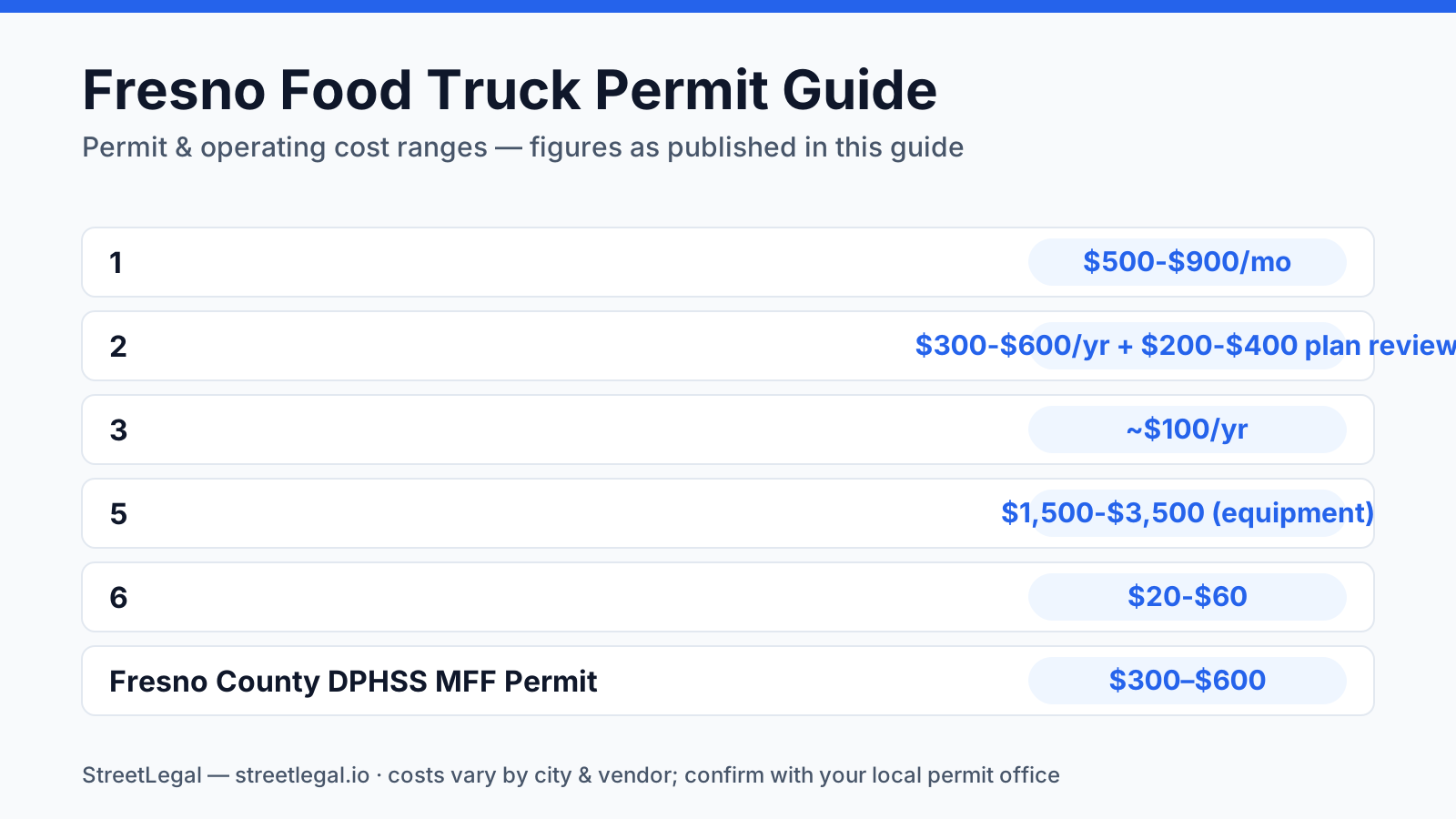
First-year total: $2,500-$5,500 including commissary startup, permits, plan review, and food manager cert. Annual renewal: $1,000-$1,700.
California market comparison: Fresno vs. other major markets (2026)
| Market | Launch friction | Best first revenue lane | Best first truck fit | Why this market matters |
|---|---|---|---|---|
| Fresno | Low to moderate | Community events + fairs + neighborhood demand | Practical family-demand / simple lunch build | Central Valley baseline — lower costs, agricultural community, strong family/community event demand |
| Los Angeles | Higher | Private events + nightlife + branded activations | Brand-forward high-volume truck | Highest California population, strongest event/nightlife demand, highest commissary costs |
| San Francisco | Higher | Corporate catering + premium private events | Premium niche / catering truck | Bay Area tech campus demand, very high commissary costs, limited street vending |
| San Diego | Moderate | Breweries + coastal events + private lots | Event-flex coastal truck | Year-round weather, brewery culture, military/tourism demand, moderate launch friction |
| Sacramento | Moderate | Government lunch + neighborhood events | Farm-to-fork / local sourcing truck | Capital region, farm-to-fork culture, government lunch demand, moderate costs |
Fresno is the strongest Central Valley comparison for founders who want lower launch friction, agricultural community ties, and family/community-event demand without Bay Area or LA overhead.
Best food truck types for Fresno market (2026)
| Truck type | Fresno market fit | Commissary pressure | Event flexibility | Rationale |
|---|---|---|---|---|
| Compact taco / street food truck | Excellent | Moderate | High | Strong Latino community, fast service fits fairs/events, works for lunch and dinner demand |
| Farm-to-truck local-sourcing truck | Strong | Moderate to high | Moderate | San Joaquin Valley agricultural access, farmers market fit, authentic local positioning |
| Hmong / Southeast Asian specialty truck | Strong (niche) | Moderate | Moderate | Large Hmong community in Fresno, cultural food traditions, devoted local following |
| Dessert / ice cream truck | Good | Lower | High | Summer heat demand, family events, fairs, schools; avoid peak July/August outdoor markets |
| BBQ / comfort food trailer | Good | Moderate | Moderate to high | Works well for Fresno State football games, fairs, community events, family demand |
| Coffee / espresso cart | Moderate | Lower | High | Works for farmers markets, office parks, downtown Fulton Street corridor |
Fresno rewards practical builds that serve family demand, community events, and agricultural/cultural authenticity without requiring Bay Area or LA overhead.
Where Fresno food trucks can actually operate (2026)
| Operating lane | Permit alone enough? | Access reality | Best truck fit |
|---|---|---|---|
| Community events and fairs | No | Event organizer approval and vendor application required; often strong early revenue lane | Taco truck, dessert truck, BBQ trailer |
| Fresno State campus events | No | University vendor program or event organizer approval; football games and campus events generate strong demand | Compact taco truck, comfort food, dessert |
| Farmers markets | No | Market organizer acceptance; strong fit for farm-to-truck and local-sourcing concepts | Farm-to-fork truck, coffee cart |
| Tower District | No | Arts district with brewery partnerships and weekend foot traffic; venue relationships needed | Specialty truck, taco truck, dessert |
| Fulton Street corridor (downtown) | Maybe | Revitalized main street emerging as food truck destination; verify city vending rules and private lot access | Coffee cart, compact lunch truck |
| Private lots and ag-adjacent events | No | Property owner or event organizer permission required; unique to Fresno's agricultural economy | Farm-to-truck, BBQ, any practical build |
| Neighborhood pop-ups | No | Repeat-site agreements and neighborhood demand patterns; works well for family-oriented concepts | Taco truck, Hmong/Southeast Asian truck |
Fresno County health permit approval is not the same as location access. Community events, Fresno State activations, farmers markets, and venue relationships drive early revenue — not permit status alone.
Core Permits & Licenses
1. Mobile Food Facility Permit (Fresno County DPHSS)
The Fresno County Department of Public Health and Social Services issues the Mobile Food Facility (MFF) Permit under the California Retail Food Code — your primary operating credential in Fresno.
- Application with commissary agreement and CRFC-compliant equipment list
- Plan review for new builds
- Pre-opening inspection
- Annual renewal — fee: $300–$600
Renew annually. Fresno County inspects throughout the year.
2. Fresno Business License
All businesses operating in Fresno must hold a City of Fresno Business License. Apply through the Finance Department.
3. California Seller's Permit (CDTFA)
Register with CDTFA to collect CA sales tax. Free online registration.
4. Commissary Agreement
CA CRFC requires daily commissary return for prep, cleaning, and storage. Commissary must hold its own Fresno County DPHSS permit.
Health & Food Safety
- CFPM required: At least one Certified Food Protection Manager per truck.
- Temperature control: Cold ≤41°F, hot ≥135°F.
- Summer heat: Fresno averages 100°F+ in summer. Proper ventilation and shade are critical.
- Three-compartment sink and handwash sink: Both required and must be separate.
- Fresh/waste water tanks: Waste tank 15% larger than fresh water capacity.
Fees & Timeline
| Permit / License | Approx. Fee | Renewal |
|---|---|---|
| Fresno County DPHSS MFF Permit | $300–$600 | Annual |
| Plan Review (new build) | $200–$400 | One-time |
| Fresno Business License | ~$100 | Annual |
| CA Seller's Permit | Free | Permanent |
| Commissary kitchen | $500–$900/mo | Monthly |
Timeline: 5–9 weeks. California plan review is rigorous and adds 3–6 weeks. Fresno County is usually faster than Bay Area or LA county health departments.
Operator Tips
- Farm-to-truck positioning: The San Joaquin Valley is one of the world's most productive agricultural regions — local sourcing is authentic and marketable.
- Hmong and Southeast Asian community: Fresno has a large Hmong community with strong cultural food traditions — niche cuisines can build devoted local followings.
- Spring and fall are best: Avoid peak summer heat for outdoor markets. September–May is your prime outdoor season.
- Fresno State events: Football games and campus events generate significant demand.
- Community event access: Health permit alone does not guarantee event vendor acceptance — build relationships with fair organizers, church event coordinators, and Fresno State campus programs early.
- Lower costs than Bay Area or LA: Fresno commissary costs and plan review timelines are usually lower/faster than major California metros, making it a strong first-market choice for Central Valley founders.
Related StreetLegal guides
People also ask about Fresno food truck permits
How much does a food truck permit cost in Fresno?
How long does it take to get a food truck permit in Fresno?
Do I need a commissary kitchen to operate a food truck in Fresno?
What documents do I need for a Fresno food truck permit?
Answers to the most common permit questions — costs, timelines, commissary rules, and more.
Find city-level permit guides for every state we cover — compare costs and requirements.
More from the blog
Food Truck POS Systems: Square vs. Toast vs. Clover vs. Avocado (2026)
Real 2026 pricing, hardware costs, offline mode, and contract terms for Square, Toast, Clover, and Avocado — compared specifically for food truck operators.
City GuidesEagan, MN Food Truck Permit Guide
Eagan MN food truck permit guide: MDH mobile food licensing, Dakota County food safety, city peddler rules, commissary records, costs, and launch timeline.
City GuidesBentonville, AR Food Truck Permit Guide
Complete guide to food truck permits, fees, and requirements in Bentonville, AR.
City GuidesBiloxi, MS Food Truck Permit Guide
Biloxi food truck permit guide 2026: licenses, health permit steps, commissary records, inspections, costs, renewal timing, and launch checklist.