· 8 min read ·

Informational only — not legal advice. Confirm requirements with the city before you apply. See our Disclaimer.
Municipal reply evidence
StreetLegal updated this guide from official city, county, or health-department replies received by info@streetlegal.io.
Permitting Inquiries <PermitQuestions@kingcounty.gov> · Fri, 4 Sep 2026 21:29:45 +0000
Hello Ben, I copied in the City of Bellevue in this email to assist you. To contact King County Public Health, please call 206-477-8050 and they will help you. Thank you, Kim Kim Laymen Customer Service Supervisor | Permitting
King County reply was a contact/referral, not a complete city requirement confirmation.
Bellevue Food Truck Permit Guide (2026)
Operating a food truck in Bellevue, Washington requires compliance with regulations established and administered by Bellevue City Government. This guide provides essential information to help food truck operators understand the permitting process and requirements for doing business in the city. For current information on specific permits, insurance requirements, and licensing procedures, direct contact with Bellevue City Government is recommended.
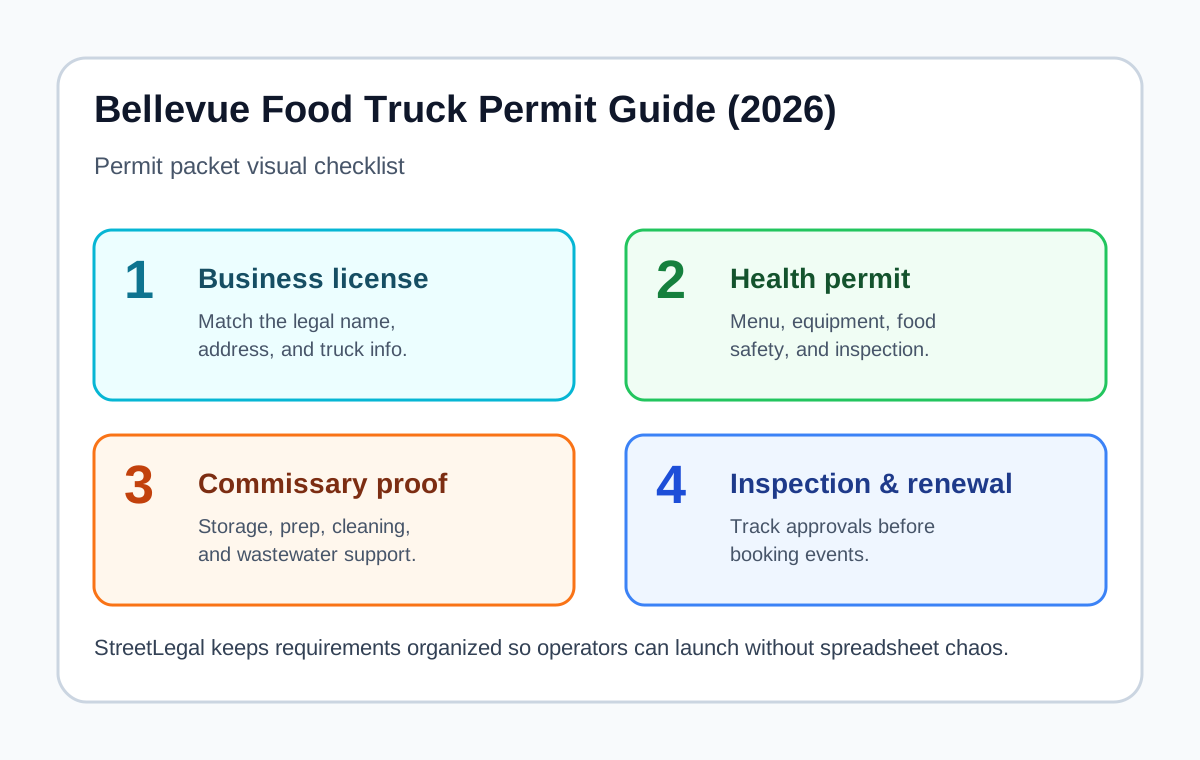
Permit packet checklist
Line up the Bellevue approval packet before you book service.
Use one clean packet for the local license, health review, commissary, and inspection steps.
Local business license
Match the legal name, address, insurance, and truck details across every form.
Health permit
Prepare the menu, equipment list, food-safety credentials, and inspection plan.
Commissary proof
Show where storage, prep, dishwashing, wastewater, and overnight servicing happen.
Inspection and renewal
Track corrections, approval dates, renewal deadlines, and event-specific permissions.
StreetLegal keeps these requirements organized so operators can launch without spreadsheet chaos.
Fee Schedule
| Permit / Fee Type | Amount |
|---|---|
| Mobile Food License | $350 (est.) |
| Health Permit | $280 (est.) |
| Business License | $119 |
| Fire Inspection | $125 (est.) |
| Total First Year | $1,274-1,674 |
| Renewal Period | Annual |
| Commissary Fee Monthly | $400-600/mo |
What operators in Bellevue should do before they apply
Before you submit anything, make sure your truck setup, menu, certifications, and support documents all match each other. Many permit delays happen because the truck description, commissary agreement, insurance certificate, or food safety paperwork conflicts across forms. That kind of mismatch creates rework even in cities that are otherwise straightforward.
It also helps to contact Bellevue local permitting office before you treat any checklist as final. Food truck rules change through fee updates, form revisions, inspection policy shifts, and routing changes between city and county departments. StreetLegal is useful because it organizes the stack, but operators should still confirm the latest official instructions right before filing.
From a launch-planning perspective, the real constraint is rarely just the permit fee. The bigger issue is coordinating timing: commissary access, inspection readiness, staff certifications, menu scope, and where you will actually operate once approval lands. If your local timeline is varies days and renewal cadence is annual, build slack into your launch plan so one delayed document does not push your opening date.
How to use this guide well
Use this guide as a preparation tool, not just a reading piece. Build your own permit packet, note which documents you already have, and flag every dependency that still needs a real owner. The fastest operators do not just gather information — they turn it into a sequence: business setup, permit application, inspections, venue approvals, and renewal tracking.
If you plan to expand beyond Bellevue, think regionally. Nearby cities often share vendor movement, event circuits, and commissary economics, but they still require their own approvals. That is exactly where a tracked permit system becomes more valuable than a one-off checklist.
Documents to prepare before the first inspection
Most operators should expect to prepare a business license record, government identification, vehicle registration, menu or food process description, commissary or support-kitchen agreement, food manager certificate, liability insurance certificate, and any fire-safety documentation required for propane, generators, suppression systems, or cooking equipment. The exact list varies by jurisdiction, but assembling these records early makes the official application much less stressful.
Keep the names and addresses consistent across every document. If the business entity, truck owner, commissary, or mailing address changes between forms, reviewers may pause the file until the mismatch is explained. A simple packet index with document dates, expiration dates, and contact names can prevent avoidable back-and-forth.
Launch planning after approval
Approval to operate is only one part of the launch. You still need a plan for parking permissions, event applications, fire-lane restrictions, private-property letters, sales-tax setup, insurance renewals, and inspection windows. Build those dependencies into the same calendar as the permit application so the truck is not legally approved but commercially idle.
For operators adding multiple cities, the best system is a repeatable file structure: one folder for permanent business records, one for vehicle and equipment documents, one for each local application, and one for renewal reminders. That structure helps you reuse the stable pieces while still respecting each city's separate review process.
Common reasons applications slow down
Applications usually slow down for practical reasons: missing signatures, expired certificates, unclear commissary support, incomplete equipment lists, menu items that require extra review, or insurance that names the wrong business. Before filing, review every page as if you were the city clerk receiving it for the first time. If a reviewer has to infer what the truck serves, where it parks overnight, who owns it, or how food will be stored safely, the file is likely to come back with questions.
A clean application is not about adding extra paperwork. It is about making the approval decision easy: official forms complete, supporting documents current, fees ready, contact information accurate, and inspection timing realistic. That discipline matters more as you grow because one delayed renewal can affect events, staffing, inventory, and customer commitments.
Auto-fill your Bellevue permit application
StreetLegal can pre-fill your permit forms using your truck profile and uploaded documents.
Get Started FreePeople also ask about Bellevue food truck permits
How much does a food truck permit cost in Bellevue?
How long does it take to get a food truck permit in Bellevue?
Do I need a commissary kitchen to operate a food truck in Bellevue?
What documents do I need for a Bellevue food truck permit?
Answers to the most common permit questions — costs, timelines, commissary rules, and more.
Find city-level permit guides for every state we cover — compare costs and requirements.
More from the blog
Jefferson County, MO Food Truck Permit Guide
Complete guide to food truck permits, fees, and requirements in Jefferson County, MO.
City GuidesSt. Charles County, MO Food Truck Permit Guide
Complete guide to food truck permits, fees, and requirements in St. Charles County, MO.
City GuidesSt. Louis County, MO Food Truck Permit Guide
Complete guide to food truck permits, fees, and requirements in St. Louis County, MO.
Buyer's GuideFood Truck POS Systems 2026: Square, Toast, Clover & Avocado
Compare 2026 food truck POS systems by pricing, hardware costs, offline mode, and contract terms for Square, Toast, Clover, and Avocado.