· 12 min read · Gibby, StreetLegal Editorial
How to Start a Food Truck in Plano, TX (2026 Guide)
Plano sits in the heart of DFW's corporate corridor, with some of the strongest office-park lunch demand in Texas. Legacy West, Legacy Drive, and Parkwood Boulevard office clusters mean steady weekday revenue—but Collin County's health permit plus City of Plano mobile vendor license mean you're navigating a two-agency stack before you roll.
This guide covers the full Plano food truck permit process: Collin County health requirements, City of Plano mobile vendor license, commissary rules, fire safety, costs, timeline, and where you can actually operate once permitted.
Table of Contents
- Permit Snapshot: What You Need
- Collin County Health Permit
- City of Plano Mobile Vendor License
- Commissary Requirements
- Fire Safety Inspection
- Total Startup Costs
- Launch Timeline
- Where You Can Operate
- Operating Lanes: Permit vs. Access Reality
- Best Truck Types for Plano
- DFW Market Comparison
- Renewal & Ongoing Compliance
- Common Mistakes
- FAQ
Permit Snapshot: What You Need
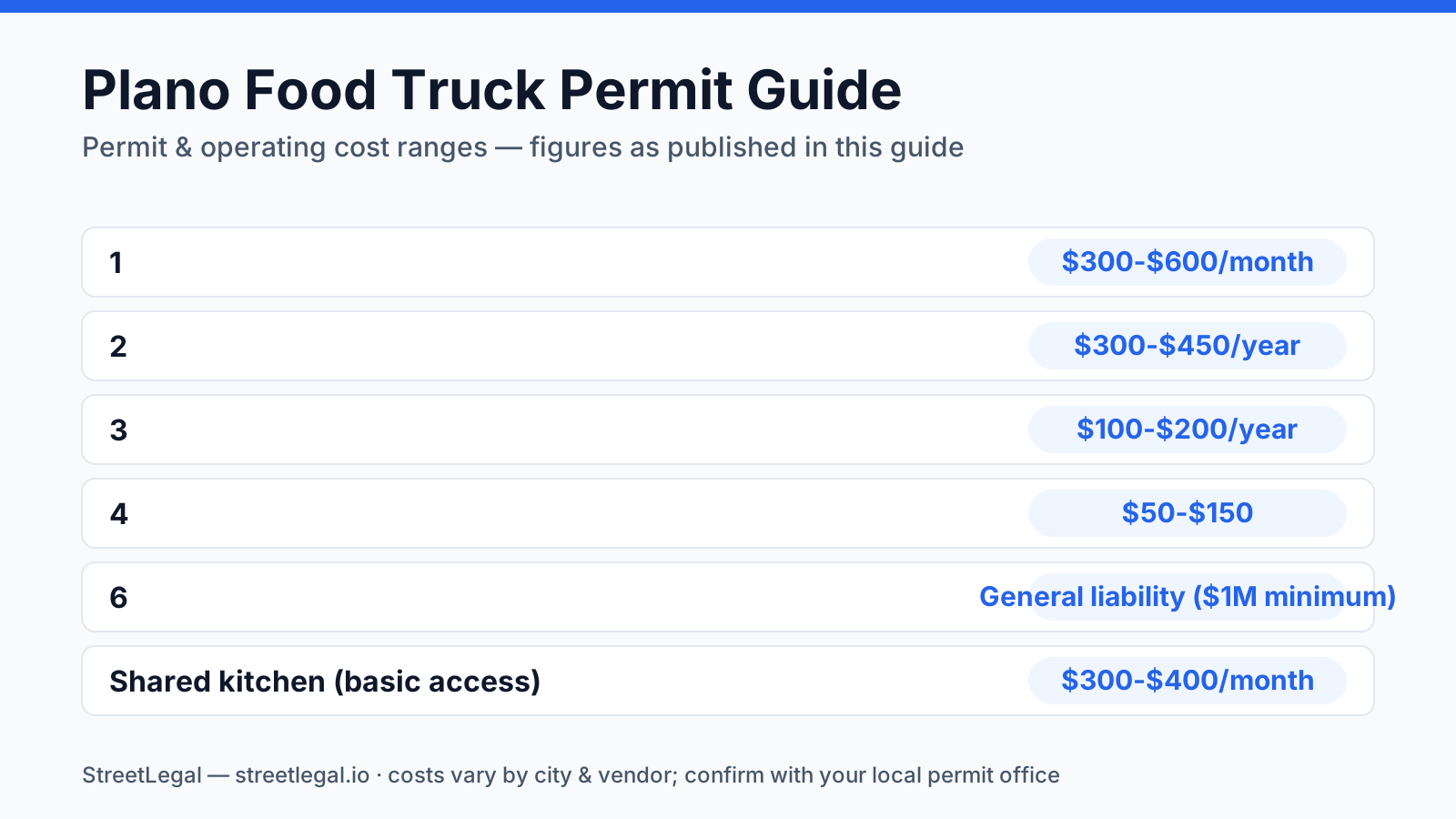
| Step | Agency | Permit | Fee | Timeline | Sequence |
|---|---|---|---|---|---|
| 1 | Commissary | Commissary agreement (Collin County-licensed) | $300-$600/month | 1-2 weeks | Required first—needed for health permit |
| 2 | Collin County Health | Mobile Food Establishment Permit | $300-$450/year | 4-6 weeks | After commissary secured |
| 3 | City of Plano | Mobile Food Vendor License | $100-$200/year | 2-3 weeks | After Collin County permit issued |
| 4 | Fire Department | Fire safety inspection (propane/open-flame) | $50-$150 | 2-3 weeks | Before final city approval if applicable |
| 5 | Texas Comptroller | Sales and Use Tax Permit | Free | Same day online | Before you sell anything |
| 6 | Insurance | General liability ($1M minimum) | $1,200-$2,500/year | 1-3 days | Required before city permit |
Collin County Health Permit
Collin County Health Department issues the Mobile Food Establishment permit that covers food safety, equipment standards, and operational compliance across Collin County (including Plano, Frisco, McKinney, Allen).
What Collin County Health Reviews
- Commissary agreement from a Collin County-licensed facility
- Three-compartment sink OR approved dishwasher
- Handwashing sink with hot water
- Food-grade surfaces (stainless steel preferred)
- Refrigeration holding temps (41°F or below for cold, 135°F+ for hot)
- Wastewater holding tank
- Menu and prep process
Cost: $300-$450/year depending on truck size and menu complexity.
Timeline: 4-6 weeks from application to approval. Inspection happens after plan review approval.
City of Plano Mobile Vendor License
Once you have your Collin County health permit, the City of Plano Mobile Food Vendor license allows you to operate within Plano city limits. This is a business license layer, not a duplicate health inspection.
What City of Plano Requires
- Copy of Collin County Mobile Food Establishment Permit
- Proof of general liability insurance ($1M minimum)
- Vehicle registration
- Texas Sales Tax Permit number
- Signed property owner permission letter (if operating on private property)
Cost: $100-$200/year.
Timeline: 2-3 weeks after submitting Collin County permit.
Commissary Requirements
Collin County Health requires all mobile food vendors to operate from a licensed commissary. The commissary is your legal base for:
- Food prep and cooking
- Cold and dry storage
- Cleaning and sanitizing equipment
- Fresh water refill
- Wastewater disposal
Commissary Cost
| Commissary Type | Monthly Cost | Notes |
|---|---|---|
| Shared kitchen (basic access) | $300-$400/month | Nights/weekends only |
| Shared kitchen (full access) | $500-$600/month | Daytime access, storage included |
| Restaurant agreement | $200-$400/month | Off-hours only, limited storage |
Key rule: Your commissary must hold a current Collin County health permit. Out-of-county commissaries may not be accepted unless reciprocal agreements exist.
Fire Safety Inspection
If your truck uses propane tanks or open-flame cooking equipment (griddles, deep fryers, charcoal), you need a fire safety inspection before final City of Plano approval.
What Fire Marshal Checks
- Propane tank securement and shutoff valves
- Ansul-type fire suppression system (required for open-flame cooking)
- Class K fire extinguisher placement and current inspection tag
- Electrical wiring and generator safety
- Ventilation hood (if cooking with grease)
Cost: $50-$150 for inspection. Ansul system install runs $2,000-$4,000 if not already present.
Timeline: 2-3 weeks to schedule. Book early as fire inspection slots fill quickly during spring/summer event season.
Total Startup Costs
| Item | Cost Range | Notes | |
|---|---|---|---|
| Collin County Health Permit | $300-$450 | Annual | Annual |
| City of Plano Vendor License | $100-$200 | Annual | |
| Commissary (first 3 months) | $900-$1,800 | Upfront deposit often required | |
| Fire safety inspection | $50-$150 | If propane/open-flame | |
| Fire suppression system | $2,000-$4,000 | If not already installed | |
| General liability insurance | $1,200-$2,500 | Annual, $1M minimum | |
| Texas Sales Tax Permit | Free | Online registration | |
| Total (no Ansul) | $2,550-$5,100 | First year, excluding truck/equipment | |
| Total (with Ansul install) | $4,550-$9,100 | If fire suppression needed |
Launch Timeline
Week-by-Week Breakdown
- Week 1-2: Research commissaries, contact Collin County-licensed kitchens, sign commissary agreement.
- Week 2-3: Submit Collin County Mobile Food Establishment application with commissary proof, menu, equipment list.
- Week 3-7: Collin County plan review (4-6 weeks). Fix any plan deficiencies during this window.
- Week 7-8: Pass Collin County health inspection. Receive Mobile Food Establishment permit.
- Week 8-9: Submit City of Plano Mobile Vendor application with Collin County permit, insurance, and vehicle docs.
- Week 9-10: Schedule fire safety inspection if needed. Pass inspection and receive fire approval.
- Week 10-11: Receive City of Plano Mobile Vendor license. Register for Texas Sales Tax Permit online.
- Week 12: You're legal to operate in Plano.
Total timeline: 10-12 weeks. Start commissary search early—it's often the first blocker.
Where You Can Operate
Plano allows food trucks on private property with property owner permission. The city does not allow vending on public streets or right-of-way without a special event permit.
High-Opportunity Zones
- Legacy West: Mixed-use district with offices, shops, and lunch demand. Private property vending allowed with landlord permission.
- Legacy Drive office corridor: Corporate campus lunch rush. Target office parks and corporate property.
- Parkwood Boulevard: Another strong office-lunch zone. Needs property owner approval.
- Plano Food Truck Park: Dedicated food truck lot. Contact park management for vendor agreements.
- Special events: Plano Balloon Festival, community festivals, corporate events. Event permits required.
- Private lots: Strip malls, breweries (though Plano has fewer craft breweries than Dallas/Fort Worth).
Key restriction: Plano does not allow sidewalk or curbside vending without event permits. Your revenue model will be private-property-based or event-driven.
Operating Lanes: Permit vs. Access Reality
| Operating Lane | Permit Approval Alone Enough? | Access Reality | Best Truck Fit |
|---|---|---|---|
| Legacy West mixed-use | No | Need landlord permission + liability insurance certificate. High foot traffic, competitive. | Upscale lunch trucks, specialty coffee, healthy/fast-casual |
| Office park lunch (Legacy/Parkwood) | No | Requires corporate property manager approval. Often exclusive vendor agreements. Steady weekday revenue. | Fast lunch, gourmet sandwiches, salad bowls, ethnic fusion |
| Plano Food Truck Park | No | Dedicated truck lot with vendor agreements. Application process, may have waiting list. | Dinner/weekend crowd trucks, BBQ, tacos, comfort food |
| Special events (Balloon Festival, etc.) | No | Event permits required. Application 60-90 days in advance. Vendor fees $200-$500/event. | High-volume trucks, desserts, specialty items |
| Private brewery/retail lots | No | Property owner permission required. Plano has fewer breweries than Dallas/Fort Worth, so retail lots more common. | BBQ, tacos, comfort food for retail/brewery customers |
| Residential neighborhoods | No | Generally not allowed. Plano zoning restricts mobile vending in residential areas. | Not viable |
Best Truck Types for Plano
| Truck Type | Plano Market Fit | Commissary Pressure | Event Flexibility | Rationale |
|---|---|---|---|---|
| Gourmet lunch truck (sandwiches, bowls, salads) | Excellent | Medium | Medium | Plano's corporate corridor (Legacy, Parkwood) has strong weekday lunch demand. Office workers want fast, quality, healthy options. Steady revenue Monday-Friday. |
| Upscale/fusion truck | Excellent | Medium-High | High | Legacy West attracts affluent professionals. Higher price tolerance than typical food truck markets. Works well for lunch and dinner events. |
| Specialty coffee/espresso cart | Good | Low | High | Morning office rush. Lower commissary needs (no hot food prep). Can pair with office park contracts. Competition from Starbucks but specialty/local angle works. |
| BBQ trailer | Good | High | Medium | Plano Food Truck Park and weekend events. Texas BBQ always plays. Heavy commissary use for smoking/prep. Evening and weekend revenue model. |
| Taco truck | Good | Medium | High | Lunch and dinner versatility. Works for office parks and events. Strong DFW market but competitive. |
| Dessert/ice cream truck | Medium | Low-Medium | High | Best for events and weekend crowds. Lower weekday lunch demand compared to savory trucks. Summer-seasonal revenue spike. |
Plano-specific insight: The office-park lunch lane is Plano's strongest revenue driver. Corporate campuses along Legacy and Parkwood want quality, speed, and variety. If you can land exclusive office-park agreements, you have predictable weekday revenue that beats event-only models.
DFW Market Comparison
| Market | Launch Friction | Best First Revenue Lane | Best First Truck Fit | Why This Market |
|---|---|---|---|---|
| Plano | Medium (two-agency permit stack, private-property-only vending) | Office park lunch contracts (Legacy/Parkwood) | Gourmet lunch truck, upscale fusion, specialty coffee | Strongest corporate office-park lunch demand in DFW. Predictable weekday revenue if you land property agreements. Lower event scene than Dallas/Fort Worth but steadier income base. |
| Dallas | Medium (Dallas County + City permits, fire inspection wait times) | Deep Ellum + Uptown lunch rush | BBQ, taco, international fusion, upscale lunch | Most diverse operating lanes in DFW. Strong nightlife + lunch + event scene. More competition but bigger total market. |
| Fort Worth | Medium-High (Tarrant County + City permits, limited public vending zones) | Stockyards + private lots + events | BBQ trailer, taco truck, comfort food | Tourist traffic at Stockyards. Lower cost of entry than Dallas but smaller lunch market. Event-driven revenue model. |
| Arlington | Medium (Tarrant County + Arlington permits, entertainment district focus) | AT&T Stadium + Globe Life Field events | High-volume event trucks, BBQ, tacos, desserts | Stadium events = massive single-day revenue spikes. Off-season can be quiet. Event permit fees $300-$500/event. |
| Houston | Medium (Harris County + City permits, commissary search challenging) | Montrose + food truck parks + private lots | Taco, BBQ, international, dessert | Largest total food truck market in Texas. Year-round operating weather. Higher competition, stronger Hispanic/international food scene. |
Renewal & Ongoing Compliance
Annual Renewals
- Collin County Health Permit: Renews annually based on your original issue date. Budget $300-$450.
- City of Plano Vendor License: Renews annually. Budget $100-$200.
- General Liability Insurance: Annual renewal. Shop quotes 60 days before expiration as rates fluctuate.
Ongoing Compliance
- Maintain valid commissary agreement (notify Collin County if you change commissaries)
- Keep fire extinguisher current (annual inspection tag)
- Keep Ansul system serviced (6-month inspection required)
- File Texas Sales Tax returns (monthly or quarterly depending on volume)
- Update insurance certificate with City of Plano if carrier changes
Common Mistakes
- Assuming Plano permit covers all of DFW. It doesn't. Dallas requires a Dallas County + Dallas City permit. Fort Worth requires Tarrant County + Fort Worth City permit. Frisco/McKinney are Collin County health but separate city business licenses.
- Underestimating commissary lead time. Collin County-licensed commissaries are limited. Start your commissary search before you buy your truck.
- Skipping fire inspection when you have propane. Even small propane tanks trigger fire safety review. Don't assume "it's just a coffee cart" exempts you.
- Not securing property owner permission before setting up. Plano does not allow public right-of-way vending. Every location needs written landlord approval.
- Expecting foot-traffic vending like Austin or Portland. Plano's model is private-property and office-park based. Your revenue comes from corporate contracts and events, not curbside walk-up.
- Overlooking Legacy West landlord approval timelines. Legacy West property managers often require 30-60 day lead time for vendor agreements and insurance certificate processing.
- Not budgeting for commissary deposit upfront. Many commissaries require first month + last month + security deposit. Budget $1,000-$2,000 upfront just for commissary access.
FAQ
Can I operate in Plano with just a Collin County health permit?
No. You need both Collin County Mobile Food Establishment permit AND City of Plano Mobile Vendor license to operate legally in Plano city limits.
Do I need separate permits for Dallas and Plano?
Yes. Dallas is in Dallas County (requires Dallas County Health + Dallas City permits). Plano is in Collin County (requires Collin County Health + Plano City permits). If you want to operate in both cities, you need permits from both counties and both cities.
Can I prep food in my truck instead of using a commissary?
No. Collin County Health requires all mobile food vendors to use a licensed commissary for prep, storage, and cleaning. No exceptions.
How much does it cost to operate a food truck in Plano for a full year?
Budget $8,000-$12,000 for permits, commissary, and insurance. Add $3,000-$6,000 for fuel, maintenance, and Texas sales tax compliance. Total ongoing cost: $11,000-$18,000/year excluding food costs and labor.
Where can I find a Collin County-licensed commissary?
Contact Collin County Health Department for a list of approved commissaries. Many shared kitchens in Plano, Frisco, and McKinney hold Collin County licenses. Expect $300-$600/month depending on access level.
Can I operate at Legacy West without a vendor agreement?
No. Legacy West is private property. You need written landlord permission and proof of general liability insurance naming the property owner as additional insured. Contact Legacy West property management 60-90 days in advance.
What's the difference between Plano and Dallas food truck permits?
Dallas uses Dallas County Health + Dallas City permits. Plano uses Collin County Health + Plano City permits. Different agencies, different application processes, different fee structures. You cannot use a Dallas permit in Plano or vice versa.
Do I need a fire suppression system for a coffee cart?
Probably not, unless you're using propane for heating water or cooking. Coffee carts with electric-only equipment typically do not need Ansul systems. But if you have any propane, expect a fire safety inspection.
Ready to Start Your Plano Food Truck?
StreetLegal helps you navigate Collin County health permits, City of Plano business licenses, and commissary compliance so you can launch faster and avoid costly mistakes.
People also ask about Plano food truck permits
How much does a food truck permit cost in Plano?
How long does it take to get a food truck permit in Plano?
Do I need a commissary kitchen to operate a food truck in Plano?
What documents do I need for a Plano food truck permit?
Answers to the most common permit questions — costs, timelines, commissary rules, and more.
Find city-level permit guides for every state we cover — compare costs and requirements.
More from the blog
Food Truck POS Systems: Square vs. Toast vs. Clover vs. Avocado (2026)
Real 2026 pricing, hardware costs, offline mode, and contract terms for Square, Toast, Clover, and Avocado — compared specifically for food truck operators.
City GuidesEagan, MN Food Truck Permit Guide
Eagan MN food truck permit guide: MDH mobile food licensing, Dakota County food safety, city peddler rules, commissary records, costs, and launch timeline.
City GuidesBentonville, AR Food Truck Permit Guide
Complete guide to food truck permits, fees, and requirements in Bentonville, AR.
City GuidesBiloxi, MS Food Truck Permit Guide
Biloxi food truck permit guide 2026: licenses, health permit steps, commissary records, inspections, costs, renewal timing, and launch checklist.