· 8 min read · StreetLegal Team
How to Start a Food Truck in El Paso: Complete Permit Guide 2026
Updated June 19, 2026 — City of El Paso MFV permit, new Texas DSHS statewide license (HB 2844), commissary rules, fire inspection, Fort Bliss catering lanes, and operating areas reviewed for El Paso 2026.
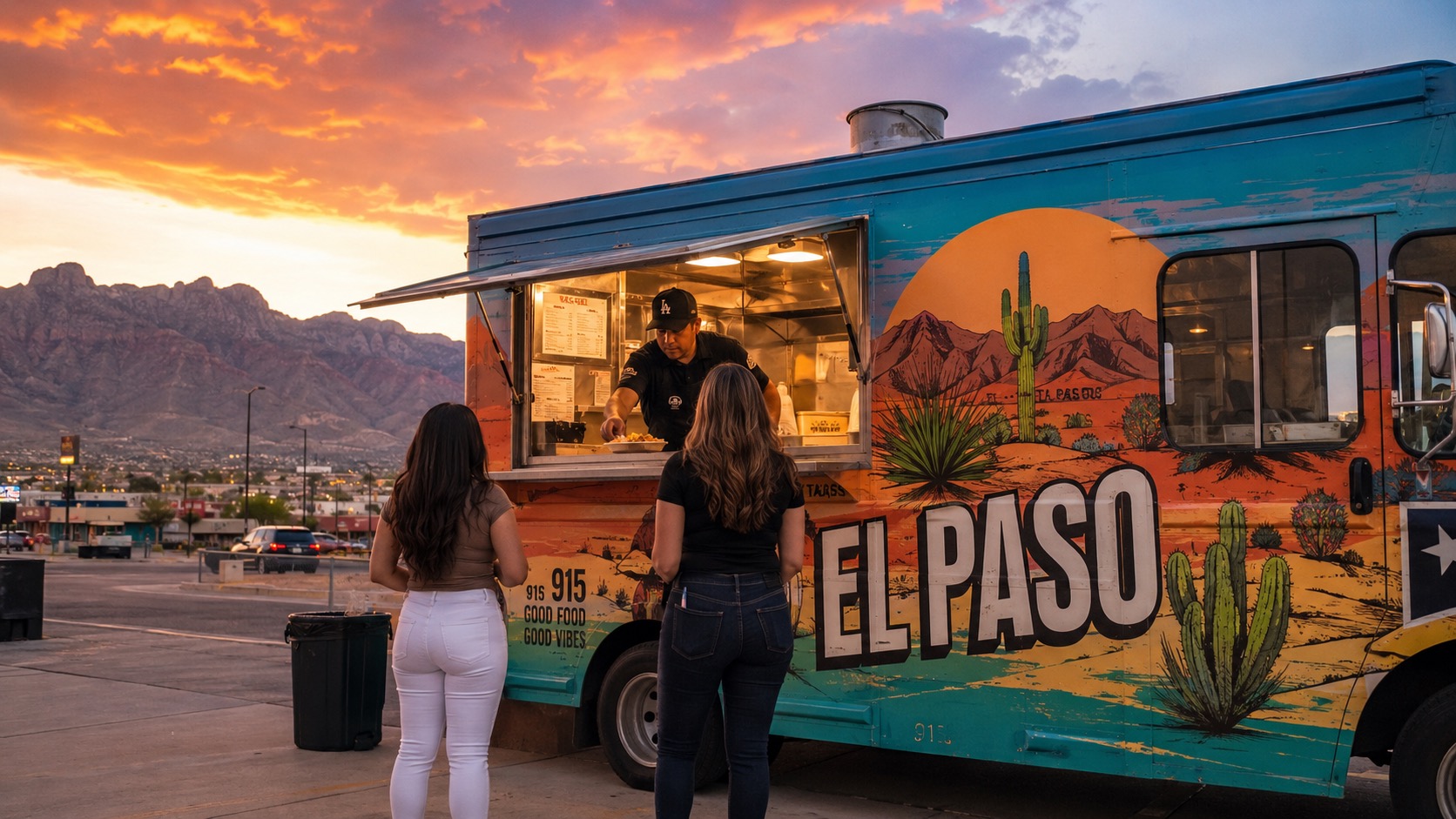
El Paso is one of Texas's most underrated food truck markets — a massive military community at Fort Bliss, the lowest cost of living among major Texas cities, a deep border Tex-Mex culinary identity, growing downtown revitalization, and year-round warm weather make it prime territory for mobile food operators. Getting licensed here means working through the City of El Paso Environmental Services Department, the new Texas DSHS statewide licensing system (effective July 1, 2026), and local business registration. This guide covers every permit you need, the real costs, launch timeline, and where you can actually make money in El Paso.
What's in this guide
- Permit snapshot — every agency, fee, and sequence
- City of El Paso Mobile Food Vendor Permit
- Texas DSHS statewide license — what changes July 1, 2026
- Commissary requirements in El Paso
- Fire inspection and safety requirements
- Total first-year cost estimate
- Where you can actually operate in El Paso
- Best food truck types for El Paso
- El Paso vs other Texas markets
- Common mistakes and operator tips
- FAQ
Texas Permit System Change — July 2026
Starting July 1, 2026, Texas HB 2844 transfers all mobile food vendor health permitting to the state level (DSHS). This guide covers both the existing City of El Paso permit process and the new statewide license. Local business registration and fire inspection requirements remain separate from the DSHS license. Always verify current rules directly with each agency before applying.
Permit Snapshot — Every Agency, Fee, and Sequence
El Paso's permit stack combines city-level food safety permitting through Environmental Services with the new Texas DSHS statewide licensing system. Most operators need all steps below before their first legal service day.
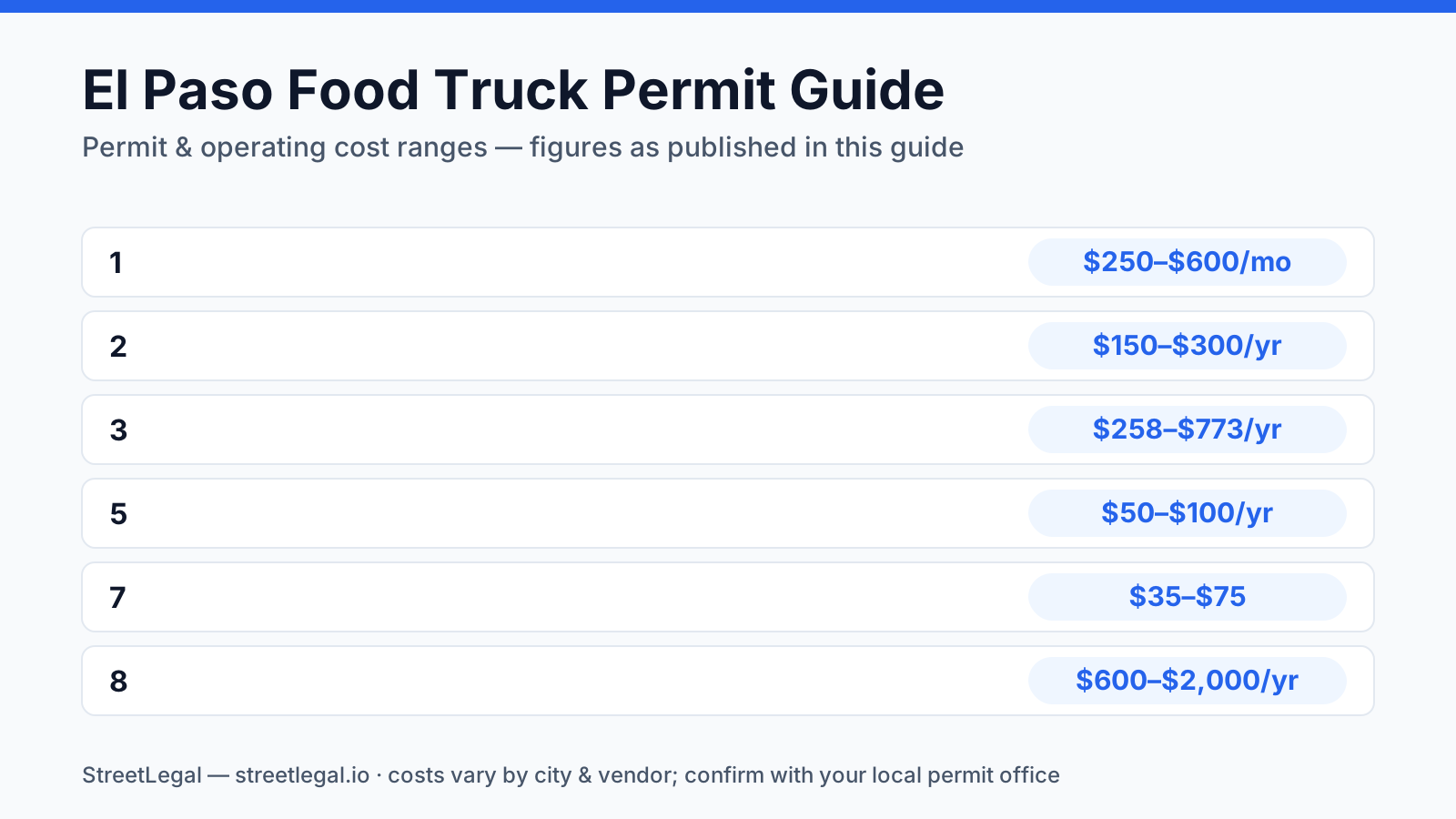
| Step | Agency / Permit | Fee | Timeline | Sequence Note |
|---|---|---|---|---|
| 1 | Commissary Agreement (Central Preparation Facility) | $250–$600/mo | 1–2 weeks to find + sign | Required before MFV application; CPF must have inspection score ≥85; notarized letter needed |
| 2 | City of El Paso — Mobile Food Vendor Permit (Environmental Services) | $150–$300/yr | 2–3 weeks (app + vehicle inspection) | Apply at One Stop Shop, 811 Texas Ave; submit with commissary agreement + menu |
| 3 | Texas DSHS — Statewide Mobile Food Vendor License (HB 2844) | $258–$773/yr | 2–4 weeks (app + pre-licensing inspection) | Required July 1, 2026; valid statewide; replaces local health permit patchwork |
| 4 | El Paso Fire Marshal — Fire Safety Inspection | Varies | 1–2 weeks to schedule | Annual requirement; covers propane, fire suppression, ventilation, extinguishers |
| 5 | City of El Paso — Business Registration | $50–$100/yr | 1–2 weeks | Apply through City Clerk's office; required for all businesses in city limits |
| 6 | Texas Comptroller — Sales Tax Permit | Free | 1–3 days online | Can be done in parallel; El Paso County rate is 8.25% |
| 7 | Food Manager Certification (TX DSHS-approved) | $35–$75 | 1–2 days (exam) | At least one certified food manager per truck; required before first service |
| 8 | General Liability Insurance | $600–$2,000/yr | 1–5 days (online broker) | Not state-required but required by most events, Fort Bliss, and private venues |
City of El Paso Mobile Food Vendor Permit
The City of El Paso Environmental Services Department issues the Mobile Food Vendor (MFV) Permit — the local food safety permit required for all food trucks operating within El Paso city limits. This permit operates under Chapter 9.12 of El Paso's Code of Ordinances and the Texas Food Establishment Rules.
Apply at the One Stop Shop (811 Texas Ave) with your completed application, commissary agreement, menu with all items listed, equipment list, proof of vehicle insurance, and evidence of business registration with the Texas Secretary of State. Environmental Services will schedule a physical inspection of your truck.
Truck Equipment Requirements
- Mechanical refrigeration maintaining foods at 41°F or below
- Hot holding equipment maintaining 135°F or above
- Handwashing sink with hot water, soap, and single-use paper towels
- Three-compartment sink for utensil washing
- Potable water tank sized to your menu and service volume
- Wastewater tank at least 15% larger than potable water capacity
- Proper waste disposal systems and sanitary conditions
- Food-grade surfaces, pest-proof construction
Texas DSHS Statewide License — What Changes July 1, 2026
Texas House Bill 2844 creates a major change for food truck operators statewide. Starting July 1, 2026, all mobile food vendor health permitting authority transfers to the Texas Department of State Health Services (DSHS). This means one statewide license replaces the patchwork of local health permits — you no longer need a separate health permit for each Texas city you operate in.
What this means for El Paso operators
Your DSHS statewide license will be valid in Houston, Dallas, Austin, San Antonio, and every other Texas city — no separate local health permits. Local business registration and fire inspection requirements remain separate and still apply. DSHS began accepting applications in June 2026.
DSHS License Tiers
HB 2844 licenses food trucks in three tiers based on how food is prepared:
- Tier 1 (Lowest): Prepackaged foods only — lowest fee tier ($258/yr)
- Tier 2 (Mid): Limited food preparation — mid-range fees
- Tier 3 (Highest): Full cooking operations on the truck — highest fee tier ($773/yr)
Initial application and pre-licensing inspection fees range from $300 to $1,350 depending on tier. Annual renewal runs $258–$773. DSHS may charge up to $500 per inspection.
Commissary Requirements in El Paso
Texas requires all mobile food units to operate from a licensed Central Preparation Facility (CPF). El Paso's commissary market is more affordable than most major Texas cities, with monthly costs typically running $250–$600/month.
El Paso commissary rules:
- CPF must hold its own food establishment permit — verify the permit is current and active before signing
- Annual inspection score of 85 or higher required — ask for their most recent inspection report
- Notarized letter from CPF owner required — this is part of your MFV permit application; get it notarized before submitting
- CPF must provide: prep access, potable water, wastewater disposal, cold storage, and equipment cleaning facilities
- Some operators use licensed restaurant kitchen rentals as their CPF — allowed if the restaurant holds an active permit with a qualifying inspection score
- If your CPF loses its permit or drops below 85 inspection score, your MFV permit can be jeopardized
Fire Inspection and Safety Requirements
The El Paso Fire Marshal's Office requires an annual fire safety inspection for all mobile food units operating within their jurisdiction. Contact the Fire Marshal's Office directly to schedule your initial inspection — don't wait until the rest of your permits are approved.
- Fire suppression system — UL-300 (Ansul or equivalent) required for deep fryer and high-heat cooking operations; cost $1,800–$4,000 if not already installed
- Portable fire extinguisher — 2A10BC minimum; Class K required for cooking oil operations
- Propane system compliance — proper tank mounting, shutoff valves, leak testing
- Exhaust hood and ventilation — must meet NFPA standards for clearances and airflow
- Annual re-inspection required — schedule proactively before your anniversary date
Cold-serve and coffee cart advantage
If your concept is specialty coffee, cold desserts, raspas, or a no-open-flame setup, you avoid the Ansul suppression requirement entirely — saving $1,800–$4,000 in startup cost and simplifying your fire inspection. In El Paso's year-round warm climate, cold-serve and raspa concepts have strong natural demand.
Total First-Year Cost Estimate
| Cost Item | Estimated Range | Notes |
|---|---|---|
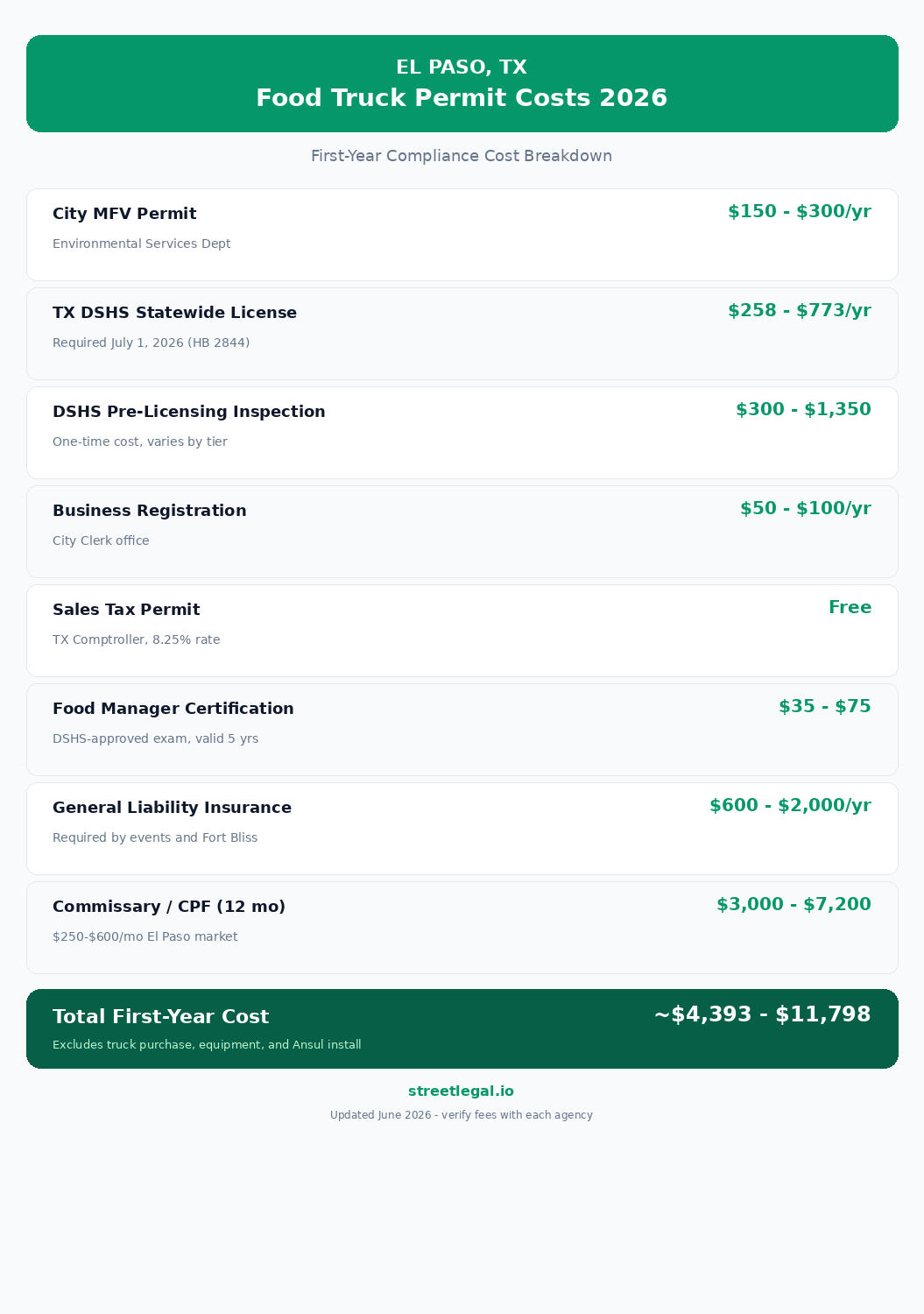
| City of El Paso MFV Permit (annual) | $150–$300 | Renews on permit anniversary date |
| Texas DSHS Statewide License (annual) | $258–$773 | Fee varies by preparation tier; required July 1, 2026 |
| DSHS Pre-Licensing Inspection | $300–$1,350 | One-time cost; varies by tier |
| El Paso Business Registration | $50–$100 | Annual renewal through City Clerk |
| Texas Sales Tax Permit | Free | 8.25% El Paso County rate |
| Food Manager Certification | $35–$75 | TX DSHS-approved exam; valid 5 years |
| General Liability Insurance | $600–$2,000/yr | Required by most events and Fort Bliss |
| Commissary / CPF (monthly × 12) | $3,000–$7,200 | $250–$600/month El Paso market rate |
| Total First-Year Compliance Cost | ~$4,393–$11,798 | Excludes truck, equipment, Ansul install |
Timeline: 4–8 weeks from starting the process to your first legal operating day. Commissary agreement and fire inspection scheduling are typically the bottlenecks — start both as early as possible. The DSHS statewide license application adds 2–4 weeks but can be done in parallel with city permits.
Where You Can Actually Operate in El Paso
Having your MFV permit and DSHS license does not automatically mean you can park anywhere and serve. Permit approval and real operating-lane access are two separate things. Here's the honest breakdown by lane:
| Operating Lane | Permit Alone Enough? | Real Access Reality | Best Truck Fit |
|---|---|---|---|
| Downtown El Paso / San Jacinto Plaza | No — city vending rules and location approval apply | Growing food truck presence in the arts district and around San Jacinto Plaza; coordinate with downtown property managers and the Downtown Management District for approved spots | Tex-Mex, taco trucks, coffee carts, fusion concepts with lunch crowd appeal |
| UTEP Campus Area | No — university coordination required for on-campus; private lots nearby are easier | University of Texas at El Paso generates consistent student traffic; private lots along Sun Bowl Dr and Mesa St are the primary access lanes; on-campus vending requires university vendor agreements | Breakfast burritos, tacos, coffee, affordable grab-and-go concepts |
| Fort Bliss Military Community | No — on-base requires military vendor approval; off-base private lots are accessible | One of the largest Army installations in the US; on-base catering requires coordination with base food services; off-base military family neighborhoods (Northeast El Paso) are an underserved and accessible revenue lane | BBQ trailers, comfort food, taco trucks — high-volume, family-friendly concepts |
| Food Truck Parks (Foodville, The Boardwalk at Ricky's) | Yes — MFV permit + park operator acceptance sufficient | Established food truck gathering spots with built-in foot traffic; park operators typically prefer variety — differentiate your concept when applying; consistent weekend revenue potential | All truck types; variety is preferred by park operators |
| Brewery and Taproom Lots | Yes — MFV permit + property owner permission sufficient | El Paso's growing craft brewery scene (DeadBeach Brewery, Craft & Commerce, El Paso Brewing) offers weekend revenue; direct brewery relationship is the access path; less saturated than Dallas or Austin brewery circuits | BBQ, tacos, fusion — pairs well with craft beer |
| Westside / Upper Valley Neighborhoods | Yes — private lots with owner permission; check residential zoning restrictions | Growing residential areas with family demand; commercial lots along Mesa St and Doniphan Dr are accessible; weekend evening service does well here | Family-friendly concepts, dessert trucks, raspas, tacos |
| Events and Festivals (Food Truck Circus, WinterFest, Taste of El Paso) | No — event-specific vendor application required | Food Truck Circus is El Paso's largest food truck gathering — draws thousands; WinterFest runs 6 weeks with dedicated food truck village on Mills St; Taste of El Paso features 20+ vendors; applications open months ahead | High-volume event setups — BBQ, tacos, desserts, specialty items |
| Montana Ave Corridor / Northeast El Paso | Yes — commercial lots with owner permission | Montana Ave is a major commercial corridor with steady traffic; Northeast El Paso (near Fort Bliss) has military families and blue-collar neighborhoods with strong demand for affordable food truck options | Taco trucks, breakfast burritos, comfort food, affordable lunch concepts |
Best Food Truck Types for El Paso
El Paso's market is shaped by its deep border Tex-Mex culinary identity, massive Fort Bliss military community, year-round warm weather, low cost of living, and growing downtown revitalization. The best-performing truck types reflect these local demand realities:
| Truck Type | El Paso Market Fit | Commissary Pressure | Event Flexibility | Why It Fits |
|---|---|---|---|---|
| Tex-Mex / Mexican street food truck | Very strong | Medium (daily prep required) | Excellent — Food Truck Circus, WinterFest, all events | El Paso has one of the most authentic border Tex-Mex food cultures in the US; trucks that reflect this identity build deeply loyal local followings; tourist and cross-border visitor demand is a bonus lane |
| BBQ / smoked meats trailer | Strong | High (smoker setup, daily commissary) | Very strong — outdoor events, Fort Bliss community, brewery circuit | Fort Bliss military community drives large-volume BBQ demand; outdoor event culture and year-round warm weather support consistent operations; brewery partnerships are a natural fit |
| Breakfast burrito / morning truck | Strong | Medium (early morning prep) | Moderate — best for daily locations, not events | El Paso has a strong breakfast burrito culture; UTEP campus and Fort Bliss gate areas are underserved for early morning food truck service; consistent daily revenue without event dependency |
| Dessert / raspa / ice cream truck | Strong | Low–Medium | Excellent — warm weather year-round, festivals, neighborhoods | Year-round warm climate is a structural advantage for cold-serve concepts; raspa (shaved ice) trucks are culturally familiar and popular; no fire suppression system needed = lower startup cost and faster permitting |
| Specialty coffee / espresso cart | Growing | Low (no cooking, simple daily clean) | Strong — morning corporate, UTEP campus, farmers markets | Downtown revitalization and growing UTEP campus economy create demand for quality coffee; no Ansul system required; lower startup cost; morning revenue lane is less competitive than lunch and dinner |
| Border fusion / cross-cultural truck | Growing | High (fresh daily prep) | Strong for downtown, events, and private catering | El Paso's unique position as a binational metro (El Paso–Juárez) creates a food culture found nowhere else; fusion concepts blending Mexican, Tex-Mex, and American cuisines tap into the growing downtown foodie scene and tourist demand |
El Paso vs Other Texas Markets
The new Texas DSHS statewide license (HB 2844) makes it easier than ever to operate across multiple Texas cities. Here's how El Paso compares to other major Texas food truck markets on launch friction, revenue potential, and best entry strategy:
| Market | Launch Friction | Best First Revenue Lane | Best First Truck Fit | Why This Market |
|---|---|---|---|---|
| El Paso | Low–Medium — city MFV + DSHS license + business reg; 4–8 weeks to launch | Food truck parks + Fort Bliss off-base neighborhoods | Tex-Mex, taco truck, breakfast burrito, BBQ trailer | Lowest cost of living among major TX cities; massive Fort Bliss military demand; less competition than Houston/Dallas/Austin; authentic border food culture is a brand advantage |
| Houston | Medium — city MFV permit + Harris County health; higher commissary costs; 6–10 weeks | Brewery taprooms + corporate office parks (Energy Corridor, Galleria) | Viet-Cajun, BBQ, taco truck, upscale fusion | Largest TX market by population; extremely diverse food demand; massive event circuit (rodeo season); highest revenue ceiling but also highest competition and operating costs |
| Dallas | Medium — Dallas County + city permits; corporate catering competition is high; 6–10 weeks | Corporate catering (Uptown, Legacy) + brewery circuit | BBQ, upscale fusion, taco truck, specialty coffee | Strong corporate lunch demand in Uptown/Legacy corridors; premium pricing potential; well-developed brewery scene; higher operating costs than El Paso but higher average ticket |
| Austin | Medium — Austin Public Health permit + Travis County; legendary food truck culture but saturated; 6–10 weeks | Food truck parks (South Congress, East Austin) + festival circuit (SXSW, ACL) | BBQ trailer, taco truck, fusion, specialty coffee | Most food-truck-friendly culture in Texas; SXSW and ACL are massive revenue events; but market is highly saturated and cost of living has increased significantly; harder first-market entry than El Paso |
| San Antonio | Low–Medium — Metro Health permit + city license; approachable process; 4–8 weeks | Private lots + military community (JBSA) + Riverwalk-adjacent events | Tex-Mex, BBQ, breakfast tacos, dessert trucks | Second-largest TX city with lower cost of living than Austin/Dallas; massive military community (JBSA); strong tourism (Riverwalk/Alamo); similar cultural advantage to El Paso but larger market |
| Fort Worth | Low–Medium — Tarrant County health + city license; less bureaucratic than Dallas; 4–8 weeks | Stockyards events + brewery circuit + Near Southside arts district | BBQ trailer, taco truck, comfort food, Western-themed concepts | Growing food truck scene separate from Dallas; Stockyards tourism is a unique revenue lane; lower operating costs than Dallas proper; Western culture identity differentiates from DFW metro |
Common Mistakes and Operator Tips
Mistake 1: Not getting the notarized commissary letter before applying
El Paso requires a notarized letter from your CPF owner as part of your MFV permit application. A verbal agreement or unsigned letter won't be accepted. Get the letter notarized before visiting One Stop Shop — it's a common reason applications get sent back. Budget an extra day for notarization.
Mistake 2: Ignoring the CPF inspection score requirement
Your Central Preparation Facility must have an annual inspection score of 85 or higher. If your commissary's score drops below 85, your MFV permit is at risk. Before signing a commissary agreement, ask for their most recent inspection report and verify the score. Don't find out about a failing score after you've already started operating.
Mistake 3: Assuming Fort Bliss access is automatic
Fort Bliss is one of the largest Army installations in the US and a massive potential market — but on-base vending requires military vendor approval, background checks, and coordination with base food services. This process can take months. The faster revenue lane is off-base: military family neighborhoods in Northeast El Paso have strong demand for food trucks and only need your standard permits plus private property permission.
Mistake 4: Not preparing for the DSHS statewide license transition
Starting July 1, 2026, all Texas mobile food vendors must hold a DSHS statewide license under HB 2844. If you're launching in mid-2026, apply for both your city MFV permit and the DSHS license simultaneously. Don't wait until the deadline — DSHS inspection scheduling will be backed up as thousands of operators apply at once. Early applicants will have shorter wait times.
Mistake 5: Treating El Paso as a Ciudad Juárez expansion lane
El Paso is a border city, and some operators assume they can serve on both sides. Operating a food truck in Ciudad Juárez, Mexico requires completely separate Mexican permits, health inspections, and business registration. Your US permits have zero validity across the border. Treat El Paso and Juárez as entirely separate legal jurisdictions.
Tip: El Paso's cost advantage is real
El Paso has the lowest cost of living among major Texas cities — commissary rents, insurance, labor, and daily operating expenses are 20–40% lower than Houston or Dallas. For a first-time food truck operator, this means you can break even on lower daily revenue while building your reputation. Combined with less competition, El Paso is one of the best entry markets in Texas.
Tip: HB 2844 statewide license is your multi-city superpower
The new Texas DSHS statewide license (effective July 2026) means you can operate in Houston, Dallas, Austin, San Antonio, and any other Texas city without getting a separate local health permit. You'll still need local business registration in each city (~$50–$100), but the major health permitting barrier is gone. El Paso operators who want to expand to other Texas markets now face dramatically less friction.
Exploring all of Texas?
See our complete Texas food truck permit hub — permit stacks for Houston, Dallas, Austin, San Antonio, Fort Worth, and the new DSHS statewide license walkthrough in one place.
Texas Food Truck Permit Guide →Frequently Asked Questions
What permits do I need to operate a food truck in El Paso?
How long does it take to get a food truck permit in El Paso?
How much does a food truck permit cost in El Paso?
Does my El Paso permit work in other Texas cities?
What is the new Texas statewide food truck license?
Can I operate my food truck on Fort Bliss?
Related Texas and National Guides
People also ask about El Paso food truck permits
How much does a food truck permit cost in El Paso?
How long does it take to get a food truck permit in El Paso?
Do I need a commissary kitchen to operate a food truck in El Paso?
What documents do I need for a El Paso food truck permit?
Answers to the most common permit questions — costs, timelines, commissary rules, and more.
Find city-level permit guides for every state we cover — compare costs and requirements.
More from the blog
Food Truck POS Systems: Square vs. Toast vs. Clover vs. Avocado (2026)
Real 2026 pricing, hardware costs, offline mode, and contract terms for Square, Toast, Clover, and Avocado — compared specifically for food truck operators.
City GuidesEagan, MN Food Truck Permit Guide
Eagan MN food truck permit guide: MDH mobile food licensing, Dakota County food safety, city peddler rules, commissary records, costs, and launch timeline.
City GuidesBentonville, AR Food Truck Permit Guide
Complete guide to food truck permits, fees, and requirements in Bentonville, AR.
City GuidesBiloxi, MS Food Truck Permit Guide
Biloxi food truck permit guide 2026: licenses, health permit steps, commissary records, inspections, costs, renewal timing, and launch checklist.