· Updated · 8 min read · StreetLegal Team
Should Your Food Truck Take Online Orders in 2026? Pros, Cons, and Tools
Updated July 26, 2026
Online ordering can shorten the window line and turn one-time customers into regulars, but it's not free, and it's not automatically right for a truck that changes location every day. Here's what the real tools cost, where direct ordering beats a delivery app, and where it doesn't.
Pros and cons of taking online orders
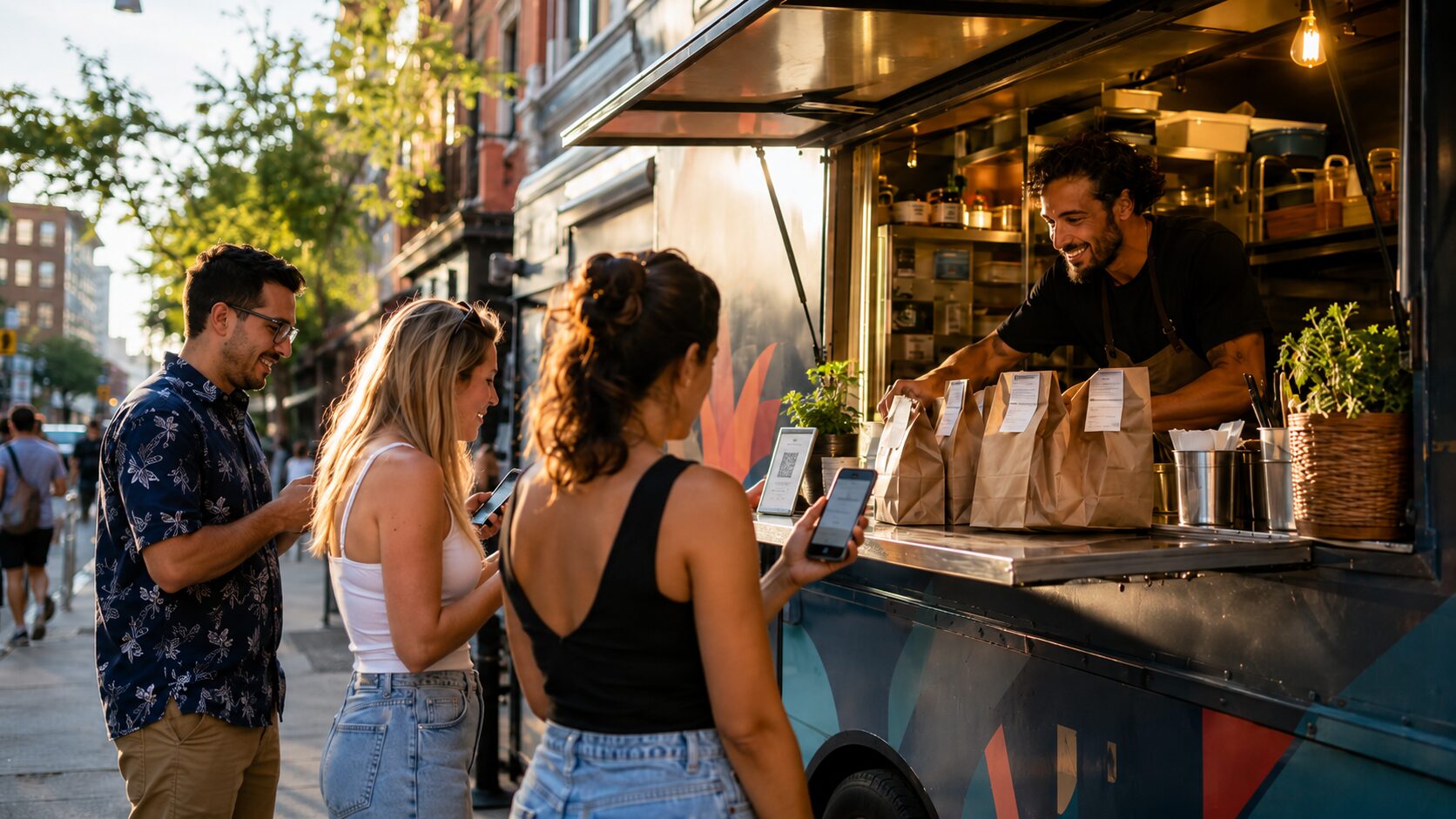
The upside is straightforward: customers who already know what they want can order ahead and skip the line, which speeds up throughput during a lunch rush instead of slowing it down. Pre-orders also smooth out demand spikes, since food can start prepping before the customer physically arrives, and a branded ordering flow captures customer data (name, order history, contact info) that a cash or tap-to-pay transaction never does.
The downside is real too. Every platform costs something, whether that's a flat monthly fee, a per-transaction processing fee, or a straight commission — there's no truly free option once you count payment processing. Direct ordering only pays off if you can actually drive customers to your own ordering link, which takes marketing effort most trucks are already stretched thin on. And a kitchen built for a walk-up window can get overwhelmed fast if online orders stack up during the same rush as the in-person line, so timing and order-throttling matter as much as the platform itself.
What the tools actually cost
Direct ordering platforms fall into two pricing models: flat monthly fee with no per-order commission, or a lower/no monthly fee with a percentage cut on top of card processing. Here's what the major options publish as of 2026.
| Platform | Pricing | Commission on direct orders |
|---|---|---|
| ChowNow | $119-$328/month (Hub/Pro/Premier tiers) | None; 2.95% + $0.29 card processing |
| Owner.com | $499/month flat | None to the truck; 5% fee charged to the customer |
| Square Online | Free tier available; Plus $49/mo, Premium $149/mo | 2.6% + $0.15 per transaction on the free tier |
| Toast Online Ordering | $499/month | 5% fee on direct orders |
| The Foody Gram | $159-$199/month flat | None |
| GloriaFood | Free core plan | None (revenue from optional premium add-ons) |
The math only favors a flat-fee platform once you're doing real volume. A truck doing roughly $5,000/week in online orders through a 25% third-party commission pays about $1,250/week — $65,000/year — while the same volume through a $69/month flat-fee tool costs about $828/year. Below a few hundred dollars a week in online orders, though, a $119-$499/month platform can easily cost more than paying commission would, so match the tool to your actual order volume, not the other way around.
The mobile-location problem
Most online ordering platforms were built for restaurants with one fixed address. A truck that parks somewhere different every day makes delivery zones and even pre-order pickup windows harder to promote consistently — customers need to already know where you'll be. In practice, direct online ordering works best for trucks with at least a few predictable, repeating locations (a regular lunch lot, a weekly brewery night, a standing office-park stop) where regulars can learn the schedule and order ahead with confidence. Highly mobile trucks working one-off festivals and private events get far less value from it, since there's no repeat foot traffic to convert into app users.
When it's worth setting up
It's worth it when you have a reliable, repeating schedule, a customer base that already follows you on social media or knows your regular stops, and a kitchen that can handle pre-orders without falling behind on the walk-up line. It's probably not worth it yet if your schedule changes weekly, most of your business comes from one-off events, or you don't have the bandwidth to actively promote the ordering link — a QR code on the truck alone won't generate enough volume to justify a flat monthly fee.
Getting started
Setup typically takes one to two weeks: three to five days to upload your menu and configure settings, then the rest of the time for a soft launch and testing before pushing the link to regulars. Start with a QR code at the service window and a link in your social bios, track how many orders actually come through in the first month, and only upgrade to a paid tier once volume justifies the fee. If you also want delivery (not just pickup), check whether your platform integrates with a courier-dispatch service like ShipDay rather than assuming pickup-only ordering covers delivery too.
Frequently asked questions
Do food trucks actually need online ordering?
Not always — it matters most for trucks with a predictable schedule and repeat customers, less for trucks that mostly work one-off events.
What's the cheapest way to add online ordering to a food truck?
Commission-free tools like GloriaFood (free) or flat-fee platforms like The Foody Gram and ChowNow avoid the 20-30% commission third-party delivery apps charge.
Is a delivery app or a direct ordering platform better for a food truck?
Delivery apps bring new-customer discovery but take a 20-30% commission; direct platforms keep the sale commission-free but only work if you can drive traffic to your own link.
Can a food truck offer delivery through its own online ordering site?
Yes, some direct platforms integrate with courier-dispatch services like ShipDay, though you still pay a per-delivery courier fee and need a predictable location.
How long does it take to set up online ordering for a food truck?
About one to two weeks, including menu setup, configuration, and a soft-launch testing period.
What's the real cost difference between commission and flat-fee ordering?
At $5,000/week in orders, 25% commission costs about $65,000/year versus roughly $828/year on a $69/month flat-fee platform — but flat fees only win at real volume.
Whichever ordering setup you choose, keep your permits and licenses current.
StreetLegal helps food truck operators track permits, health department documents, and renewals in one place, so adding new sales channels doesn't turn into a compliance scramble later.
Answers to the most common permit questions — costs, timelines, commissary rules, and more.
Find city-level permit guides for every state we cover — compare costs and requirements.
More from the blog
Food Truck POS Systems 2026: Square, Toast, Clover & Avocado
Compare 2026 food truck POS systems by pricing, hardware costs, offline mode, and contract terms for Square, Toast, Clover, and Avocado.
City GuidesEagan, MN Food Truck Permit Guide
Eagan MN food truck permit guide: MDH mobile food licensing, Dakota County food safety, city peddler rules, commissary records, costs, and launch timeline.
City GuidesBentonville, AR Food Truck Permit Guide
Complete guide to food truck permits, fees, and requirements in Bentonville, AR.
City GuidesBiloxi, MS Food Truck Permit Guide
Biloxi food truck permit guide 2026: licenses, health permit steps, commissary records, inspections, costs, renewal timing, and launch checklist.