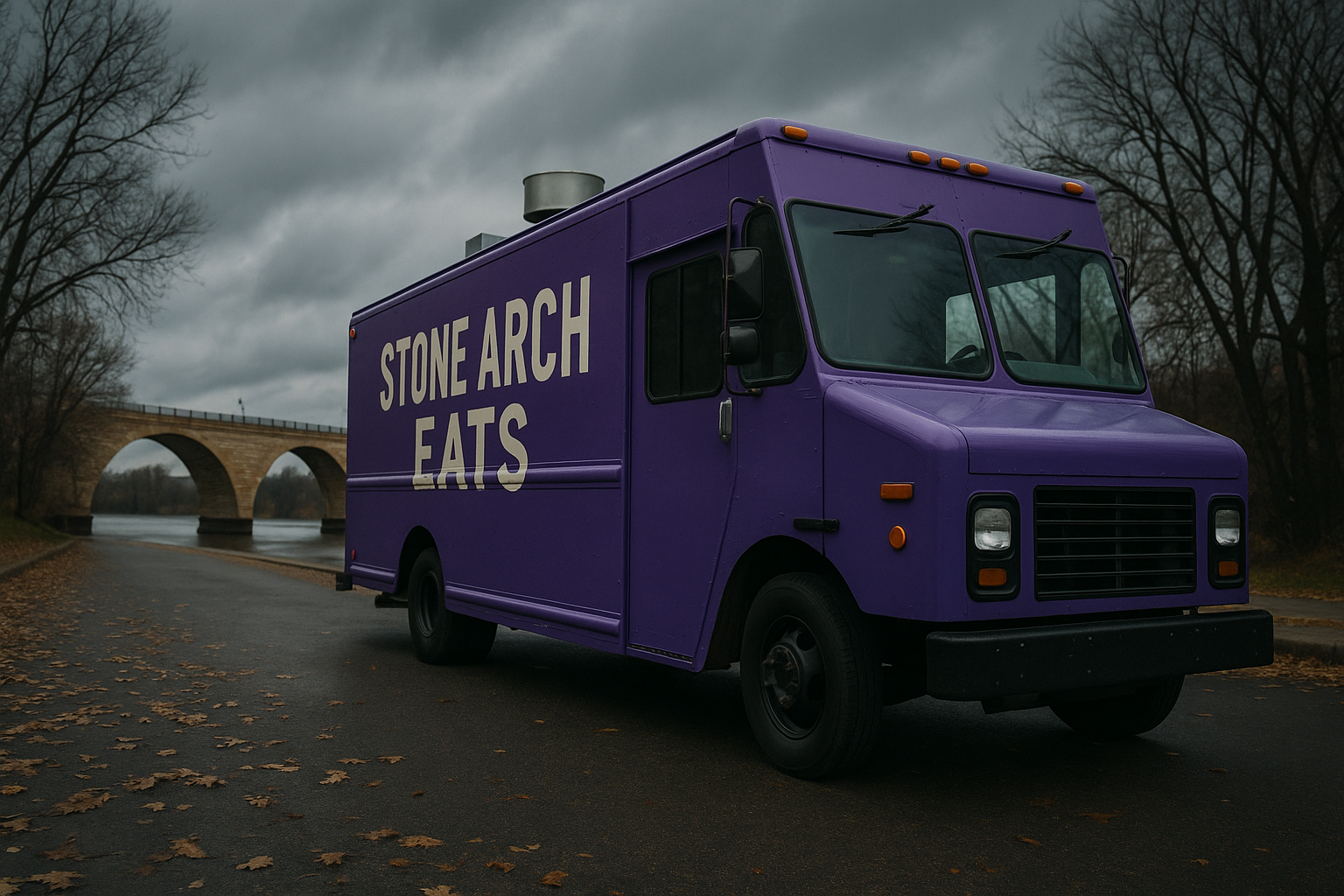
How to Get a Food Truck Permit in Minneapolis, MN (2026 Guide)
Updated August 5, 2026 - permit fees, commissary rules, operating zones, startup costs, and Midwest market comparison reviewed and verified current.
Operating a food truck in Minneapolis requires a Mobile Food Vehicle (MFV) License from Minneapolis Environmental Health, a City Business License, and — if you plan to vend on public right-of-way — a competitive Street Vending Permit. The Twin Cities market rewards year-round operators who work the brewery circuit, summer festival calendar, and Minneapolis's climate-controlled downtown skyway for winter pop-ups. This guide covers the full permit stack, real costs, where you can actually operate, and how Minneapolis compares to other major Midwest markets.
Planning snapshot
What to budget and when to start
First-year operating setup
$5,825–$12,200
Permits, insurance, and six months of commissary access. Truck, equipment, and inventory are separate.
Typical time to launch
5–8 weeks
Secure a commissary first, then run registrations and inspections in parallel where possible.
$600–$1,200/mo
Commissary
May–Oct
Peak outdoor season
No 200-ft rule
Compared with Chicago
Minneapolis runs on two seasons — plan for both
Most Midwest guides only cover the outdoor calendar. Operators who go year-round work Minneapolis's enclosed downtown skyway system through winter.
- Nicollet Mall and the downtown core — weekday lunch crowds
- Brewery lots: Surly, Indeed, Bauhaus, Fulton
- Festival circuit — Beer Fest, Pride, Art-a-Whirl
- Street Vending Permit governs public right-of-way spots
- Climate-controlled downtown skyway pop-ups
- Per-building property management approval, not a city permit
- Indoor catering, corporate events, winter festivals
- Best fit: coffee carts, compact lunch formats
Minneapolis Permit Snapshot
Minneapolis food truck licensing runs through three agencies: Minneapolis Environmental Health (MFV License), Minneapolis Community Planning and Economic Development (Business License), and — for public right-of-way vending — the Minneapolis Street Vending program. Minnesota state-level registrations (sales tax, food manager cert) layer on top.
-
01
Licensed commissary
Sign a commissary agreement
Secure this first—it is required before the MFV application.
- Cost
- $600–$1,200/mo
- Timing
- 1–2 weeks
-
02
Minneapolis Environmental Health
Apply for the Mobile Food Vehicle license
Your primary operating credential; plan for the inspection.
- Cost
- $200–$400/yr
- Timing
- 4–6 weeks
-
03
Minneapolis CPED
Get your city business license
Run this in parallel with the MFV application.
- Cost
- $75–$200/yr
- Timing
- 1–2 weeks
-
04
MN Department of Revenue
Register for Minnesota sales tax
Complete this before making your first sale.
- Cost
- Free
- Timing
- 1–3 days
-
05
Minneapolis Street Vending
Apply for a street vending permit
Only needed for public right-of-way vending; spots are limited.
- Cost
- $200–$400/yr
- Timing
- Late-winter window
-
06
ANSI-accredited program
Complete food safety manager certification
Have the certification in place before your inspection.
- Cost
- $150–$200
- Timing
- 1 day + prep
Commissary Requirements in Minneapolis
Minnesota requires all mobile food vehicles to operate from an approved commissary. Your commissary must hold its own valid food license issued by Minneapolis Environmental Health or the applicable county health department. You cannot use a residential kitchen.
The commissary handles:
- Food prep and ingredient storage
- Equipment cleaning, sanitizing, and wastewater disposal
- Supply restocking between service periods
A signed commissary agreement must be submitted with your MFV License application. Inspectors will verify commissary compliance during your pre-opening inspection.
| Commissary Type | Typical Cost | Best For |
|---|---|---|
| Shared commercial kitchen | $600–$900/mo | New operators, lower overhead, flexible hours |
| Restaurant commissary agreement | $400–$700/mo | Established operators with set schedules |
| Private commissary / own space | $1,000–$2,500/mo | Multi-truck fleets, highest operational control |
Key risk: Licensed commissaries in Minneapolis fill up fast before the May season start. Secure your commissary agreement in February or March — do not wait until you are ready to file your MFV application.
Fire & Food Safety Requirements
- Fire suppression system (Ansul/UL 300): Required for trucks with commercial cooking hoods. Mandatory if you operate deep fryers, commercial flat tops, or open-flame cooking. Annual service certification required. Budget $1,500–$3,500 installed.
- Class K fire extinguisher: Required for any cooking with grease or oils. Must be current and tagged.
- ABC extinguisher: Required in addition to Class K in all commercial food trucks.
- Propane system inspection: If you use LP gas, connections and regulators must pass inspection before licensing.
- Food Safety Manager Certification: At least one operator per truck must hold a current CFPM from an ANSI-accredited program (ServSafe, NRFSP, etc.).
- Temperature control: Cold hold at 41°F or below; hot hold at 135°F or above. Inspectors calibrate on-site.
- Handwashing station: Dedicated handwash sink with hot water, soap, and single-use towels required.
- Winter operations: If you run winter catering or skyway events, ensure your vehicle can maintain safe food temperatures in sub-zero ambient conditions.
Week-by-Week Launch Timeline
| Week | Action | Notes |
|---|---|---|
| 1–2 | Secure commissary agreement | Must have signed agreement before MFV application; licensed commissaries fill fast |
| 1–2 | Register MN business entity + Sales Tax Permit | MN Secretary of State (LLC) + MN Dept of Revenue (tax); takes 1–5 days |
| 2–3 | Complete Food Safety Manager Certification | ServSafe or equivalent ANSI exam; required before MFV inspection |
| 3–4 | Submit MFV License application to Minneapolis Environmental Health | Include commissary agreement, menu, equipment list; schedule pre-opening inspection |
| 3–4 | Apply for Minneapolis Business License (CPED) | Parallel with MFV application; 1–2 week processing |
| 4–6 | Pass pre-opening health inspection | Minneapolis Environmental Health inspects your vehicle; most common delay point |
| 5–7 | Apply for Street Vending Permit (if needed) | Competitive limited spots; apply as soon as application window opens (late winter) |
| 7–8 | Secure property owner agreements for private lots | Brewery lots, business parks, event venues; get written permission before operating |
| 8 | Launch + set renewal reminders | MFV License, Business License, and Street Vending Permit all renew annually |
Minneapolis Startup Cost Breakdown
| Item | First-Year Cost | Notes |
|---|---|---|
| MFV License (Minneapolis Environmental Health) | $200–$400 | Annual; primary operating license |
| City Business License | $75–$200 | Annual; Minneapolis CPED |
| Street Vending Permit (if public ROW) | $200–$400 | Annual; limited competitive spots; skip if private-lot only |
| Fire Inspection / Suppression Certification | $100–$300 | Required annually for vehicles with cooking hoods |
| Food Safety Manager Certification (CFPM) | $150–$200 | ServSafe or equivalent; valid 5 years |
| General Liability Insurance | $1,500–$3,500/yr | Most venues and events require proof; $1M minimum recommended |
| MN Sales Tax Permit | Free | MN Department of Revenue registration; no fee |
| Commissary kitchen (seasonal, 6 months) | $3,600–$7,200/yr | $600–$1,200/mo; full season May–Oct; some operators pay year-round |
Total first-year permits and fees (excluding commissary): $2,225–$5,000. Add commissary kitchen and you are looking at $5,825–$12,200 before equipment and food costs.
Where You Can Actually Operate in Minneapolis
Getting your MFV License is permit approval — not location access. Operating on private property requires written landowner permission. Street Vending Permits are limited and competitive. Here is where real revenue actually happens:
| Operating Lane | Permit Alone Enough? | Access Reality | Best Truck Fit |
|---|---|---|---|
| Nicollet Mall / Downtown Core | No — Street Vending Permit required | Limited designated zones; strong weekday lunch demand; competitive for spots | Quick-service lunch, specialty coffee, taco/Mexican |
| North Loop / Warehouse District | No — landowner permission + possibly Street Vending Permit | Arts/beer district; strong weekend evenings; private parking lots accessible with agreements | Upscale/fusion, BBQ, specialty desserts |
| Private Brewery Lots (Surly, Indeed, Bauhaus, Fulton) | No — brewery partnership agreement required | Strongest repeat-revenue lane; breweries actively recruit food trucks; consistent evening/weekend crowds | BBQ, taco, upscale/fusion, dessert |
| University of Minnesota Campus | No — U of MN vendor permit required | Student demand, heavy lunch traffic; competitive vendor spots; apply through University catering/events office | Taco/Mexican, lunch trucks, dessert/ice cream |
| Summer Festivals (Surly Beer Fest, Minneapolis Pride, Art-a-Whirl) | No — event vendor application required | High-volume events; apply 2–4 months in advance; vendor fees vary by event; strong revenue potential | Any truck with broad appeal; BBQ and taco strongest |
| Private Office Parks / Business Districts | No — property owner permission required | Predictable weekday revenue; less competitive than public vending; building management agreements needed | Specialty coffee, gourmet lunch, Asian/fusion |
| Downtown Skyway (Winter Pop-ups) | No — individual building management permission required | Year-round climate-controlled opportunity; contact each building's property management; not centrally organized | Coffee cart, specialty dessert, compact lunch format |
Note: St. Paul requires its own separate mobile food license (Saint Paul Environmental Health). Most Twin Cities metro operators hold both licenses for maximum route flexibility.
Best Food Truck Types for the Minneapolis Market
| Truck Type | Minneapolis Market Fit | Commissary Pressure | Event Flexibility | Best First Revenue Lane |
|---|---|---|---|---|
| Specialty Coffee / Espresso Cart | Excellent — cold winters create year-round hot drink demand; Twin Cities coffee culture is strong | Low — minimal cooking equipment, simplified commissary needs | High — works indoor skyway events, markets, festivals, office parks year-round | Office park or downtown skyway — consistent year-round revenue |
| BBQ / Smoked Meats Trailer | Strong — festival season + brewery circuit; distinctive outdoor smoke appeal draws large crowds May–Oct | Medium-High — heavy prep, butcher-level commissary access needed | High for outdoor festivals; limited in winter indoor events | Brewery lot circuit (Surly, Indeed, Bauhaus) — weekend evenings peak |
| Taco / Mexican Truck | Good — broad appeal across demographics; strong demand at festivals, lunch routes, and late-night bar districts | Medium — standard commissary workload | High — flexible format works festivals, events, and private lots | Downtown lunch vending or festival circuit — fast ticket times, broad audience |
| Specialty / Upscale Fusion Truck | Good — Warehouse District and North Loop demand upscale options; office catering premium pricing | Medium-High — complex menu prep, more commissary time | Medium — best at curated events and private catering | Corporate catering and private events — highest per-ticket revenue |
| Dessert / Ice Cream Truck | Seasonal strength — summer festivals and beach events strong; winter demand limited to indoor events | Low-Medium — mostly cold storage and light prep | Very High — excellent at summer events, markets, and private parties | Summer festival circuit — high-volume, fast service |
| Asian / Southeast Asian Fusion | Strong — Twin Cities has one of the largest Hmong populations in the US; diverse food culture drives strong specialty demand | Medium — wok cooking and fresh prep require solid commissary access | High — culturally distinct and in demand at markets and community events | Community events and Hmong Village market area — authentic differentiation |
How Minneapolis Compares to Other Midwest Markets
| Market | Launch Friction | Best First Revenue Lane | Best First Truck Fit | Why This Market |
|---|---|---|---|---|
| Minneapolis, MN | Moderate — competitive Street Vending Permit but no 200-ft rule; 5–8 week timeline | Brewery circuit and summer festival calendar | BBQ, specialty coffee, or taco | No 200-ft rule; strong festival culture; Twin Cities metro doubles the market with dual license |
| Chicago, IL | High — 200-ft restaurant rule blocks most street vending; 8–14 week timeline; expensive permit stack | Food truck parks and private corporate lots | Event-flex truck; specialty/upscale | Largest Midwest market; best event revenue; but hardest street access |
| Milwaukee, WI | Low-Moderate — no 200-ft rule; simpler permit stack; 6–10 week timeline | Brewery circuit and Summerfest/festival grounds | Bratwurst/German, BBQ, taco | Easiest Midwest market to launch; Summerfest is one of the world's largest music festivals |
| Detroit, MI | Moderate — city permitting improving; 6–10 week timeline | Eastern Market and food truck events | BBQ, soul food, specialty concepts | Lower startup costs; food culture revival; Eastern Market is strong anchor |
| St. Louis, MO | Low-Moderate — city permitting approachable; 4–8 week timeline | Food truck parks and downtown lunch circuit | BBQ, comfort food, specialty | Lower commissary costs; lower overall startup; good food truck park infrastructure |
Common Mistakes Minneapolis Operators Make
- Missing the Street Vending Permit window: These permits are competitive and limited. Applications open in late winter — if you miss the window, you cannot get a street vending spot for that season. Apply the day the window opens.
- Operating in St. Paul without a separate license: Minneapolis and St. Paul are separate cities with separate licensing systems. Your Minneapolis MFV License does not cover St. Paul operations. Budget and apply for both if you want true Twin Cities metro access.
- Launching too late for commissary access: Minneapolis commissary kitchens fill up before the May season start. If you start the process in April hoping to open by May, you will likely be pushed to June at best.
- Planning the timeline backwards without a May 1 launch buffer: MFV License inspection alone takes 4–6 weeks. Commissary, CFPM cert, business license, and sales tax registration layer on top. Start the process in late February or early March to hit a May opening.
- No fire suppression system for deep fryers: If your menu includes anything deep-fried, an Ansul UL 300 fire suppression system is required. Inspectors will not pass vehicles with fryers but no suppression system. Budget $1,500–$3,500 installed.
- Treating the Street Vending Permit as the only operating lane: Most of Minneapolis's best recurring revenue comes from private brewery lots, festival vendor spots, and private catering — not public street vending. A strong private-lot strategy often beats waiting for a competitive permit spot.
- Not building the brewery circuit relationship early: Surly, Indeed, Bauhaus, and Fulton all partner with food trucks, but they have preferred vendors. Building those relationships before the season starts — not in May when everyone is calling — gives you a real advantage for the best weekend slots.
Minneapolis Food Truck FAQ
What permits do I need to operate a food truck in Minneapolis?
You need a Mobile Food Vehicle (MFV) License from Minneapolis Environmental Health ($200–$400/yr), a City Business License from Minneapolis CPED, a Minnesota Sales Tax Permit (free), and a commissary agreement. If operating on public right-of-way, add a Street Vending Permit ($200–$400/yr). A Food Safety Manager Certification is required before inspection.
How much does it cost to start a food truck in Minneapolis?
First-year permit and fee costs run $2,225–$5,000 (MFV License, Business License, Street Vending Permit, fire inspection, CFPM cert, insurance). Add commissary kitchen at $600–$1,200/month (roughly $3,600–$7,200 for a 6-month season). Total before equipment: roughly $5,825–$12,200.
How long does it take to get a food truck permit in Minneapolis?
Plan 5–8 weeks from commissary agreement to MFV License. Health inspection scheduling is the longest step. To open in May, submit your application in late February or March. Street Vending Permits have competitive application windows — check timing in late winter.
Does Minneapolis have a 200-foot rule like Chicago?
No. Minneapolis does not have Chicago's blanket 200-foot proximity restriction from brick-and-mortar restaurants. Street Vending Permits have zone-specific rules, but there is no city-wide restriction blocking vending near restaurants. This makes Minneapolis significantly more accessible for street vending than Chicago.
Can I operate my food truck in both Minneapolis and St. Paul?
Yes, but you need separate licenses for each city. St. Paul has its own mobile food licensing through Saint Paul Environmental Health. Most Twin Cities operators hold both for full metro coverage. Budget additional time and fees to apply for the St. Paul license.
What is the food truck season in Minneapolis?
Outdoor season runs May through October. Year-round operators extend revenue through indoor events, downtown skyway pop-ups, catering, winter festivals, and private events. Planning backward from a May 1 launch means starting the permit process by late February or early March.
Can I operate at the Minnesota State Fair with my Minneapolis MFV License?
No. The Minnesota State Fair is located in Falcon Heights (Ramsey County) and requires a separate vendor application through the State Fair's vendor program. It is a highly competitive, lucrative event. Apply through the State Fair's commercial food vendor process — it is separate from Minneapolis city licensing.
Do I need a fire suppression system on my Minneapolis food truck?
Yes, if your truck has cooking equipment under a commercial hood — including deep fryers, commercial flat tops, or open-flame cooking. An Ansul or equivalent UL 300 fire suppression system is required and must be inspected and certified annually. Budget $1,500–$3,500 installed. Class K and ABC extinguishers are also required.
Nearest locations to vend
Markets, spots where food trucks already set up, and parking around Minneapolis, MN.
These are leads, not permission. Private lots need the owner's OK and street spots follow Minneapolis vending rules — see the Food Truck Support City by City (2026).
Map: what's around Minneapolis
Food trucks near Minneapolis, MN
Browse every food truck →
Upcoming events in Minneapolis, MN


Commissary kitchens in Minneapolis, MN

Guides for Minneapolis, MN
People also ask about Minneapolis food truck permits
How much does a food truck permit cost in Minneapolis?
How long does it take to get a food truck permit in Minneapolis?
Do I need a commissary kitchen to operate a food truck in Minneapolis?
What documents do I need for a Minneapolis food truck permit?
Answers to the most common permit questions — costs, timelines, commissary rules, and more.
Find city-level permit guides for every state we cover — compare costs and requirements.
More from the blog
Jefferson County, MO Food Truck Permit Guide
Complete guide to food truck permits, fees, and requirements in Jefferson County, MO.
City GuidesSt. Charles County, MO Food Truck Permit Guide
Complete guide to food truck permits, fees, and requirements in St. Charles County, MO.
City GuidesSt. Louis County, MO Food Truck Permit Guide
Complete guide to food truck permits, fees, and requirements in St. Louis County, MO.
Buyer's GuideFood Truck POS Systems 2026: Square, Toast, Clover & Avocado
Compare 2026 food truck POS systems by pricing, hardware costs, offline mode, and contract terms for Square, Toast, Clover, and Avocado.