· Updated · 8 min read · StreetLegal Team
How to Get a Food Truck Permit in Boston (2026 Guide)
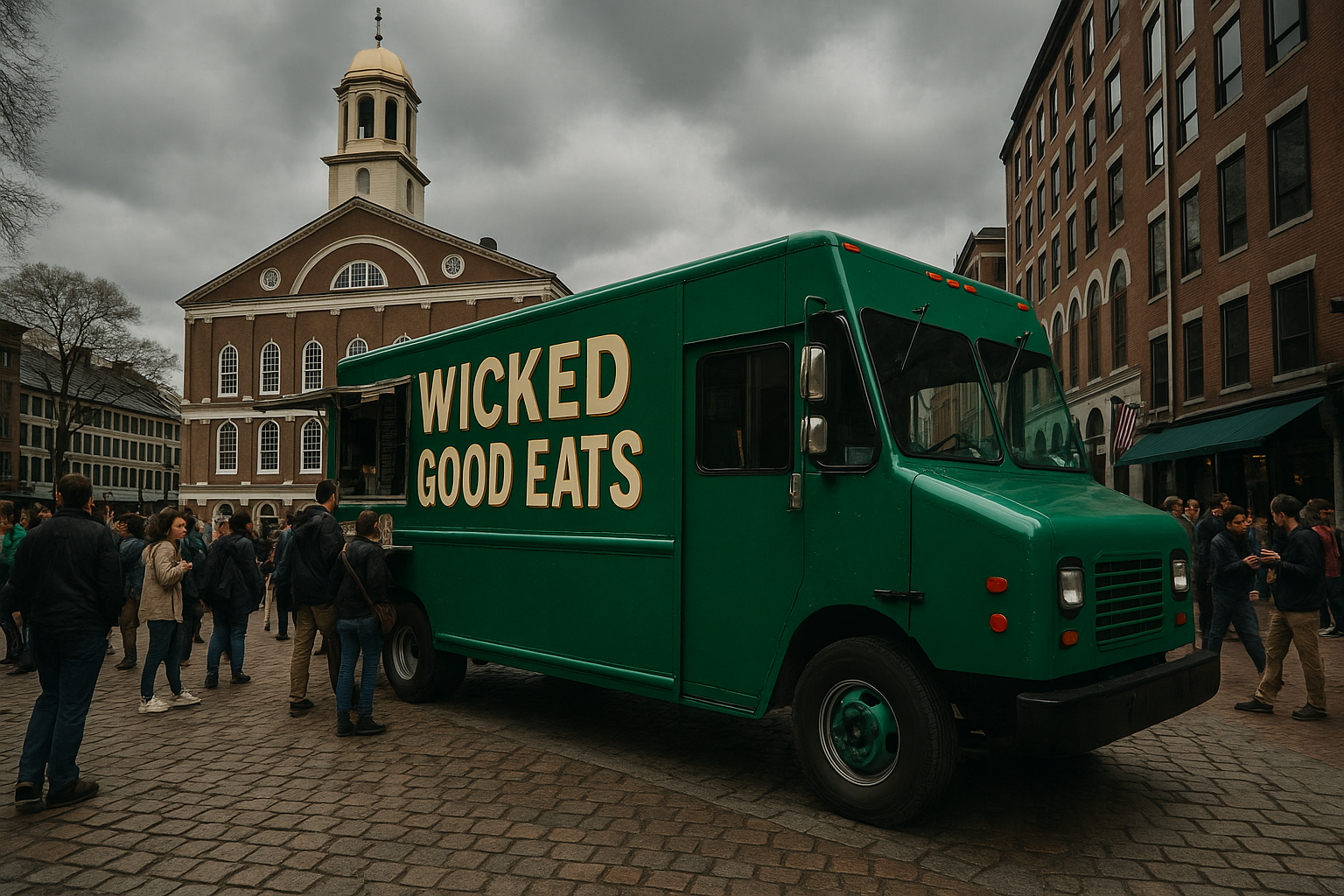
Operating a food truck in Boston, Massachusetts is a rewarding opportunity in one of America's most walkable, food-obsessed cities. Boston has a well-defined permitting system run by the Inspectional Services Department (ISD) and the Boston Public Health Commission (BPHC). This guide walks you through every permit, license, and compliance step to legally operate on Boston streets, at events, or on private property.
Core Permits & Licenses
1. Mobile Food Vendor License (ISD)
The Inspectional Services Department issues the Mobile Food Vendor License — your primary authorization to operate on public streets. Apply in person at ISD (1010 Massachusetts Ave) or through the city Permit Portal.
- Proof of vehicle ownership or lease
- Current vehicle registration
- Commercial general liability insurance ($1M minimum)
- Signed commissary agreement
- MA DPH / BPHC Food Establishment Permit (see below)
Annual renewal due January 31 each year.
2. BPHC Food Establishment Permit
The Boston Public Health Commission issues your state-required food establishment permit. For a new truck or significant build-out, a Plan Review is required first (3–4 week review time). A licensed inspection follows before the permit is granted.
- ServSafe Food Manager Certification required (at least one person per truck)
- Fee: $100–$300 based on truck capacity and risk class
- Annual renewal — inspection may be required
3. Commissary Requirement
Boston requires all food trucks to base out of a BPHC-licensed commissary kitchen. You must provide a signed commissary agreement as part of both your BPHC and ISD applications. Home kitchens are not permitted.
4. Massachusetts Business Registration & DBA
LLCs and corporations register with the MA Secretary of State ($500 filing). Sole proprietors using a business name must file a Business Certificate (DBA) with the Boston City Clerk ($65, valid 4 years).
Health & Food Safety Requirements
- Food Manager Certification: ServSafe or equivalent — required on truck at all times.
- Temperature control: Cold food ≤41°F, hot food ≥135°F. Temperature logs reviewed during inspections.
- Dedicated handwashing sink: Hot/cold water, soap, paper towels — cannot share with prep sink.
- Three-compartment sink: Required for on-truck dishwashing unless commissary handles all utensil washing.
- Fire suppression / extinguisher: Class K extinguisher required if operating a fryer. ABC extinguisher required in all trucks.
- Grease containment: Commissary must have grease interceptor; some street locations require portable containment.
Where You Can Operate in Boston
- City-designated food truck zones: The Rose Kennedy Greenway, City Hall Plaza, financial district blocks, and university corridors are the primary zones. Check the current approved location list from ISD before setting up.
- Metered parking: Some food truck spots require feeding the meter or holding a street occupancy permit from Public Works.
- Private property: Written landowner permission is sufficient — no separate city location permit needed, but your vendor license must be active.
- Cambridge: MIT, Harvard, and Central Square are in Cambridge — a separate Cambridge food truck permit is required. Your Boston license does not cross the city line.
Events & Markets
- Rose Kennedy Greenway vending program: Apply through the Greenway Conservancy — competitive slots, applications open January–February for the spring season.
- SoWa Open Market (South End): Popular Sunday market — apply directly to SoWa; BPHC permit must be valid.
- Boston Public Market / Farmers Markets: City-sponsored markets managed by the Mayor's Office of Food Access — applications open in late winter.
- Special events & festivals: Require a Temporary Food Establishment Permit from BPHC ($50–$100, apply 2+ weeks before the event).
Fees & Timeline
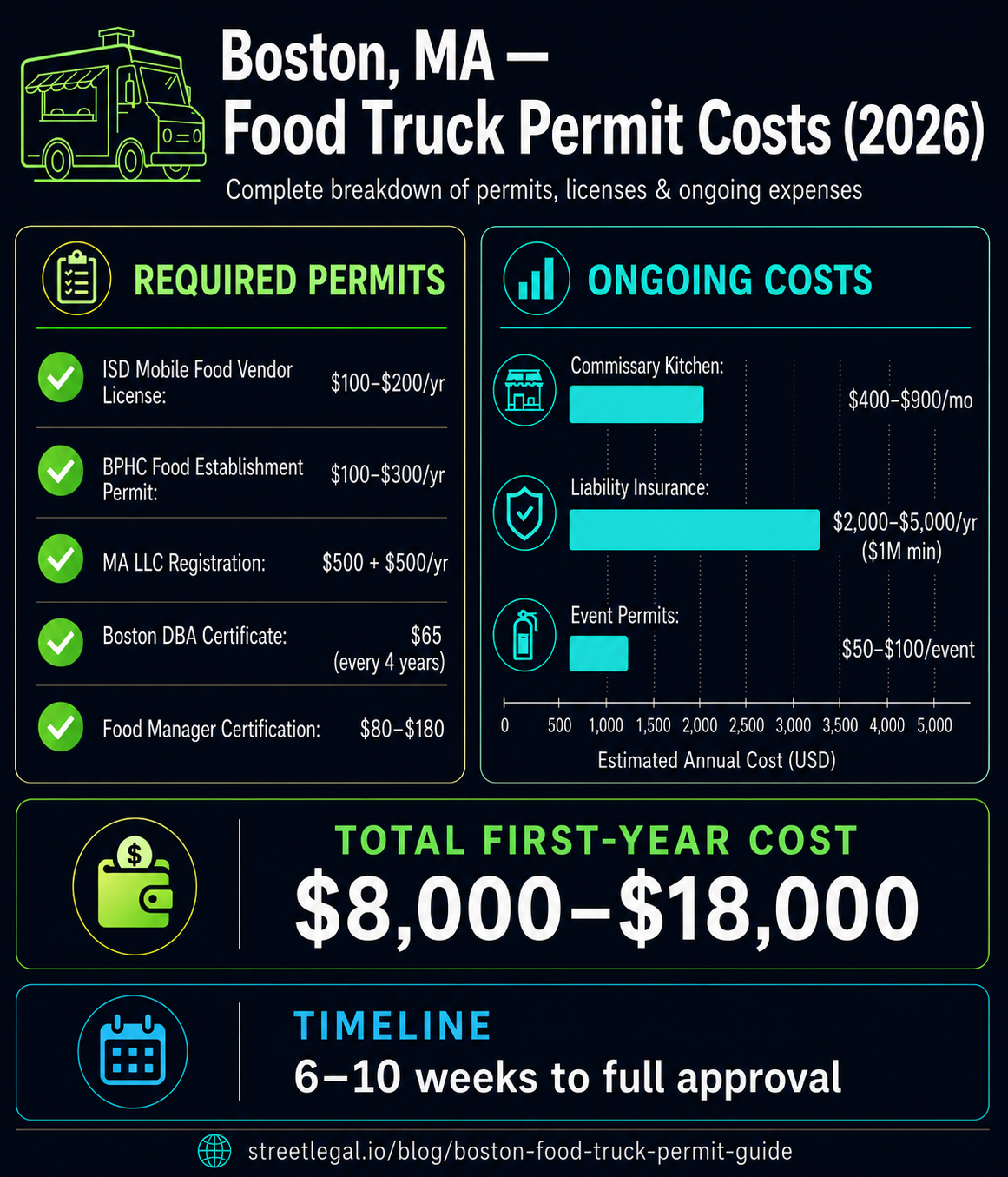
| Permit / License | Approx. Fee | Renewal |
|---|---|---|
| ISD Mobile Food Vendor License | $100–$200 | Annual (Jan 31) |
| BPHC Food Establishment Permit | $100–$300 | Annual |
| MA LLC Registration | $500 | $500/yr annual report |
| Boston Business Certificate (DBA) | $65 | Every 4 years |
| Temporary Food Permit (per event) | $50–$100 | Per event |
| Commissary kitchen | $400–$900/mo | Monthly |
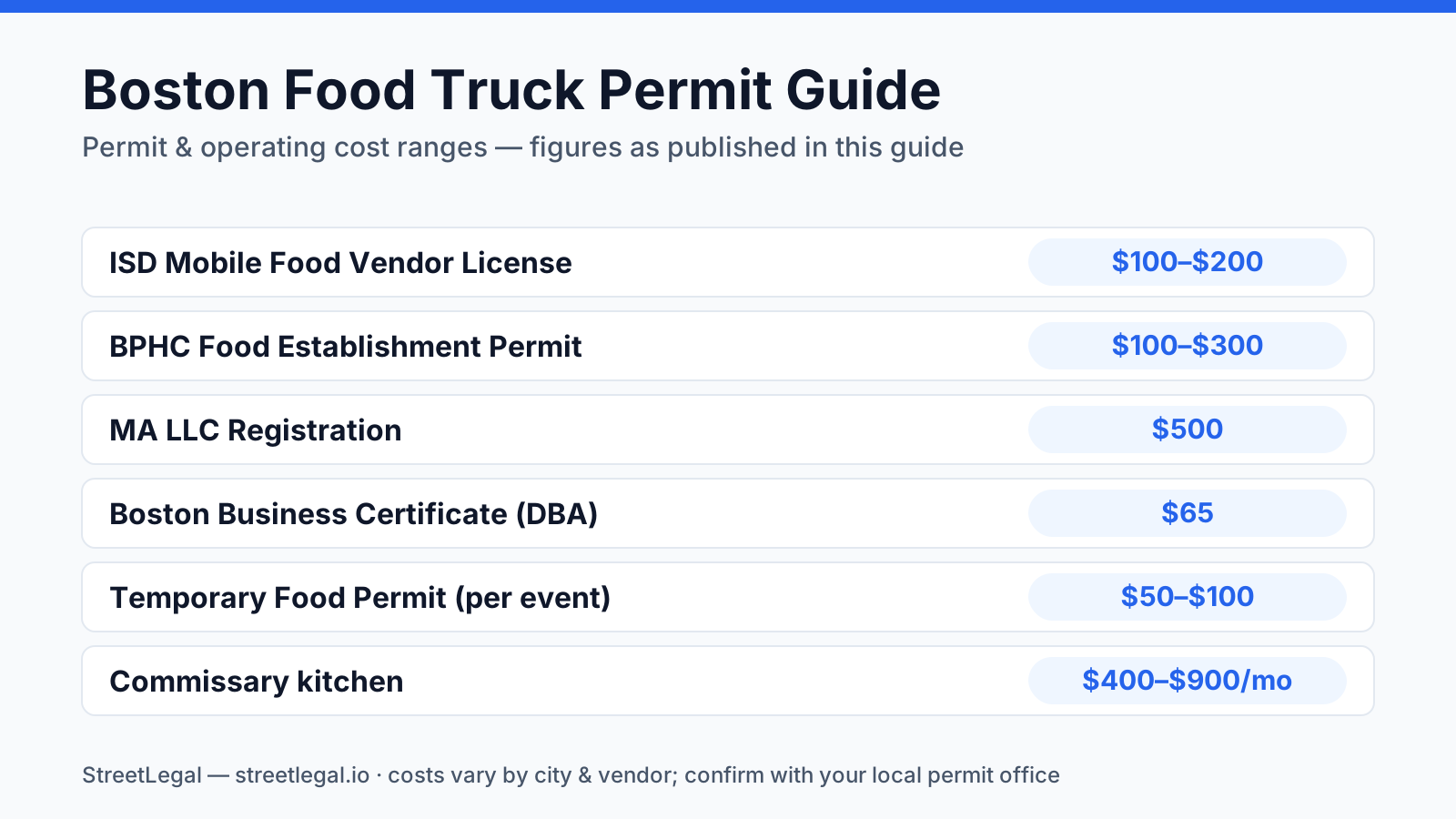
Timeline: Budget 6–10 weeks. BPHC plan review alone takes 3–4 weeks for new builds. ISD vendor license processes in 1–2 weeks once BPHC approval is in hand.
Operator Tips
- Plan for seasonality: Boston winters are brutal. Peak street season runs April–October. Many operators shift to catering and indoor pop-ups November–March.
- Apply for Greenway spots early: The Greenway vending program fills fast — apply as soon as it opens in January or February.
- Cambridge = separate permit: Don't assume your Boston license covers the other side of Mass Ave.
- Keep your commissary binder current: BPHC inspectors check your agreement and commissary logs. Gaps in documentation can trigger a violation.
- Corporate catering is lucrative: The financial district, Seaport biotech corridor, and Kendall Square have strong weekday lunch demand. A catering supplement from BPHC covers off-site events.
- Network with local operators: Boston Food Truck Association and New England Food Truck Association share spot intel, event leads, and permit updates.
People also ask about Boston food truck permits
How much does a food truck permit cost in Boston?
How long does it take to get a food truck permit in Boston?
Do I need a commissary kitchen to operate a food truck in Boston?
What documents do I need for a Boston food truck permit?
Answers to the most common permit questions — costs, timelines, commissary rules, and more.
Find city-level permit guides for every state we cover — compare costs and requirements.
More from the blog
Food Truck POS Systems: Square vs. Toast vs. Clover vs. Avocado (2026)
Real 2026 pricing, hardware costs, offline mode, and contract terms for Square, Toast, Clover, and Avocado — compared specifically for food truck operators.
City GuidesEagan, MN Food Truck Permit Guide
Eagan MN food truck permit guide: MDH mobile food licensing, Dakota County food safety, city peddler rules, commissary records, costs, and launch timeline.
City GuidesBentonville, AR Food Truck Permit Guide
Complete guide to food truck permits, fees, and requirements in Bentonville, AR.
City GuidesBiloxi, MS Food Truck Permit Guide
Biloxi food truck permit guide 2026: licenses, health permit steps, commissary records, inspections, costs, renewal timing, and launch checklist.