· 6 min read · StreetLegal Team

How to Start a Food Truck in Baton Rouge (2026 Guide)
Updated June 27, 2026 • Reviewed for 2026 permit planning.

Updated June 16, 2026
Baton Rouge Food Truck Permitting Overview
Baton Rouge operates under a two-tier system: Louisiana state health permitting through the LDH Baton Rouge district office, and local business licensing through the City of Baton Rouge / Parish of East Baton Rouge. Unlike cities in some states, Baton Rouge does not issue a separate "mobile vendor" city permit — your LDH permit is the primary operating license.
The good news: Louisiana is relatively food-truck-friendly. The LDH permit process is straightforward if you submit a complete application. The biggest delays typically come from scheduling health inspections and getting commissary paperwork together.
LDH Mobile Food Unit (MFU) Permit
The Louisiana Department of Health issues Mobile Food Unit (MFU) permits through its Baton Rouge district office. This is your primary operating permit and is required before you can legally sell food from a truck in Baton Rouge or anywhere in East Baton Rouge Parish.
What LDH requires at application time:
- Completed MFU permit application form
- Menu (all items you plan to sell)
- Vehicle description and VIN
- Equipment list with manufacturer specs for cooking equipment
- Signed commissary agreement from a current LDH-licensed commissary
- Food manager certification (ServSafe or equivalent)
- Proof of water source and wastewater disposal plan
After filing, LDH will schedule a pre-opening inspection. The inspector verifies your truck matches your application — equipment, layout, commissary arrangement, and food safety systems. If everything checks out, your MFU permit is issued.
Permit cost: $100–$300 per year depending on menu risk level (raw proteins and ready-to-eat foods push toward the higher end). Annual renewal is required.
Commissary Requirements in Baton Rouge
Louisiana requires all Mobile Food Units to operate out of a licensed commissary kitchen. The commissary is used for:
- Advance food preparation
- Storage of ingredients and supplies
- Cleaning and sanitizing equipment
- Fresh water filling and wastewater disposal
Your commissary must hold a current LDH food permit. A written commissary agreement signed by both parties is required when you apply for your MFU permit. Commissary fees in the Baton Rouge area typically run $200–$600/month depending on how much kitchen time and storage you need.
Finding a commissary: Local options include shared commercial kitchen spaces in the Mid City and Perkins Road areas. Some food truck parks include commissary access. The LDH district office can confirm whether a specific facility is currently licensed.
East Baton Rouge Parish Business License
In addition to your LDH health permit, you need a business license from the City of Baton Rouge / Parish of East Baton Rouge. File with the Permits and Inspections Division of the Department of Development.
If you're operating as an LLC or corporation, register with the Louisiana Secretary of State first to get your legal entity established before applying for local licenses. Sole proprietors can apply directly. The parish business license costs $75–$150 per year depending on gross revenue.
Also register your business with the Louisiana Department of Revenue to collect and remit sales tax (see below).
Sales Tax in Baton Rouge
Baton Rouge has one of the higher combined sales tax rates in the region. The current combined rate is approximately 9.95%:
- Louisiana state sales tax: 4.45%
- East Baton Rouge Parish sales tax: 5.5%
Register for your Louisiana Sales Tax Certificate with the Louisiana Department of Revenue before your first day of sales. Registration is free. You'll file monthly or quarterly returns depending on your revenue volume.
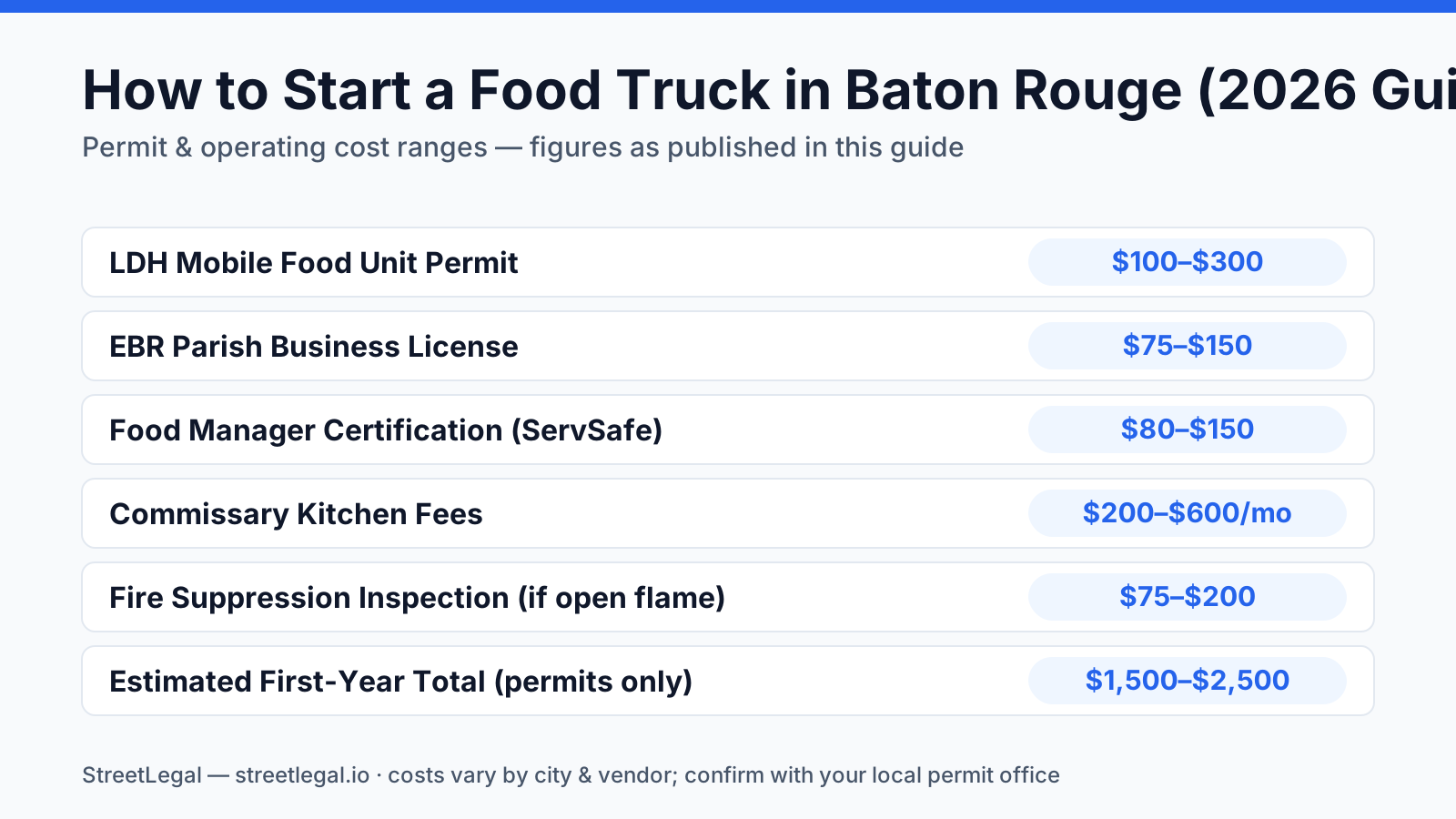
Full Cost Breakdown: Baton Rouge Food Truck Permits 2026
| Permit / Fee | Cost | Renewal |
|---|---|---|
| LDH Mobile Food Unit Permit | $100–$300 | Annual |
| EBR Parish Business License | $75–$150 | Annual |
| Louisiana Sales Tax Registration | Free | Ongoing |
| Food Manager Certification (ServSafe) | $80–$150 | Every 5 years |
| Commissary Kitchen Fees | $200–$600/mo | Monthly |
| Fire Suppression Inspection (if open flame) | $75–$200 | Annual |
| Estimated First-Year Total (permits only) | $1,500–$2,500 | — |
Baton Rouge Permitting Timeline
| Step | Who | Est. Time |
|---|---|---|
| Sign commissary agreement | You + commissary | 1–2 weeks |
| Submit LDH MFU application | LDH Baton Rouge office | Day 1 |
| LDH review + inspection scheduled | LDH | 2–4 weeks |
| Pre-opening inspection | LDH inspector | 1 day |
| MFU Permit issued | LDH | 1–2 weeks post-inspection |
| Parish business license | EBR Permits Division | 1–2 weeks |
| Fully licensed to operate | — | 4–8 weeks total |
Where to Operate in Baton Rouge
Baton Rouge has a few distinct operating zones that work well for food trucks:
- LSU Campus / College Town area — 35,000+ students, high lunch and late-night demand. Private property contracts with campus areas or nearby lots are the most reliable approach.
- Perkins Road corridor — Trendy Baton Rouge neighborhood with evening foot traffic, bars, and restaurants. Good for weekend dinner service.
- Mid City — Growing food and culture scene. Check for permitted spots and food truck parks.
- Downtown Baton Rouge — State government workers, conventions, and River Center events. Downtown vending requires city permits for public ROW.
- Special events — Baton Rouge hosts dozens of festivals annually including Fest for All, Baton Rouge Blues Festival, and Louisiana Oyster Festival. Each event requires its own vendor permit separate from your LDH MFU.
Operating on public sidewalks or streets requires a specific location permit from the City Parish. Operating on private property only requires permission from the property owner — your LDH permit covers the food safety side.
Louisiana Food Truck Market Context
Baton Rouge sits between New Orleans (the state's biggest food truck market) and the Acadiana region. Louisiana's food culture is a strength — locals expect quality, and trucks that deliver authentic flavors (Creole, Cajun, and fusion) do well. The state's warm climate means year-round outdoor dining is realistic, though summer heat and hurricane season (June–November) affect scheduling.
For operators looking to expand, the LDH MFU permit covers all Louisiana parishes — you don't need a separate health permit for each city. However, individual parishes and cities may have their own business license and vending permit requirements. New Orleans in particular has its own food truck ordinance.
See the full Louisiana food truck permit guide for a statewide comparison of requirements across Baton Rouge, New Orleans, and other Louisiana markets.
Frequently Asked Questions
Do I need a separate permit for each parish I operate in?
Your LDH MFU permit is statewide and covers all Louisiana parishes. You will need a business license in each parish or city where you have a regular presence. For occasional event vending in another parish, your LDH permit and event permit typically suffice.
Can I sell at LSU tailgates and campus events?
LSU manages food vendor approvals for campus events independently. You must apply through LSU's vendor/concession program and have a current LDH MFU permit. Tailgating spaces on public lots adjacent to campus have different rules than on-campus locations.
What food manager certification does Louisiana accept?
Louisiana accepts ServSafe and other ANSI-accredited food protection manager certifications. At least one certified manager per food truck is typically required. Certification must be renewed every 5 years.
How often does LDH inspect food trucks after the initial permit?
LDH conducts unannounced routine inspections of permitted food trucks, typically 1–2 times per year. Complaint-triggered inspections can also occur. Keep your commissary agreement current and your truck in good condition to pass inspections without issues.
People also ask about Baton Rouge food truck permits
How much does a food truck permit cost in Baton Rouge?
How long does it take to get a food truck permit in Baton Rouge?
Do I need a commissary kitchen to operate a food truck in Baton Rouge?
What documents do I need for a Baton Rouge food truck permit?
Answers to the most common permit questions — costs, timelines, commissary rules, and more.
Find city-level permit guides for every state we cover — compare costs and requirements.
More from the blog
Food Truck POS Systems 2026: Square, Toast, Clover & Avocado
Real 2026 pricing, hardware costs, offline mode, and contract terms for Square, Toast, Clover, and Avocado — compared specifically for food truck operators.
City GuidesEagan, MN Food Truck Permit Guide
Eagan MN food truck permit guide: MDH mobile food licensing, Dakota County food safety, city peddler rules, commissary records, costs, and launch timeline.
City GuidesBentonville, AR Food Truck Permit Guide
Complete guide to food truck permits, fees, and requirements in Bentonville, AR.
City GuidesBiloxi, MS Food Truck Permit Guide
Biloxi food truck permit guide 2026: licenses, health permit steps, commissary records, inspections, costs, renewal timing, and launch checklist.