· Updated · 12 min read · Gibby, StreetLegal Editorial
How to Start a Food Truck in Las Vegas: Complete Permit Guide 2026
Updated June 28, 2026
Las Vegas Quick Stats
- 🏛️ Primary permit: Southern Nevada Health District (SNHD) Mobile Food Facility License
- 💰 Permit cost: $479 plan review + $244/year license
- 🏭 Commissary required: Yes — licensed commercial kitchen mandatory
- ⏱️ Timeline: 6–10 weeks from application to operating
- 📍 Unique advantage: High-revenue Strip & tourist zones; food truck parks popular alternative
Las Vegas's Food Truck Regulatory Structure
Las Vegas operates under a three-tier jurisdiction: Southern Nevada Health District (SNHD) handles food safety licensing for all food trucks in Clark County, the City of Las Vegas issues business licenses and parking permits for city limits operations, and Clark County governs unincorporated areas. Most food truck operators need permits from multiple agencies.
Las Vegas has explosive demand for food trucks — the Strip's 24-hour foot traffic, resort crowds, and convention center business create premium revenue opportunities — but regulations are complex and enforcement is strict. Violating parking, vending zone, or commissary rules can result in immediate shutdown and fines.
Step 1: Southern Nevada Health District Mobile Food Facility Permit
Every food truck operating in Clark County must hold a Mobile Food Facility Permit issued by SNHD. This is the cornerstone permit. Without it, you cannot legally operate anywhere in the county, including the Strip.
SNHD Permit Fees (2026)
- Plan Review Fee: $479 (one-time, non-refundable)
- Annual Permit: $244/year
- Late Renewal Penalty: $50 (due by December 31)
- Commissary Inspection (if applicable): Additional fee based on commissary scope
Most full-service food trucks pay the standard $244/year annual fee. Plan review is required for all new applications and significant equipment changes.
Application Process
- Obtain and complete the SNHD Mobile Food Facility Application (available at snhd.org)
- Submit detailed menu, equipment list, and commissary agreement with commissary's health permit number
- Pay the $479 plan review fee and submit for review (allow 2–3 weeks)
- SNHD assigns risk level and provides construction/equipment approval
- Schedule and pass your initial inspection
- Receive your Mobile Food Facility Permit
- Display license visibly inside the truck at all times
⚠️ Annual Renewal Deadline: December 31
SNHD permits expire December 31 every year. Renewals submitted after January 1 incur a $50 late penalty. If you want a penalty-free renewal, submit at least 30 days before expiration. Inspections must pass before renewal is granted.
Step 2: Nevada State Business License
Register your business with the Nevada Secretary of State via SilverFlume (the state's online business portal). This gives you a state business registration and tax ID.
- Fee: $200/year initial + $200 annual renewal
- Apply at: guidestar.nv.gov (SilverFlume Portal)
- Processing time: 1–3 business days
- You'll receive your Federal EIN (Employer Identification Number) from the IRS
Step 3: City of Las Vegas / Clark County Business License
If you operate within Las Vegas city limits, you need a Las Vegas Business License. If you operate in unincorporated Clark County areas, you need a Clark County Business License. These are separate permits.
City of Las Vegas Business License
- Fee: $150 total ($100 for the license + $50 processing fee)
- Apply at: las-vegas.org/business-licensing
- Processing time: 3–5 business days
- Required if you operate anywhere within city limits
Clark County Business License (Unincorporated Areas)
- Application Fee: $45
- Semi-Annual License Fee: $25
- Apply at: Clark County Business Services
- Required only if you operate outside city limits (typically industrial zones or private properties)
Step 4: Clark County Fire Prevention Permit
The Clark County Fire Prevention Bureau requires a permit for any food truck using cooking equipment, open flames, propane, or commercial cooking systems. This is separate from SNHD and is strictly enforced.
- Fee: $100–$400/year depending on equipment complexity
- Inspectors check: Propane tank safety, fire suppression system, K-class fire extinguishers, hood ventilation, electrical safety
- Required: Commercial-grade fire suppression system (Ansul or equivalent), minimum 1.5-gallon K-class wet chemical extinguisher
- Schedule at: clarkcountynv.us/fire
- Fire trucks cannot operate without current fire permit on display
💡 Fire Suppression System Tip
Clark County requires annual fire suppression system certification and semi-annual visual inspections. A failed fire inspection can suspend your operating permit immediately. Budget $300–$600/year for suppression system maintenance and certification.
Step 5: Commissary Kitchen Agreement
SNHD requires every mobile food facility to operate from a licensed commissary kitchen. You cannot prep, store food, or wash your truck at home or an unlicensed space. The commissary agreement must be notarized and on file with SNHD before license issuance.
SNHD Commissary Requirements
- Written, notarized commissary agreement on file with SNHD
- Agreement must include the commissary's health permit number
- Commissary owner/manager must sign (verbal agreements not accepted)
- Agreement must specify hours of access and services provided
- SNHD inspects commissary as part of your food truck approval
Las Vegas Commissary Costs (2026)
- Shared commercial kitchen: $300–$700/month (daily access: $40–$60/day)
- Dedicated prep space: $800–$1,500/month
- Hourly kitchen rental: $15–$25/hour
Las Vegas has more commissary availability than Seattle or Portland. Most commissaries are clustered in downtown and the industrial south strip area. Secure your agreement before submitting your SNHD application — SNHD will verify the commissary is licensed and available.
Step 6: Food Handler Cards & Certification
Nevada requires food handler cards for all employees before they begin working. These are health cards, not certifications.
- Food Handler Card Cost: ~$15–$25 per person
- Valid for 3 years
- Must be renewed every 3 years
- Operator must also hold a card — no exceptions
Step 7: Where You Can (and Can't) Operate in Las Vegas
Las Vegas has some of the most lucrative vending locations in the country, but parking and zoning rules are complex and heavily enforced.
Legal Operating Locations
- Private property: Parking lots, shopping centers, event venues — most permissive option (requires owner permission)
- Food truck parks: Popular alternative to street vending; multiple trucks in one location (check with park operator for rules)
- Las Vegas Strip: City jurisdiction; premium locations available but competitive and strictly permitted
- Downtown Las Vegas: Revitalization District (Fremont Street area) — increasing opportunities for food trucks
- Convention centers & events: LVCC, other venues issue temporary food permits
The 30-Minute Rule & Open Air Vending
- Public Right-of-Way Rule: You must move at least 150 feet after every 30 minutes of operation on public streets
- Open Air Food Vending License: Required if you stay in one location longer than 4 hours — additional permit from city/county
- Estimated cost: $200–$400/year for Open Air license
Restricted Zones (Must Avoid)
- Restaurant proximity: Cannot vend within 150 feet of established restaurants without written permission
- School zones: Cannot operate within 1,000 feet of schools during school hours (6am–3pm weekdays)
- Residential neighborhoods: Cannot vend in residential areas except for catering or special events with permits
- No parking in pedestrian zones: Some areas ban mobile units during peak hours — check local ordinances
Full Cost Breakdown: Starting a Food Truck in Las Vegas
| Permit / Cost Item | Low | High |
|---|---|---|
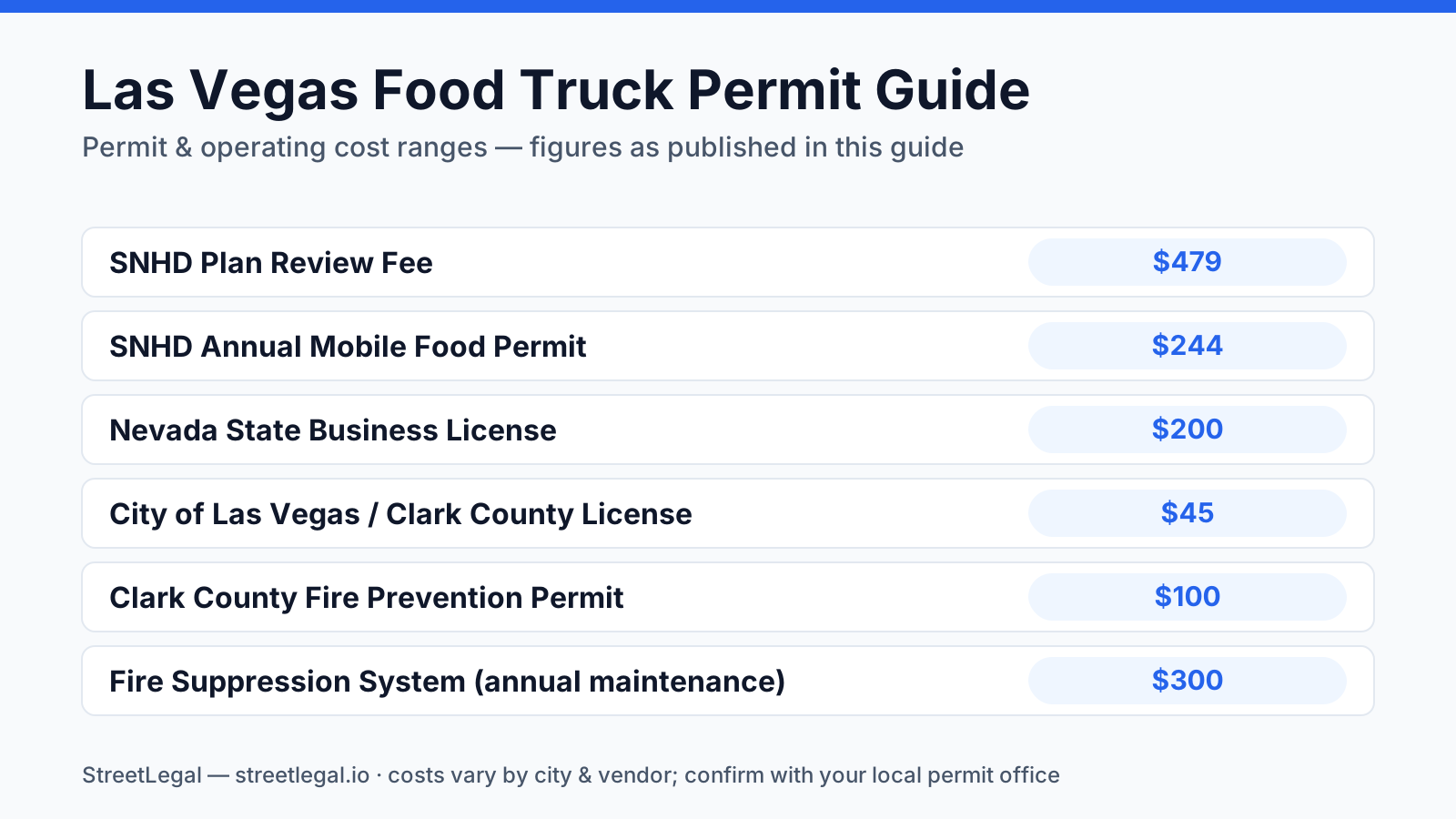
| SNHD Plan Review Fee | $479 | $479 |
| SNHD Annual Mobile Food Permit | $244 | $244 |
| Nevada State Business License | $200 | $200 |
| City of Las Vegas / Clark County License | $45 | $150 |
| Clark County Fire Prevention Permit | $100 | $400 |
| Fire Suppression System (annual maintenance) | $300 | $600 |
| Food Handler Cards (2–3 employees @ $15) | $45 | $75 |
| Sales & Use Tax Permit (Nevada DOR) | $0 | $0 |
| Nevada DMV Food Truck Registration | $100 | $200 |
| Open Air Vending License (if applicable) | $0 | $400 |
| Commissary Kitchen (annual) | $3,600 | $8,400 |
| Business Insurance (liability + auto) | $2,000 | $4,500 |
| Legal / LLC formation | $150 | $500 |
| Total First-Year Estimate | $6,263 | $15,348 |
Excludes truck purchase/lease, equipment, and initial inventory. Costs vary by location (city vs. unincorporated county).
Timeline: Las Vegas Food Truck Launch
- Week 1–2: Register Nevada state business license (SilverFlume), secure commissary agreement with notarization
- Week 2–3: Apply for city/county business license, submit SNHD Mobile Food Facility application with menu and equipment
- Week 3–4: SNHD plan review period; fire suppression system installed and certified
- Week 4–5: Clark County Fire Prevention permit submitted; complete food handler card training
- Week 5–7: SNHD initial inspection scheduled and completed
- Week 7–8: Fire Prevention inspection and approval
- Week 8–10: SNHD permit issued; parking location confirmed; first day of operations
5 Las Vegas-Specific Tips
- The Strip and downtown are premium revenue zones but high-competition. If you can secure a food truck park location or a legitimate Strip parking agreement, your revenue potential is 3–5x higher than suburban areas. But vending illegally on the Strip carries severe penalties — work with city licensing to find legal spots.
- Nevada has no income tax — build this into your pricing model. While Clark County sales tax is 8.375%, Nevada's lack of income tax means higher disposable income for customers. Price competitively but profitably; customers have money to spend.
- The 30-minute rule is enforced. Code enforcement actively monitors public right-of-way vending. If you operate on public streets without an Open Air license, move every 30 minutes or face fines. Food truck parks are a legal way to stay put longer.
- School hour restrictions are strict. 1,000 feet from schools during 6am–3pm is non-negotiable. Use a mapping tool to identify all schools near your planned location — violations result in immediate shutdown.
- Commission your commissary agreement early. SNHD won't process your application without a signed, notarized commissary agreement. Some commissaries require 1–2 week turnaround for notarization. Lock this in before you submit anything else.
Las Vegas vs. Other Southwest Cities
| City | License Cost | Timeline | Key Challenge |
|---|---|---|---|
| Las Vegas, NV | $723 | 6–10 wks | Zoning rules, Strip competition, school zones |
| Phoenix, AZ | $650 | 4–8 wks | Heat, truck durability, summer closures |
| Albuquerque, NM | $400 | 3–6 wks | Smaller market, lower revenue |
| Reno, NV | $500 | 4–7 wks | Tourist market but seasonal demand |
People also ask about Las Vegas food truck permits
How much does a food truck permit cost in Las Vegas?
How long does it take to get a food truck permit in Las Vegas?
Do I need a commissary kitchen to operate a food truck in Las Vegas?
What documents do I need for a Las Vegas food truck permit?
Answers to the most common permit questions — costs, timelines, commissary rules, and more.
Find city-level permit guides for every state we cover — compare costs and requirements.
More from the blog
Jefferson County, MO Food Truck Permit Guide
Complete guide to food truck permits, fees, and requirements in Jefferson County, MO.
City GuidesSt. Charles County, MO Food Truck Permit Guide
Complete guide to food truck permits, fees, and requirements in St. Charles County, MO.
City GuidesSt. Louis County, MO Food Truck Permit Guide
Complete guide to food truck permits, fees, and requirements in St. Louis County, MO.
Buyer's GuideFood Truck POS Systems 2026: Square, Toast, Clover & Avocado
Compare 2026 food truck POS systems by pricing, hardware costs, offline mode, and contract terms for Square, Toast, Clover, and Avocado.