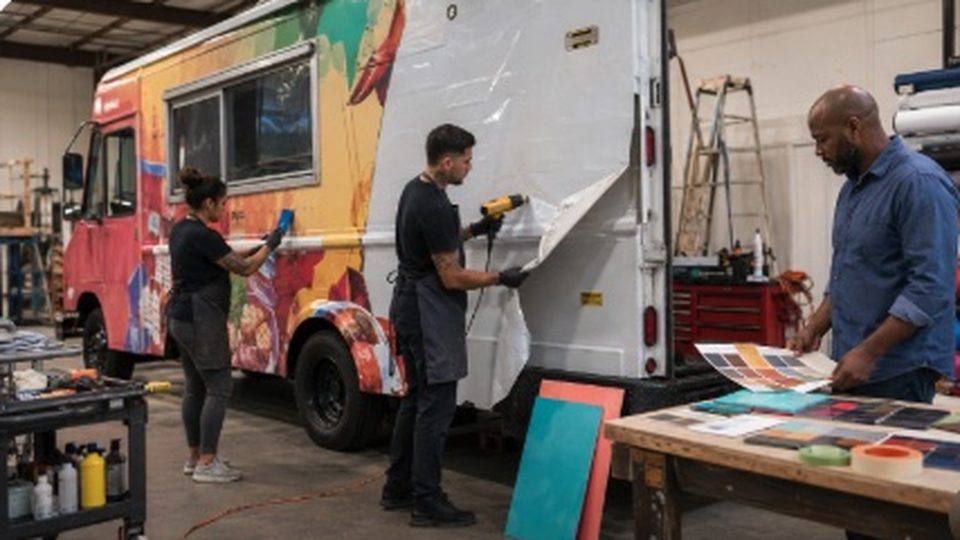
Food Truck Wrap Removal and Repainting Costs
Updated August 30, 2026
A tired wrap is more than a cosmetic problem. Peeling vinyl, sun-faded panels, outdated logos, and mismatched menu graphics make the truck look neglected before anyone tastes the food. The expensive part is not always the new design. It is removing old vinyl, cleaning adhesive, fixing paint, and deciding whether the truck needs a repaint before the next wrap goes on.
Wrap removal cost ranges
Professional vinyl removal is usually priced by labor, condition, and surface area. Fleet Wrap HQ's removal guide says professional car wrap removal in the United States commonly runs $500 to $1,500 for a standard vehicle, with most jobs billed hourly. J.D. Power says a wrap in good structural condition may take about three to four hours and cost about $500 to $600, while baked-in wraps can climb above $2,500.
A food truck is not a standard sedan. It may have larger flat panels, rivets, roof edges, vents, menu-board brackets, service-window trim, awning hardware, grease staining, and old adhesive around cutouts. That means a truck removal quote can land above car ranges, especially if the wrap is cracked or has been cooked in sun for years.
Repainting cost ranges
Public paint ranges are wide because prep drives the bill. Kelley Blue Book says car painting can range from about $1,000 for a basic job to $10,000 or more for high-quality or custom work, with an average around $4,000 for a mid-tier sedan repaint. Mickey Truck Bodies' food-trailer guidance says a simple, basic paint job on a small to midsized truck or trailer can run around $2,000, and more extensive detail, colors, or designs cost more.
Those figures should be treated as starting points, not guarantees. Food trucks often need body repair, sanding, primer, rust treatment, masking around kitchen openings, and downtime scheduling. A cheap paint job that fails under a wrap can make the next redesign more expensive.
Budget scenarios
| Scenario | Likely work | Budget note |
|---|---|---|
| Fresh wrap, good paint | Remove vinyl, clean adhesive, spot prep, install new graphics | Removal may be close to normal vehicle ranges if the vinyl releases cleanly. |
| Old, cracked, sun-baked wrap | Slow removal, heat, adhesive cleanup, paint inspection | Industry guides warn difficult removals can cost far more than clean removals. |
| Paint damage under vinyl | Removal, body repair, primer, repaint, cure time, then graphics | Budget for downtime and sequencing, not just the paint invoice. |
| Rebrand plus new wrap | Design, removal, surface prep, new wrap, menu/signage updates | Coordinate website, social photos, QR codes, and permits if the legal name changes. |
Hidden costs after removal
The quote can change after the vinyl comes off. Shops may find mismatched paint, filler, surface rust, dents, screw holes, or adhesive that takes hours to clean. Removal around vents, hatches, door handles, window frames, and service openings takes more time than flat panel work. If the old installer used edge primer aggressively, the vinyl may resist removal around seams and trim.
Do not forget non-graphics costs. The truck may be down for several days. You may need temporary signage, updated menu boards, replacement QR decals, new inspection placard placement, and fresh photos for your website, Google Business Profile, delivery apps, and catering deck.
Repaint, rewrap, or both?
Rewrap if the paint underneath is sound and your main goal is a brand update. A wrap can carry menu visuals, cuisine cues, QR codes, and high-impact graphics. Food truck wrap vendors commonly describe full wraps in the $2,000 to $5,000 range depending on size and complexity, though removal and prep are separate.
Repaint first if the body needs repair, the paint is failing, or the wrap removal exposes corrosion and bare patches. The best sequence is inspection, removal quote, surface assessment, paint or bodywork decision, brand design, then install. Skipping the inspection can make a rebrand look cheap two months later.
Frequently asked questions
Can I remove a wrap myself?
You can try small decals, but full-truck removal can damage paint or take days if the vinyl is brittle. Get a professional quote before assuming DIY saves money.
Should I repaint before wrapping?
Only if the paint or body is weak. A wrap needs a clean, stable surface, but a full repaint adds cost and cure time.
How long should I budget for downtime?
Ask the shop after inspection. Clean removal and rewrap may be quick; baked vinyl, adhesive cleanup, paint, or bodywork can stretch the schedule.
Does a new wrap affect permits?
Usually graphics alone do not, but legal name, DBA, menu, equipment, or license-display changes can. Check local permit and inspection requirements before launch day.
Treat rebranding as an operations project, not just a design job.
StreetLegal helps food truck operators keep permit documents, inspection records, business details, and renewal tasks organized while the truck's public-facing brand changes.
Answers to the most common permit questions — costs, timelines, commissary rules, and more.
Find city-level permit guides for every state we cover — compare costs and requirements.
More from the blog
Jefferson County, MO Food Truck Permit Guide
Complete guide to food truck permits, fees, and requirements in Jefferson County, MO.
City GuidesSt. Charles County, MO Food Truck Permit Guide
Complete guide to food truck permits, fees, and requirements in St. Charles County, MO.
City GuidesSt. Louis County, MO Food Truck Permit Guide
Complete guide to food truck permits, fees, and requirements in St. Louis County, MO.
Buyer's GuideFood Truck POS Systems 2026: Square, Toast, Clover & Avocado
Compare 2026 food truck POS systems by pricing, hardware costs, offline mode, and contract terms for Square, Toast, Clover, and Avocado.