· 8 min read · StreetLegal Team
Food Truck Equipment Costs: Budgeting Your Build-Out (2026)
Updated July 18, 2026
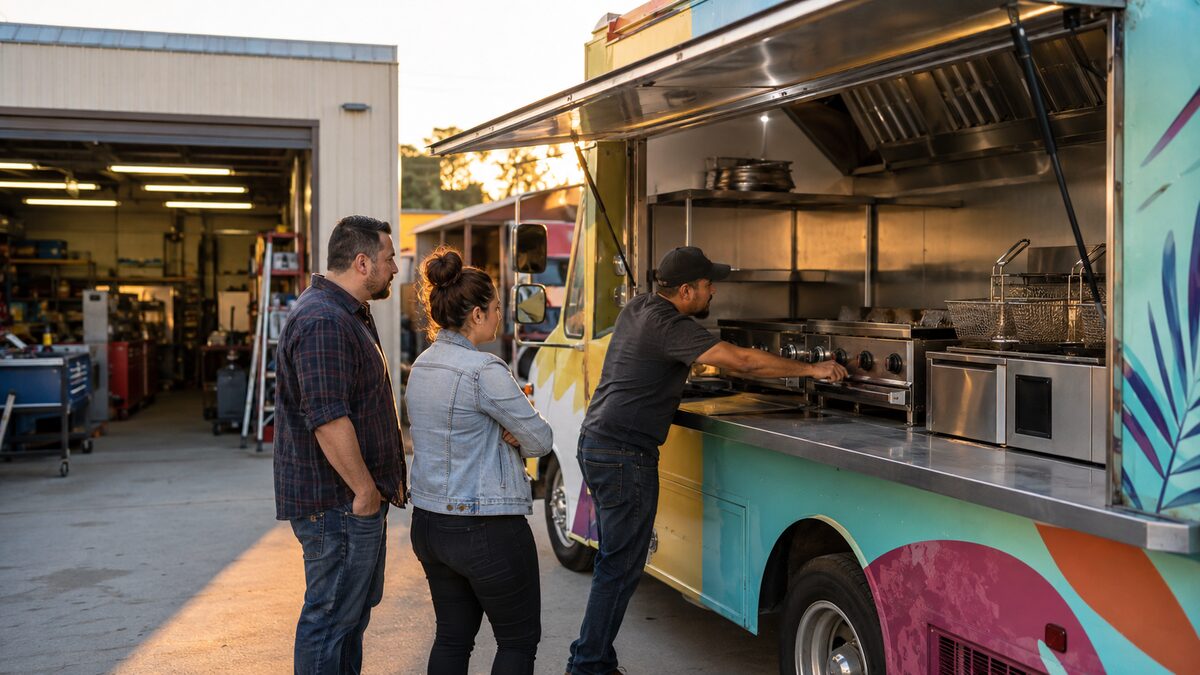
The truck or trailer is only part of the bill. What goes inside it, the griddle, fryer, refrigeration, and the fire suppression system code requires around all of it, is where a lot of new operators underbudget. Here's what each piece actually costs in 2026, what a realistic full build-out totals, and where the number tends to run away from people.
What a full build-out actually costs
Most food truck operations need core equipment totaling $15,000 to $45,000, separate from the vehicle itself, with the range driven almost entirely by menu complexity. A single-item dessert or coffee truck can build out at the low end, one appliance, minimal refrigeration, simple ventilation. A full-line truck running a fryer, flat-top, range, and multiple refrigerated stations lands at the high end. A bare-minimum setup (one griddle, a small fryer, a basic reach-in) can come in as low as $6,200-$21,800. Commercial kitchen equipment pricing is also up roughly 12% since 2022, so if you're working off a quote or blog post from a couple years ago, add at least 15% before trusting the number.
| Category | Typical range |
|---|---|
| 36" flat-top griddle | $2,000 - $6,000 ($1,150+ for light-volume/smaller units) |
| Deep fryer | $1,500 - $4,000 |
| Refrigeration (reach-ins, prep tables) | $4,000 - $15,000 |
| Ventilation hood | $6,500 - $7,500 (plus $1,500-$4,000 if retrofitting) |
| Fire suppression system, installed | $3,000 - $6,000 |
| Full core equipment package | $15,000 - $45,000 |
Cooking equipment: griddles and fryers
A quality 36-inch flat-top griddle runs $2,000 to $6,000. Lighter-volume trucks can get away with a smaller unit, an 18-inch medium-duty gas griddle can start around $1,147, but that's a real ceiling on output during a busy lunch rush, so weigh it against your expected volume, not just the price tag. Deep fryers run $1,500 to $4,000. Ventless fryer models exist and can simplify (and sometimes reduce) your ventilation and suppression requirements, worth asking your builder about if your menu is fryer-light and you're trying to control the ventilation line item.
Refrigeration
Refrigeration, reach-in units, refrigerated prep tables, and small under-counter or walk-in units, runs $4,000 to $15,000 depending on how much cold storage your menu needs. Most trucks need at minimum one reach-in for bulk storage and one refrigerated prep rail for line cooking, which puts a realistic working budget around $6,000-$10,000 rather than the bare minimum. Undersizing refrigeration is one of the more common mistakes on a first build, it's cheaper to spec it right the first time than to retrofit a second unit into a truck that's already wired and plumbed.
Ventilation and fire suppression: the one you can't skip
Any truck cooking with open flame, a griddle, fryer, or range, needs a code-compliant hood and a UL 300 wet-chemical fire suppression system tied to it, and health/fire inspectors will not pass a truck without one. An installed suppression system runs $3,000 to $6,000 depending on hood length and nozzle count. A small single-griddle dessert truck might pay $2,500-$3,200 for full UL 300 coverage plus extinguishers, while a typical taco truck running a fryer, flat-top, and 6-burner range lands around $4,000-$5,000. The hood itself runs $6,500-$7,500, and if you're retrofitting an existing hood and duct setup rather than building new, add $1,500-$4,000 for that work before suppression installation can even start. This system also isn't a one-time cost: annual recertification runs $200-$450 and semi-annual maintenance checks run another $100-$200 each, budget that into year-one operating costs, not just the build-out.
Ongoing maintenance costs
Beyond fire suppression recertification, expect $2,000 to $5,000 a year across all your equipment for preventive maintenance, parts, and repairs, refrigeration compressors, griddle thermostats, fryer element replacement, the wear items that come with daily commercial use in a moving vehicle. Building a small equipment maintenance line into your monthly budget from day one is cheaper than an emergency fryer replacement mid-season.
Where new operators overspend
- Buying new when used works. Restaurant equipment auctions and used commercial kitchen dealers regularly have griddles, fryers, and refrigeration at a fraction of new pricing, worth checking before ordering new, especially for your first truck.
- Oversizing equipment for the actual menu. A full 6-burner range for a two-item menu is wasted capital and wasted square footage in a space where every square foot matters.
- Treating fire suppression as a line item to shrink. It's the one system you genuinely cannot pass inspection without, and cutting corners here either fails inspection later or creates a real safety risk. Budget it at full cost from the start.
- Forgetting recertification and maintenance in the year-one budget. The build-out number isn't the whole cost, annual recertification and a maintenance reserve belong in your operating budget alongside generator and fuel costs.
Frequently asked questions
How much does a full food truck equipment build-out cost?
Core cooking and refrigeration equipment runs $15,000-$45,000 depending on menu complexity, separate from the truck itself.
How much does a food truck fire suppression system cost?
An installed UL 300 system runs $3,000-$6,000, plus $1,500-$4,000 for hood/duct retrofitting if needed, and $200-$450 a year for recertification.
How much does food truck refrigeration cost?
Refrigeration equipment runs $4,000-$15,000, with a realistic working budget of $6,000-$10,000 for a reach-in plus a refrigerated prep rail.
How much do a griddle and fryer cost for a food truck?
A 36" griddle runs $2,000-$6,000, and a deep fryer runs $1,500-$4,000. Ventless fryers can lower ventilation and suppression requirements.
Has food truck equipment gotten more expensive recently?
Yes, roughly 12% since 2022. Add at least 15% to any pre-2024 quote or estimate you find.
Health and fire inspections check your equipment against your permit, not the other way around.
StreetLegal helps food truck operators track health permits, fire inspection certificates, and equipment documentation in one place, so your build-out passes inspection the first time.
Answers to the most common permit questions — costs, timelines, commissary rules, and more.
Find city-level permit guides for every state we cover — compare costs and requirements.
More from the blog
Jefferson County, MO Food Truck Permit Guide
Complete guide to food truck permits, fees, and requirements in Jefferson County, MO.
City GuidesSt. Charles County, MO Food Truck Permit Guide
Complete guide to food truck permits, fees, and requirements in St. Charles County, MO.
City GuidesSt. Louis County, MO Food Truck Permit Guide
Complete guide to food truck permits, fees, and requirements in St. Louis County, MO.
Buyer's GuideFood Truck POS Systems 2026: Square, Toast, Clover & Avocado
Compare 2026 food truck POS systems by pricing, hardware costs, offline mode, and contract terms for Square, Toast, Clover, and Avocado.