· 8 min read · StreetLegal Team
Food Safety and Packaging Rules for Delivery Orders: What Health Departments Require (2026)
Updated July 18, 2026
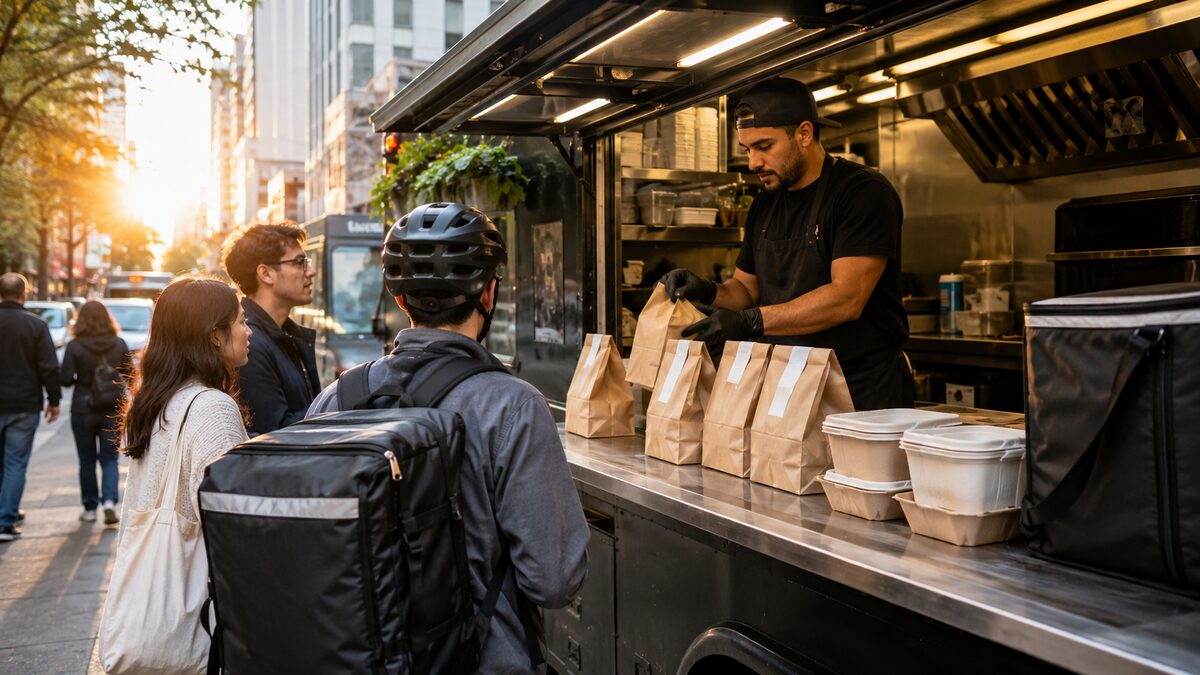
Running orders through DoorDash, Uber Eats, or Grubhub adds a step your walk-up window doesn't have to deal with: the food sits in a bag, in a car, for minutes you don't control. Health departments have real rules for that gap. Here's what the FDA Food Code actually requires on temperature and time, what California's tamper-evident sealing law covers, and a practical packaging checklist for a truck sending orders out the window.
The 4-hour rule: temperature and time limits
The FDA Food Code defines the "temperature danger zone" as 41°F to 135°F, the range where bacteria like Salmonella, E. coli, and Clostridium perfringens can double in number every 20 minutes. Time/Temperature Control for Safety (TCS) foods, cooked meats, rice, beans, sauces, cut produce, basically anything that supports bacterial growth, cannot sit in that danger zone for a cumulative total of more than 4 hours before it must be discarded. That clock doesn't reset when the food changes hands: prep time, staging time waiting for a courier, and transit time all count against the same 4 hours. Cold TCS food has to stay at 41°F or below and hot TCS food at 135°F or above for the whole trip, which is why insulated delivery bags and hot-holding equipment aren't optional extras for a truck running regular delivery volume.
| Rule | Requirement |
|---|---|
| Cold holding | 41°F or below |
| Hot holding | 135°F or above |
| Max cumulative time in danger zone | 4 hours, then discard |
| Cooked food cooling, stage 1 | 135°F → 70°F within 2 hours |
| Cooked food cooling, stage 2 | 70°F → 41°F within a total of 6 hours |
California's tamper-evident sealing law (AB-3336)
California's AB-3336, in effect since January 1, 2021, requires every bag or container of ready-to-eat food handed to a third-party delivery driver to be sealed with a tamper-evident method before the driver takes possession, and the food facility (your truck or commissary) is responsible for doing the sealing, not the delivery platform. The law doesn't mandate one specific product, common solutions are tamper-evident stickers across the bag opening, sealed bags with a security strip, or containers with built-in tamper features. It also requires the food to be transported in a clean holding area at the proper temperature and protected from contamination during transit. Prepackaged, non-potentially-hazardous items (a bagged chip, a factory-sealed drink) are exempt, since they already arrive sealed from the manufacturer.
Does this apply outside California?
As of now, California is the state with a specifically named statewide law requiring tamper-evident sealing for third-party delivery orders. No other state currently has an identical statute on the books, though food-safety industry coverage has noted more states are expected to follow that pattern over time. Practically, that means: if you're operating in California, tamper-evident sealing is a legal requirement with real liability exposure for skipping it. If you're operating anywhere else, it's not currently a state mandate, but it's still the right baseline practice, it protects you from customer disputes about contamination, and if your state does add a similar law you'll already be compliant.
Practical packaging checklist
- Keep hot food hot and cold food cold at the moment of bagging. Don't stage food on the counter waiting for a courier, that's when it starts losing temperature and eating into the 4-hour clock.
- Seal every bag before it leaves your hands. A sticker across the bag opening or a sealed-bag system, whichever you use consistently, not just for California orders if you operate there, but as standard practice everywhere.
- Use insulated bags for hot items and cold packs for anything temperature-sensitive. A standard delivery bag alone won't hold 135°F for a 20-minute drive in a hot car.
- Label the outside with the order number and customer name so a courier can match it to the app without opening it to check.
- Mark the order "Ready" in the platform's app the instant it's staged, not before it's actually sealed and ready to hand off, since an early "Ready" status can mean the food sits longer in the danger zone waiting for pickup.
- Track prep-to-handoff time on your busiest delivery days. If orders are regularly sitting more than 20-30 minutes before a courier arrives, that's a platform routing or staffing issue worth raising with your account manager, not something packaging alone fixes.
What the delivery platforms themselves expect
Beyond the legal requirements, DoorDash, Uber Eats, and Grubhub all expect merchants to have basic packaging supplies on hand for delivery orders: bags, tissue or dividers for anything fragile, and cold packs or insulated containers for temperature-sensitive items. None of this is exotic or expensive, it's the same packaging a decent takeout counter already uses, the difference for delivery is that nobody from your truck is there to catch a problem before the customer opens the bag, so the packaging has to do that job on its own.
Frequently asked questions
How long can hot food sit before it's unsafe for delivery?
TCS food cannot stay in the 41-135°F danger zone for more than a cumulative 4 hours before it must be discarded, and that clock includes prep, staging, and transit time combined.
Does a food truck have to seal delivery orders with a tamper-evident label?
California requires it under AB-3336, effective since January 1, 2021. Other states don't currently have an identical law, but sealing is a smart baseline practice everywhere.
What temperature does hot and cold food need to stay at during delivery?
Cold TCS food at 41°F or below, hot TCS food at 135°F or above, for the entire trip from prep to customer.
What should a food truck reject if a delivery courier's setup looks wrong?
You control packaging only up to handoff. Package correctly, seal it, and mark it ready only when it's actually staged and sealed.
Do prepackaged snacks or drinks need tamper-evident sealing for delivery?
No, California's AB-3336 exempts prepackaged, non-potentially-hazardous foods since they already arrive sealed from the manufacturer.
Keep your health permit and food-safety paperwork current before delivery volume grows.
StreetLegal helps food truck operators track health department permits and compliance documents in one place, so packaging and food-safety questions don't turn into a permit problem later.
Answers to the most common permit questions — costs, timelines, commissary rules, and more.
Find city-level permit guides for every state we cover — compare costs and requirements.
More from the blog
Jefferson County, MO Food Truck Permit Guide
Complete guide to food truck permits, fees, and requirements in Jefferson County, MO.
City GuidesSt. Charles County, MO Food Truck Permit Guide
Complete guide to food truck permits, fees, and requirements in St. Charles County, MO.
City GuidesSt. Louis County, MO Food Truck Permit Guide
Complete guide to food truck permits, fees, and requirements in St. Louis County, MO.
Buyer's GuideFood Truck POS Systems 2026: Square, Toast, Clover & Avocado
Compare 2026 food truck POS systems by pricing, hardware costs, offline mode, and contract terms for Square, Toast, Clover, and Avocado.