· 8 min read · StreetLegal Team
Delivery App Integration for Food Trucks (2026): DoorDash, Uber Eats, and More
Updated August 16, 2026
Delivery apps can help a food truck reach customers who are not walking past the window, but integration is where the work gets real. A truck has less space, fewer staff, tighter prep windows, and a location that may change by the day. The goal is not to be on every app. The goal is to accept orders you can actually make, stage, and hand off without wrecking the walk-up line.
Integration options
Most food trucks fall into one of three setups:
- Marketplace tablet only. You run DoorDash, Uber Eats, or Grubhub on a separate device and manually key orders into the POS. This is simplest, but it creates room for missed tickets and duplicate menu edits.
- POS-connected marketplaces. Orders and menu data flow between the platform and your POS. Square says its Uber Eats integration can sync menus, prices, item images, and item availability between Square and Uber Eats. Toast says Toast Delivery Services uses third-party delivery network partners and notes DoorDash Marketplace as a separate direct integration.
- Direct ordering plus delivery dispatch. Customers order from your website or branded ordering page, and you either handle pickup, use your own driver, or dispatch third-party delivery behind the scenes. This usually keeps more customer data with you, but it requires your own demand generation.
Current published fee signals
Fee math changes by plan, city, promo, and contract, so verify your own merchant agreement before signing. Published platform pages give a starting point:
| Platform | Published fee signal | Food truck takeaway |
|---|---|---|
| DoorDash | Marketplace delivery plans at 15%, 25%, and 30% | Lower commission can mean fewer marketplace benefits; match the plan to volume. |
| Uber Eats | Marketplace delivery tiers at 20%, 25%, and 30%, with Plus-tier Uber One orders listed at 30% | Watch blended rate, not just the headline tier. |
| Grubhub | Marketing packages as low as 5%, with delivery fees starting at 10% | Separate marketplace visibility from who handles delivery. |
| ChowNow | Positions itself as commission-free online ordering with subscription plans | Better fit for repeat customers than pure app discovery. |
For a deeper fee discussion, see Is Uber Eats Worth It for Food Trucks? and Uber Eats vs. DoorDash vs. Grubhub for Food Trucks.
POS and menu syncing
Integration is most valuable when your menu changes often. A truck that sells out of brisket, swaps a seasonal drink, or closes early because of weather needs item availability to update everywhere fast. If the app shows an item you no longer have, the refund and support burden lands during service.
Before connecting any app, confirm five things with your POS provider: whether item availability syncs both ways, whether modifiers map cleanly, whether taxes and fees flow into reports, whether orders print on the right printer, and whether you can pause the channel quickly from the truck.
Food truck operating rules
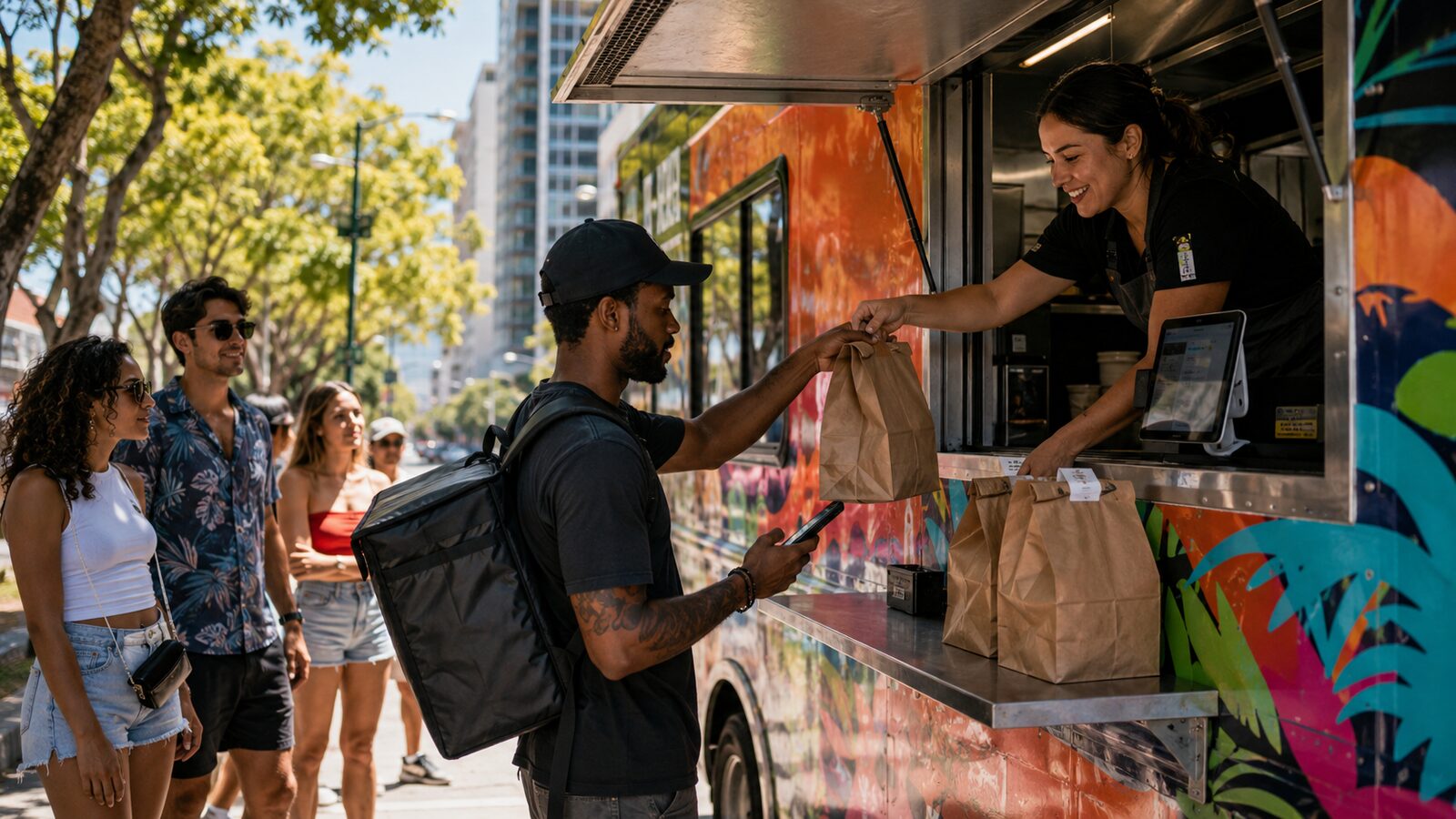
Delivery-app integration fails when the digital promise does not match the physical truck. Keep the delivery menu narrower than the walk-up menu, because courier orders need to hold up in packaging. Set realistic prep times. Use a labeled pickup shelf or bin. Keep pickup instructions specific: lot entrance, truck color, window side, and whether couriers should skip the customer line.
Location matters too. If your app storefront is tied to a commissary or regular home base, do not turn it on from a temporary event across town unless the delivery radius and pickup instructions still make sense. Delivery is best for reliable weekly spots, brewery residencies, office parks, and commissary-adjacent service windows.
Sources
- DoorDash merchant pricing
- Uber Eats marketplace fee changes
- Grubhub pricing and fees
- Square Uber Eats integration
- Toast Delivery Services
- ChowNow commission-free ordering
Frequently asked questions
Should a food truck integrate delivery apps with its POS?
Yes if delivery volume is meaningful. POS integration can reduce tablet juggling, menu mismatches, and missed orders. Low-volume trucks can start manually and upgrade when order flow justifies it.
Should I list every menu item on delivery apps?
Usually no. List items that travel well, are easy to package, and do not slow down the walk-up line.
What should couriers see in pickup instructions?
Tell them the exact lot, truck color, window side, and where the pickup shelf is. Do not make them wait in the walk-up line unless that is truly your process.
Keep the paperwork and storefront aligned.
StreetLegal helps operators keep licenses, health permits, commissary documents, and operating details organized so digital channels do not get held up by missing compliance records.
Answers to the most common permit questions — costs, timelines, commissary rules, and more.
Find city-level permit guides for every state we cover — compare costs and requirements.
More from the blog
Jefferson County, MO Food Truck Permit Guide
Complete guide to food truck permits, fees, and requirements in Jefferson County, MO.
City GuidesSt. Charles County, MO Food Truck Permit Guide
Complete guide to food truck permits, fees, and requirements in St. Charles County, MO.
City GuidesSt. Louis County, MO Food Truck Permit Guide
Complete guide to food truck permits, fees, and requirements in St. Louis County, MO.
Buyer's GuideFood Truck POS Systems 2026: Square, Toast, Clover & Avocado
Compare 2026 food truck POS systems by pricing, hardware costs, offline mode, and contract terms for Square, Toast, Clover, and Avocado.