· 7 min read · StreetLegal Team
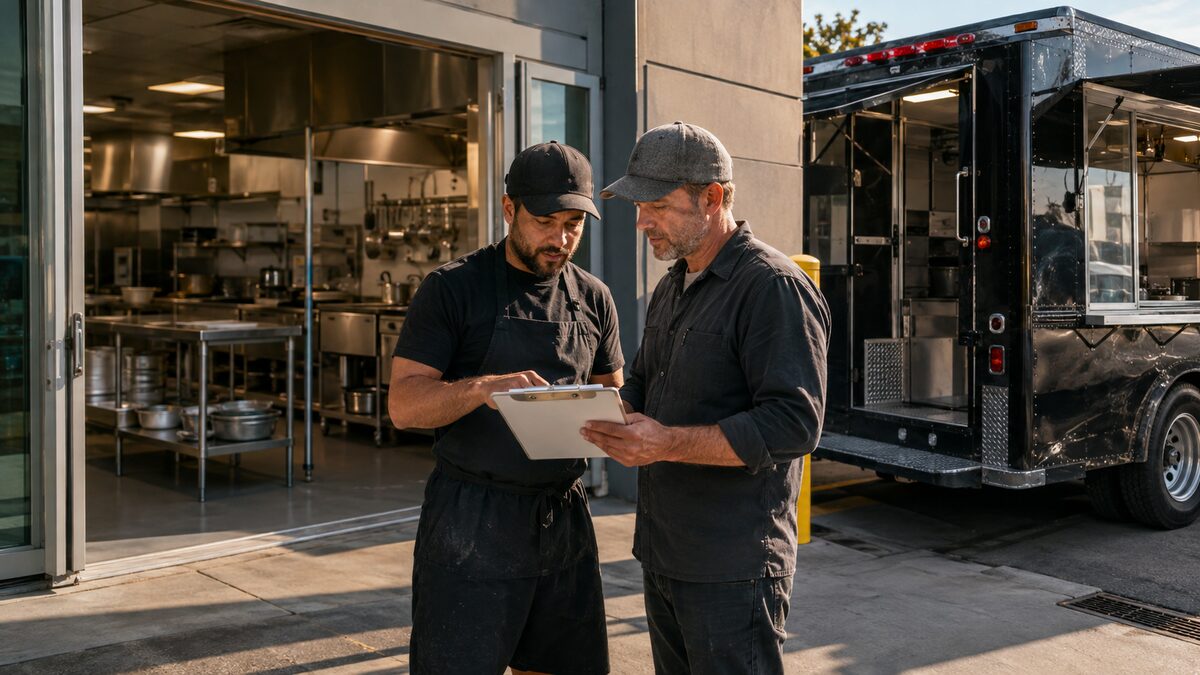
Commissary Kitchen vs. Building Your Own Prep Space (2026): Cost Comparison
Updated August 3, 2026
A commissary kitchen is not just a room with a stove. For a food truck, it may be the place tied to health paperwork, prep, storage, potable water, wastewater, cleaning, and sometimes the fixed address used for ordering or delivery workflows. Building your own prep space can sound like escaping rent, but it usually replaces one monthly bill with a stack of fixed costs and inspections.
What renting a commissary buys you
The Kitchen Door describes shared-use or commissary kitchens as commercially licensed spaces used by chefs, caterers, trucks, and food producers so they do not have to carry the overhead of building their own kitchen. That is the real value: the operator is not just renting a prep table. They are buying access to infrastructure that has already been built, inspected, cleaned, maintained, and scheduled.
For a truck, the most valuable parts are often the least glamorous: signed commissary paperwork, cold and dry storage, mop sinks, dishwashing, potable water, gray-water disposal, grease handling, pest control, loading access, and predictable hours. If the kitchen also allows truck parking or servicing, that can be worth more than a cheaper hourly rate somewhere else.
What building your own really includes
A private prep space can work, but only if the health department accepts it for your food operation. A garage, warehouse corner, or back room does not become a commissary because it has stainless tables. The space may need approved surfaces, handwashing, warewashing, refrigeration, food storage, wastewater handling, pest control, equipment clearances, ventilation, fire review, and local building permits before it can support a licensed food business.
The cost problem is timing. Commissary rent is a monthly operating expense. Building a prep space concentrates lease deposits, design, build-out, fixtures, utilities, equipment, inspections, and delays before the truck earns from that space.
Cost comparison
| Cost area | Rent commissary | Build own prep space |
|---|---|---|
| Upfront cash | Application, deposit, first month, storage setup. | Lease/security, design, equipment, build-out, permits, inspections. |
| Compliance burden | Facility usually already licensed; verify your use is covered. | You carry plan review, inspection, maintenance, and ongoing facility compliance. |
| Flexibility | Easy to scale up, down, or change kitchens if hours or location stop working. | More control, but harder to unwind if demand changes. |
| Storage and access | Depends on membership tier and kitchen rules. | You design the layout, but pay for every cooler, rack, lock, and utility. |
| Best use case | First truck, seasonal operators, uncertain volume, or markets with good shared kitchens. | High-volume prep, multiple trucks, catering production, or a brand with stable demand. |
When each option makes sense
Rent the commissary if you are launching your first truck, testing a market, running seasonal events, or still learning your prep volume. The ability to leave, switch kitchens, or add hours is valuable while the business is still proving its rhythm.
Consider a private prep space only when the math is obvious without optimistic sales assumptions. Signs include multiple trucks sharing the same prep workflow, a catering arm that needs daily production, limited commissary availability in your market, or a menu that requires specialized equipment no shared kitchen will reasonably provide.
Before signing either way, ask the health department what paperwork the space must support. Then ask the kitchen or landlord the same question in writing. If those answers do not match, solve that before spending money.
Frequently asked questions
Can I prep at home for my food truck?
Usually no for regulated food truck operations. Confirm with your health department, but most trucks need approved commercial food facilities for prep, storage, cleaning, and wastewater handling.
Is a shared kitchen the same as a commissary?
Not always. A shared kitchen may be great for prep, but a food truck may also need parking, potable water, gray-water disposal, waste handling, and specific commissary paperwork.
What should I ask before renting a commissary?
Ask about health-permit status, accepted use, storage, hours, truck servicing, water/waste access, insurance, cancellation terms, and whether the facility will sign the exact form your health department needs.
Do not separate kitchen choice from permit paperwork.
StreetLegal helps food truck operators track commissary agreements, health permits, insurance, renewals, and inspection documents so the kitchen decision does not become a launch blocker.
Answers to the most common permit questions — costs, timelines, commissary rules, and more.
Find city-level permit guides for every state we cover — compare costs and requirements.
More from the blog
Jefferson County, MO Food Truck Permit Guide
Complete guide to food truck permits, fees, and requirements in Jefferson County, MO.
City GuidesSt. Charles County, MO Food Truck Permit Guide
Complete guide to food truck permits, fees, and requirements in St. Charles County, MO.
City GuidesSt. Louis County, MO Food Truck Permit Guide
Complete guide to food truck permits, fees, and requirements in St. Louis County, MO.
Buyer's GuideFood Truck POS Systems 2026: Square, Toast, Clover & Avocado
Compare 2026 food truck POS systems by pricing, hardware costs, offline mode, and contract terms for Square, Toast, Clover, and Avocado.