· 8 min read · StreetLegal Team
Commissary Kitchen Rental Costs 2026: A Multi-City Comparison
Updated July 14, 2026
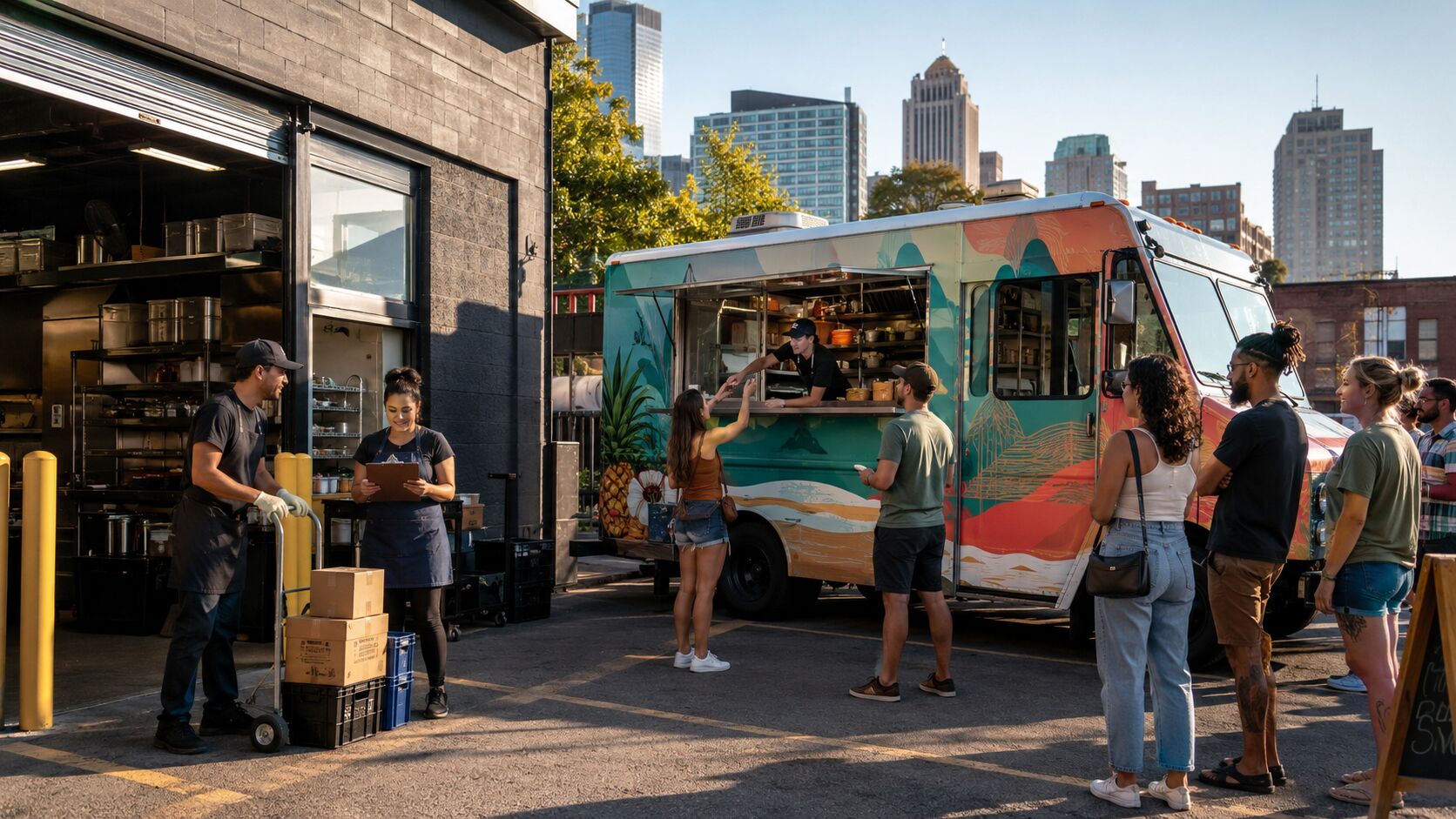
Commissary rent is one of the recurring food truck costs operators underestimate. The cheap headline price is rarely the full answer: kitchen hours, cold storage, dry storage, waste disposal, potable water, overnight parking, inspection paperwork, and delivery-app address use can all change the number.
National cost ranges
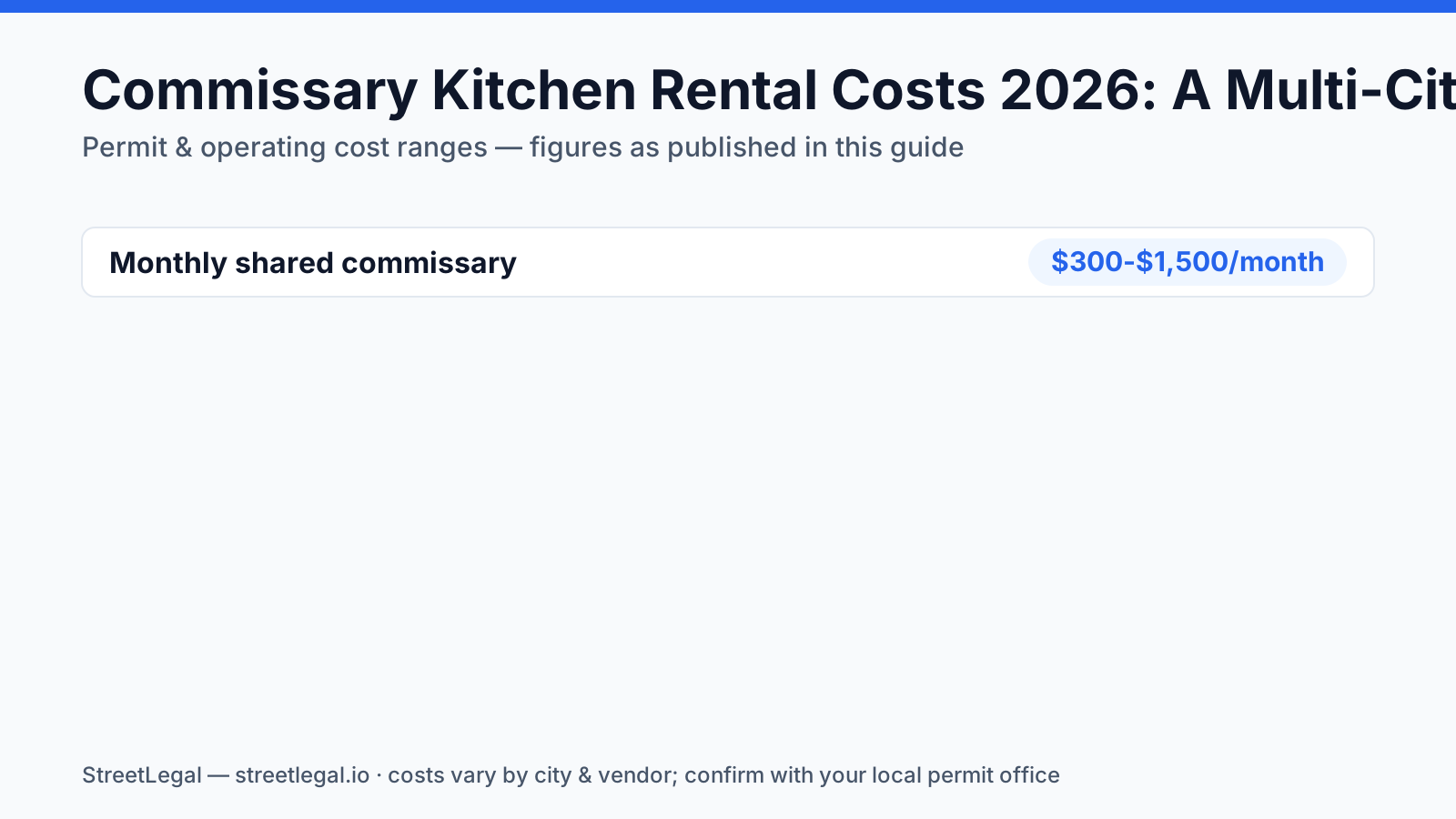
A practical 2026 planning range is $15 to $50 per hour for shared kitchen time and about $300 to $1,500 per month for recurring commissary access. Le Gourmet Factory’s commissary cost guide gives the same broad range: hourly fees often run $15 to $50, while monthly memberships can run $300 to $1,500 depending on access and amenities. Peerspace similarly notes hourly commercial kitchen rates often around $15 to $30 with monthly leases, deposits, and minimums on top.
| Access type | Budget range to test | Best fit |
|---|---|---|
| Hourly shared prep | $15-$50/hour | Testing menus, farmers markets, low-volume weekends |
| Monthly shared commissary | $300-$1,500/month | Regular service with recurring health-department paperwork |
| Private or ghost-kitchen-style unit | Often quote-based; examples can reach several thousand per month | Delivery brands, high-volume prep, dedicated production |
Multi-city comparison
Most city-specific commissary operators do not publish full pricing online, so quote requests are still normal. The table below uses public examples and ranges as planning signals, not guaranteed quotes.
| Market | Public signal checked | Planning takeaway |
|---|---|---|
| Dallas-Fort Worth | PREP Dallas advertises shared kitchens, private kitchens, food truck commissary support, overnight parking options, storage, online scheduling, and quote-based plans. | Budget within the national monthly range until you get a quote; parking and storage can be the swing items. |
| Houston | A Houston Kitchen Door listing shows hourly pricing starting at $30/hour with a $250 deposit. | Hourly access can be viable for testing, but regular trucks should price weekly/monthly blocks. |
| New York City | A Kitchen Door listing in Queens shows $28-$48/hour with a 20-hour monthly minimum. | Dense markets often combine hourly rates with minimum commitments. |
| Sacramento area | 24 Hour Kitchens lists prep kitchen access from $20/hour, hot/baking stations from $35/hour, and an all-inclusive ghost kitchen at $3,500/month. | Dedicated delivery or private production can cost far more than basic commissary support. |
What drives the price
- Hours: weekend and peak-time access usually costs more than off-peak prep.
- Storage: cold, frozen, dry, and locked storage are often separate line items.
- Parking and servicing: overnight parking, wastewater disposal, and potable water matter more for trucks than caterers.
- Inspection support: some cities require commissary forms, logs, or health-department access.
- Delivery address use: if you plan to list on delivery apps from a fixed base, verify that the address and permission actually work for that use.
Questions before signing
- Is this facility accepted by the health department for my exact mobile food unit permit?
- Does the agreement include potable water, wastewater disposal, cleaning, and storage?
- Can I park overnight, and is that included?
- Are kitchen hours guaranteed or first-come, first-served?
- Can inspectors access the facility when needed?
- Can I use the address for delivery-platform setup, mail, or licensing?
Sources checked
- Le Gourmet Factory commissary cost ranges
- The Kitchen Door shared-use kitchen overview
- Houston shared commercial kitchen listing
- Queens shared kitchen listing
- Sacramento-area 24 Hour Kitchens pricing page
- PREP Dallas commissary and kitchen support overview
- Peerspace commercial kitchen rental cost overview
Frequently asked questions
How much does a food truck commissary kitchen cost per month?
A common planning range is $300-$1,500 per month, with hourly shared kitchen access often around $15-$50/hour.
Is hourly or monthly commissary rental better?
Hourly is useful for testing. Monthly usually makes more sense once you need recurring storage, parking, inspections, and service access.
Keep the paperwork side as organized as the sales side.
StreetLegal helps food truck operators track permits, commissary agreements, renewals, inspections, and operating documents so growth work does not turn into compliance cleanup later.
Answers to the most common permit questions — costs, timelines, commissary rules, and more.
Find city-level permit guides for every state we cover — compare costs and requirements.
More from the blog
Jefferson County, MO Food Truck Permit Guide
Complete guide to food truck permits, fees, and requirements in Jefferson County, MO.
City GuidesSt. Charles County, MO Food Truck Permit Guide
Complete guide to food truck permits, fees, and requirements in St. Charles County, MO.
City GuidesSt. Louis County, MO Food Truck Permit Guide
Complete guide to food truck permits, fees, and requirements in St. Louis County, MO.
Buyer's GuideFood Truck POS Systems 2026: Square, Toast, Clover & Avocado
Compare 2026 food truck POS systems by pricing, hardware costs, offline mode, and contract terms for Square, Toast, Clover, and Avocado.