· Updated · 8 min read · StreetLegal Team
Informational only — not legal advice. Confirm requirements with the city before you apply. See our Disclaimer.
How to Start a Food Truck in Columbus, Ohio: Complete Permit Guide 2026
Updated June 29, 2026
Columbus Quick Stats
- 🏛️ Primary permit: Columbus Public Health Mobile Food Facility (MFF) License
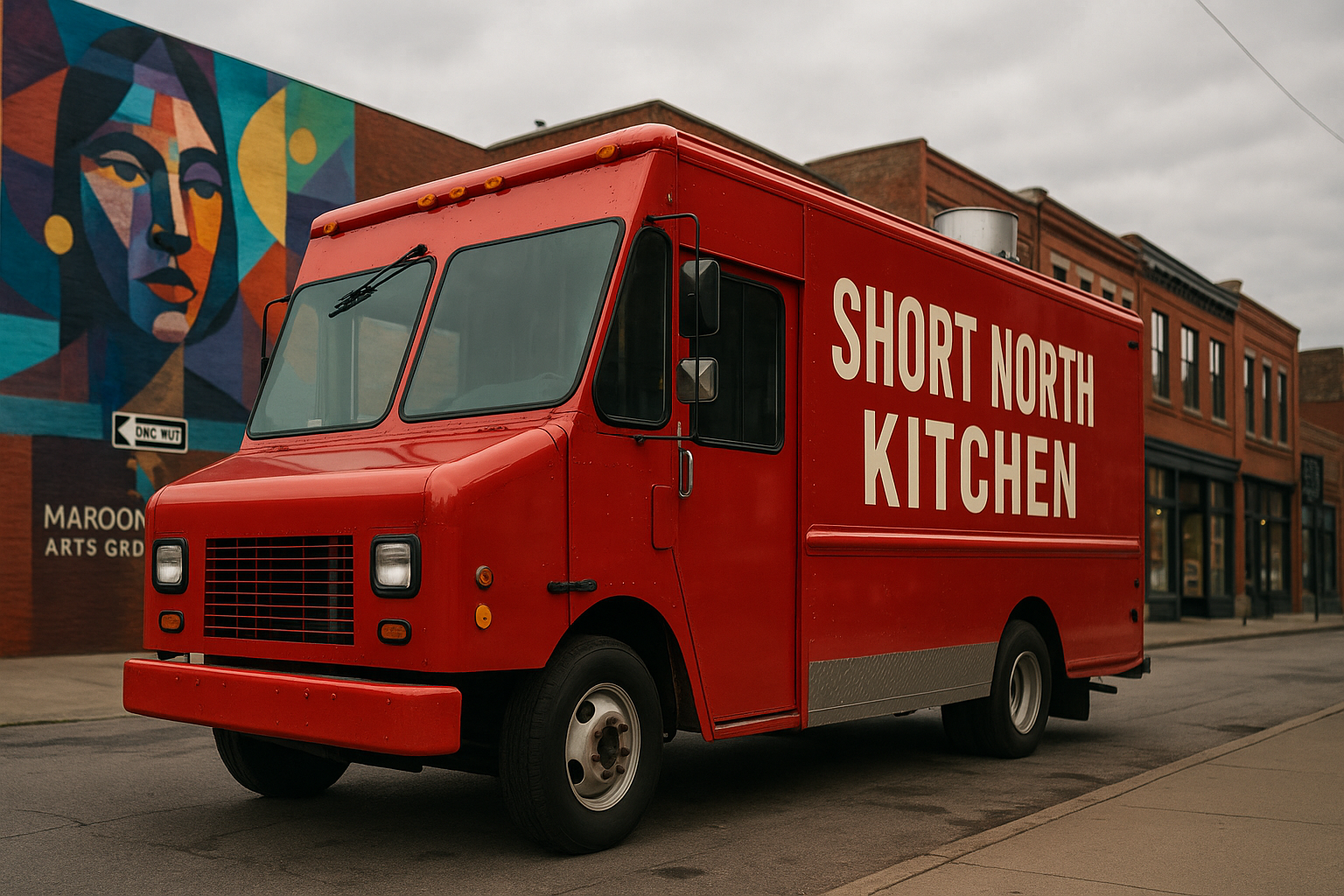
- 💰 Permit cost: $175–$350/yr via Columbus Public Health
- 📋 Mandatory requirement: Commissary agreement (CPH-licensed facility)
- 🏭 Commissary required: Yes — Ohio law mandates licensed commissary
- ⏱️ Timeline: 4–8 weeks (moderate processing)
- 📍 Unique advantage: Ohio State gamedays; Short North brewery scene; low permit costs; supportive city government
Columbus has emerged as one of the Midwest's strongest food truck cities — a young population, a booming downtown, Ohio State University, and a genuinely supportive city government have created a thriving food truck culture. Getting licensed here means working through Columbus Public Health, the city's vending permit system, and Ohio's state food safety requirements. This guide covers every permit, the real fees, commissary requirements, and where you can set up.
Ohio Disclaimer
Food truck regulations in Columbus are administered by Columbus Public Health, the City of Columbus, and the Ohio Department of Taxation. Requirements and fees change periodically. Always verify current rules directly with each agency before applying.
Permit Snapshot: What You're Getting Into
| Step | Agency | Permit / Requirement | Fee | Timeline | Sequence |
|---|---|---|---|---|---|
| 1 | Private commissary | Commissary agreement | $250–$600/mo | 1–2 weeks | Required before CPH application |
| 2 | Columbus Public Health | Mobile Food Facility (MFF) License | $175–$350/yr | 4–8 weeks | Core permit; requires commissary agreement first |
| 3 | Columbus Division of Fire | Fire safety inspection | $50–$150 | 1–2 weeks | Required if cooking with propane/open flame |
| 4 | Columbus City Auditor | Peddler's License | $45–$80/yr | 3–5 days | Only if vending on public property; can run parallel |
| 5 | Ohio Dept. of Taxation | Ohio Vendor's License (sales tax) | $25 one-time | 1–2 days | Can run parallel |
| 6 | Insurance carrier | General liability + auto insurance | $1,000–$2,500/yr | 1–3 days | Required before launch |
Columbus vs. Other Midwest Markets
| Market | Launch Friction | Best First Revenue Lane | Best First Truck Fit | Why This Market Matters |
|---|---|---|---|---|
| Columbus | Low (single health permit + supportive city) | Ohio State gamedays + Short North breweries | BBQ trailer, ethnic/fusion, comfort food | Fastest-growing Ohio metro; young population; 100K+ gameday crowds; low permit costs |
| Cincinnati | Low-Moderate (county health + city permit) | OTR district + brewery lots | BBQ, comfort food, chili-adjacent concepts | Strong brewery culture; lower competition; Kentucky cross-border events add volume |
| Cleveland | Low-Moderate (county health + city vending rules) | Brewery lots + West Side Market area | Ethnic cuisine, comfort food, BBQ | Revitalizing food scene; strong ethnic demand; lakefront summer events |
| Indianapolis | Low (Marion County health + city license) | Downtown office lunch + Indy 500 events | BBQ, comfort food, fast lunch concepts | Major sports/event market; low permit costs; growing food truck adoption |
| Pittsburgh | Moderate (Allegheny County + city permit + inspection sequencing) | Strip District + university campuses | Pierogies/comfort, BBQ, ethnic/fusion | Strong food culture but tighter permit sequencing; university demand year-round |
Best Truck Types for the Columbus Market
| Truck Type | Columbus Market Fit | Commissary Pressure | Event Flexibility | Rationale |
|---|---|---|---|---|
| BBQ / smoked meats trailer | Excellent | Low (prep at commissary or onsite) | Very High (gamedays, festivals, brewery lots, catering) | Columbus loves BBQ; 100K+ Ohio State gameday crowds are a goldmine; brewery partnerships in Short North and Franklinton; strong catering demand |
| International / ethnic cuisine | Very Good | Moderate (specialty ingredients) | High (diverse city; campus + downtown demand) | Columbus is surprisingly diverse — large Somali, Nepali, Mexican, and Asian communities; OSU campus drives international food demand; less saturated than Chicago |
| Comfort food / American classics | Very Good | Moderate (standard ingredients) | Very High (gamedays, corporate events, family events) | Midwest comfort food sells year-round; gameday crowd-pleaser; corporate lunch demand downtown; universally accessible menu |
| Taco / street food truck | Very Good | Moderate (fresh prep daily) | Very High (fast service; high volume at events) | High-volume, fast-serve format dominates gamedays and bar districts; strong late-night demand in Short North and campus area |
| Specialty coffee / espresso cart | Good | Very Low (minimal prep) | Moderate (downtown, office parks, farmers markets) | Columbus has a strong craft coffee scene; low commissary friction; stable morning revenue in downtown and campus corridors |
| Dessert / ice cream truck | Good | Low (desserts often pre-made) | Very High (family events, festivals, gamedays, weddings) | Strong summer demand; German Village and Bexley family crowds; gameday impulse buys; wedding catering market growing |
The Columbus Public Health MFF License — Your Core Permit
The Mobile Food Facility license from Columbus Public Health is required to legally sell food from a truck anywhere in Columbus. Here's the process:
Step 1: Commissary Agreement
Ohio law requires all mobile food facilities to operate from a licensed commissary. Your commissary must be a licensed food establishment (Columbus Public Health licensed) that provides:
- Potable water supply for tank refills
- Approved wastewater and grease disposal
- Food storage (refrigerated and dry)
- Equipment cleaning and sanitizing facilities
- Food prep space (if you prep food before service)
A signed commissary agreement from the commissary operator is required with your MFF application.
Step 2: Truck Equipment Requirements
CPH requires your truck to meet Ohio Retail Food Establishment code standards. Core requirements:
- Handwashing sink with soap, paper towels, and hot/cold water
- Three-compartment sink for ware washing
- Mechanical refrigeration maintaining 41°F or below
- Hot holding equipment maintaining 135°F or above
- Fresh water tank (size depends on operation type)
- Wastewater tank 15% larger than fresh water capacity
- Food-grade construction with easily cleanable surfaces
- Screened openings to prevent pest entry
Step 3: Plan Review (for new trucks)
Columbus Public Health requires a plan review for new mobile food facilities or significantly modified trucks. Submit your truck layout drawings, equipment list, and menu before applying for an inspection. Plan review fee is typically included in the MFF application fee.
Step 4: Apply for Your MFF License
Apply through Columbus Public Health's Environmental Health Division. You'll need:
- Completed MFF application
- Plan review documents (truck layout, equipment list, menu)
- Signed commissary agreement
- Food Protection Manager certification
- Fire inspection approval
- Vehicle registration/ownership proof
Commissary Requirements in Columbus
Columbus has a solid commissary market centered around the Short North, Franklinton, and downtown. Monthly commissary costs typically run $250–$600/month.
What CPH looks for in your commissary agreement:
- The commissary's CPH license number and facility name
- Your access schedule and hours
- What services are provided (water, storage, waste disposal)
- Signature of commissary owner/operator
Columbus Commissary Costs (2026)
- Shared commercial kitchen: $250–$600/month
- Daily access: $35–$60/day if available
- Hourly rental: $15–$25/hour
Columbus commissary costs are notably lower than California or Chicago markets. The Short North and Franklinton neighborhoods have multiple options that cater specifically to food truck operators.
Fire Inspection
The Columbus Division of Fire inspects trucks with propane, natural gas, or open-flame cooking. Requirements:
- Type K fixed fire suppression system for commercial cooking equipment
- Propane tank compliance (mounting, shutoffs, pressure testing)
- Exhaust hood clearances and ventilation
- Portable extinguisher (2A10BC or K-class, visible and accessible)
Other Licenses You Need
City Peddler's License
Required if you plan to vend on any public streets, sidewalks, or city-owned property. Apply through the Columbus City Auditor. Fee is $45–$80/year. If you only operate on private property (brewery lots, office parking, private events), you do not need this.
Ohio Vendor's License (Sales Tax)
Required to collect Ohio sales tax on food sales. Register through the Ohio Department of Taxation. One-time $25 fee, then file returns monthly or quarterly depending on your volume.
Food Protection Manager Certification
At least one person on your truck must hold an ANSI-accredited Food Protection Manager certification (ServSafe or equivalent). Costs $35–$75 and is valid for 5 years.
Where You Can Actually Operate in Columbus
Columbus is food truck-friendly, but a permit alone doesn't guarantee a good spot. Below is a realistic breakdown of where permits actually translate to revenue access.
| Operating Lane | Permit Approval Alone Enough? | Access Reality | Best Truck Fit |
|---|---|---|---|
| Ohio State gamedays (off-campus) | No — lot access required | Private lot owners near campus control access; book spots months ahead; MFF license is baseline | BBQ, tacos, comfort food, desserts |
| Short North brewery/bar lots | No — brewery partnership required | Brewery owners curate truck schedules; build relationship first; consistent weekly spots possible | BBQ, ethnic/fusion, upscale, tacos |
| Downtown office lunch | Partly — Peddler's License + zoning check | Public sidewalk spots exist but verify zoning with city; some spots need building owner approval | Fast lunch, comfort food, coffee, ethnic |
| Franklinton / arts district | Partly — property consent for most spots | Growing arts/brewery district; private property partnerships are the path; Second Friday art walks draw crowds | Upscale, fusion, ethnic, desserts |
| Festivals and events (Comfest, Food Truck Festival, etc.) | No — event vendor application required | Apply through event organizer; MFF license is baseline; popular events are competitive | High-volume: BBQ, tacos, comfort, desserts |
| Private catering (corporate, weddings) | Yes — MFF license sufficient | Private events on private property; no extra city approval; build event planner relationships | BBQ, upscale, comfort, desserts |
| German Village / Bexley neighborhoods | Partly — verify residential zoning | Some residential zones restrict; Schiller Park events draw crowds; partner with neighborhood orgs | Family-friendly (desserts, comfort, ethnic) |
Full Cost Breakdown: Starting a Food Truck in Columbus
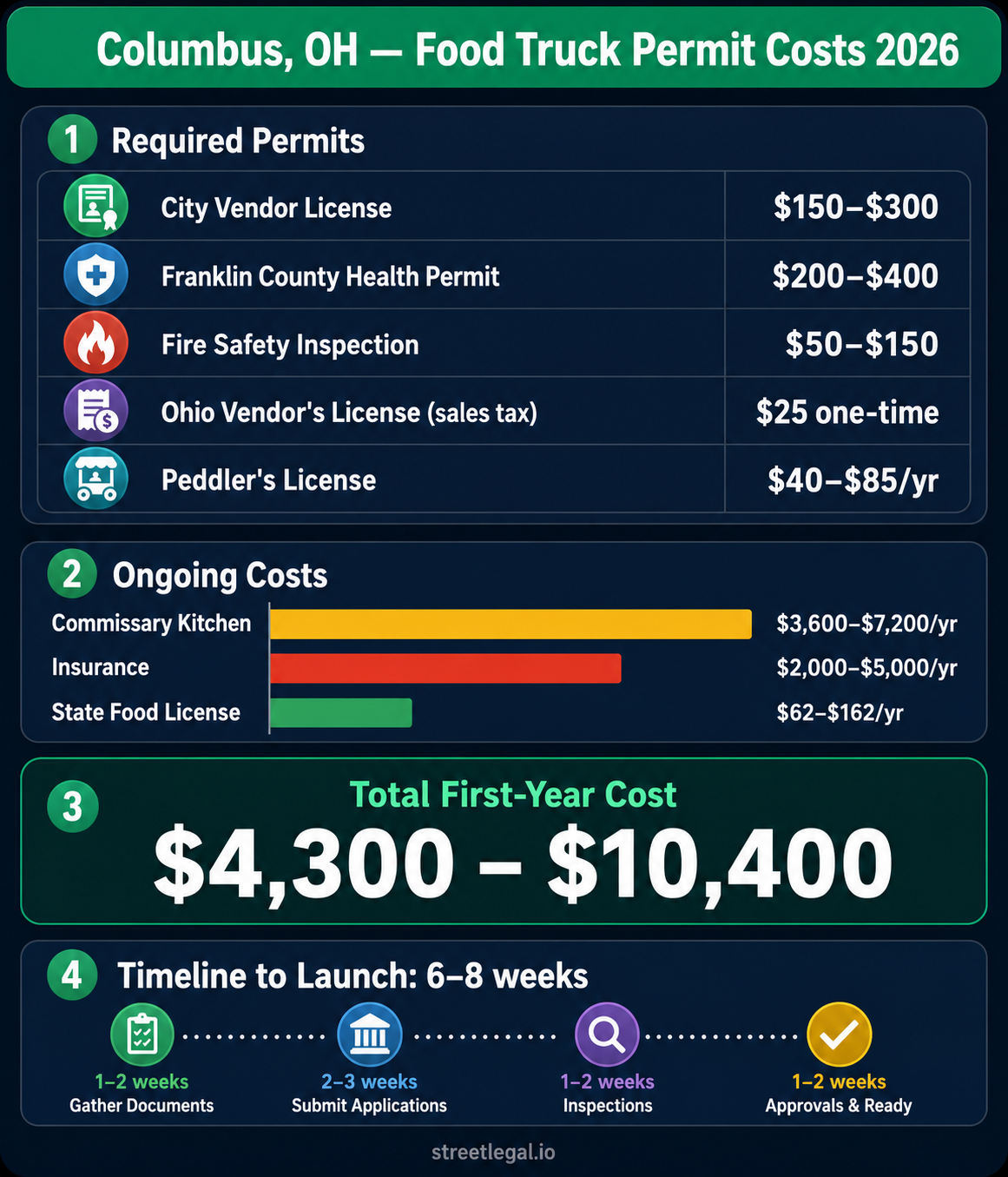
| Permit / Cost Item | Low | High |
|---|---|---|
| Columbus Public Health MFF License | $175 | $350 |
| City Peddler's License | $45 | $80 |
| Ohio Vendor's License (sales tax) | $25 | $25 |
| Fire Inspection | $50 | $150 |
| Food Manager Certification | $35 | $75 |
| Commissary Kitchen (annual) | $3,000 | $7,200 |
| Business Liability + Auto Insurance | $1,000 | $2,500 |
| Total First-Year Estimate | $4,330 | $10,380 |
Excludes truck purchase/lease, equipment, and initial inventory. Columbus permit costs are among the lowest for major Midwest metros.
Timeline: Columbus Food Truck Launch
- Week 1–2: Secure commissary agreement with CPH-licensed facility
- Week 2–3: Register for Ohio sales tax; get Food Manager Certification if needed
- Week 3: Verify truck equipment meets Ohio Retail Food Establishment code
- Week 3–4: Submit Columbus Public Health MFF application with all documents
- Week 4–5: CPH schedules health inspection
- Week 5–6: Pass health inspection; receive MFF license
- Week 6–7: Pass fire inspection (if applicable); finalize insurance
- Week 7–8: Apply for Peddler's License if needed; connect with breweries and event organizers
Columbus Operator Tips
MFF license renews March 1 — mark your calendar
Ohio food facility licenses expire March 1 each year. CPH sends renewal notices but don't rely on them — start your renewal in January to avoid any gap in your operating license.
Football Saturdays are a different business
Columbus does 100,000+ at Ohio Stadium for home games. The Whittier Peninsula, Franklinton lots, and High Street corridor are goldmines on game days. Plan your positioning months in advance — good spots get claimed by regulars.
Columbus has a dedicated food truck advocate
The Columbus Food Truck Association actively works with the city on vending zones and policy. Joining is worth the time — they publish current approved street vending locations and have relationships with event organizers across the city.
Short North is your best brewery partnership lane
The Short North Arts District has a dense brewery and bar scene that actively seeks food truck partners. Build relationships early — consistent weekly brewery spots are more reliable revenue than chasing one-off events.
Columbus costs are a competitive advantage
First-year compliance runs $4,300–$10,400 in Columbus vs. $7,500–$16,000+ in California markets. Lower overhead means faster breakeven. Use the cost advantage to invest in your truck, menu development, or marketing instead.
Ready to launch your food truck in Columbus?
StreetLegal tracks permit requirements, renewal deadlines, and compliance for food truck operators across Ohio.
Get Started with StreetLegal →Related Guides
People also ask about Columbus food truck permits
How much does a food truck permit cost in Columbus?
How long does it take to get a food truck permit in Columbus?
Do I need a commissary kitchen to operate a food truck in Columbus?
What documents do I need for a Columbus food truck permit?
Answers to the most common permit questions — costs, timelines, commissary rules, and more.
Find city-level permit guides for every state we cover — compare costs and requirements.
More from the blog
Jefferson County, MO Food Truck Permit Guide
Complete guide to food truck permits, fees, and requirements in Jefferson County, MO.
City GuidesSt. Charles County, MO Food Truck Permit Guide
Complete guide to food truck permits, fees, and requirements in St. Charles County, MO.
City GuidesSt. Louis County, MO Food Truck Permit Guide
Complete guide to food truck permits, fees, and requirements in St. Louis County, MO.
Buyer's GuideFood Truck POS Systems 2026: Square, Toast, Clover & Avocado
Compare 2026 food truck POS systems by pricing, hardware costs, offline mode, and contract terms for Square, Toast, Clover, and Avocado.