· 7 min read · StreetLegal Team
Charlotte Commissary Kitchen Guide for Food Trucks (2026)
Updated August 5, 2026
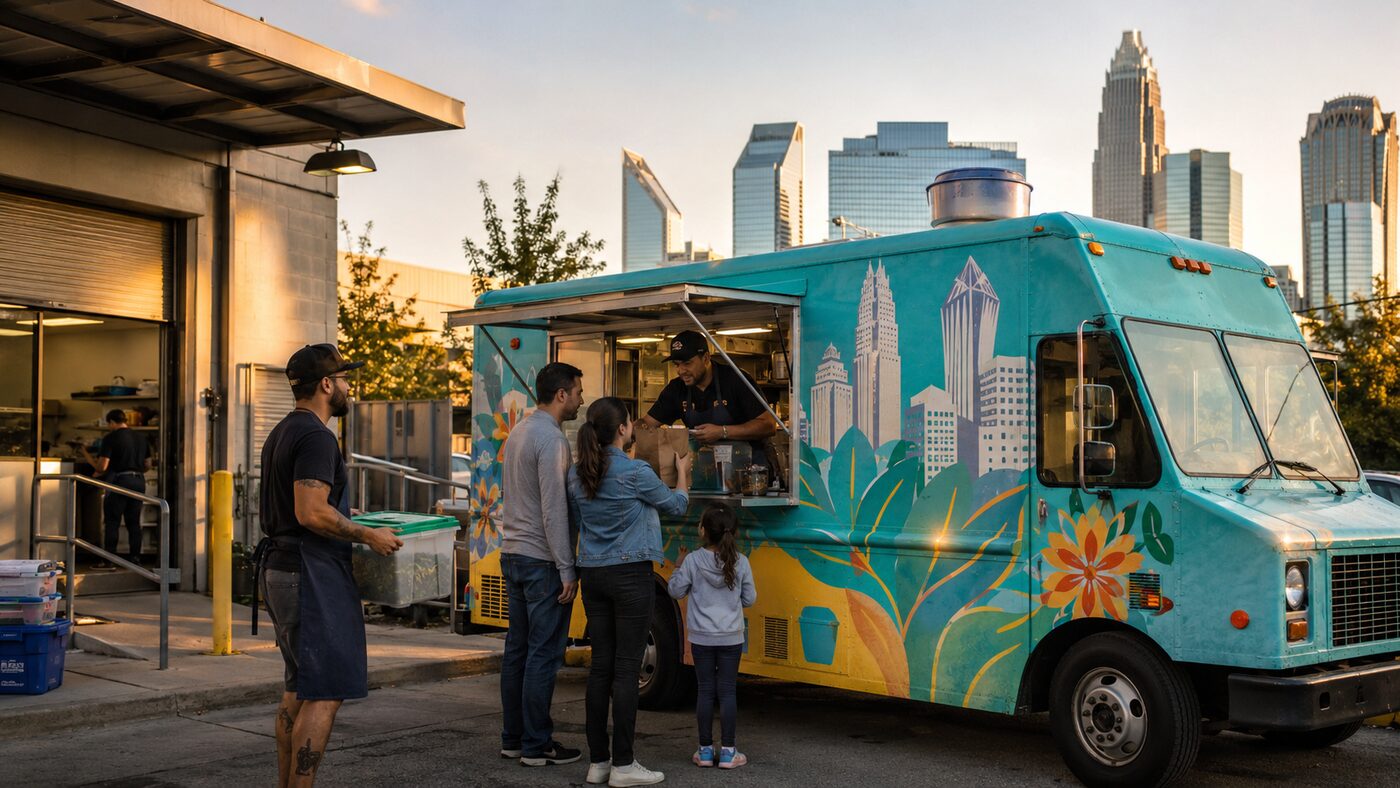
Charlotte food trucks need more than a good parking spot. Mecklenburg County expects mobile food units to have a licensed base of operations for prep, cleaning, storage, and wastewater support, and your commissary agreement can also become the fixed address you use for delivery-platform paperwork.
Charlotte permit context
Charlotte sits in Mecklenburg County, so the health-permit side runs through Mecklenburg County Environmental Health. StreetLegal's Charlotte permit guide notes that operators should expect to provide a commissary agreement, menu, vehicle/equipment details, and pass inspection before operating. The guide also flags practical first-year overhead from commissary access, permits, fire inspection, insurance, and setup, so do not treat the kitchen contract as an optional convenience.
The key is not just "commercial kitchen." The kitchen needs to support the actual truck: prep space, cold and dry storage, three-compartment sink or warewashing access, handwashing, wastewater disposal, trash, grease handling, and records an inspector can verify.
Real local kitchen options
| Kitchen | What is verified publicly | Best fit to ask about |
|---|---|---|
| The City Kitch | Charlotte locations, shared and dedicated kitchen options, secure 24/7 access, hot line, sinks, refrigeration, fire suppression, and food truck booking support | Classic commissary/shared-kitchen membership for trucks and food businesses |
| CloudKitchens Charlotte | Private ghost-kitchen spaces, driver pickup area, staff areas, sinks, hood, utilities, delivery software, and Charlotte delivery-demand data | Delivery-heavy operators or trucks adding a fixed prep/delivery address |
| Restaurant or brewery kitchen sublease | Not a single public directory listing; must be verified case by case | Operators with a stable host relationship and county-approved paperwork |
The City Kitch's membership page lists practical truck-relevant features: 99 feet of hot line, natural gas and interlock, ANSUL fire suppression, three-compartment sinks, prep sinks, refrigeration, lockers, 24/7 access, maintenance, cleaning, utilities, internet, delivery integrations, and food truck booking. CloudKitchens' Charlotte page is more delivery-focused: it advertises private kitchens, pickup areas, sinks, hood, utilities, grease-trap/interceptor support, cleaning and maintenance, and delivery software.
What to verify before signing
- Will Mecklenburg County accept the kitchen as your commissary for your exact menu and truck setup?
- Can the kitchen provide a signed commissary agreement and current permit documentation?
- Is storage included, and is it dry, refrigerated, frozen, or locked?
- Are wastewater, grease, trash, and potable-water refills available for a mobile unit?
- Can you access the space before early lunch service and after late events?
- Is food truck parking or loading included, or only kitchen time?
Delivery-app address impact
For Uber Eats, DoorDash, and similar platforms, the commissary can matter beyond prep. A truck that moves around Charlotte still needs a stable business and permit trail. If the commissary is the address attached to health paperwork and delivery prep, make sure the platform setup, pickup instructions, courier parking, and kitchen agreement all tell the same story.
That does not mean every food truck should become a ghost kitchen. A lunch-route truck may only need a simple commissary with storage and cleaning. A delivery-first truck may need a private kitchen, courier handoff, and tablet/order management. Pick the kitchen around the operating model, not around the prettiest equipment list.
Keep the kitchen agreement tied to your permit file.
StreetLegal helps Charlotte food truck operators track commissary agreements, health permits, fire inspections, insurance, and renewal dates in one place.
Sources checked: StreetLegal Charlotte permit guide, The City Kitch membership page, and CloudKitchens Charlotte.
People also ask about Charlotte food truck permits
How much does a food truck permit cost in Charlotte?
How long does it take to get a food truck permit in Charlotte?
Do I need a commissary kitchen to operate a food truck in Charlotte?
What documents do I need for a Charlotte food truck permit?
Answers to the most common permit questions — costs, timelines, commissary rules, and more.
Find city-level permit guides for every state we cover — compare costs and requirements.
More from the blog
Jefferson County, MO Food Truck Permit Guide
Complete guide to food truck permits, fees, and requirements in Jefferson County, MO.
City GuidesSt. Charles County, MO Food Truck Permit Guide
Complete guide to food truck permits, fees, and requirements in St. Charles County, MO.
City GuidesSt. Louis County, MO Food Truck Permit Guide
Complete guide to food truck permits, fees, and requirements in St. Louis County, MO.
Buyer's GuideFood Truck POS Systems 2026: Square, Toast, Clover & Avocado
Compare 2026 food truck POS systems by pricing, hardware costs, offline mode, and contract terms for Square, Toast, Clover, and Avocado.