· 6 min read · StreetLegal Team
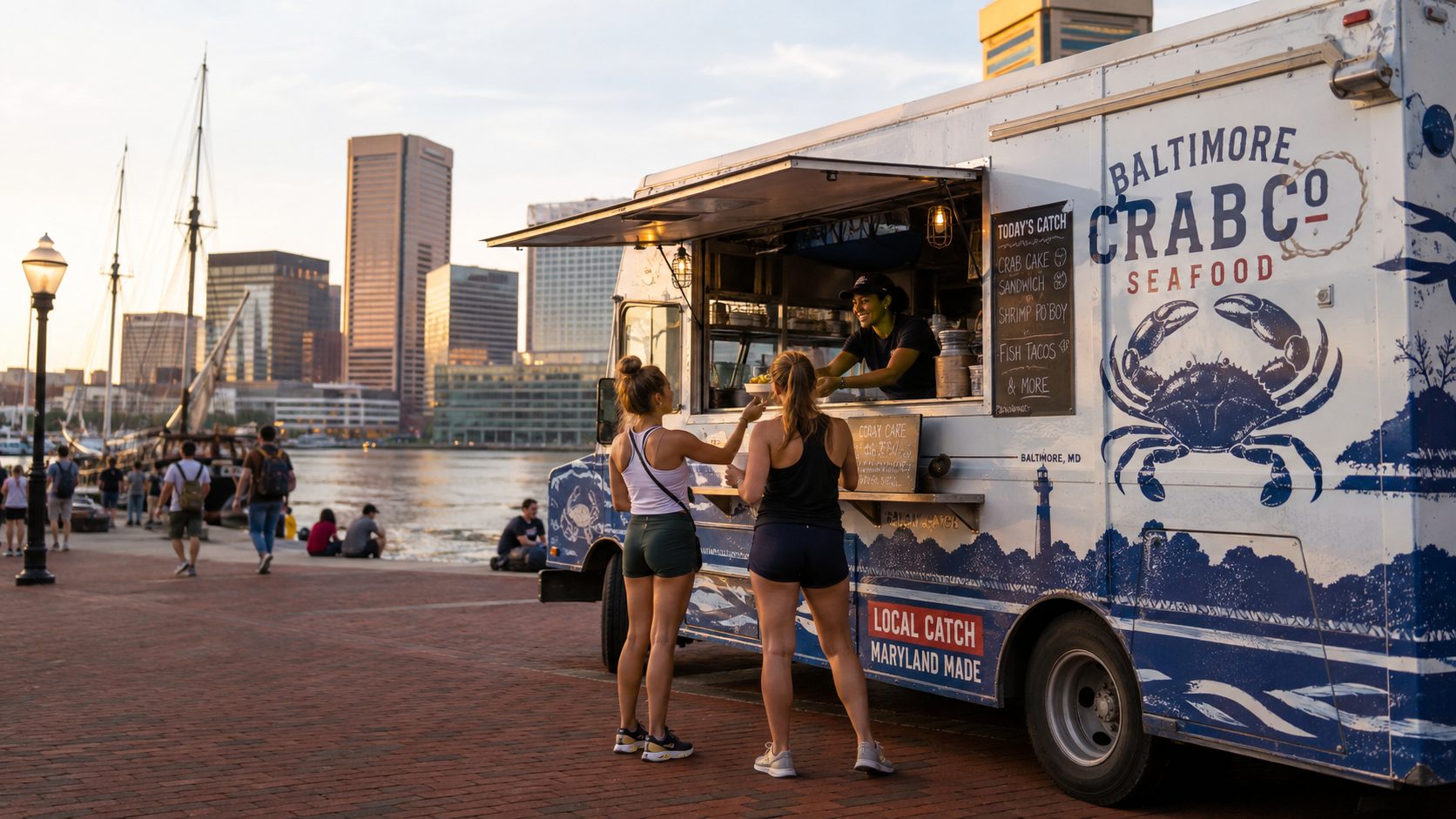
Baltimore Commissary Kitchen Guide (2026)
Updated August 17, 2026
Baltimore City requires every mobile food unit to operate from a licensed commissary, and the Health Department won't issue a Mobile Food Service Facility License without a signed commissary agreement on file. Here are real commissary and shared-kitchen options serving Baltimore in 2026, with the pricing each one publishes, so you're not starting your search from a "contact us" form.
Baltimore commissary kitchen options
| Commissary | Location | Pricing |
|---|---|---|
| La Chow | 210 S Central Ave, Baltimore, MD 21202 — 443-332-3392 | Food truck plan: $600/month, includes half-fridge storage, shared commercial equipment, parking and loading dock access, hood cleaning/pest control/grease trap upkeep, and 24/7 security. Extra dry or cold storage shelf: $150/month. Additional parking: $150/month. After-hours (2–6 a.m.) surcharge: $200/hour. |
| B-More Kitchen | 5609 Hess Ave, Baltimore, MD 21212 | 24/7 membership: $1,750/month. Nights & Weekends membership (weekdays 5 p.m.–7 a.m., all day Sat/Sun): $1,200/month. Both include unlimited access to shared equipment on a 65-foot hood line, dedicated storage, and shared office space. 10,000 sq. ft. facility. |
| B'More Made with Pride Commercial Kitchen | 6617 Harford Road, Baltimore, MD 21214 | Licensed for catering, food prep, and specialty food production; available 24/7 — rates not published, contact directly (natashabmoremade@gmail.com) for a quote. |
| Our Time Kitchen | 117 W 24th Street, Baltimore, MD | Hourly rental and monthly memberships, plus a to-go window, retail space, and bulk packaging — contact for current rates. |
| Baltimore Food & Beverage Maker's Space (Greenmount Culinary Incubator) | 3326 Greenmount Ave, Baltimore, MD | Shared kitchen with small-batch packaging equipment (deli-container sealing, food-grade bagging) for retail-ready products — contact for rates. |
| Tasty Creations | 8010 Hog Neck Road, Suite 103, Pasadena, MD (about 20 minutes outside Baltimore) | Licensed facility with prep tables, mixers, two convection ovens, a griddle, a six-burner stove, and a chopper — contact for rates. |
This isn't every kitchen operating near Baltimore — it's a shortlist of options that publish real details. Shared-kitchen capacity and pricing shift as members join and leave, so confirm current availability directly before you count on a spot. Only two of the facilities above publish specific rates; the rest require a call or email, which is worth doing early since commissary sign-off has to be in hand before BCHD will move your license application forward.
What Baltimore City requires from your commissary
The Baltimore City Health Department (BCHD) requires every mobile food unit to operate from an approved commissary for food prep, storage, and cleaning — you can't run entirely out of the truck. The commissary itself must hold a valid Maryland food service facility license, and you need a signed commissary agreement from that facility before BCHD will process your Mobile Food Service Facility License application. Along with the agreement, BCHD asks for a completed application, Maryland Food Manager Certification for at least one person per truck, vehicle registration and proof of ownership, commercial liability insurance, and a passed health inspection scheduled after your paperwork is reviewed.
On fees: the BCHD Mobile Food License typically runs $100–$250 a year, and a Maryland Trader's License runs $15–$150 a year. Commissary cost is the biggest variable — general estimates for Maryland commissaries put the range at $300–$700/month, though the real Baltimore options above start around $600/month and run well past $1,000/month for full-service, dedicated-storage plans. Budget 4–8 weeks from application start to your first day of legal operation. BCHD's Environmental Health office (1001 E. Fayette Street, Baltimore, MD 21202, 410-396-4424) is the direct line for current fee schedules and inspection scheduling.
One jurisdictional wrinkle worth flagging: Baltimore City and Baltimore County run separate mobile food vending programs through separate health departments. A commissary agreement and license approved for city operation doesn't automatically cover county events, and a county-approved truck isn't automatically cleared to vend inside city limits. If your routes cross the city/county line, confirm both sets of requirements rather than assuming one permit travels with you.
What to bring and verify before you sign
- Confirm the facility's own license is current and that they'll provide a signed commissary letter or agreement in the format BCHD expects — ask to see a sample before you commit.
- Get the full monthly cost in writing, not just the headline rate. La Chow's $600/month plan adds $150/month per extra storage shelf or parking spot and a $200/hour after-hours surcharge; other facilities may add deposits or processing fees that don't show up until the invoice.
- Check whether access is truly 24/7 or limited to specific windows (B-More Kitchen's Nights & Weekends tier, for example, starts at 5 p.m. on weekdays) that might not match your prep schedule.
- Ask if delivery-platform use is allowed under your plan. Some Baltimore commissary agreements restrict using that address for delivery-app storefronts under lower-cost tiers — confirm this explicitly if you plan to list on Uber Eats or DoorDash from the same address.
- Walk the equipment list against your menu — walk-in storage, hood/ventilation capacity, three-compartment sinks, and specialized gear like combi ovens or batch freezers vary a lot between these facilities.
Commissary access and delivery-app listings
Picking a commissary isn't only about prep space and BCHD compliance — it also determines the address you can use if you want to list on delivery apps. Uber requires the legal entity name and address on your business license and health permit to match the address you list on Uber Eats, and since a truck moves lot to lot, most operators use their commissary address as that fixed storefront address instead. That makes the commissary's paperwork trail (its own license, your signed agreement, a stable street address) part of what gets your delivery listing approved, not just your food truck license.
Worth double-checking before you assume this works: at least one Baltimore facility's published food truck plan explicitly states that delivery platform services like DoorDash and Uber Eats are prohibited under that tier. If you're planning to run delivery-app orders out of your commissary address, confirm that's permitted under the specific plan you sign, not just under the facility's brand generally. See our guide on whether Uber Eats is worth it for food trucks for the full address-matching and listing-approval process.
Frequently asked questions
Do Baltimore food trucks legally need a commissary kitchen?
Yes. BCHD requires every mobile food unit to operate from a licensed commissary for prep, storage, and cleaning, and a signed commissary agreement must be submitted with your license application.
How much does a Baltimore commissary kitchen cost?
Published rates vary: La Chow's food truck plan is $600/month plus add-ons, while B-More Kitchen lists $1,750/month for 24/7 access or $1,200/month for nights and weekends. Several other Baltimore kitchens don't publish rates and require a direct quote.
What documents does BCHD require for a mobile food license?
A completed application, Maryland Food Manager Certification for at least one crew member, a signed commissary agreement, vehicle registration, commercial liability insurance, and a passed health inspection.
Is a Baltimore County commissary the same as a Baltimore City one?
No. City and county run separate permitting programs through separate health departments, so confirm both jurisdictions if your routes cross the city/county line.
Does a Baltimore commissary address help with Uber Eats listings?
Yes — Uber requires your license address to match your delivery listing address, and most trucks use their commissary address for that. Some commissary plans restrict delivery-platform use, so confirm it's allowed before you sign.
Keep your commissary agreement current alongside every other permit.
StreetLegal helps Baltimore food truck operators track BCHD permits, health department documents, and commissary agreements in one place, so nothing lapses and your Uber Eats or DoorDash address checks don't hold up your listing.
People also ask about Baltimore food truck permits
How much does a food truck permit cost in Baltimore?
How long does it take to get a food truck permit in Baltimore?
Do I need a commissary kitchen to operate a food truck in Baltimore?
What documents do I need for a Baltimore food truck permit?
Answers to the most common permit questions — costs, timelines, commissary rules, and more.
Find city-level permit guides for every state we cover — compare costs and requirements.
More from the blog
Jefferson County, MO Food Truck Permit Guide
Complete guide to food truck permits, fees, and requirements in Jefferson County, MO.
City GuidesSt. Charles County, MO Food Truck Permit Guide
Complete guide to food truck permits, fees, and requirements in St. Charles County, MO.
City GuidesSt. Louis County, MO Food Truck Permit Guide
Complete guide to food truck permits, fees, and requirements in St. Louis County, MO.
Buyer's GuideFood Truck POS Systems 2026: Square, Toast, Clover & Avocado
Compare 2026 food truck POS systems by pricing, hardware costs, offline mode, and contract terms for Square, Toast, Clover, and Avocado.